
You can almost hear the internet trying to make a decision for a 39-year-old superstar.
In mid-July 2024, Google Trends appeared to show a spike in searches for “LeBron James trade” in the United States. The phrasing makes it feel like something already happened. It did not. What happened instead is more modern, and more revealing: a handful of offseason “what-if” stories landed close together, and the public compressed them into a single, high-intent question.
Not Was LeBron traded today? but How does LeBron leave the Lakers, if he leaves at all?
That is the real story behind the trend spike. The NBA’s rumor economy is built to turn possibility into urgency, especially when the name involved is still one of the most searched players in sports.
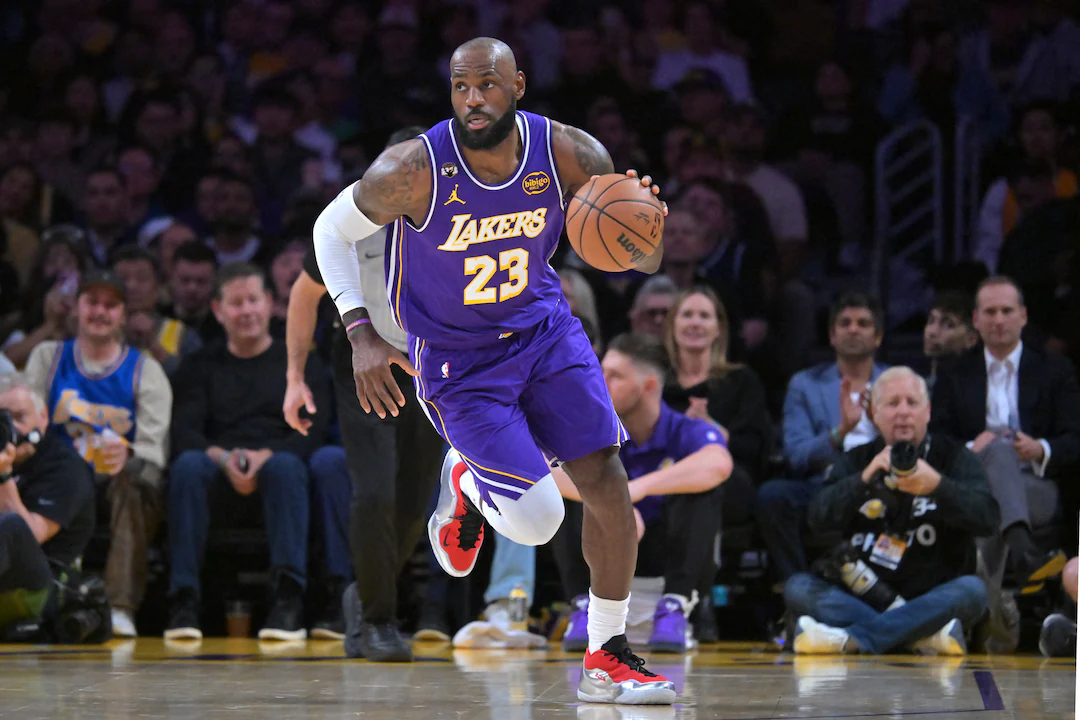
Join the Discussion
Why “trade” trends
Search behavior is literal. Fans type the most efficient word that captures the feeling they have: movement.
But the July 2024 conversation is not anchored to a transaction notice. It is anchored to an offseason framing that treats LeBron as an availability event, whether that availability comes through:
- A trade, if the Lakers and LeBron decide the cleanest exit is an asset-for-contract swap.
- Free agency, if LeBron controls his destination by signing elsewhere (or by threatening to).
- Retirement, the silent fourth option in every LeBron rumor cycle, always present and never fully knowable.
One reason the word “trade” dominates anyway: trade rumors are easier to imagine than salary-cap spreadsheets. “Trade” is a single verb that captures an entire set of possibilities.
The July 2024 cluster
This particular cycle did not come from a single announcement. It came from a familiar pileup: offseason lists, cap-room hypotheticals, and “best fits” segments that treat July like a narrative draft. One idea gets posted, another gets aggregated, a third gets clipped for social, and by the time it hits your feed it has been repeated enough to feel like consensus.
That is how speculation becomes “common knowledge.” Not through one authoritative claim, but through repetition that strips away the original conditional language.
The current viral cycle concentrates around three destination narratives that keep resurfacing because they are emotionally satisfying. Each one also has a different kind of obstacle, and that is where the rumor stories get their traction.
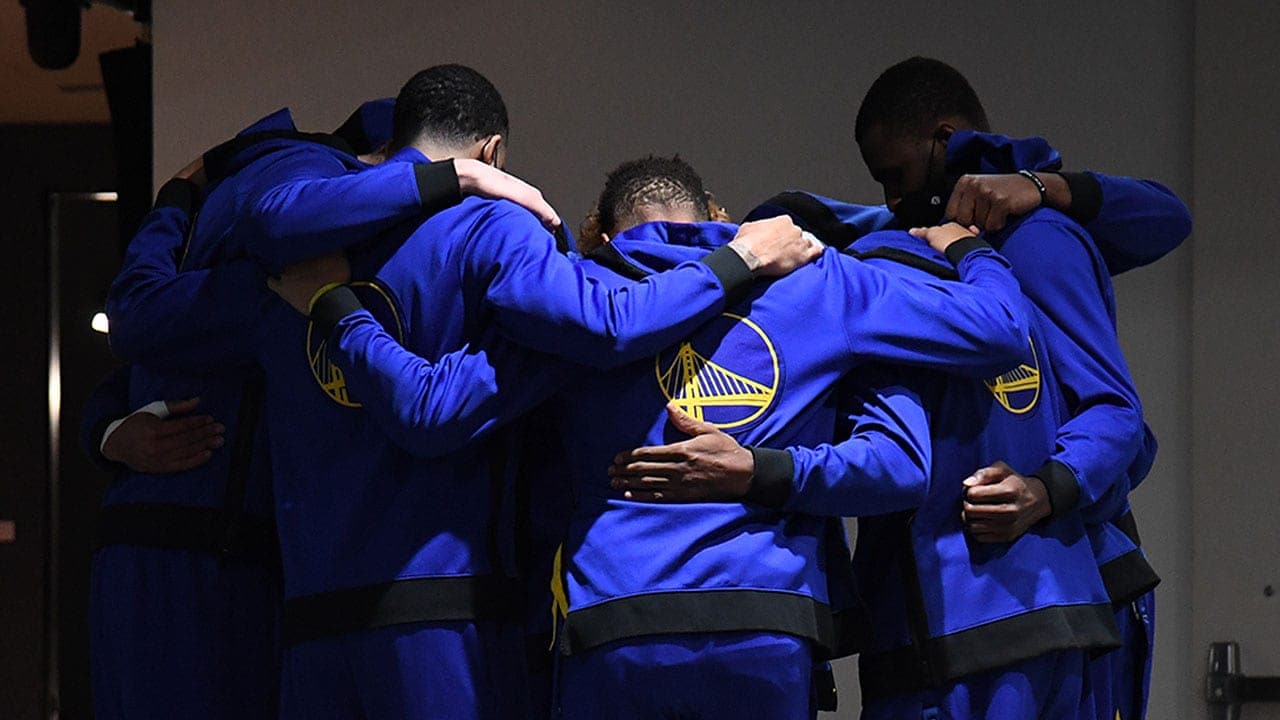
1) Warriors
The Golden State angle keeps lighting up because it is the purest basketball argument. LeBron paired with elite shooting and motion offense is a thought experiment that writes its own headlines.
But the Warriors pathway is framed, in part, around a very specific piece of roster machinery: what has to be moved to make any acquisition work. One of the names that often gets pulled into that machinery is Moses Moody, not because fans want him gone, but because salary matching and roster construction turn real players into negotiating pieces.
That is why Warriors rumor coverage resonates. It is not just “Would LeBron look good in a Warriors jersey?” It is “Who becomes the cost of even trying?”
2) Heat
Miami will always be a LeBron destination in the public imagination, because it already happened, and because the franchise sells a familiar promise: stars plus structure.
The 2024 version of this story is usually built around an extreme cap-clearing concept: multi-player chain reactions that could, in theory, open financial runway for a LeBron signing or a sign-and-trade. These are the kinds of scenarios that show up in offseason “here’s how it could work” pieces and then spread because they sound like a blueprint.
Whether any particular five-player construction is realistic is almost beside the point. The appeal is that it offers an answer to the hardest question in superstar pursuit: Where does the money and roster space come from? Fans are searching “trade” because the Heat scenario typically requires something like a trade earthquake before it can even pretend to be a signing.
3) Lakers
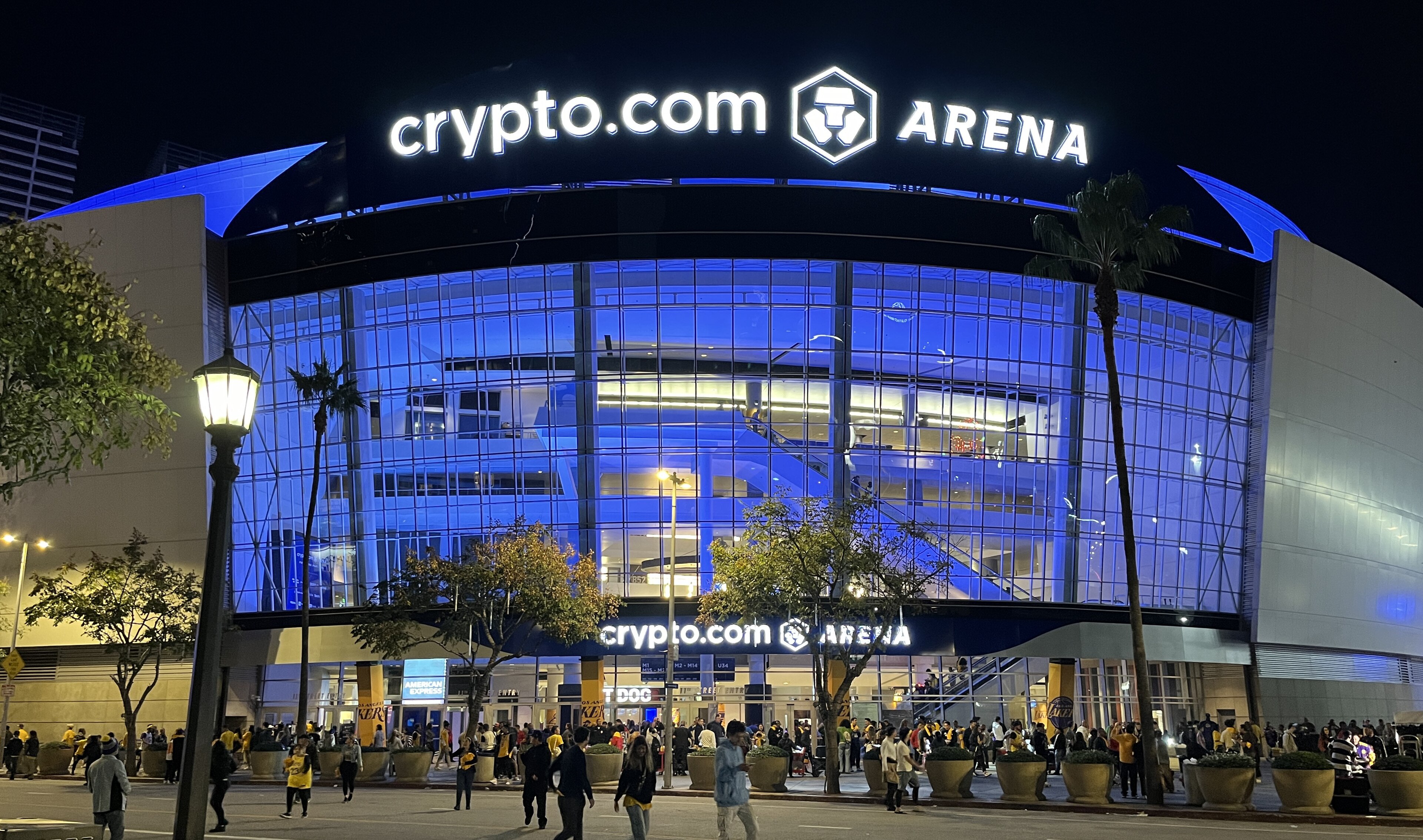
The most durable part of the rumor cycle is the possibility that LeBron’s Lakers chapter is ending, or entering its final act. And that triggers a second, uniquely Los Angeles storyline: what happens to Bronny James if the Lakers become post-LeBron overnight?
When people search “LeBron trade,” they are also searching for downstream consequences: the roster timeline, the identity of the team, and whether Bronny’s role is redefined from “part of a historic father-son moment” to “a young player who now has to be evaluated without the gravitational pull of the league’s most famous teammate.”
That is why Lakers-related coverage in this cycle reads less like gossip and more like a reset. It treats LeBron leaving as a live possibility, and then asks what the franchise does with that new reality.
Why this fits here
USConstitution.net does not cover sports as entertainment for entertainment’s sake. But the way a single phrase can flood search engines, shape public belief, and turn conditional speculation into something that feels settled is a civic media story. It is a case study in agenda-setting and media literacy: how information moves, how narratives harden, and how Americans decide what is “real” before any accountable actor has said a word.
LeBron trade chatter is not law. The mechanism behind the chatter is still the point.
What framing does
A big accelerant in July is the offseason-content genre itself: rankings, destination lists, and free-agency boards that treat the summer like a marketplace of narratives.
When a major outlet ranks top players available in upcoming free agency and places LeBron among the headline names, it effectively turns “trade” into shorthand for “availability.” It invites the public to think of him less as a fixed Laker and more as an asset that could plausibly change uniforms.
That single shift changes search behavior. Once “LeBron” and “available” occupy the same week of the news cycle, “trade” becomes the easiest keyword to throw at the question: Where does he go next?
The mechanics people want
Underneath the spike is a wonky curiosity that deserves credit. People are not only reacting emotionally. They are trying to reverse-engineer the exit mechanisms that govern a superstar’s late-career options.
One reason July speculation floats so easily is that most fans are not tracking the same baseline: LeBron’s contract status in that moment, and the CBA constraints that shape the menu. In plain English, even if a star wants to move, the path depends on whether he is under contract (trade), can become a free agent (sign), or needs a sign-and-trade (a hybrid that is often restricted by hard cap and apron rules that limit what teams can take back, aggregate, or spend). Those constraints are exactly why fans default to “trade.” It is the simplest label for a complicated set of cap and contract gates.
Trade
- Requires cooperation between teams, and often some alignment between player preference and front-office leverage.
- For the acquiring team, it means surrendering real rotation players or picks, not just typing names into a mock-trade machine.
- For the sending team, it is a decision about whether the return is worth the symbolic cost of moving a franchise icon.
Free agency
- Shifts leverage toward the player and away from the Lakers, but it also shifts the challenge to the suitor’s cap sheet.
- Creates softer narratives (“he chose it”) compared to a trade (“they moved him”), which matters for legacy talk.
Retirement
- Explains the intensity of every rumor cycle: people are not just asking where he plays, but whether they are watching the closing scene.
- Turns every roster move around him into a possible signal, even when it is just routine team building.
Is he leaving?
What is “confirmed” in this moment is not a transaction. It is the structure of the conversation: multiple speculative items converged during the loudest part of the NBA offseason, and the public treated the convergence as evidence.
If you want the durable takeaway, it is this: the viral trend is an audience trying to price a future that has not been announced yet.
July is when that happens. Cap sheets harden, rosters fill, and the window for a megastar move feels both urgent and plausible. Add the fact that LeBron is entering his 22nd NBA season, and every offseason rumor starts to sound like a last chapter.
How to read headlines
The next time you see “LeBron trade” go vertical, you can usually sort the noise from the signal with three questions:
- Is there a concrete mechanism? (specific salary matching, specific roster pieces, a stated contract path)
- Is anyone accountable? (a team statement, a player statement, an agent quote, an official filing)
- Does the story explain who sacrifices what? (because every real move has a cost that somebody hates)
Until those show up, the safest translation of the spike is also the simplest: America is not searching for a trade. It is searching for an ending, or a new beginning, and trying to figure out which teams could afford to be part of it.