

The Second Amendment debate has a bad habit of turning into a shouting match about modern politics instead of a serious argument about constitutional limits. This week, Assistant Attorney General for Civil Rights Harmeet Dhillon tried to drag it back to first principles, at least in the legal framing she chose.
In a video posted to X, Dhillon didn’t hedge. Semiautomatic rifles like the AR-15, she said, “are protected by the Constitution.” She anchored the claim in the Supreme Court’s 2022 decision in New York State Rifle & Pistol Association v. Bruen and in the method Bruen demands: a history-based test for gun restrictions.
Join the Discussion
Dhillon’s claim
Dhillon’s argument is blunt and legally strategic. She points to Bruen and frames the AR-15 question as the kind of question Bruen was built to answer.
Her key line is worth quoting because it sets the battlefield:
“When you look at the historical analysis — and Justice Thomas lays this out very clearly — it is clear that semiautomatic rifles of the nature of the AR-15 are protected by the Constitution and the Second Amendment.”
Notice what she is doing. She is not saying the AR-15 is a good idea, a bad idea, or a cultural symbol. She is saying the Constitution already made the essential choice, and courts are supposed to enforce it the way Bruen instructed.
Why Bruen matters
If you want to understand today’s Second Amendment scope fight, you start with the rule Bruen tried to impose on lower courts: stop balancing. Stop asking whether a restriction is “reasonable” in the modern sense. Start asking whether the restriction fits within the nation’s historical tradition of firearm regulation.
That shift is seismic because it changes which side carries the burden. Under Bruen, once ordinary conduct covered by the Second Amendment is implicated, the government has to justify its regulation by pointing to historical analogues, not just policy studies or public safety arguments.
Dhillon is leaning into that. If semiautomatic rifles are within the Amendment’s coverage, then broad bans live or die on history, not headlines.
Virginia test
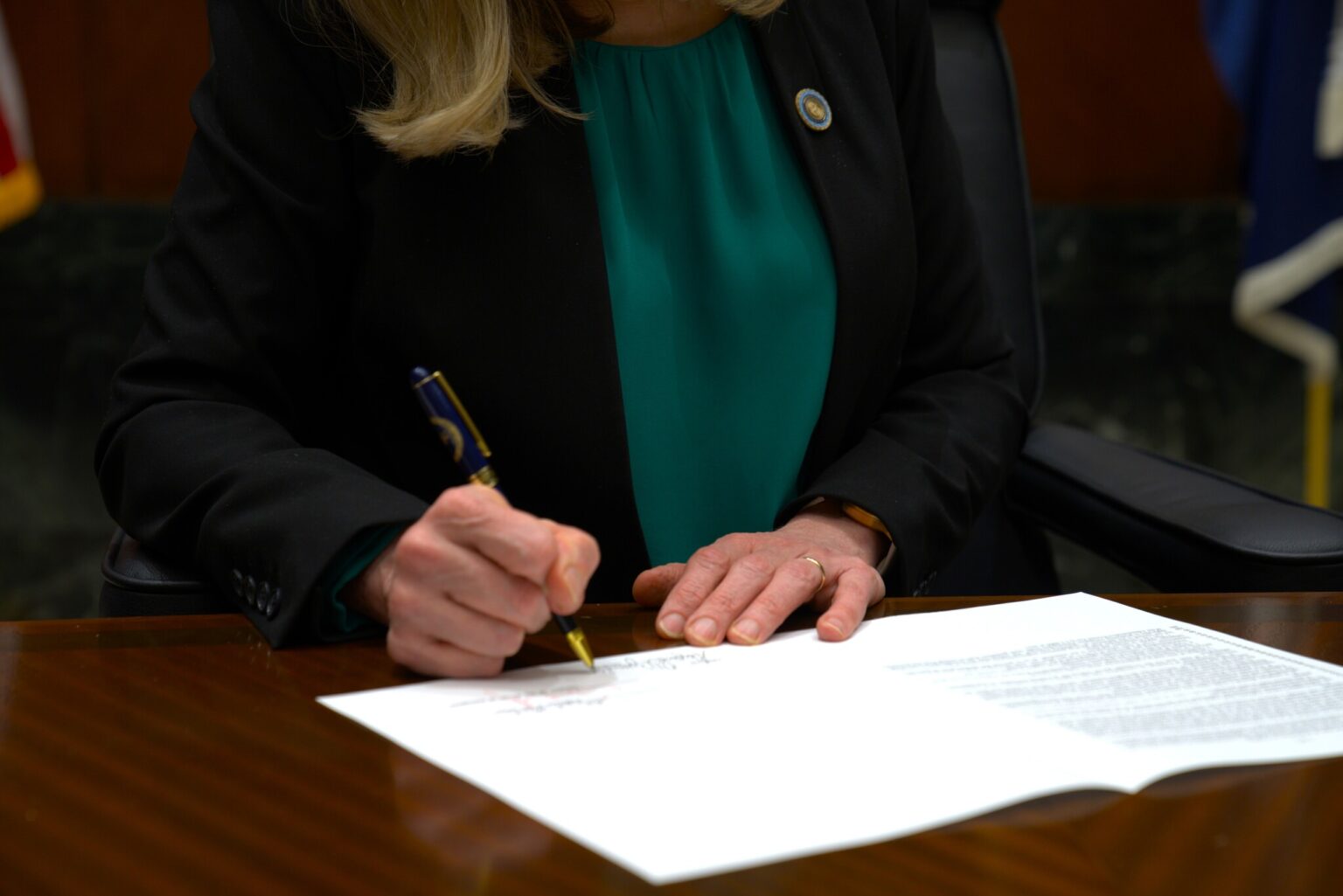
This debate is not happening in a vacuum. Dhillon says she sent a letter to Virginia Governor Abigail Spanberger warning that the Department of Justice would sue if Spanberger signed “assault weapons” ban legislation passed by the Democrat-controlled Virginia legislature.
Spanberger did not sign that bill by an April 13 deadline. Instead, Dhillon says the governor returned it to the legislature with “minor, technical edits” that, in Dhillon’s view, “don’t cure the problems identified in my letter.”
That procedural detail matters because it hints at what could come next: a state trying to tweak language to survive Bruen, and a Justice Department that Dhillon says was prepared to litigate if the bill became law.
Ghost guns and liability
Dhillon also flagged other Virginia measures that did move forward.
- A “ghost gun” ban, which Dhillon indicated would be evaluated in light of ATF regulations.
- A law affecting manufacturer immunity, which she described as “very concerning.”
Her critique of the industry-targeting approach is straightforward: a right that exists on paper can be hollowed out in practice if lawful access becomes impossible. As she put it, “the right to carry, the right to bear arms, the right to have them in your home and enjoy them for lawful purposes is meaningless if you’re not able to acquire those firearms.”
That is not just a gun-policy argument. It is a constitutional-structure argument. Rights do not function if government can choke off the supply chain while insisting it never banned the right itself.
The hard question
Here is the question worth wrestling with, and it is still the right question today: Is the Second Amendment a guarantee of a category, or a guarantee of a principle?
If it is merely a guarantee of a narrow set of 18th century weapons, modern firearms regulation becomes a kind of time-travel exercise. But if it is a guarantee of a principle, that principle has to be applied to modern arms that ordinary people actually possess and use for lawful purposes.
Dhillon is clearly betting on the latter, and on Bruen as the doctrinal vehicle for it.
What courts decide
The AR-15 fight is not really about one brand or one model. It is about classification and consequence.
- Are these rifles “Arms” in the Second Amendment sense? If yes, the Amendment is in play.
- Are they commonly possessed by law-abiding citizens for lawful purposes? That question tends to drive whether bans look like regulation or like a categorical carve-out.
- Does history contain a tradition of banning a broad class of commonly owned weapons? Under Bruen, modern lawmakers need an analogue that is more than a vibe. They need something that functions similarly and arises from a similar rationale.
Reasonable people can disagree on each step. But Bruen narrows the kinds of arguments courts are supposed to accept, and that is exactly why public officials now talk like amateur historians.
A constitutional mirror
When Dhillon says the AR-15 is constitutionally protected, she is not just making a claim about firearms. She is making a claim about who gets to decide what the Constitution means.
If courts treat Bruen as a real constraint, then bans on widely owned semiautomatic rifles face a steep climb. If courts quietly drift back toward interest balancing, then the history test becomes a slogan instead of a rule.
That is the mirror. The Second Amendment argument is also an argument about whether constitutional rights are stable limits or flexible permissions. If Virginia’s measures and similar efforts elsewhere turn into court fights, the country will get a clearer answer.