Americans often talk about “getting a visa” as if it is the whole story. It is not. A U.S. visa is usually just a key that lets you knock on the door. What matters after you arrive is your immigration status, how long it lasts, what you are allowed to do, and what happens if you break the rules.
One more nuance up front: not everyone needs a visa to travel to the United States. Many Canadians are visa-exempt for most visits, and many travelers use the Visa Waiver Program (ESTA), which is not a visa. But once you are admitted, you still have a legal status, and that status is what governs your life inside the country.
This is where confusion breeds myths. Some people think a visa is permission to stay forever. Others think a visa is the same thing as a green card. And in political debates, “legal” and “illegal” are treated like simple labels, even though the line between them can turn on paperwork, timing, and technical definitions that most citizens never have to learn.
So let’s make the system legible. Not bureaucratic. Not moralized. Just clear.
Join the Discussion
Visa vs. status: the distinction that runs the whole system
In everyday conversation, “visa” and “status” blur together. In U.S. immigration law, they are different tools.
What a visa is
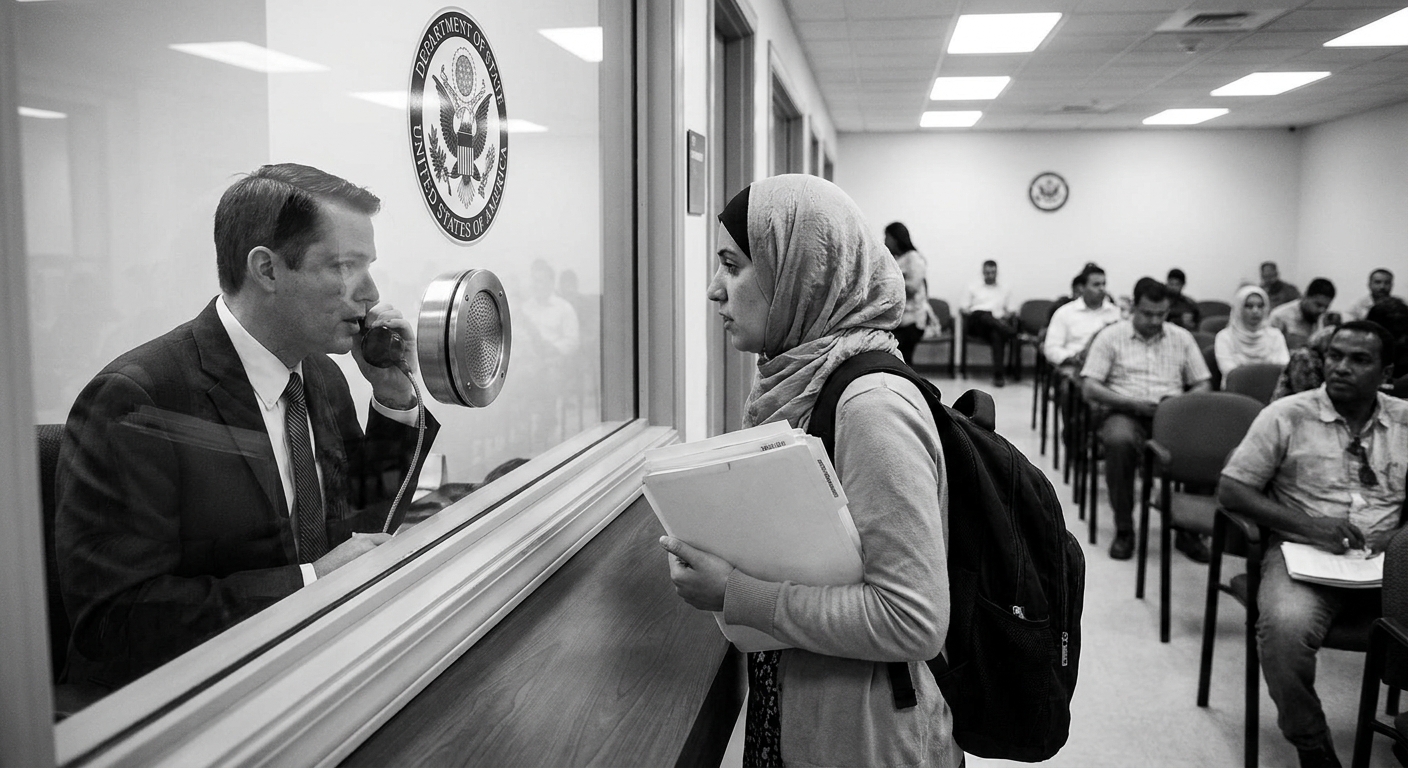
A visa is typically a sticker or foil placed in a passport by a U.S. embassy or consulate abroad. It allows a person to travel to a U.S. port of entry and request admission in a specific category, such as tourist, student, or temporary worker.
- Visa validity is about how long you can use the visa to seek entry.
- A visa can be valid for years, but it does not guarantee you can stay that long after you enter.
What immigration status is
Status is what you have inside the United States after you are admitted. It defines what you can do and how long you can remain.
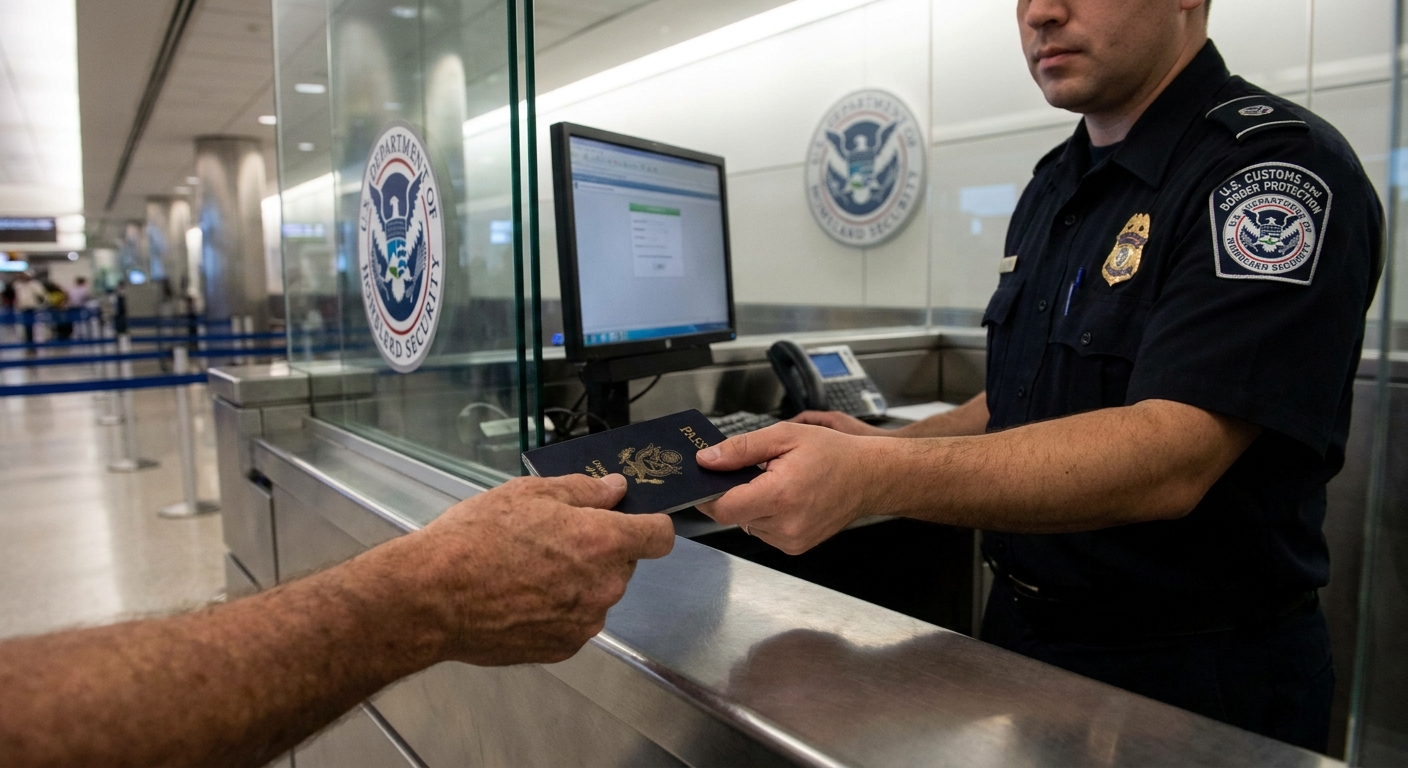
- When you arrive, U.S. Customs and Border Protection admits you in a certain status, or denies admission.
- Your permitted stay is determined by your admission record (your I-94 record and its notation), not by the expiration date on the visa sticker.
- Some categories are admitted until a specific date. Others, notably many F-1 and J-1 admissions, are often marked D/S (duration of status), meaning your lawful stay is tied to compliance with the program rules, not a calendar date.
A concrete example
Imagine a traveler with a B-2 visitor visa that is valid for 10 years. They enter the U.S. today and CBP admits them for 6 months (as shown on the I-94). If they stay 7 months, they may be out of status even though the visa in the passport still looks “valid.”
Why this matters
Two people can hold the same visa type and have different legal realities. One may fall “out of status” by working when not allowed, or overstaying. Another may extend status properly, change to a different status, or later become a permanent resident.
Nonimmigrant vs. immigrant: the two big categories
Most visas fall into one of two buckets.
Nonimmigrant visas: coming temporarily
Nonimmigrant visas are for people who plan to stay temporarily for a defined purpose, such as tourism, study, or time-limited work.
- Common idea: “I am coming for a while, then leaving.”
- Reality: many nonimmigrant paths are truly temporary, but some are used as stepping stones to long-term residence, depending on the category.
Immigrant visas: coming to live permanently
Immigrant visas are for people who plan to live in the United States permanently. Entering on an immigrant visa is typically the final step before becoming a lawful permanent resident (a green card holder). In most cases, the person becomes an LPR upon admission at the port of entry, and the physical green card is produced and mailed later.
- Common idea: “This is the move.”
- Reality: an immigrant visa is often tied to a family relationship, an employment petition, or a special humanitarian category.
The labels are functional, not poetic. They answer one question: is this person being admitted temporarily, or as a future permanent resident?
Tourist and visitor visas: B-1 and B-2
If you have heard of “a tourist visa,” you are usually hearing about the B categories.
- B-2 is generally for tourism, visiting family, and certain medical treatment.
- B-1 is generally for business travel like meetings and conferences.
Visitor activities can be fact-specific. The border between permissible business travel and impermissible work is not always intuitive, and there are narrow exceptions that do not fit neatly into a one-line summary. When in doubt, treat B status as a category for visits, not for performing a job in the U.S. labor market.
What you cannot do on a visitor visa is often the part that surprises people:
- You generally cannot work in the U.S. labor market.
- You generally cannot enroll in a full course of academic study. There are limited exceptions for short recreational classes or other narrow scenarios, but “I can just start school on a visitor visa” is a common and costly misunderstanding.
Visitor status is time-limited. If someone remains after the authorized period, they may become “out of status,” which can trigger serious consequences later even if the person eventually qualifies for a green card.
Student visas: F-1 and M-1
Student routes are among the most common nonimmigrant paths, and also among the most misunderstood.
F-1: academic students
F-1 is used for academic programs, including universities and many language programs. F-1 students must typically maintain a full course of study and follow strict employment rules. Many are admitted for D/S, meaning their lawful stay depends on continued compliance, not a fixed expiration date on an entry stamp.
M-1: vocational students
M-1 is generally for vocational or non-academic programs.
Work rules are category-specific
Some student work is allowed, but it is not a general permission to take any job. The rules turn on the type of work, the timing, and the authorization. This is one reason “I thought it was allowed” can become a life-altering mistake for an international student.

Work visas: temporary categories with very different rules
“Work visa” is not one thing. It is a family of categories with different eligibility standards, timelines, and limits.
H-1B: specialty occupations
H-1B is one of the most well-known temporary work categories. It is used for certain jobs that generally require specialized knowledge and at least a bachelor’s degree or equivalent.
It is also known for one basic fact: it is capped most years. When demand exceeds the number of available slots, selection can depend on a lottery-like registration process. There are also cap-exempt H-1B roles, often connected to certain universities, nonprofit entities, and research organizations, which is why some employers can hire on H-1B without going through the annual cap cycle.
H-2A and H-2B: seasonal and temporary work
- H-2A covers temporary agricultural work.
- H-2B covers certain non-agricultural seasonal or temporary work.
These categories have their own requirements, and they are closely tied to specific employers and time periods.
L-1: intracompany transfers
L-1 can allow multinational companies to transfer certain employees to U.S. offices. The logic is corporate continuity, not a general hiring pipeline.
O-1: extraordinary ability
O-1 is for people who can demonstrate extraordinary ability or achievement in fields like sciences, arts, education, business, or athletics.
E visas: treaty traders and investors
E-1 and E-2 relate to treaty-based trade and investment for nationals of certain countries. Not everyone is eligible, and the details depend on treaty relationships and the facts of the business.
In many temporary worker categories, status is tied to a specific job and employer. That dependency is a legal feature, and it shapes real life. Losing the job can mean losing the status unless another lawful step is taken, often within a limited grace period (and the exact rules vary by category and circumstance).
Exchange visitors: J-1
J-1 status covers many exchange visitor programs, including certain research, training, teaching, and au pair programs. Like F-1, J-1 admissions are often noted as D/S, and compliance is the center of gravity.
One common source of confusion is the two-year home residency requirement that applies to some J-1 participants. When it applies, it can restrict certain future immigration steps unless the person fulfills the requirement or obtains a waiver. This is a classic example of why immigration outcomes can hinge on a small line of text in the record.
Visa waiver travel: ESTA
The Visa Waiver Program lets eligible travelers from certain countries visit the U.S. for short stays without getting a visa, typically after obtaining ESTA authorization. ESTA is not a visa. It is permission to board a plane and seek admission under the program.
The underlying lesson stays the same: admission creates a status, with rules and a time limit, even when there is no visa sticker involved.
Humanitarian paths: not “visas” in the usual way
Some of the most important immigration categories are not “visas” in the typical tourist-student-worker sense. People often mix these up in conversation because the word “visa” becomes shorthand for any lawful presence.
- Refugees are generally processed from outside the U.S. under refugee law and admitted in refugee status.
- Asylees are granted protection after arriving in the U.S. (or at the border) and meeting the legal definition of asylum.
These pathways have their own rules, timelines, and eligibility standards. They are not simply alternate “visitor visas,” and they should not be discussed as if they are.
K-1: the fiance(e) pathway
K-1 is a fiance(e) visa that allows a foreign national to enter the U.S. to marry a U.S. citizen within a required time frame and then apply for permanent residence. It often feels like an immigrant path in practice, but it has its own structure and its own compliance traps. The key point for a reader is simple: it is not a tourist workaround, and it is not a green card by itself.
Caps, backlogs, and why “waiting your turn” can take years
Some visa categories are limited by annual numerical caps set by Congress. Others are shaped by per-country limits or complicated allocation formulas. The result is a reality that feels simple to describe but harsh to live:
- In certain paths, there are more qualified applicants than available visas.
- When visas are limited, backlogs grow and the “line” can stretch for years, sometimes longer depending on the category and country of chargeability.
This is why two statements can both be true: the U.S. admits large numbers of immigrants each year, and also that many people wait an extraordinarily long time for a lawful pathway to open.
The diversity visa lottery: a narrow doorway with high visibility
The phrase “visa lottery” often refers to the Diversity Immigrant Visa program. It is an immigrant visa pathway, not a tourist or student program.
At a high level:
- It is designed to increase immigration from countries that have historically had lower rates of immigration to the United States.
- Selection involves randomization among eligible entries, but selection is not the end. Applicants still must meet the program’s requirements and complete processing.
It draws political attention because it is easy to describe in a sound bite. It also represents only one slice of the overall system.
How visas connect to green cards and citizenship
Here are the three concepts that get mashed together most often.
Visa and status: permission to be here for a reason
A visa and status typically involve a limited purpose and a limited stay. Some people extend or change status, but the legal default is temporary.
Green card: lawful permanent residence
A green card is lawful permanent resident status. It is not citizenship. It does not make immigration law disappear. But it does create a durable legal footing, including the ability to work without employer-based visa sponsorship and the possibility of eventual naturalization.
Citizenship: membership with constitutional weight
Citizenship is a separate legal status, often obtained by birth or through naturalization after meeting statutory requirements. Citizens can vote in federal elections and cannot be deported for ordinary immigration violations. In rare cases, citizenship can be lost through renunciation or certain denaturalization proceedings, but that is the exception, not the rule.
From a constitutional perspective, this is where the conversation sharpens. The Constitution speaks directly to citizenship in places like the Fourteenth Amendment, and it restrains government power in ways that become especially consequential when a person’s right to remain in the country is at stake.
Out of status vs. unlawful presence
These terms sound interchangeable in everyday speech. In law, they can diverge, and the difference can matter.
- Out of status generally means you are no longer complying with the conditions of the status you were granted (for example, unauthorized work, dropping below a required course load, or staying past the authorized period).
- Unlawful presence is a separate legal concept that can trigger specific penalties in some situations, and its counting rules can depend on the category (including whether someone was admitted for D/S).
- Undocumented is a broader, non-technical label people use to describe someone without lawful immigration status, but it does not tell you how the situation happened or what legal consequences apply.
If your goal is clarity, the safest habit is to ask: what is the person’s current status, what does their I-94 say, and are they complying with the rules of that status?
Glossary
- Visa: A travel document placed in a passport that allows a person to seek entry to the U.S. in a specific category.
- Status: A person’s legal classification inside the U.S. after admission, defining what they can do and how long they can stay.
- I-94: The admission record showing a person’s class of admission and how long they are authorized to stay (by date or D/S).
- D/S (Duration of Status): An admission notation commonly used for certain categories like F-1 and J-1, tying lawful stay to compliance rather than a fixed end date.
- Nonimmigrant: A temporary category, such as tourist, student, or many work visas.
- Immigrant: A category intended for permanent residence, usually leading to a green card.
- Lawful Permanent Resident (LPR): A green card holder.
- Naturalization: The legal process of becoming a U.S. citizen after meeting requirements.
- Out of status: When a person no longer complies with the conditions of their admission, such as overstaying or unauthorized work.
- Unlawful presence: A legal concept that can trigger specific penalties in some cases, depending on how it accrues and the person’s circumstances.
- Overstay: Remaining in the U.S. after the period of authorized stay ends (or, in D/S cases, after a status violation that ends the authorized stay under the rules).
- Port of entry: The airport, land crossing, or seaport where a person asks to be admitted to the U.S.
- Cap: A numerical limit on how many visas or statuses can be issued in a category each year.
FAQs
Is a visa the same thing as a green card?
No. A visa is typically permission to seek entry for a specific purpose. A green card is lawful permanent resident status.
Can you have a valid visa and still be in the U.S. illegally?
Yes. A visa can be unexpired while someone is still out of status inside the U.S., depending on their authorized period of stay (including D/S rules) and compliance with the conditions of admission.
Does a visa guarantee you can enter the United States?
No. A visa generally allows you to request admission. Final admission decisions are made at the port of entry.
Why do people talk about “lotteries” for visas?
Because some pathways are oversubscribed. The diversity visa program uses random selection among eligible entries. The H-1B process also can involve a lottery-like selection when demand exceeds the cap.
Can a student visa holder work in the U.S.?
Sometimes, in limited ways and under strict rules. Student work authorization is not the same as open permission to take any job.
Can a nonimmigrant visa lead to a green card?
Sometimes, depending on the person’s circumstances and the category. Many people follow lawful pathways from temporary status to permanent residence, but it is not automatic and it is not available to everyone.
Is citizenship just a “better green card”?
No. Citizenship is a different legal status with different rights and protections, including voting in federal elections and a stronger constitutional footing against removal.
The civic takeaway
Visas are not merely paperwork. They are legal categories that determine whether a person can work, study, reunite with family, or build a permanent life. And the system’s complexity has a political consequence: when citizens cannot distinguish a visa from status, or temporary stay from permanent residence, policy debates become arguments about shadows.
The Constitution does not design the visa categories. Congress largely does, through statutes, and agencies implement them. But constitutional principles still matter because they set boundaries on government power and shape what “due process” means when the government decides who may enter and who must leave.
If you want a more informed immigration debate, start here: separate the key from the door, the sticker from the status, and the promise of entry from the reality of life once you are admitted.