
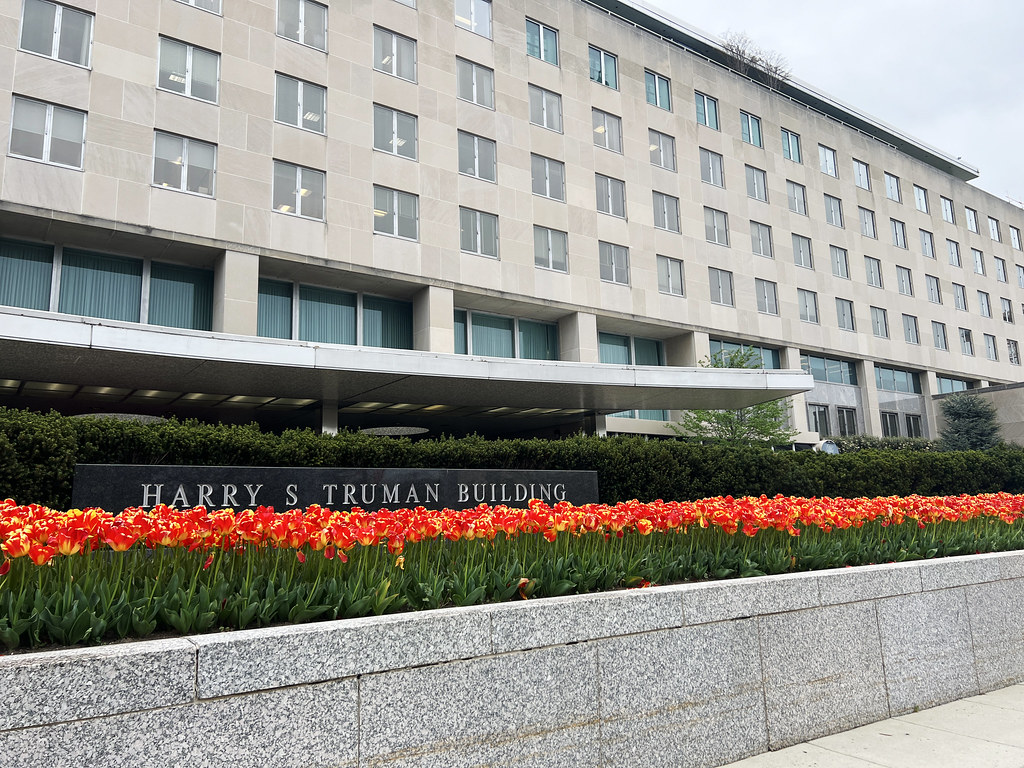
The State Department says it has revoked more than 175,000 visas since President Donald Trump took office in January 2025. In its public statement, the Department described revocations involving people who “violated the terms of their visas, committed crimes, called for violence against U.S. citizens, defrauded Americans, abused our immigration system, or endangered national security.”
Those are big numbers, and they raise a very practical civic question: Who actually has the power to cancel a visa, and what can a court do about it if someone believes the government got it wrong?
Join the Discussion
What revoking a visa means
A visa is best understood as permission to seek entry to the United States for a particular purpose and time period. It is not the same thing as citizenship, and it is not even the same thing as lawful status once a person is already inside the country.
That distinction matters because visa revocation can happen in different moments and different ways:
- Before travel: A consular post can revoke a visa so it can no longer be used to board a plane and present for admission.
- After entry: A person may still face immigration enforcement if their conduct makes them removable, but that is usually handled through separate processes.
In plain terms: revoking a visa takes away a travel and entry privilege. Whether the person can remain in the U.S. can become a second, separate question depending on their circumstances.
Where the power comes from
When readers ask, “Is this constitutional?” I start with a helpful anchor: immigration and foreign affairs are areas where Congress and the President share authority, and the courts have historically given the political branches wide breathing room.
Visa cancellation is mostly an executive function carried out through the State Department and, at the border, through the Department of Homeland Security. The legal foundation comes from federal immigration statutes passed by Congress that authorize visa issuance and revocation, and from the President’s Article II responsibilities in foreign relations and national security, implemented through the executive agencies.
Why revocation is treated differently
A visa decision is not just paperwork. It sits at the intersection of:
- Border control (who may enter),
- Foreign policy (how the U.S. engages other nations), and
- Public safety (screening and enforcement).
That combination is exactly why courts often treat visa decisions as a domain where the executive branch has broad discretion, as long as it is acting within the authority Congress has granted.
What the State Department cited
In the same statement announcing the total, the State Department said: “The majority of these visas were revoked due to law enforcement encounters for a range of criminal activity, with assault, driving under the influence, theft, and drug crimes being the leading causes.” It also said a “significant share” involved reckless driving, sexual assault, child abuse, fraud and embezzlement, and other crimes.
The Department described examples tied to serious allegations, including charges involving sexual violence, trafficking, child sexual abuse material, and large-scale fraud. It also highlighted a case in which a U.S. embassy in North Africa revoked over 100 visas connected to “birth tourist” parents who traveled to the U.S. primarily to give birth so their children would get U.S. citizenship.
It is worth pausing here for a library-style reminder: “charged” is not the same as “convicted.” But visa law does not always wait for a criminal conviction. In many contexts, the government may act on arrests, charges, credible information, or a person’s conduct if it concludes the person has violated visa terms or falls within a statutory inadmissibility ground.
Birth tourism and the legal backdrop
The “birth tourism” example sits inside a larger fight over what the federal government can do, and cannot do, to limit citizenship-by-birth outcomes through immigration enforcement tools.
The Supreme Court recently upheld birthright citizenship in a 5-4 ruling. In response, President Trump pursued other avenues aimed at limiting birth tourism. The administration issued executive orders that narrowed the scope and targeted future births in four categories:
- Either parent of that person is an alien enemy, defined to include any member of a designated Foreign Terrorist Organization.
- Either parent is a foreign government employee working on behalf of a foreign government.
- Person is born in a territory or territorial waters of the United States where citizenship is not conferred by Federal statute.
- The entry of any foreign national into the United States via a nonimmigrant visa for the purpose of giving birth on American soil, or any effort by any foreign national to facilitate the entry of any foreign national into the United States via a nonimmigrant visa for the purpose of giving birth on American soil.
The Department of Justice also vowed to tackle birth tourism after the Supreme Court’s decision. Attorney General Todd Blanche put the broader point this way: “There’s more that DHS can do and the federal government can do in the visa process and the application process to try to minimize or limit the opportunity of folks coming here not to visit, not to do what they say they’re going to do on their Visa, but just to have a baby that can be a U.S. citizen.”
Separately, estimates about the number of children who have been the result of birth tourism range from the low thousands to the tens of thousands.
What courts can review
When people hear “175,000 revocations,” the next question is often: Can someone sue? The honest answer is: sometimes, but often with major limits.
The big barrier
A longstanding doctrine often called consular nonreviewability means that when a consular officer makes a visa decision abroad, courts generally do not re-litigate that decision the way they might review other agency actions.
The logic is institutional: visa decisions are deeply tied to foreign affairs and national security, and Congress has given the executive branch significant discretion in this space.
What courts may still consider
Even in a system with strong deference, courts can sometimes review legal and constitutional boundaries. Examples of issues that may be heard include:
- Whether the government acted within the authority Congress granted, especially if a plaintiff can point to a concrete statutory limit that was ignored.
- Whether a U.S. citizen’s constitutional interests are implicated, such as certain family-based claims. Even there, review is typically narrow and focused on whether the government offered a facially legitimate reason.
- Procedural or jurisdictional questions where Congress has allowed review, such as certain removal or detention issues, which are related but not identical to visa revocation.
What courts rarely do
What courts generally do not do is second-guess the executive branch’s judgment call about:
- how risky a person is,
- how credible certain information is, or
- whether issuing or keeping a visa is wise as a policy matter.
That kind of balancing is usually treated as political-branch territory, not a judicial task.
The civics takeaway
If you remember only three things, make them these:
- A visa is a privilege tied to entry and purpose, not a guarantee of admission and not a permanent right to remain.
- The executive branch has broad statutory authority to revoke visas, especially when the government believes visa terms were violated or public safety and national security concerns are present.
- Courts play a limited role in reviewing many visa decisions, particularly those made by consular officers abroad, though constitutional and clear legal boundary questions can still matter in the right case.
In other words, visa revocation is one of the clearest examples of how U.S. government power can be both law-governed and highly discretionary, with the judiciary serving as a backstop in select circumstances rather than a full appeals court for visa judgments.
Quick questions
Can a visa be revoked for an arrest?
It can. Visa law often allows action based on the government’s assessment of conduct, risk, or visa violations, even if a criminal case is ongoing. The exact legal hook depends on the visa category and the statutory ground invoked.
Does revoking a visa automatically deport someone?
Not automatically. Deportation, or removal, typically involves separate procedures. But the facts that lead to revocation can also trigger removal proceedings or other immigration consequences.
Is there an appeal?
Some decisions have internal review or reconsideration mechanisms within the executive branch. Judicial review exists in limited settings, but for many consular visa decisions abroad, the pathway into court is narrow.