
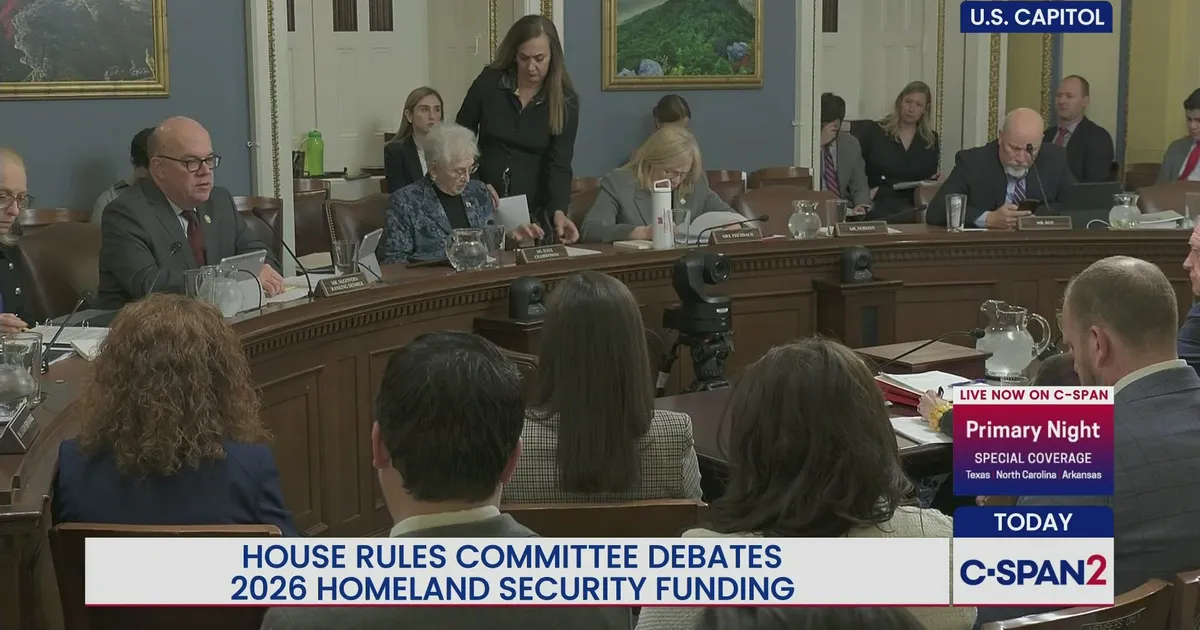
A House Republican deal to renew and revise Section 702 of the Foreign Intelligence Surveillance Act is hitting its first major procedural hurdle: the House Rules Committee. The committee decides what reaches the floor, how debate is structured, and which amendments are allowed. Lawmakers expected to be central to that stage include Reps. Andy Biggs, Barry Moore, Thomas Massie, and Mark Harris.
That might sound like inside baseball. But with Section 702, procedure can shape the outcome. Depending on how the floor rule is written, the House could see a wide amendment debate, a narrow set of permitted changes, or something closer to an up-or-down vote on the underlying measure.
Congress is back at a familiar fork: reauthorize Section 702, reauthorize it with tighter limits, or let it lapse. The immediate fight is over the Rules Committee step. The broader question is constitutional and practical: how much incidental collection of Americans’ communications, and how much later searching of that data, the country is willing to tolerate without a traditional warrant.
Join the Discussion
Why Rules matters
The Rules Committee is the gate between a negotiated agreement and a floor vote. It sets the terms of debate and determines which amendments are in order.
In contentious fights, that lever can matter as much as the bill language. A tighter rule can limit the range of amendments that get a vote. A more open rule can expand the number of proposals members can force onto the floor and into recorded votes.
The involvement of Biggs, Moore, Massie, and Harris signals that the Rules stage may become an early pressure point for members who want changes to the reauthorization package, or who want recorded votes that draw clearer lines between a straight extension and reform-focused alternatives.
What happens next
The next step is the Rules Committee deciding the floor rule for the Section 702 legislation. That decision will determine how long debate lasts and whether members can offer amendments that add, remove, or tighten privacy-related guardrails.
If the committee reports a restrictive rule, the House could move faster with fewer amendment votes. If it reports a more open rule, the reauthorization effort could slow as lawmakers test where the votes actually are on warrants, query limits, and oversight changes.
Until the rule is set, any predictions about the House floor path should be treated as conditional. In recent surveillance fights, leadership has sometimes tried to manage the floor process tightly, but the Rules Committee can also become the place where competing blocs force debates that would otherwise be avoided.
What Section 702 does
Section 702 authorizes foreign-intelligence collection aimed at non-U.S. persons located abroad, without an individualized warrant for each target.
Instead of the classic search-warrant model, the government operates under court-approved targeting and minimization procedures. The Foreign Intelligence Surveillance Court reviews those procedures rather than approving a warrant for each person the government targets.
That structural difference sits at the heart of the controversy. It changes what oversight looks like, and it changes the practical experience for Americans whose communications can end up in the same stream as a foreign target.
Incidental collection
Most people hear “foreign intelligence” and picture someone else. Someone overseas. Someone outside the Bill of Rights.
Section 702 was designed to fit that category. But the friction has always been in the spillover. If you are an American emailing your cousin in Jordan, texting a business partner in Berlin, or sitting in a group thread with one person overseas, your messages can be swept into a system that is not built around probable cause and a traditional Fourth Amendment warrant.
When the government targets a foreigner abroad, Americans’ communications can be collected incidentally. The term is legal. The effect is predictable in a world where international communication is routine.
For civil-liberties critics, the concern is not only collection in the moment. It is what can happen after the data is stored.
- Retention: how long the government keeps what it gathered.
- Use: whether the information can be used beyond foreign intelligence.
- Searching later: whether agencies can later look through stored data using an American’s identifier, a practice often called a “backdoor search.”
What reform can include
Reform proposals vary, but most debates orbit the same pressure points. In practice, lawmakers often fight over whether reauthorization comes with stronger limits on how U.S.-person information is handled once it is incidentally collected.
- Warrants for U.S.-person queries: requiring judicial approval before searching collected data using an American’s identifier.
- Tighter minimization and retention: reducing how much U.S.-person information is kept and for how long.
- Narrower query purposes: limiting the reasons agencies can search within 702 repositories.
- More transparency: expanded reporting on how often Americans’ identifiers are used and under what circumstances.
Supporters of reform generally frame these as guardrails that bring the authority closer to a Fourth Amendment baseline built around individualized suspicion and judicial oversight. Opponents often argue that added hurdles can slow time-sensitive intelligence work.
If Congress does nothing
An expiration date can sound like a clean stop. In practice, sunsets can be complicated.
If Section 702 lapses without reauthorization, the government would lose that specific statutory authority for new 702 collection. But several realities would still shape what happens next.
1) Existing data remains
Information already collected under lawful authority does not automatically disappear when a statute expires. Questions about retention and later querying can become their own legal and political disputes.
2) Other tools remain
Even without 702, the government has other authorities for foreign-intelligence collection. Those options can be narrower, slower, or more process-heavy, but a lapse would not end intelligence gathering. It would change how it is done.
3) The constitutional argument remains
Whether incidental collection and later searching of Americans’ communications is “reasonable” does not vanish when Congress misses a deadline. The underlying dispute remains, and any replacement framework will still have to grapple with it.
Why this moment matters
Because Section 702 is both powerful and politically charged, House leaders and factions often treat the floor process as a battleground of its own. The Rules Committee is where that effort can hold, or where it can start to fracture.
If the committee advances a rule that limits amendments, the House could move quickly while leaving some members with fewer opportunities to push additional guardrails. If the rule allows broader amendments, the House could be forced into a more explicit, recorded debate over warrants, backdoor searches, and how to treat Americans whose communications are caught up in foreign targeting.
Either way, the near-term test is procedural. The stakes are substantive.
The bottom line
The Fourth Amendment does not forbid intelligence gathering. It forbids unreasonable searches and seizures. The country has spent decades arguing about what “reasonable” means in a world of modern networks, large-scale collection, and cross-border communications where Americans are often in the stream.
The Rules Committee hurdle is not just a scheduling note. It is the point where the House can determine, in practice, whether a Section 702 deal becomes a straight reauthorization, a reauthorization with meaningful limits, or a package that reaches the floor with little room for change.
If Congress fails to reauthorize or reform Section 702, one point tends to become clear quickly: expiration does not automatically equal privacy. Surveillance authorities rarely disappear. They often migrate, narrow, expand, or reassemble under different rules.