
When an armed person rushes a high-profile political event, our first reaction is usually a mix of fear and disbelief. The second reaction, if we are honest, is often to reach for a simple explanation: “He was crazy,” or “He was evil,” or “That is just what politics is now.”
Those reactions are understandable. They are also incomplete. Incidents like this do not come from nowhere. They tend to grow in environments where people feel unheard, boxed out, and convinced that ordinary channels of accountability no longer work.
Details aside, the incident at the WHCA dinner prompted a familiar civic question: what happens when people start to believe there is no lawful path left to be heard?
Join the Discussion
The thread
In a thread about the armed man who rushed the WHCA dinner, one commenter, @espiers.bsky.social, put the underlying fear into plain language: This guy is indicative of people who are anti Trump not having a voice because Congress and SCOTUS have enabled Trump to obliterate any recourse they have when he does horrible things.
I am quoting that not to validate harmful behavior, but to name a civic emotion many Americans recognize: the sense that there is no lever left to pull.
What this feeling can do
When people conclude that lawful methods do nothing, some will start looking for unlawful ones. That is not a claim about any one person’s inner motives. It is a broader pattern worth taking seriously, because it is the kind of pressure a constitutional system is meant to relieve.
The point is not that the law always delivers the outcome we want. The point is that it is supposed to deliver recourse, a credible path for disagreement and accountability that does not require dangerous disruption.
What the Constitution promises
The Constitution is not a guarantee that every election result will feel fair to every voter, or that every policy will be reversible on a schedule we like. What it does attempt to guarantee is something more basic: that power can be checked, challenged, and changed without people taking matters into their own hands.
That is why our structure matters. Not just rights on paper, but pathways in real life.
- Congress is meant to be a counterweight to the president, not a spectator.
- Courts are meant to enforce legal limits, not to function as a permanent political referee for one side.
- Elections are meant to be recurring opportunities for peaceful change, not the only moment when public opinion counts.
When any of those pathways feel blocked, people can experience something like civic claustrophobia. That feeling is dangerous, even when the person feeling it is otherwise rational. It is also a warning sign we should take seriously.
Recourse is many levers
In everyday life, when someone says “there is nothing I can do,” it often helps to slow down and get specific: What outcome are you trying to change? Who has the legal authority to change it? What is the next closest pressure point?
That same approach helps here. “Recourse” in American civic life is rarely one dramatic action. It is usually a set of smaller, lawful mechanisms that work slowly and sometimes unevenly:
- Oversight and investigations by Congress, including hearings, subpoenas , and budget leverage.
- Litigation by states, organizations, or individuals when a policy violates statute or constitutional protections.
- State and local power, including state attorneys general, governors, legislatures, and election administrators.
- Organizing and voting in primaries, local elections, and off-year races that often determine who holds real institutional power.
- Speech and press freedom, including peaceful protest, petitions, and sustained public documentation.
None of these tools is as emotionally satisfying as a single decisive moment. But that is the point. The system was designed to channel conflict into processes, not flashpoints.
Speech is protected
One reason armed incidents and other dangerous disruptions are so corrosive is that they poison legitimate speech. They give officials an excuse to treat dissent as a security threat, and they make everyday people afraid to participate in public life.
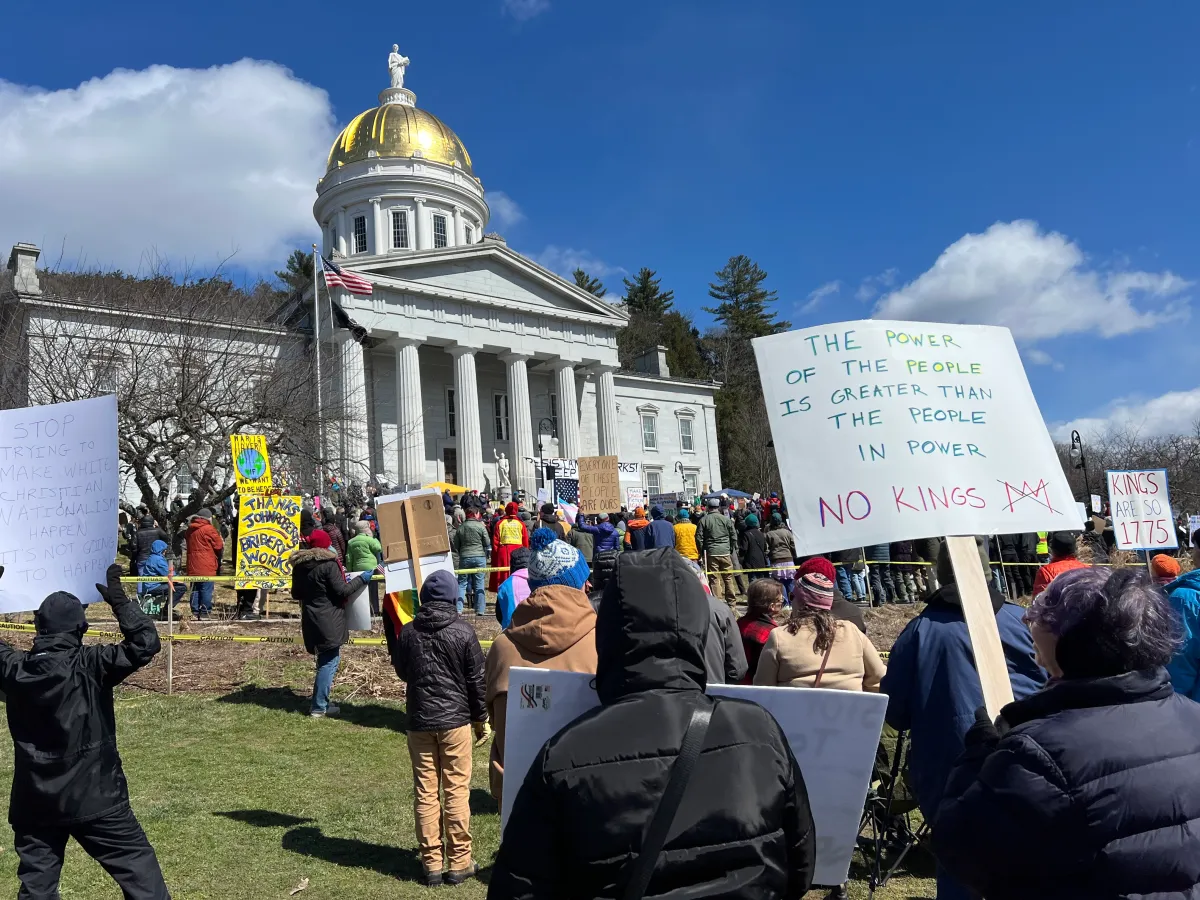
The First Amendment protects a wide range of expression, including harsh criticism of leaders. It does not protect violence or attempts to intimidate others into silence. If anything, intimidation is the abandonment of speech. It is the decision to replace persuasion with fear.
A calm takeaway
Here is the civic lesson I hope we can hold onto, even when emotions are running high: when people feel they have no lawful path to be heard, the risk of dangerous incidents rises. The answer is not to romanticize that danger. The answer is to widen lawful pathways and make them real.
That is a responsibility shared across institutions and across neighbors:
- Officials should treat oversight, transparency, and clear ethics rules as democratic maintenance, not partisan theater.
- Courts should be mindful that legitimacy is not just about outcomes, but about consistent, principled constraints on power.
- The rest of us should keep practicing the slow habits of self-government, especially at the local level where change is most reachable.
Political intimidation is not inevitable. But it becomes more likely when people stop believing in peaceful recourse. A constitutional culture is, at its heart, a culture that keeps recourse available and keeps it credible.