
On Election Day, democracy does something unusual: it invites the public to watch itself work.
That visibility is a feature, not a flaw. Transparent procedures can be harder to manipulate and easier to trust. But the same public access that supports accountability can also be misused. The law draws a line between observing an official process and interfering with a citizen’s right to vote, a line shaped by state election rules and bounded by federal constitutional and civil-rights protections.
This is where vocabulary matters. “Election observer,” “poll watcher,” and “challenger” are often used interchangeably in headlines, but they are not the same role. The rules governing them are mostly state law, filtered through federal protections against discrimination, intimidation, and unequal treatment. Because those state rules vary widely, the best practice is always to check the specific guidance for the state and county where you are voting or observing.
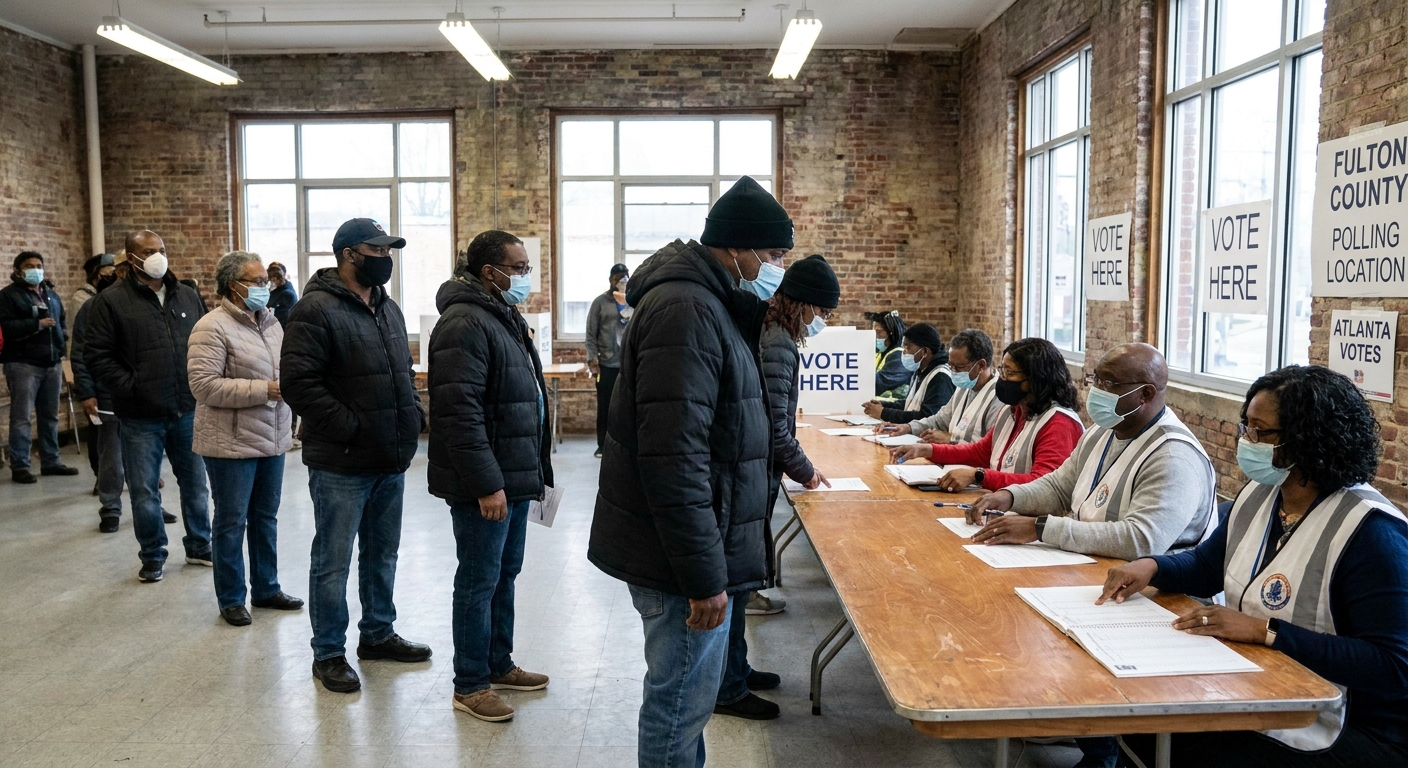
Join the Discussion
Three roles, three rule sets
At most polling places, you will encounter some combination of these categories. The labels differ by state, but the underlying functions are consistent.
Election observers
“Observer” is the broadest term. It can include members of the public (where allowed), nonpartisan civic organizations, media observers, approved monitors, and, in some jurisdictions, international delegations. When international visitors are present, it is typically by invitation or approval of state or local election officials and subject to the same conduct limits as other observers.
The core idea is to watch procedures, not individual voters. In some states, observation from inside the polling place is limited to credentialed categories only, while the general public may be restricted to designated areas or excluded from the voting room entirely. The details matter: where an observer can stand, whether they must sign in, whether they can take notes, and what they are forbidden to record.
Poll watchers
“Poll watcher” usually means a person designated by a political party, candidate, or ballot question committee to observe from inside the polling place or another controlled election facility. Poll watchers are typically credentialed, and they often have a defined right to be present for key steps like check-in, ballot issuance, and closeout procedures, subject to space limits and voter-privacy rules.
The flip side is also typical: because poll watchers receive access that ordinary members of the public often do not, states commonly impose strict conduct rules. The purpose is the same everywhere: voters must be free from pressure while voting.
Challengers
A “challenger” is not just watching. A challenger is empowered by state law to raise an eligibility challenge about a voter, usually at the moment the voter appears to vote. In many states, that authority is limited to specific statutory grounds such as residency, identity (where state law ties identity to eligibility or the voting process), whether the voter has already voted, or party affiliation in a primary. Some states also reference citizenship as an eligibility criterion, but polling-place challenges based on citizenship are typically constrained, highly state-specific, and often handled at registration rather than at the check-in table.
Because challenging directly affects the voter experience, states usually regulate it more tightly. Some states allow challenges only by certain officials or within narrow windows. Others permit party-appointed challengers but limit how, when, and on what basis a challenge can be made.
Why states differ
The Constitution sets the broad architecture, but the day-to-day mechanics of elections are largely left to the states.
Article I, Section 4 (the Elections Clause) gives states the power to set the “Times, Places and Manner” of congressional elections, subject to congressional override.
The 10th Amendment reinforces that states retain general police powers and administrative authority over elections not specifically preempted by federal law.
The 14th and 15th Amendments, along with later voting-rights amendments, constrain states from running elections in ways that violate equal protection or discriminate in voting.
That combination produces the system we have: states write most polling-place rules, and federal constitutional law draws boundary lines when those rules burden protected rights or discriminate.
Credentials and access
A common point of confusion is who “authorizes” a watcher. It is rarely the watcher themselves, and it is rarely a national party in any direct sense. It is usually a chain that runs through state law to a local election authority.
Common credentialing models
Appointment by a party or candidate. A county party chair, candidate committee, or campaign may file a list of designated watchers.
Appointment by a civic organization. Some states allow nonpartisan groups to apply for observer status.
Official status by job function. Some “observers” are actually roving election officials, inspectors, or auditors, with access based on employment and training.
Government monitors. In limited circumstances, federal personnel (including Department of Justice observers under federal voting-rights authorities) may be present where law permits and where required approvals or court orders exist. Their role is distinct from private poll watchers.
What credentials usually look like
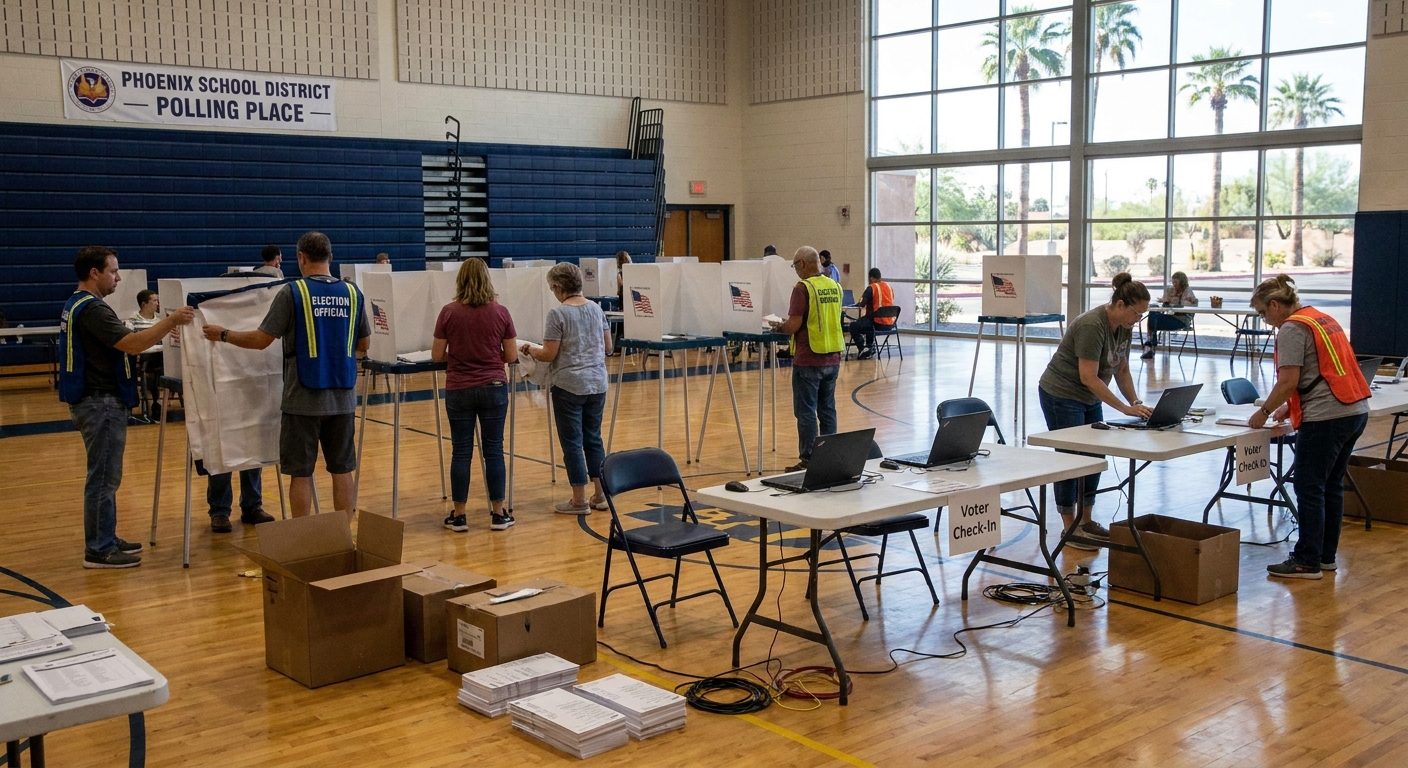
States and counties often require a badge, letter of appointment, or certificate. Some require observers to check in, take an oath, or attend training. Many cap the number of watchers per party or per polling location, because a polling place is not a public square. It is a controlled site designed to move voters through a process efficiently and privately.
If a person cannot produce the required credential when asked by the chief poll worker or election judge, they may be removed under applicable state or local rules. In some places, separate rules may apply to credentialed media or to public observation from designated areas.
What observation usually allows
State rules differ, but lawful observation tends to share a pattern: you can watch processes, you cannot interfere with people.
Commonly permitted
Watching check-in procedures from an approved distance.
Taking written notes about procedures.
Observing the opening of the polls and the closing reconciliation process.
Reporting concerns to the polling-place supervisor through established channels.
Commonly restricted
Approaching voters inside the polling place. Many states prohibit watchers from talking to voters in the voting room.
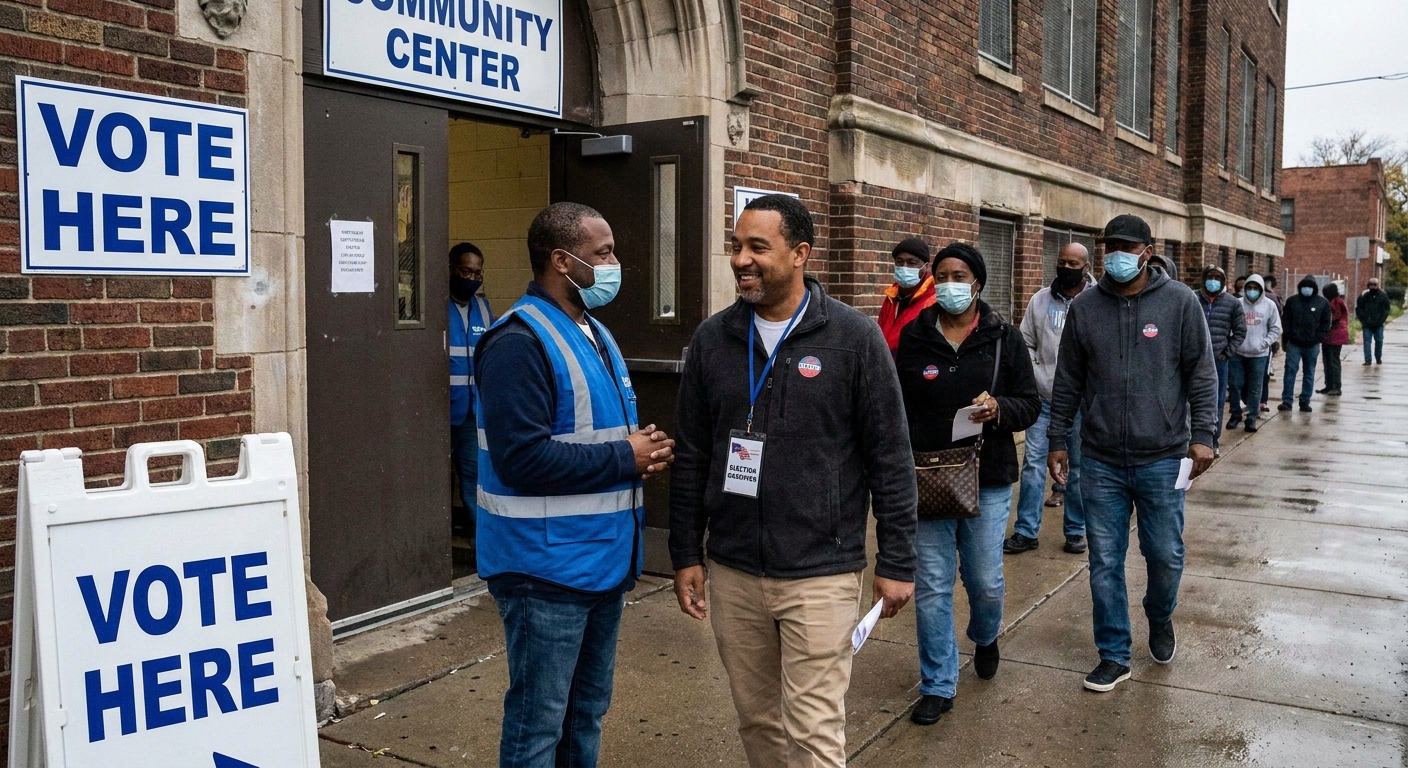
Approaching voters within the outside buffer zone. Many jurisdictions enforce a no-electioneering or restricted-activity zone near the entrance where interaction, signage, and campaigning are limited. The size and enforcement vary by state.
Handling election materials. Touching poll books, ballots, ballot scanners, or voting machines is typically forbidden.
Recording identifiable voter information. Photographing or writing down personal identifying details is often prohibited.
Photography or video. Some states allow limited recording, many prohibit it inside the polling place, and most prohibit recording that captures voters marking ballots or reveals private choices.
The guiding concept is ballot secrecy. Observation is meant to support public confidence without weakening the voter’s right to cast a ballot without surveillance.
Electioneering vs observation
Readers often conflate the two. Observation is about watching officials follow procedures. Electioneering is advocacy: persuading voters, displaying campaign signs, handing out literature, or wearing apparel that a state treats as campaign material inside the polling place.
States commonly restrict electioneering near polling places, and the Supreme Court has upheld buffer zones in principle, including in Burson v. Freeman (1992), recognizing a compelling interest in protecting voters from confusion, undue influence, and intimidation. That does not mean every rule is the same everywhere, but it does explain why “but it’s public property” is not a universal answer at the polls.
When “watching” becomes intimidation
If election observation were only about standing quietly in a corner, we would not need this article. The hard part is that intimidation can be both overt and subtle, and the law addresses both. Federal protections against voter intimidation and unequal treatment can be triggered by conduct that chills voting, including under civil-rights statutes that prohibit intimidation, threats, or coercion in connection with voting.
There is no First Amendment right to pressure voters while they vote. A polling place is not an open microphone environment.
Examples that can cross the line
Confronting voters. Questioning them about eligibility, citizenship, criminal history, or address in a way that is not part of a formal, lawful challenge process controlled by election officials.
Following or hovering. Trailing voters, standing close enough to be physically imposing, or positioning oneself to block movement.
Targeting protected groups. Singling out voters based on race, language, disability, or perceived national origin can trigger federal voting-rights concerns, even when framed as “fraud prevention.”
Weapon displays. Even where open carry is generally legal, many jurisdictions restrict firearms at polling places, and armed “security” behavior can be treated as intimidation depending on state law and circumstances.
Misrepresenting authority. Claiming to be law enforcement, an election official, or a government investigator when you are not.
Mass challenges without individualized grounds. In some jurisdictions, challenges based on generalized suspicion or bulk lists without voter-specific, credible information are restricted or disallowed by statute or administrative rule. Where permitted, challengers are commonly required to state a specific, legally recognized basis for each challenge.
The constitutional north star here is simple: the voter’s right to cast a ballot must be meaningful. If the environment is coercive or threatening, the right is functionally impaired even if the doors are technically open.
How a voter challenge works
Challenging a voter is one of the most regulated actions that can happen in a polling place, for obvious reasons. Done properly, challenges can be part of maintaining accurate voter rolls and lawful participation. Done abusively, they can become a form of gatekeeping.
Typical steps
Details vary, but many states follow a basic sequence:
A challenge is made on a permitted ground. The challenger states a reason recognized by law, not a hunch.
Election officials control the process. The poll worker or election judge asks the required questions or requests allowed documentation.
The voter is offered a path to vote. This often includes casting a regular ballot if the issue is resolved, or a provisional ballot if it is not.
The dispute is documented. Many states require forms, logs, or sworn statements.
Post-election verification occurs. For provisional ballots, officials later determine whether the ballot counts based on statutory criteria.
Notice what is missing: the challenger usually does not “decide” anything. Their role is to trigger a review. The decision remains with election officials and, if escalated, with courts.
Who runs the room
Election administration is intentionally hierarchical because on-the-spot conflict is predictable. Most states empower a chief judge, lead poll worker, inspector, or site supervisor to keep order and apply rules.
Typical chain of command
Polling-place supervisor handles immediate conduct issues, observer placement, and routine disputes.
County or municipal election office provides guidance, sends roving troubleshooters, and documents incidents.
State election authority issues directives and statewide rules, and can coordinate responses to widespread problems.
Law enforcement is often a last resort inside polling places. In some jurisdictions and in many operational policies, routine police presence is limited or handled cautiously to avoid chilling participation, though the legal rules and practices vary.
If a watcher believes a rule is being violated, the lawful move is not to “correct” it personally. It is to report it up this chain. Observers are there to document and report process concerns, not to direct voters or manage the site.
From complaint to court
Most polling-place disputes never become lawsuits. They become incident reports. But it helps to understand the escalation ladder.
Common steps
Immediate correction. A poll worker adjusts a procedure, repositions an observer, or clarifies a rule.
Documentation. The incident is logged. Names, times, and actions matter.
Administrative review. The local election board reviews complaints and may refer issues for enforcement.
State enforcement. Some conduct is a state election offense or misdemeanor.
Federal involvement. Allegations of intimidation or discrimination can implicate federal civil rights laws and draw Department of Justice attention.
Litigation. Courts may be asked for emergency relief in real time, especially regarding polling-place access, observer rules, or whether certain ballots should be counted.
Courts tend to be cautious about rewriting election procedures at the last minute, but they will intervene where a clear legal violation threatens constitutional rights or statutory protections.
Observation beyond Election Day
Many of the most consequential observation rules apply outside the polling place itself, during absentee and mail ballot processing, signature verification where used, tabulation, and post-election canvassing. States often treat these as separate observation environments with separate credentialing, distance rules, and recording restrictions.
If you are looking for “where observers actually are,” it is frequently in these counting and processing rooms. The same principle applies: watch the process, do not interfere with the people doing it, and do not compromise voter privacy.
How to check local rules
Because the details are so state- and county-specific, verification is part of responsible observation.
Start with your county election office. Many publish poll watcher guidelines, facility-specific rules, and Election Day contact numbers.
Check the state election authority site. Look for administrative rules, observer manuals, and electioneering or buffer-zone guidance.
Ask where observers may stand. The single most common conflict is distance and placement.
Save the official help line. If you are credentialed, many jurisdictions provide a watcher hotline or a supervisor contact for real-time issues.
Practical boundaries
The best universal advice is not partisan. It is procedural.
If you are observing, know the local rulebook. County election offices often publish watcher guidance that is more detailed than state statutes.
Assume distance requirements are strict. Many disputes are really about where someone is standing.
Do not create your own “audit.” Voter eligibility questions and equipment concerns must go through election officials.
Do not record voters in a way that identifies them. Even when video is allowed, it can become unlawful intimidation if it captures faces, ballots, or private information.
Remember the purpose of the room. A polling place exists to let citizens vote efficiently and privately. Everyone else is a guest in that process, including watchers.
Well-run observation strengthens confidence. Bad-faith “observation” is not a label you have to guess at. It is usually visible in behavior: quiet documentation versus personal confrontation, process oversight versus voter targeting, reporting concerns versus trying to control the room in real time.
The legal bottom line
The Constitution does not contain a neat clause that says, “Poll watchers may stand six feet from the check-in table.” That is not how election law works. It is mostly statutory and administrative, and it changes by state.
But the law does set outer boundaries. States can structure observation to promote integrity, and they can restrict conduct that chills the right to vote. Transparency is not a license to intimidate, and participation is not conditioned on passing a gauntlet of private interrogators.
The polling place is one of the few places in American life where the government’s obligation is not just to allow speech, but to protect a citizen’s ability to act freely. Voting is that act. Everything else is secondary.