
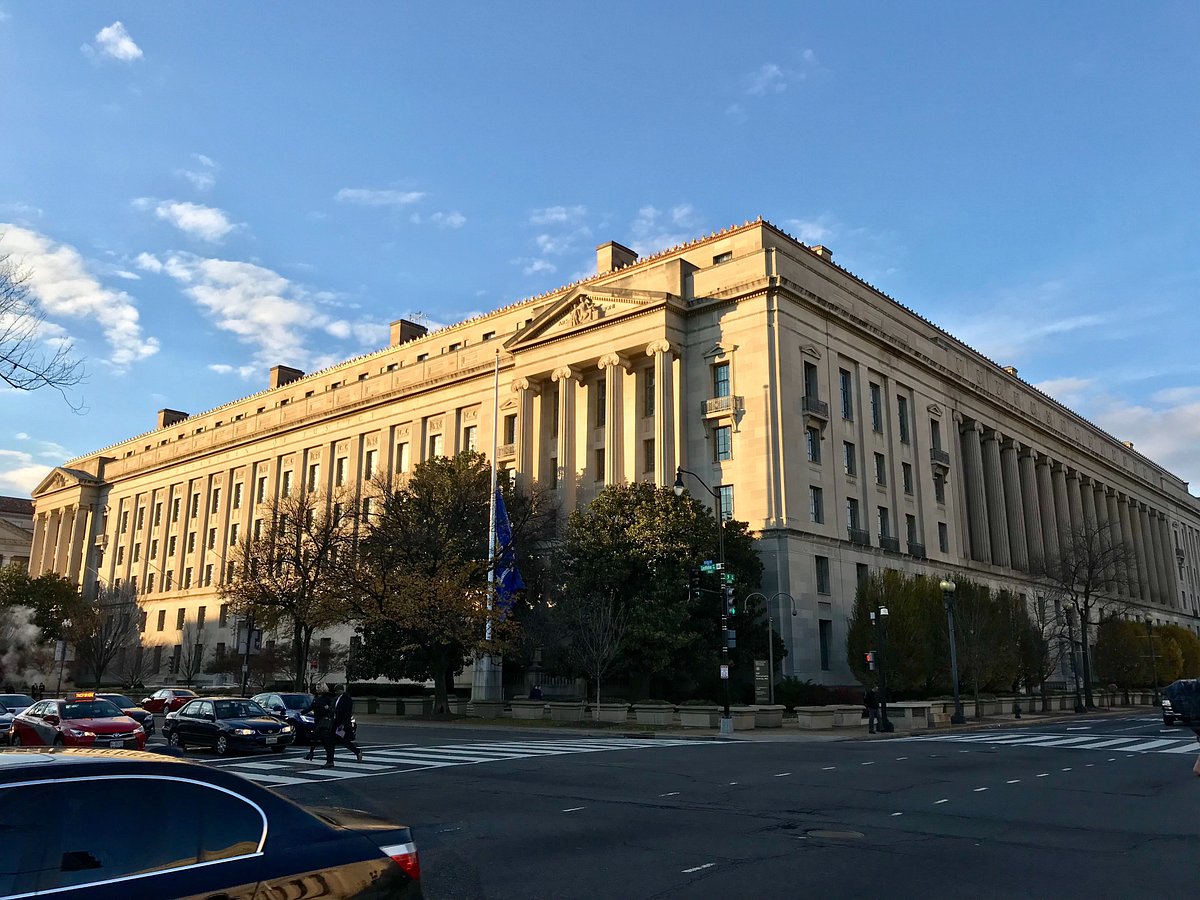
When the Department of Justice releases “religious liberty guidance,” it is not passing a new law. It is issuing an internal policy document that tells executive branch lawyers and program officials how DOJ believes the Constitution and federal statutes should be applied before the next lawsuit forces the issue.
This explainer discusses the Department of Justice’s Religious Liberty Guidance, issued by the Office of the Attorney General on October 6, 2017. It matters in day-to-day governance because it pushes agencies and DOJ components to surface religious liberty issues earlier in rulemaking, employment decisions, and grant administration, and to align routine decision-making with Supreme Court doctrine.
Join the Discussion
What this guidance is (and what it is not)
DOJ guidance is an internal road map. It does not amend the First Amendment. It does not repeal regulations. It does not bind courts the way a Supreme Court decision does.
It does matter because DOJ lawyers advise across the executive branch, and because many federal entities make thousands of discretionary decisions that can burden or accommodate religious practice, including:
- writing and enforcing workplace policies for federal employees
- deciding conditions on federal grants and contracts
- investigating complaints and choosing enforcement priorities
- drafting regulations that shape who qualifies for benefits and how services are delivered
One important scope note: unless a specific memo expressly applies government-wide, DOJ cannot automatically command independent agencies. So it is more accurate to think of this guidance as shaping how DOJ and executive branch agencies approach religious liberty questions, and how DOJ will likely evaluate and litigate those questions when disputes arise.
The practical aim is to move religious liberty analysis upstream. Instead of waiting until an agency denies an accommodation and gets sued, the guidance is meant to prompt an early question: are we creating a substantial burden on religious exercise, and if so, are we applying the correct legal standard?
The constitutional backdrop
The First Amendment contains two religion clauses that pull against each other:
- Free Exercise Clause: government cannot prohibit the free exercise of religion.
- Establishment Clause: government cannot establish religion, including certain forms of coercion, favoritism, or entanglement.
Most modern disputes are not about banning worship. They are about conditions: can the government require a person or institution to do something that conflicts with religious beliefs as a price of employment, licensing, funding, or participation in a public program?
Over the last decade, the Supreme Court has strengthened Free Exercise protections in several recurring settings, including equal access to public benefit programs (for example, Trinity Lutheran, Espinoza, and Carson) and rules with discretionary exemptions that treat comparable secular conduct more favorably (for example, Fulton). DOJ’s guidance is an attempt to translate that case law into routine government practice.
What changes in practice
1) Treat religious burdens as a design issue
The most important instruction is procedural: identify potential burdens on religious exercise while drafting rules, guidance, and grant conditions, not after the fact.
Concrete example: A federal agency designs a grant program for emergency shelter services. If the agency adds a condition that indirectly forces a faith-based shelter to change its internal religious staffing or governance to participate, the guidance’s upstream approach would push the agency to flag that issue during program design, consult counsel early, and consider neutral alternatives or accommodation mechanisms rather than waiting for a complaint or a lawsuit.
In practice, this often looks like internal checklists, earlier legal review, and a clearer accommodation pathway built into the policy itself.
2) Re-check grant and eligibility rules for equal treatment
A central line of modern Free Exercise doctrine is that when the government creates a public benefit program, it generally cannot disqualify otherwise eligible participants simply because they are religious, or impose special penalties on religious participation, without satisfying the governing constitutional or statutory standard.
That principle is real, but it is not automatic or one-size-fits-all. Outcomes can be program-specific and statute-specific, and Congress can attach conditions that may raise distinct questions. There are also live debates about how particular funding structures interact with constitutional limits and specific statutory schemes.
Still, agencies administering grants will be pushed to scrutinize:
- whether eligibility criteria indirectly exclude religious institutions
- whether conditions single out religious status or religious exercise for disfavor
- whether oversight requirements impose unique burdens on religious groups compared to similarly situated secular groups
3) Tighten workplace accommodation under Title VII
In federal employment, religious accommodation disputes usually arise under Title VII of the Civil Rights Act of 1964, not directly under the First Amendment. Title VII requires employers, including the federal government, to reasonably accommodate an employee’s religious practice unless doing so would impose an undue hardship.
The Supreme Court’s key recent clarification is Groff v. DeJoy (2023), which rejected the long-used “more than de minimis” gloss and explained that undue hardship means a burden showing “substantial increased costs in relation to the conduct of [the employer’s] particular business.” A DOJ posture document that emphasizes earlier accommodation analysis is, in effect, a message to agencies: treat Groff as the operating standard, not a litigation footnote.
Concrete example: A federal employee requests a schedule adjustment to avoid working during Sabbath observance. The updated approach encourages agencies to document what alternatives were considered (shift swaps, reassignment of a task, flexible start times) and to deny only with a record that connects the refusal to substantial, real operational costs, not just administrative inconvenience.
4) Make denials explainable on the record
Guidance like this often changes bureaucracies by changing paperwork. If agencies are told to analyze and record why an accommodation cannot be granted, the legal standard becomes part of the routine process rather than a litigation-only tool.
Where RFRA applies, that typically means documenting:
- whether a burden is “substantial”
- whether the government has a compelling interest
- whether the policy is the least restrictive means available
Where Title VII applies, the documentation is different: it centers on the requested accommodation, the explored alternatives, and whether granting it would impose undue hardship under Groff.
The legal engines: First Amendment, RFRA, Title VII
To understand what agencies must do, separate three overlapping regimes.
First Amendment
The Free Exercise Clause is the constitutional baseline. After Employment Division v. Smith (1990), a neutral, generally applicable law usually does not violate Free Exercise just because it incidentally burdens religion. The modern Court has not formally overruled Smith, but it has narrowed what counts as truly neutral and generally applicable, especially where policies contain discretionary exemptions or treat comparable secular conduct more favorably (see, for example, Fulton).
RFRA
The Religious Freedom Restoration Act (RFRA) sets a higher statutory standard for many federal actions. If the federal government substantially burdens religious exercise, it must satisfy a compelling interest and use the least restrictive means. RFRA is one reason DOJ guidance matters inside federal agencies, because it is a statute that directly constrains federal action and regularly appears in litigation over regulations, enforcement decisions, and program conditions.
Title VII
For federal employees, Title VII is often the decisive framework, with its reasonable accommodation requirement and the Supreme Court’s clarified undue hardship standard in Groff.
How to tell which one applies
As a rule of thumb: if the issue is a federal workplace accommodation request, Title VII is usually the first stop. If the issue is a federal rule, program condition, or enforcement action that substantially burdens religious exercise, RFRA is often the key statutory lens. The First Amendment remains the constitutional backdrop and sometimes the direct claim, but in federal disputes RFRA and Title VII frequently supply the concrete standards and remedies.
Does this expand religious liberty
No DOJ memo can invent new constitutional rights. Courts decide what the First Amendment requires.
But DOJ can change how aggressively the executive branch identifies burdens on religious exercise, how quickly it offers accommodations, and how cautious it is about rules that disadvantage religious participants in federal programs. That can feel like expansion on the ground because most people experience constitutional rights through bureaucracy, not Supreme Court opinions.
Limits and open questions
Religious liberty is not a get-out-of-law card. Hard cases arise when one person’s accommodation becomes another person’s denial of service, unequal access, or workplace harm.
Even under RFRA, the government can burden religious exercise if it meets strict scrutiny. That is difficult, but not impossible, and courts have recognized compelling interests in areas like public safety and prison security, and in some contexts the prevention of discrimination, depending on tailoring and the specific facts.
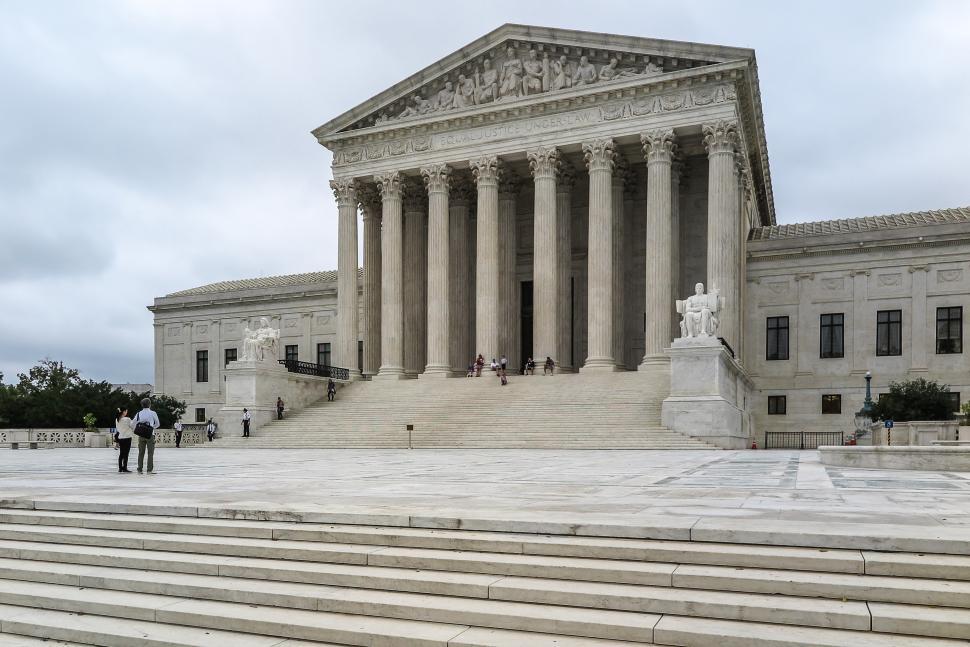
The Establishment Clause still matters too. The Supreme Court has moved away from the older Lemon framework, and in cases like Kennedy v. Bremerton School District (2022) the Court has emphasized analysis grounded in history and tradition. That said, it is safer to describe the current landscape as an approach rather than a single bright-line replacement test. The basic constraint remains: accommodation cannot become establishment.
Who might feel it
If you are a federal employee, a federal contractor, a grant recipient, or someone receiving services from a federally funded program, the most noticeable change may be process rather than headlines:
- More accommodation questions handled early, because officials are encouraged to surface and resolve issues before they harden into litigation.
- More standardized decision-making, including templates, checklists, or required legal review.
- More boundary disputes, especially where accommodations affect third parties, program beneficiaries, or coworkers.
One more scope caveat: this kind of guidance most directly affects federal decision-makers. It can indirectly affect contractors, grantees, and subgrantees through contract terms and grant conditions. It does not automatically rewrite obligations for states or private actors, which remain driven by the underlying statutes, regulations, and constitutional rules that actually apply to them.
Quick FAQ
Does DOJ guidance bind federal agencies
It can bind DOJ components and, depending on the document and how it is adopted, it can shape executive branch practice more broadly. It does not override statutes or valid regulations, and it does not bind courts. It also does not automatically control independent agencies.
Does this change the Constitution
No. It changes how the executive branch is instructed to apply existing constitutional doctrine and federal statutes like RFRA and Title VII.
Does it mean religious groups automatically get federal money
No. It signals stronger attention to equal treatment principles in public benefit programs, but outcomes remain program-specific and constrained by statutes, regulations, and constitutional limits.
Is this only about Christianity
No. Free Exercise protections apply to religious exercise broadly. Any faith community interacting with federal employment or programs can raise these claims.
The takeaway
The Constitution’s religion clauses are often discussed like abstract philosophy: neutrality, separation, free exercise. DOJ guidance is where philosophy becomes paperwork.
If the Supreme Court is telling government, in effect, that religious exercise cannot be treated as an afterthought, this guidance is the executive branch attempting to comply at scale. The next wave of conflict will be less about whether religious liberty exists and more about where accommodation ends and legally cognizable harm to others begins, and how a government can aim for neutrality in a country where neutrality is not experienced the same way by everyone.