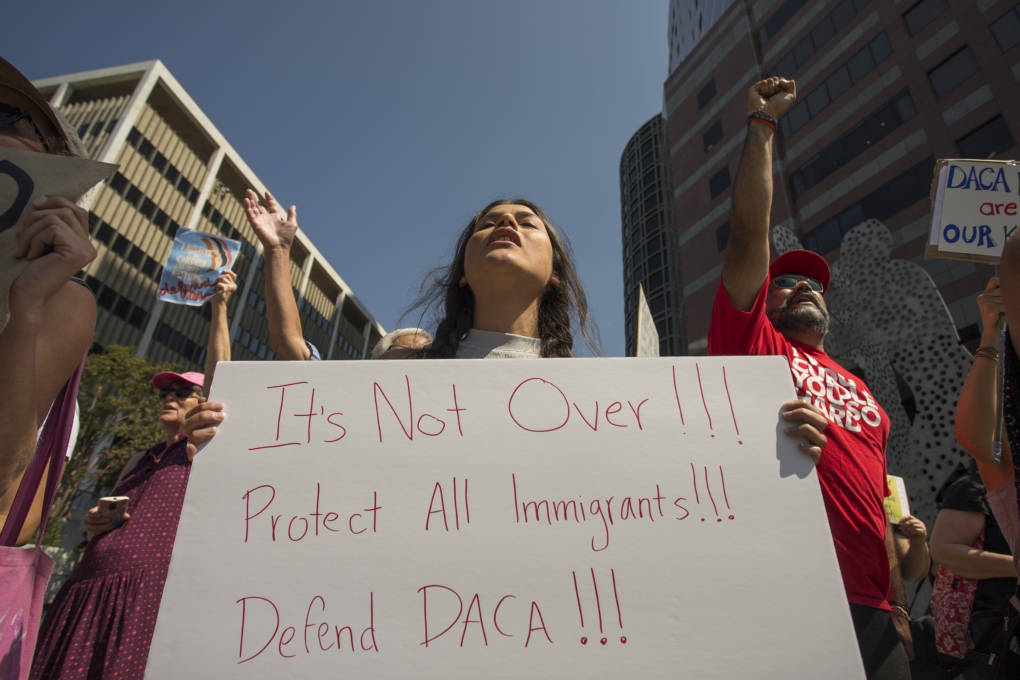
DACA stands for Deferred Action for Childhood Arrivals. Most people know it as the program that lets certain undocumented immigrants who came to the United States as children apply for protection from deportation and, in many cases, permission to work.
But DACA is also something more revealing: a live demonstration of how the Constitution divides power, and how fragile major policy can be when it is built on executive action instead of legislation.
Join the Discussion
What DACA does
DACA does not create legal immigration status and it does not provide a direct path to citizenship. It is a form of “deferred action,” meaning the federal government chooses, as a matter of enforcement priority, not to pursue removal for a defined group for a defined period.
Under the Obama administration’s 2012 policy, eligible applicants could generally receive:
- Deferred action for a renewable period (initially two years)
- Work authorization through existing federal regulations tied to deferred action (typically by applying separately for an Employment Authorization Document, or EAD). Work authorization is discretionary and category-based under DHS regulations, not automatic.
- Some practical stability, including the ability to obtain certain state-issued IDs in many states
That combination matters because deportation is not just a legal process. It is the threat that shapes where a person works, whether they drive, whether they report crimes, and whether they plan a future that extends beyond next month.
One important technical note: DACA does not grant “lawful status” under immigration law. But deferred action is often treated as “lawful presence” for limited, context-dependent purposes during the deferral period, including certain federal rules related to the accrual of unlawful presence and related eligibility categories.
Terminology note: DACA recipients are noncitizens who generally lack lawful status, even while they may have deferred action and, during that period, be considered lawfully present for certain limited purposes.
Who can qualify
Eligibility is detailed and has shifted at the margins over time, but the core requirements have generally focused on: arriving in the U.S. as a child (before age 16), meeting education or military service criteria, having continuous residence since a set date, and passing criminal and security-related screening (with significant criminal convictions generally barring eligibility).
Because the criteria are specific and the stakes are high, people often check current USCIS guidance or talk to a qualified immigration attorney before applying or renewing.
Advance parole
DACA is sometimes confused with travel permission. When available, travel has generally required a separate application for advance parole. Its availability and requirements have shifted over time because of policy changes, litigation, and operational guidance, so it is best checked against current USCIS instructions.
Why DACA is a constitutional story
The Constitution does not mention DACA, and it does not use the word “immigration.” Instead, it assigns related powers (like naturalization) and sets up a federal structure that courts and Congress have long treated as the foundation for national immigration control.
In other words, DACA lives inside the Constitution’s friction points, even if it is not named there.
Congress writes the rules, the President enforces them
Article I gives Congress the power to make laws, including broad authority over naturalization and, through statutes like the Immigration and Nationality Act, the modern immigration system. Article II charges the President with taking care that the laws be faithfully executed.
In real life, “faithfully executed” cannot mean “enforce every violation at all times.” Immigration enforcement touches millions of noncitizens, and resources are limited. So every administration prioritizes. Deferred action, in that sense, is not exotic. It is a name for prosecutorial discretion in an immigration context.
The question DACA forces is not whether discretion exists. It is whether a program this large, this durable, and this benefit-conferring is still “discretion,” or whether it is effectively legislation without Congress.
Timeline
2012: DACA begins
DACA started in 2012 as a Department of Homeland Security policy memorandum. That matters because memos are not statutes. They are executive-branch instructions.
2017: attempted termination
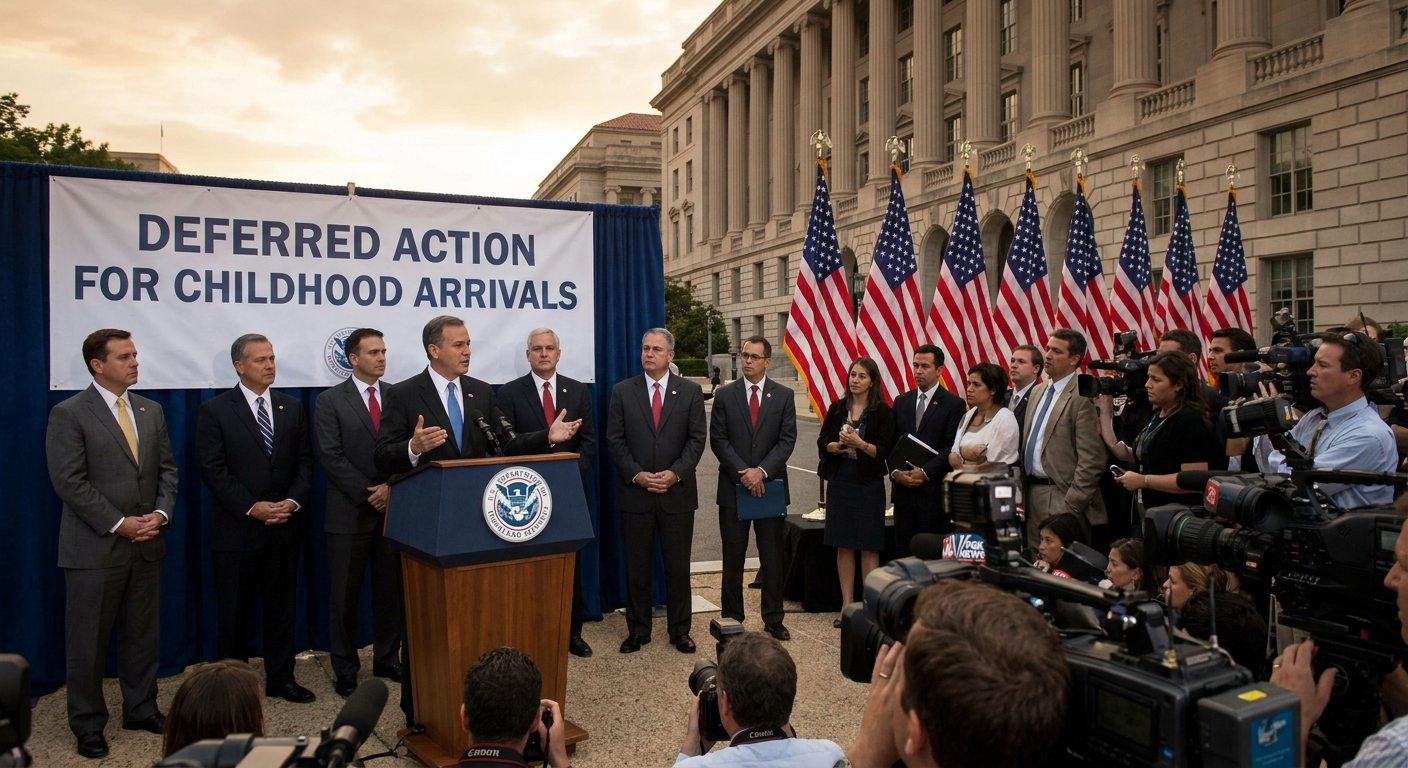
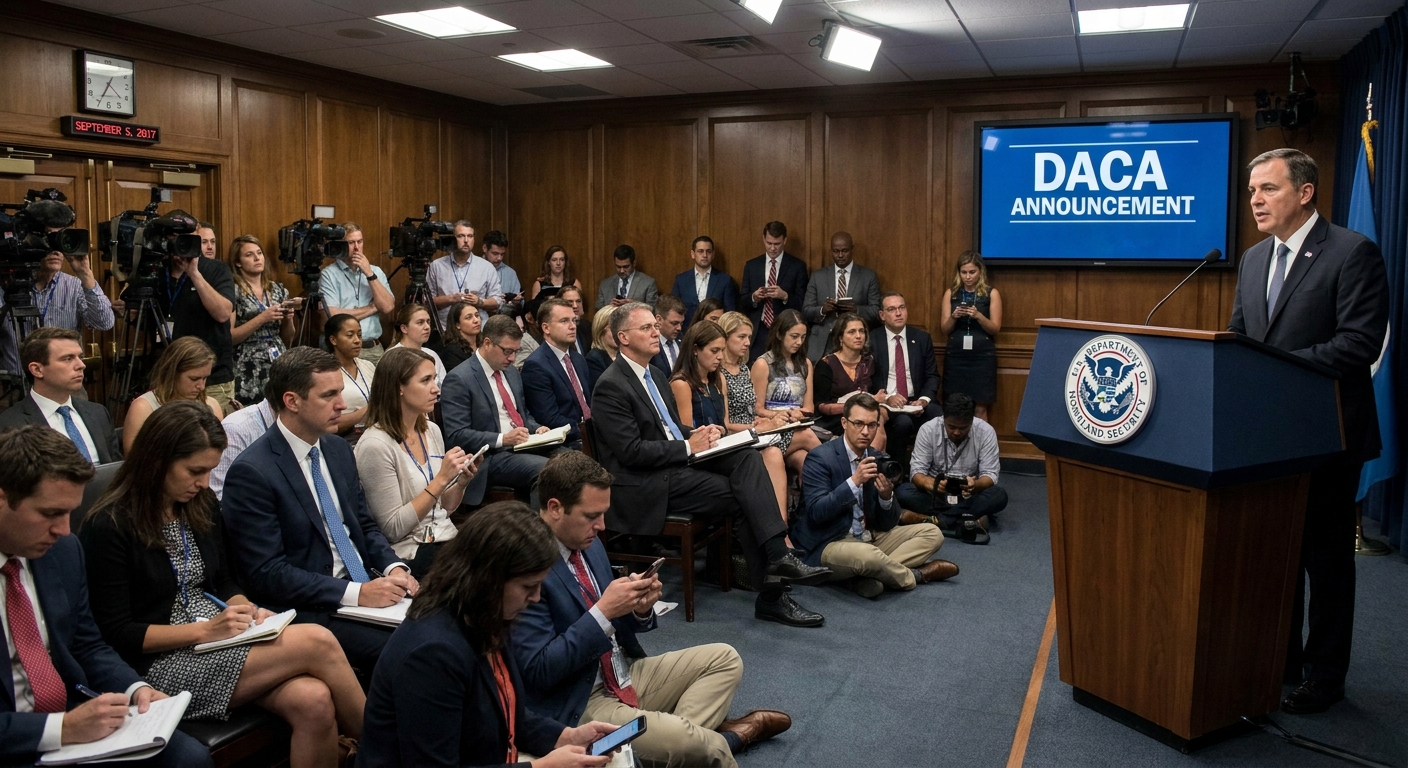
In 2017, the Trump administration announced plans to end DACA. This triggered major litigation across the country, including challenges arguing that the termination was unlawful.
2020: Supreme Court blocks the way it was ended
In Department of Homeland Security v. Regents of the University of California (2020), the Supreme Court did not hold that DACA was required by the Constitution. Instead, it held that DHS’s attempt to end DACA was arbitrary and capricious under the Administrative Procedure Act (APA) because the agency did not adequately explain its decision and failed to consider important reliance interests.
That is a crucial distinction. The Court left the door open to end DACA if DHS did it properly.
2021 to 2022: Texas rulings and a new rule
In 2021, a federal district judge in Texas, Judge Andrew Hanen, held the 2012 DACA policy unlawful. That decision helped lock in the practical split that followed: existing recipients could generally keep renewing, while the government was blocked from granting DACA to most new applicants.
The Biden administration then sought to shore up DACA through formal regulation, issuing a 2022 final rule. Litigation continued, including review in the Fifth Circuit, and the program’s day-to-day operation remained shaped as much by court orders as by executive policy choices.
Where things stand
Status note (general): DACA’s legal and operational posture can change with new court rulings. The summary below is a high-level description, not legal advice. For the most current details, check USCIS updates and the active court orders in the Texas litigation.
- Renewals have generally continued for many existing DACA recipients, subject to eligibility and screening.
- Initial requests have faced major barriers after the 2021 Texas decision and subsequent orders, with USCIS generally unable to grant most first-time DACA requests even when it can accept filings.
- Work authorization typically tracks deferred action, but it is not automatic. It generally requires a separate EAD application, and it remains discretionary under DHS regulations.
The legal issues behind DACA
1) Executive power vs. Congress’s framework
Supporters argue DACA fits within longstanding executive discretion because immigration enforcement requires prioritization, and deferred action has been used for decades in various forms.
Critics argue DACA crosses the line because it is not merely “not deporting someone.” It is a program with eligibility criteria, application procedures, and downstream benefits. That can look less like case-by-case discretion and more like a parallel system.
2) The Administrative Procedure Act
A huge portion of DACA’s courtroom life has been APA-focused, not directly constitutional. Courts ask questions like:
- Did DHS use the correct process to create DACA?
- Was DACA a “rule” that required notice-and-comment rulemaking?
- Did the agency give a reasoned explanation for starting, modifying, or ending it?
This is why DACA can survive one year and collapse the next without the Constitution changing at all. Administrative law is about process, explanation, and lawful authority. It is the plumbing beneath the headlines.
3) Reliance interests
One reason DACA is hard to unwind is that people build lives around it. The Supreme Court in Regents emphasized reliance: recipients, employers, schools, and communities had organized around a program that had been in place for years.
Reliance does not guarantee permanence. But it raises the legal bar for agencies that want to reverse course without confronting predictable harm.
4) Equal protection arguments
Some litigation around immigration enforcement and related policies raises equal protection or discriminatory intent concerns. DACA itself is usually fought on statutory and APA grounds, but the broader political environment around immigration policy often makes constitutional equality questions part of the public debate, even when they are not the core legal issue in a given case.
What DACA is not
DACA is frequently described as a “right,” or as something recipients are “entitled” to. That language is understandable in common speech, but not legally precise.
- It is not a statute passed by Congress.
- It is not permanent in the way legislation can be.
- It does not confer lawful status the way a visa, green card, or asylum grant does.
In other words: DACA is real, and it changes real lives, but it is structurally vulnerable because it is built on executive-branch discretion and administrative-law scaffolding.
Why Congress matters most
The Constitution’s design makes Congress the institution that can turn a contested policy into a durable one. Courts can decide whether DACA is lawful as an executive program. They can also decide whether an agency ended it correctly. But courts cannot pass a law creating a permanent status or a path to citizenship for DACA recipients.
If Congress enacted a Dream Act-style statute, the debate would shift. Instead of asking whether a memo went too far, we would be asking what the statute means, whether it is constitutional under Congress’s powers, and how it should be administered.
That would still be litigation, but it would rest on a firmer democratic foundation.
Common questions
Is DACA in the Constitution?
No. It is an executive-branch policy rooted in enforcement discretion and implemented through DHS, with its legality assessed largely through statutes like the APA and the immigration framework Congress has enacted.
Can a President end DACA?
A President can direct the executive branch to change enforcement priorities, including ending deferred-action programs, but the government must follow lawful procedures and provide a reasoned explanation. Courts have blocked attempts that failed those requirements.
Does DACA give citizenship or a green card?
No. DACA is temporary protection from deportation and, typically, work authorization. Any path to permanent status generally requires legislation or an existing immigration avenue under current law.
Why do courts keep saying different things?
Because different lawsuits pose different legal questions: some challenge DACA’s creation, some challenge its rescission, and some challenge later rulemaking. The facts, records, and procedural posture matter.
The bigger lesson
DACA is often framed as a fight about immigration. It is also a civics lesson about how the American system handles unresolved national questions.
When Congress cannot or will not legislate, Presidents lean harder on executive tools. When executive tools begin to look like legislation, courts step in. When courts demand better process, agencies rewrite policies.
While all of that happens, millions of lives remain contingent, renewed on a schedule, and litigated in installments. The Constitution does not resolve that tension for us. It sets the stage, assigns the actors their lines, and then waits to see whether the political branches will do what only they can do: compromise, legislate, and make a national decision durable.