

Most high-profile campus cases are loud in the usual way, through accusations, denials, and institutional statements. This one is loud in a different way, because so much of it turns on what was said after the fact, what was put in writing at the time, and what different systems can do with the information they have.
A civil lawsuit filed earlier in September by a former Cornell student, identified in court documents as Jane Doe, alleges she was drugged and repeatedly raped over the course of seven hours in October 2024 at Cornell’s Chi Phi fraternity house. The lawsuit names seven men as defendants: Matthew Ingalls, Johnathan Newell, Winston Lee, Gillio Lopes, Diego Sarabia, Scott Norris, and Scott Kretzschmar.
This week, the dispute widened again after Tompkins County District Attorney Matthew Van Houten said his office had reopened a dormant criminal investigation. Around the same time, excerpts of post-incident text messages between Doe and a defendant became public, putting new focus on how people described the night shortly after it happened.
Join the Discussion
What the lawsuit alleges

Doe’s civil lawsuit describes an October 2024 night that began with her going to the Chi Phi house in an intoxicated state while looking for a friend. The lawsuit alleges she was drugged and then assaulted by multiple men who were alerted to her presence on Snapchat.
Van Houten’s office later summarized a “six-page, single-spaced, typewritten statement” Doe gave Cornell University police after she reported the assault about three weeks after it allegedly occurred. In that account, she said she was initially willing to have sex with two Chi Phi members before other men arrived and joined in. She said she was plied with alcohol, marijuana, and ketamine, was “slapped” multiple times, and said her phone was on the other side of the room while she felt there was no way to escape “this room full of predatory, fraternity men”.
Texts in focus
Within days of the alleged assault, Doe exchanged text messages with one defendant. In the excerpts, the defendant appears to apologize for “how things went down,” adding that his memory was “kinda fuzzy.” He also wrote that he and another man regretted being too intoxicated to “shut it down and kick people out before it got way out of hand.”
In the excerpts, Doe responded that her memory was “super clouded too” and that they were all intoxicated. The messages attributed to her include: “non[e] of the sexual stuff was illegal,” along with comments indicating she liked being with him and another man. In a later message, she suggested they smoke together again, “but like leave out the extra 5 billion men and ketamine”.
Doe’s attorney, Thomas Giuffra, confirmed his client exchanged text messages with a defendant after the alleged assault, but said he could not be certain the screenshots were authentic. Giuffra said Doe was in denial and traumatized afterward, had been intoxicated to the point of incapacity that night, and was trying to find out what happened. He also said she felt that taking an aggressive tone with that particular defendant could have cut off the answers she was seeking.
Text messages like these rarely land as a single, clean answer. They can be contemporaneous and revealing, and they can also reflect confusion, fear, intoxication, trauma, and the instinct to normalize something a person has not fully processed yet.
Snapchat messages
A news organization said it had a video of Snapchat messages exchanged on the night of the alleged assault among numerous members of a group called “Chi Phi Actives.” One message, sent while Doe was in the fraternity house, allegedly stated there was “free pussy upstairs.” Another message later asked, “Shop still open?” The response was, “Yea.”
Whether and how such material can be authenticated matters. Group chats can capture real-time attitudes and intent, but their evidentiary value still depends on what can be reliably proven about origin, timing, authorship, and context.
Campus discipline

Cornell conducted its own internal investigation. Two of the men accused in the lawsuit were expelled. The other five were allowed to resume their studies after sanctions that included writing an essay, attending a workshop, or serving a short suspension.
That split matters because a university process is not a criminal prosecution. It can impose institutional penalties, but it is not designed to deliver incarceration, and it operates under different procedures and standards than a district attorney evaluating whether charges can be proved beyond a reasonable doubt.
Why it was reopened
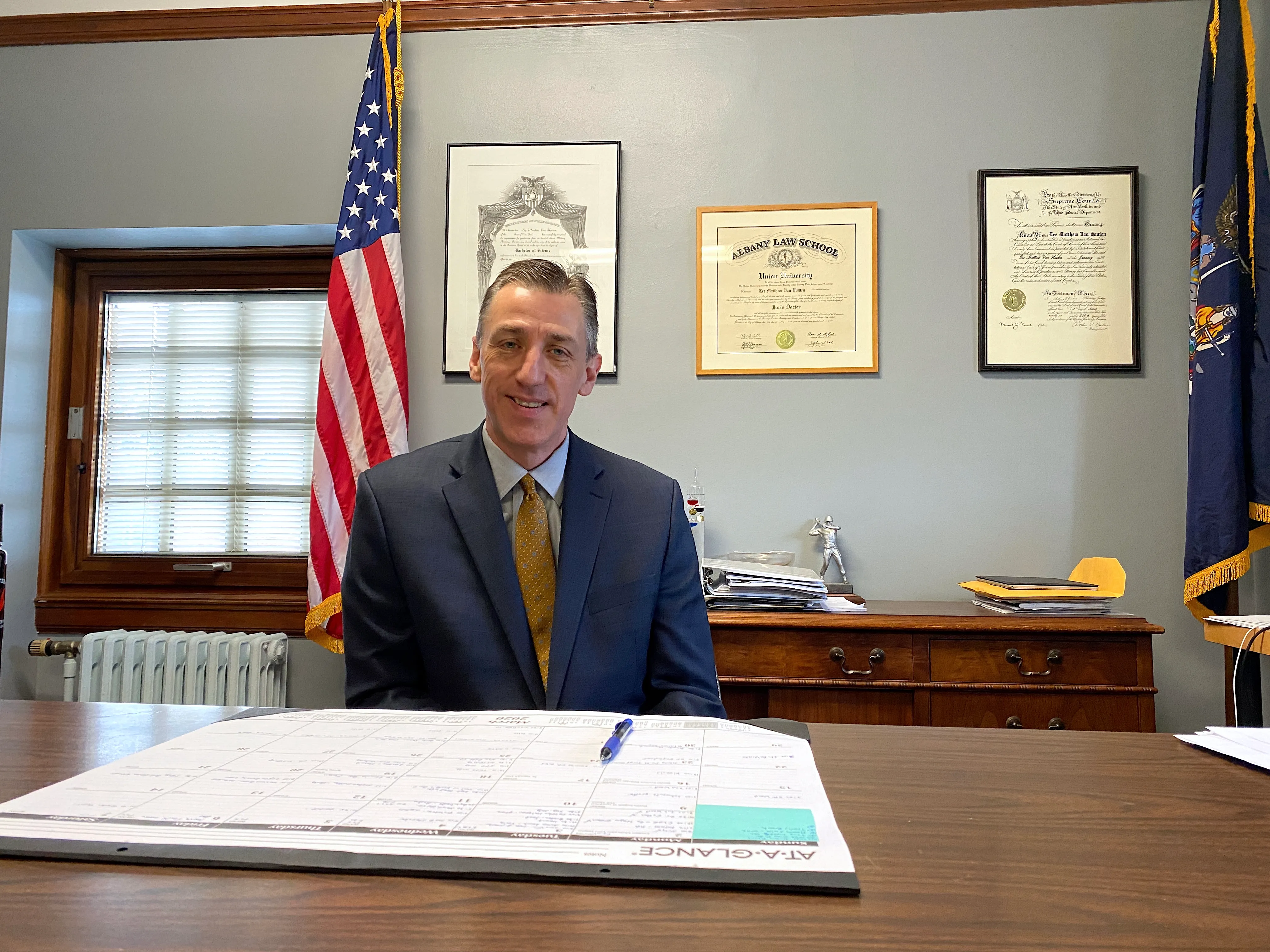
Van Houten said his office reopened what had become a dormant investigation in light of allegations he described as “dramatically different” from what his office understood earlier. He also defended the initial decision not to seek charges in 2024.
“Jane Doe’s sworn statement in November of 2024 did not allege that she was drugged against her will or gang raped,” Van Houten said. “On the contrary, [her] statement described her participation in drug use and sexual conduct as voluntary, conscious, and consensual. My office obviously did not and could not have based our November 2024 decision on the allegations in a civil lawsuit that would not be filed until nearly two years later.”
The fight is not only over what happened that night, but over what was put on record, when it was put on record, and what legal actors say they could responsibly do with what they had.
Denials and fallout
Two of the defendants, Scott Kretzschmar and Scott Norris, have denied involvement, either directly or through lawyers.
None of the men were ever arrested or charged. Public outrage over the handling of the allegations grew after the woman’s lawsuit became public.
Separately, Diego Sarabia was reported to have been fired from his job at Wells Fargo. The bank did not return a request for comment.
Process questions
This story now sits in two lanes at once: a civil lawsuit and a reopened criminal investigation. The details that may matter most are procedural and documentary.
In cases like this, the most important breadcrumbs tend to be concrete ones: what statements exist in writing, who made them under oath, what digital records can be authenticated, and how each institution explains the choices it made at the time.