
Constitutional Topics
Browse articles in Constitutional Topics on U.S. Constitution
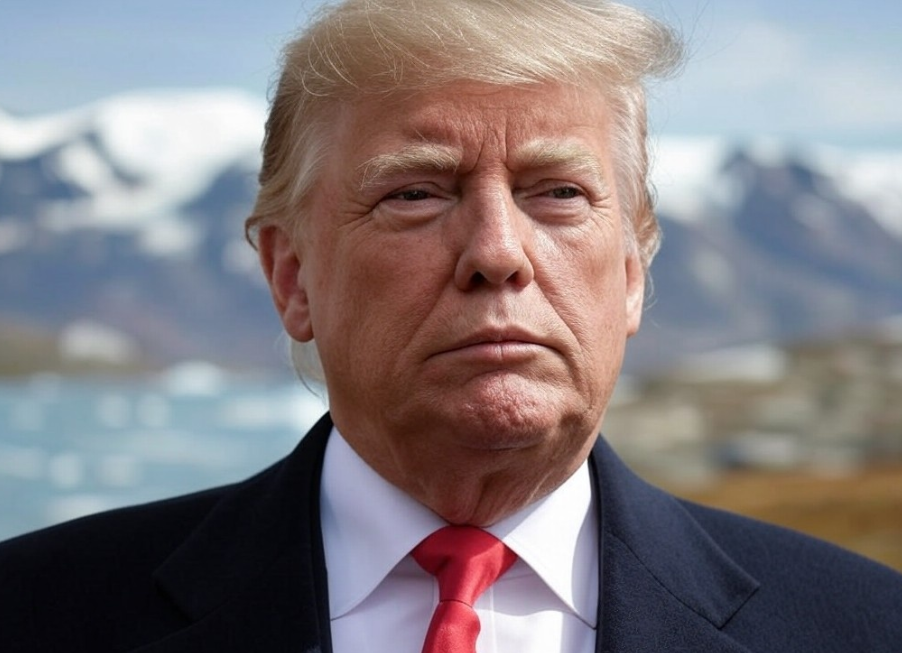
Make Greenland Great Again Act
The Make Greenland Great Again Act , introduced by Republican Congressman Andy Ogles, aims to authorize negotiations for acquiring Greenland. This legislation follows renewed interest from President-elect Donald Trump regarding the Danish territory. If passed, the bill would allow Trump to seek an...
Read more →Iconic Inauguration Days
Inauguration Day in American politics represents both continuity and change, signifying the peaceful transition of power while adapting to the nation's needs. The first inauguration took place on April 30, 1789, with George Washington taking the oath in New York City. The Constitution initially set...
Read more →SALT Deduction Explained
The State and Local Tax (SALT) deduction allows taxpayers to subtract state and local taxes from their federally taxable income. In 2017, the Tax Cuts and Jobs Act (TCJA) capped SALT deductions at $10,000, affecting taxpayers in high-tax states like California, New York, and New Jersey. Former...
Read more →Income Taxes and Constitutionality
Income taxes have been a subject of national debate throughout American history. The Constitution initially gave Congress the authority to impose taxes, but with limitations on “direct” taxes. In the late 1800s, the Supreme Court’s decision in Pollock v. Farmers’ Loan & Trust Co. declared a...
Read more →Worst US Presidents by Constitution Violations
Throughout American history, the presidency has reflected broader constitutional debates and tensions. Examining these presidencies offers insight into how leadership choices can shape the nation's trajectory, particularly when they intersect with the enduring principles enshrined in the...
Read more →Trump and the 14th Amendment
Section 3 of the 14th Amendment, established after the Civil War, disqualifies certain federal officials who engaged in rebellion or insurrection after swearing to support the Constitution. Its original intent was to prevent former Confederates from returning to positions of power. The language is...
Read more →FEMA’s Role and Constitutionality
FEMA, the Federal Emergency Management Agency, was established in 1979 by President Jimmy Carter's executive order. Its dual mission encompasses managing emergencies and handling civil defense. FEMA's role extends beyond disaster response, ensuring the continuity of U.S. government operations...
Read more →DEI Legal Challenges
The Supreme Court's decision in Students for Fair Admissions v. Harvard has brought constitutional scrutiny to Diversity, Equity, and Inclusion (DEI) initiatives. Chief Justice John Roberts emphasized that government entities cannot use race as a stereotype, aligning with previous rulings that...
Read more →Pandemic Policy in U.S.
The Continuing Resolution emphasizes the Senate's role in reviewing and approving treaties initiated by the World Health Organization (WHO). This focus reflects concerns over U.S. sovereignty and democratic oversight. Representatives Davidson and Tiffany advocated for this inclusion, stressing...
Read more →Pandemic Policy in U.S.
The Continuing Resolution emphasizes the Senate's role in reviewing and approving treaties initiated by the World Health Organization (WHO). This focus reflects concerns over U.S. sovereignty and democratic oversight. Representatives Davidson and Tiffany advocated for this inclusion, stressing...
Read more →Top 10 Constitutional Violations By Clinton, Obama, Biden
The United States Constitution continues to shape discussions around governance and individual rights. Recent events demonstrate how this foundational document guides the nation through changes, with the interplay between executive actions and constitutional mandates remaining a focal point in...
Read more →Democrats Push To Change Presidential Election Rules
Prominent Democratic Senators have made a proposal to change how Presidential elections work. It would require a constitutional change. The Electoral College has long been a contentious issue in American politics. Recently, Democratic Senators Brian Schatz, Dick Durbin, and Peter Welch proposed a...
Read more →Is USPS in the US Constitution?
The United States Postal Service (USPS) is indeed mentioned in the US Constitution. Article I, Section 8 grants Congress the power “To establish Post Offices and post Roads.” This provision authorizes Congress to regulate and establish the postal service, ensuring mail delivery and regulation...
Read more →Gillibrand’s ERA White House Push
Sen. Kirsten Gillibrand is spearheading an ambitious campaign to persuade President Joe Biden to certify and publish the Equal Rights Amendment (ERA) , aiming to solidify its position within the Constitution. Gillibrand's strategy involves: Delivering a compelling memo to rally support Making a...
Read more →NFL Anthem Policy and Constitution
The First Amendment, while fundamental to American freedom, doesn't apply to private entities like the NFL. Former Supreme Court Justice Oliver Wendell Holmes Jr. noted that an employee's right to discuss politics doesn't obligate an employer to retain them. Private companies, not being...
Read more →Constitutional Convention Overview
A constitutional convention is a gathering to discuss, draft, and propose amendments or a new constitution. These meetings address the need for major reforms or updates to a nation’s fundamental laws. In the United States, such a convention could be initiated under Article V of the Constitution,...
Read more →Top Senators on Constitution Voting
The United States Constitution provides a framework that has guided the nation through centuries. Its principles continue to shape legislative decisions and influence political discourse. Various senators play roles in upholding these constitutional values, with their interpretations contributing...
Read more →Second Amendment Basics
The Second Amendment's origins lie in early American thought and practical needs. During the nation's founding, a "well-regulated militia" was considered essential for defense against tyranny. This concept stemmed from fear of standing armies, rooted in English history. The Founders incorporated...
Read more →Birthright Citizenship Debate
The 14th Amendment’s Citizenship Clause establishes birthright citizenship in the United States. Ratified in 1868, it states: “All persons born or naturalized in the United States, and subject to the jurisdiction thereof, are citizens of the United States and of the State wherein they...
Read more →Manchin’s Supreme Court Term Limit Proposal
Senators Joe Manchin and Peter Welch have proposed a constitutional amendment to replace lifetime appointments for Supreme Court justices with 18-year nonrenewable terms . This change would introduce a regular cycle of appointments, with a new justice joining the Court every two years. The proposal...
Read more →