
You can feel the tension in the phrase sovereign immunity. It sounds absolute, like a force field. But in U.S. law it is closer to a set of rules about who can be sued or prosecuted, where, and who gets to say so.
That is why a headline like “foreign president asks judge to dismiss U.S. drug-trafficking charges on immunity grounds” triggers so many questions at once. Can an American court reach a sitting foreign leader? Does it matter whether the United States recognizes that person as the legitimate head of state? And is immunity different in criminal cases than it is in civil lawsuits?

Here is the durable, non-headline version of the answer: a foreign president can claim immunity in U.S. federal court, but whether that claim succeeds depends on the type of immunity, the person’s status, and the position of the U.S. executive branch. Immunity can delay a case, narrow it, or end it. It does not automatically erase U.S. criminal jurisdiction just because a defendant holds high office abroad.
Join the Discussion
Two doctrines, one label
Americans use “sovereign immunity” as shorthand for multiple doctrines that do not work the same way. In headlines, it often collapses state immunity, foreign official immunity, and even diplomatic immunity into one phrase, even though the legal rules and decision-makers can differ.
1) Immunity of the foreign state itself
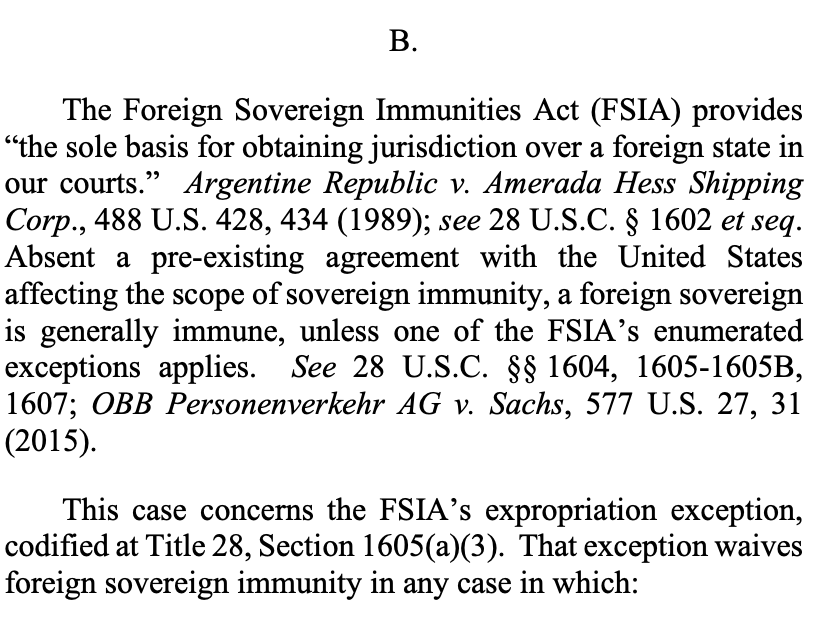
In civil cases, the big statute is the Foreign Sovereign Immunities Act (FSIA) of 1976. It sets default rules that foreign states generally cannot be sued in U.S. courts, with specific exceptions (commercial activity is a major one).
But FSIA is mainly a civil statute. It is not the usual vehicle for dismissing a federal criminal indictment.
2) Immunity of foreign officials, including heads of state
Separate from FSIA is what lawyers often call common-law foreign official immunity. This includes:
- Status-based immunity for certain top officials while they are in office (most notably heads of state, heads of government, and foreign ministers).
- Conduct-based immunity for official acts, usually invoked by former officials.
Those two categories sound similar, but they aim at different problems. Status-based immunity is about preserving diplomatic equality and avoiding one country’s courts sitting in judgment of another country’s top leadership during an ongoing relationship. Conduct-based immunity is more like a rule against turning routine state actions into personal liability.
Can U.S. courts prosecute?
U.S. federal courts have jurisdiction over federal crimes because Congress creates crimes and authorizes federal courts to hear them. The constitutional backbone is straightforward: Article III establishes federal judicial power, and Article I gives Congress power to define and punish certain offenses, plus to enact laws necessary and proper to carry its powers into execution.
The harder part is not whether a statute exists. It is whether the court can exercise its power in a particular case consistent with:
- the ability to bring the defendant before the court, including the practical reality of obtaining custody or presence
- immunity doctrines recognized by U.S. law
- foreign relations and separation of powers, because prosecutions can collide with diplomacy
So yes, charges can be filed against a foreign head of state in U.S. federal court, and an indictment can exist. But if the person is a recognized sitting head of state, status-based immunity can bar or pause proceedings in practice, especially if the executive branch urges immunity. The United States can also unseal charges, seek arrest warrants, and request extradition. Whether the case can proceed to an actual trial is often determined by a mix of law and logistics.
Head-of-state immunity
Head-of-state immunity is the doctrine most people are reaching for when they ask whether a foreign president can “claim immunity.” In U.S. practice, two features matter more than the title on the business card.
Recognition matters
In the United States, recognition of foreign governments is an executive function. Courts traditionally treat the executive branch as the authoritative voice on whether the United States recognizes someone as the head of state or head of government of a foreign country.
That flows from separation of powers logic: the judiciary is not supposed to conduct its own foreign policy by deciding which foreign leader is legitimate. The Supreme Court has repeatedly emphasized that recognition is for the political branches, especially the President.
Practically, that means head-of-state immunity in U.S. court is often bound up with what the U.S. Department of State says. If the executive branch suggests immunity, courts often defer, and in some contexts that can be effectively dispositive. If the executive branch does not recognize the person as the head of state, the status-based immunity argument is much weaker.

Status-based immunity is for sitting leaders
Status-based immunity is typically associated with sitting heads of state and a small circle of senior officials. It is not mainly about whether the alleged conduct is “official.” It is more categorical: while in office, the person is treated as immune from the jurisdiction of another country’s courts.
But again, U.S. courts do not treat this as something a defendant can simply announce into existence. It is tightly linked to the executive branch’s position on status and recognition.
Criminal cases and the gap
If you are looking for a single constitutional clause that says “foreign presidents are immune from U.S. criminal law,” you will not find one.
Instead, the system works through a combination of:
- customary international law, as reflected in U.S. common-law doctrine in appropriate contexts
- executive branch determinations (especially recognition and immunity suggestions)
- judicial doctrines developed over time to avoid courts stepping on the executive’s foreign affairs role
One reason today’s motions to dismiss get complicated is that the FSIA is a clean statutory framework for civil suits, but criminal prosecutions against foreign officials live more in a common-law and separation-of-powers world. Courts must decide how to treat immunity claims without a single all-purpose criminal immunity statute.
That does not mean “anything goes.” It means the analysis is fact-specific and often turns on what the executive branch says.
Conduct-based immunity
Former officials often argue conduct-based immunity, claiming that what they did was done on behalf of the state and therefore should be attributed to the state, not the individual.
But this immunity is not a blanket shield for everything a government official does while employed by a government. The key fight is over what counts as an official act.
In cases involving allegations like bribery, corruption, or trafficking, U.S. prosecutors typically argue that such conduct should not be treated as a legitimate “official act” entitled to immunity. Defendants often respond that the alleged conduct is intertwined with state functions or policy, and courts treat the issue as nuanced and case-dependent rather than a single bright-line rule.
Courts may also consider whether the foreign state itself has taken a position. If a recognized foreign government denies that the acts were official, that can affect how a U.S. court views the claim.
Why the executive matters
The Constitution does not say “the State Department decides immunity.” But the structure of the federal government pushes in that direction.
Under Article II, the President receives ambassadors and conducts diplomacy. Recognition decisions and foreign relations are executive responsibilities. When a federal court is asked to proceed against a foreign leader, it risks creating an international incident that the executive branch then has to manage.
So courts often treat immunity questions as a place where judicial independence yields to a different constitutional value: one national voice in foreign affairs.
This does not give the President direct power to order a court to dismiss a case. But it does mean the executive branch’s position can be highly influential in practice. Often that comes to a court through a formal filing like a suggestion of immunity submitted by the United States, typically through the Department of Justice after consultation with the Department of State.
Immunity is not forever
Immunity is often better understood as a timing and forum rule, not a moral verdict and not necessarily a permanent erasure of accountability.
- Status-based immunity can fade when someone leaves office.
- Extradition may be impossible today and possible later, depending on political change and treaties.
- A case can remain sealed or pending for years, with warrants outstanding, without a courtroom trial.
That is why prosecutors sometimes file charges even when the odds of immediate custody are low. Criminal jurisdiction is one thing. Physical custody is another.
What judges ask
When a foreign leader asks a federal court to dismiss criminal charges on immunity grounds, the judge’s core questions tend to be practical and structural:
- What immunity doctrine is being invoked? Head-of-state status immunity? Official acts immunity? Something else?
- Does the United States recognize the defendant as the relevant head of state or head of government?
- Has the executive branch filed a “suggestion of immunity” or otherwise stated its position?
- Are the alleged acts plausibly “official”? Or are they alleged private or criminal acts outside legitimate state functions?
- What remedy fits? Dismissal, stay, or narrow rulings on specific counts?
Notice what is not on that list: whether the defendant is important, whether the allegations are serious, or whether the court “approves” of the foreign government. Immunity analysis is not a referendum. It is a jurisdictional gatekeeping question in a system that is trying to keep courts from becoming instruments of international conflict.
FAQ
Can a foreign president be arrested in the United States?
If a valid federal warrant exists and the person is not protected by immunity at the time and in the circumstances, arrest is legally possible. In practice, diplomatic issues, security details, and immunity assertions often prevent that scenario from ever arising.
Is sovereign immunity the same as diplomatic immunity?
No. Diplomatic immunity is tied to accredited diplomats under treaties like the Vienna Convention. Sovereign and head-of-state immunities involve different categories of actors and different rationales.
Does immunity apply to serious crimes?
Domestic U.S. doctrine tends to treat status-based head-of-state immunity as broadly protective while in office, even when allegations are grave. Conduct-based immunity is more contested, especially when the alleged conduct looks like private gain rather than state policy.
Is immunity the only barrier to a prosecution?
No. Even without immunity, defendants may litigate other threshold issues like the statute’s extraterritorial reach, whether there is a sufficient U.S. nexus, venue, and what the criminal statute actually requires. Those are separate from immunity, which is about whether a court should exercise jurisdiction over the person at all.
Who ultimately decides?
Formally, the judge rules on the motion. But the executive branch often shapes key inputs: recognition, foreign policy posture, and whether the United States urges the court to treat the defendant as immune.
The constitutional takeaway
The Constitution does not give foreign leaders a magic phrase that dissolves U.S. criminal cases. What it does create is a federal government with separated powers, and an executive branch charged with foreign relations.
Immunity, in this setting, becomes less like a personal privilege and more like a structural boundary line: a way to keep one nation’s courts from effectively selecting another nation’s leadership or conducting diplomacy from the bench. Whether that line blocks a particular prosecution depends on the defendant’s recognized status, the nature of the acts alleged, and the position the United States takes in its own courts.