
You can close your garage door, buckle your seatbelt, and still leave a trail.
Not tire tracks. Data.
Lawmakers are pressing for tighter limits on connected-car data after privacy advocates warned that modern vehicles can collect location, speed, route history, braking patterns, voice commands, and, in some models and configurations, signals about what happens inside the cabin (for example, driver-monitoring attention checks, occupancy sensing, and interior microphones used for hands-free features). Exactly what is collected, whether it is stored, and how long it is kept vary widely by manufacturer, model, settings, and whether a driver enrolls in optional programs.
The fight is not just about what your car can record. It is about who can get it, who can pressure companies to keep it, and whether the Fourth Amendment has anything to say about a vehicle that doubles as a sensor platform.
Two forces are tightening at once. Congress is asking sharper questions about the location-data economy and how movement data is collected and resold. And federal regulators are treating precise location as sensitive, especially when it is packaged for sale at scale. The headline issue is simple: a detailed log of where you go can become valuable to advertisers, insurers, and data resellers. The constitutional issue is sharper: what happens when the same log becomes easy for the government to obtain through purchase, routine legal process, or contractor access.
In other words, the modern car does not just drive you places. It produces a trail that can be bought, queried, or shared downstream and, in the wrong hands, used like a shadow tail.
Join the Discussion
What the car collects
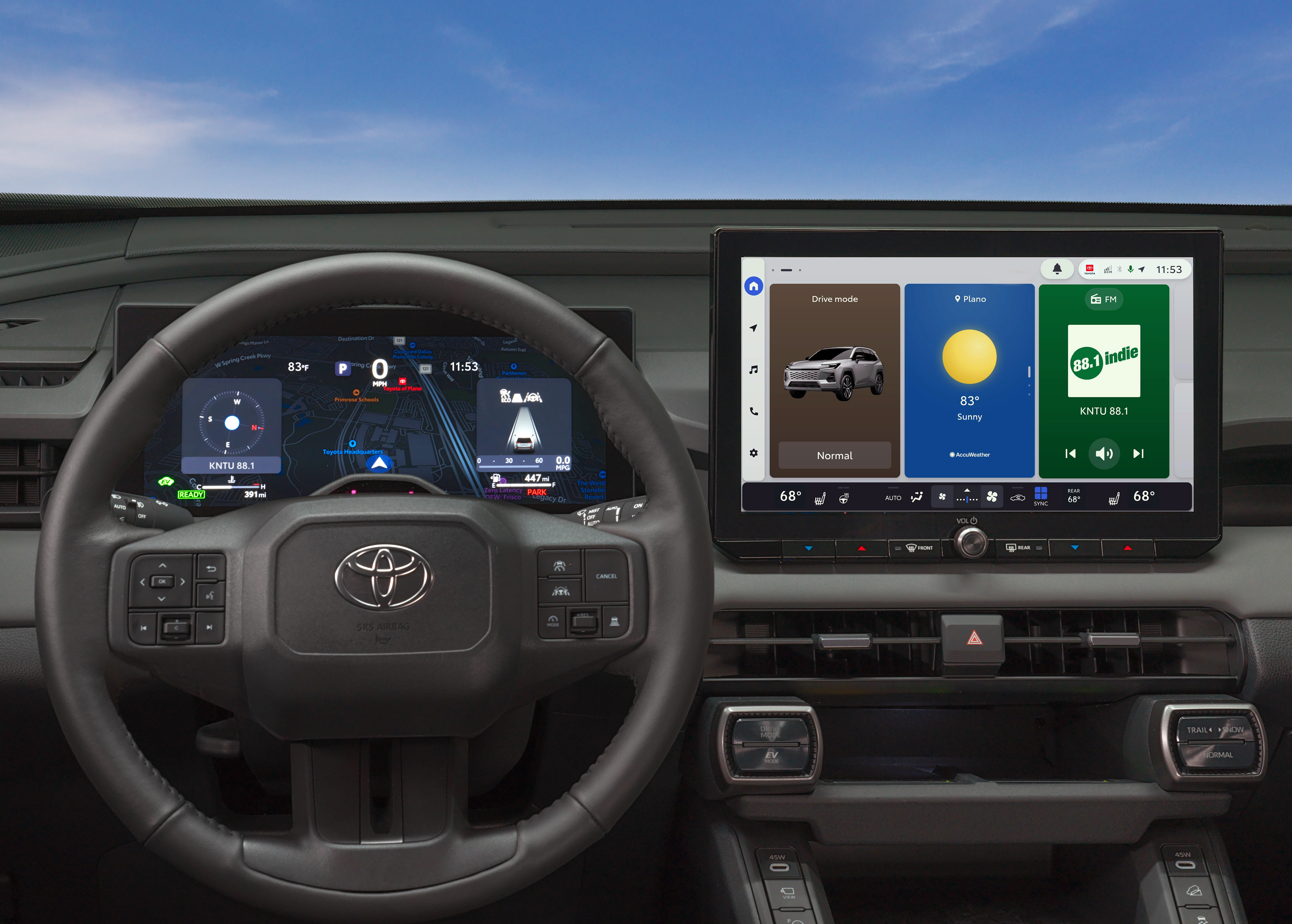
For most of American history, a car was a mechanical object that happened to move through public space. Today, many vehicles are rolling computers with cellular connections, microphones, GPS, and sensors that monitor how the vehicle moves and what happens around it.
Privacy advocates warn that modern cars can collect:
- Location data, including where you go and when you get there
- Speed and route history
- Braking patterns and other driving behavior signals
- Voice commands and assistant interactions, depending on the system and settings
- In-cabin signals in some vehicles, such as driver-monitoring cameras for attention and safety features, interior microphones used for hands-free calling and assistants, and occupancy sensors for seatbelt and airbag logic
This is not abstract. A detailed record of daily movement can reveal where you worship, seek medical care, attend political meetings, or visit family. That is why the dispute has moved from the tech sphere into constitutional territory.
The data economy
The story is not only about automakers. It is also about the market that sits downstream from them. Telematics data can move through infotainment vendors, app providers, and insurance programs that price risk based on how you drive. It can also move through the data-broker ecosystem, where location and behavior signals are packaged, enriched, and resold.
Here is what a pipeline can look like in plain terms: a vehicle logs trips and driving events, an automaker account or companion app syncs the data, a partner uses it for a service (crash response, maintenance, or insurance scoring), and an analytics vendor aggregates it with other datasets to make it easier to query at scale. The pipeline matters as much as the tap.
That is why names keep surfacing in Washington that have nothing to do with designing cars. Data brokers such as LexisNexis and Verisk are frequently discussed in the context of insurance and risk-scoring products and the broader broker market for consumer data. Mentioning them here is not an allegation about any specific connected-car feed. It is a reminder of the kind of downstream infrastructure (risk scores, claims history tools, identity and fraud analytics) that can make sensitive data easier to access once it exists.
The Fourth Amendment
The Fourth Amendment was written to limit government searches. It is a rule about power, not about gadgets.
But connected vehicles create a category of daily movement records that looks different from a single observation on a public road. It is persistent, searchable, and often stored outside the driver’s direct control.
The legal tension is familiar. Under the traditional third-party doctrine, information held by a company has often been treated differently than a letter sealed in your desk. But in Carpenter v. United States (2018), the Supreme Court held that long-term cell-site location information generally requires a warrant, recognizing that time and scale can turn location data into something closer to a detailed portrait of a person’s life. Connected-car logs raise the same question in a new place: if the government cannot track you everywhere without meaningful limits, can it accomplish the same thing by leaning on the trail your car quietly generates?
How access works
In practice, government access to “car data” can come through more than one door, and the rules can vary based on who holds the data and what it is.
- Warrants are the classic Fourth Amendment tool, and they are most clearly required for intrusive, long-term location tracking under Carpenter-style reasoning.
- Subpoenas and court orders can still be used in many contexts for business records and shorter time windows, especially when agencies argue they are seeking records held by a third party.
- Emergency requests exist in many regimes and policies, and they can be legitimate in time-sensitive situations. The anxiety is what happens when “emergency” becomes the default.
That variability is part of the controversy. When the legal process is inconsistent, the practical result can be predictable: agencies gravitate toward the easiest door.
Surveillance by default
Supporters of proposed limits argue that a car should not become a rolling surveillance tool simply because it contains software and cellular connections.
The high-stakes question is not whether connected features are convenient. It is whether the government, through routine requests, purchases, or contractor access, can effectively treat private vehicle telemetry as a reliable source of surveillance.
This is where Fourth Amendment anxiety spikes. A physical search is obvious. A data request can be quiet.
Retention matters
To be precise: the dispute is not limited to whether an agency can request data that already exists, and it does not require an explicit “retain everything” mandate to become dangerous. The worry is structural. If detailed logs are kept longer by default, the easiest investigative move becomes asking for what is already there.
That is why retention is a lever. The more data companies keep as a matter of routine, the easier it becomes to demand later, and the harder it becomes for ordinary people to meaningfully opt out.
Retention turns occasional information into infrastructure. In Fourth Amendment terms, it can shift the baseline. It can make the extraordinary routine.
Who wants it
This debate is not happening in a vacuum. Connected-car data sits at the intersection of multiple government interests and multiple private markets.
On the government side, requests can arise in ordinary law enforcement investigations, crash and fraud inquiries, border and security screening, and regulatory compliance. Depending on the context, demands can come from federal law enforcement agencies, state and local police, or agencies that rely on contractors and analytics vendors to process large datasets.
On the private side, telematics data can move through automakers, infotainment and app providers, insurers that offer usage-based products, and data brokers that buy and resell behavioral signals. That is why recent congressional attention has focused not only on government access, but also on the upstream question: whether driver data is being packaged for sale in the first place, in a way that makes later government access easier and cheaper.
The counterargument
Opponents of tighter limits argue that emergency access, crash investigations, and national-security needs require flexibility.
Those are not frivolous concerns. In real life, time-sensitive situations exist, and investigative needs do not always arrive neatly packaged with perfect facts.
The constitutional problem is that “flexibility” can become a permanent exception. If the legal rule is built for the rare case, it tends to expand into the common case.
Where the line is
The Fourth Amendment question here is not just, “Can the government obtain data from a car?” It is:
- Under what legal standard can it access that data?
- How much data can it obtain at once?
- How long can it be kept?
- Who else can receive it, including private contractors?
Connected-car records are uniquely revealing because they compress a person’s life into patterns: repeated stops, recurring routes, and the kinds of places that expose beliefs, relationships, and vulnerabilities.
That is why lawmakers are demanding safeguards before connected-car surveillance becomes normal.
What lawmakers want
The lawmakers pressing for limits are responding to a core concern: federal agencies and private contractors should not be able to access driver data without clear Fourth Amendment safeguards. In parallel, Congress has been pressing the broader location-data ecosystem about collection, sharing, resale, and retention practices that can make movement records easy to obtain.
To make that pressure checkable, here are concrete anchors that have shaped the debate, with details that can be verified in public records and press releases:
- Sen. Ron Wyden to the FTC (April 11, 2024): Wyden sent a public letter urging the FTC to use its authority to crack down on the commercial sale of sensitive location data and to treat the data-broker market for movement traces as an enforcement priority.
- FTC v. Kochava (filed August 2022): The FTC sued data broker Kochava alleging that the sale of precise location data could enable stalking and other harms. The case continued through 2024, with procedural battles that included dismissal and amended pleadings, rather than a single clean timeline. The core point for this debate is not the caption. It is the enforcement premise: precise location sold at scale is treated as sensitive, high-risk data.
- FTC location-privacy settlements (January 2024): The FTC announced settlements with Outlogic (formerly X-Mode Social) and InMarket over alleged location-data practices. The public allegations included collecting or using location data for advertising in ways that raised sensitivity concerns, including data linked to visits to sensitive places. These were not “car telematics” cases, but they are part of the same policy squeeze: when location data becomes a product, it becomes easier to misuse and easier to obtain, including by government agencies that can buy data commercially.
The Federal Communications Commission’s role is narrower and more indirect. The FCC is not a general vehicle-privacy regulator. But because connected cars often rely on cellular service and carrier-style connectivity, FCC telecom privacy and data-security expectations can matter at the communications layer, even if they do not reach automaker design decisions.
At the level of principle, the safeguards being demanded aim to prevent three outcomes:
- Backdoor surveillance, where the government gets comprehensive tracking without traditional Fourth Amendment guardrails
- Default retention, where detailed records exist simply because it is convenient for institutions that want them
- Normalization, where constant monitoring becomes the expected price of driving a modern car
Even if you agree that emergencies and investigations sometimes justify access, the constitutional question remains: what limits come first, before convenience hardens into policy?
How to leak less
You cannot “privacy” your way out of every sensor. But you can reduce the default exhaust:
- Review connected services: look for telematics, safety, diagnostics, and “data sharing” toggles in the vehicle settings and companion app.
- Be careful with usage-based insurance: these programs can be a direct pipeline from your driving behavior to pricing and profiles.
- Limit app permissions: the car is one source, but the phone is often the bridge.
- Request your data: many companies offer access, deletion, or opt-out rights depending on your state. Use them when available.
Before your next drive
Most people think of surveillance as something that happens to someone else, somewhere else, with flashing lights and a warrant.
Connected-car surveillance is different. It is ambient. It is automated. It can create incentives to collect first and justify later.
The next time you drive to a doctor’s office, a place of worship, a political meeting, or a family member’s home, ask a simple Fourth Amendment question:
Is my car creating a record of this trip that someone else can later demand?
The privacy gap
Here is the strange part about American life: we talk about privacy like it is a named constitutional right, but the Constitution never uses the word “privacy.”
That gap is not academic. It is why new technologies keep producing the same old argument: when the tool changes, does the Fourth Amendment change with it, or do we quietly accept a narrower freedom because the surveillance is digital instead of physical?
Connected cars are just the latest place that question has found a home. Unfortunately, your home now has wheels.