
Most people learn their “rights” from TV: the dramatic warning, the instant lawyer, the clear line between innocent questions and unlawful pressure.
Real life is murkier. During a traffic stop or a street encounter, the Constitution gives you powerful protections, but it does not give you a magic phrase that ends the interaction on demand. What you say and do in the first two minutes can shape everything that happens next.
This guide walks through what the Constitution actually guarantees during police encounters and what it does not. It is practical, plain-language, and built around the rights people most often misunderstand.
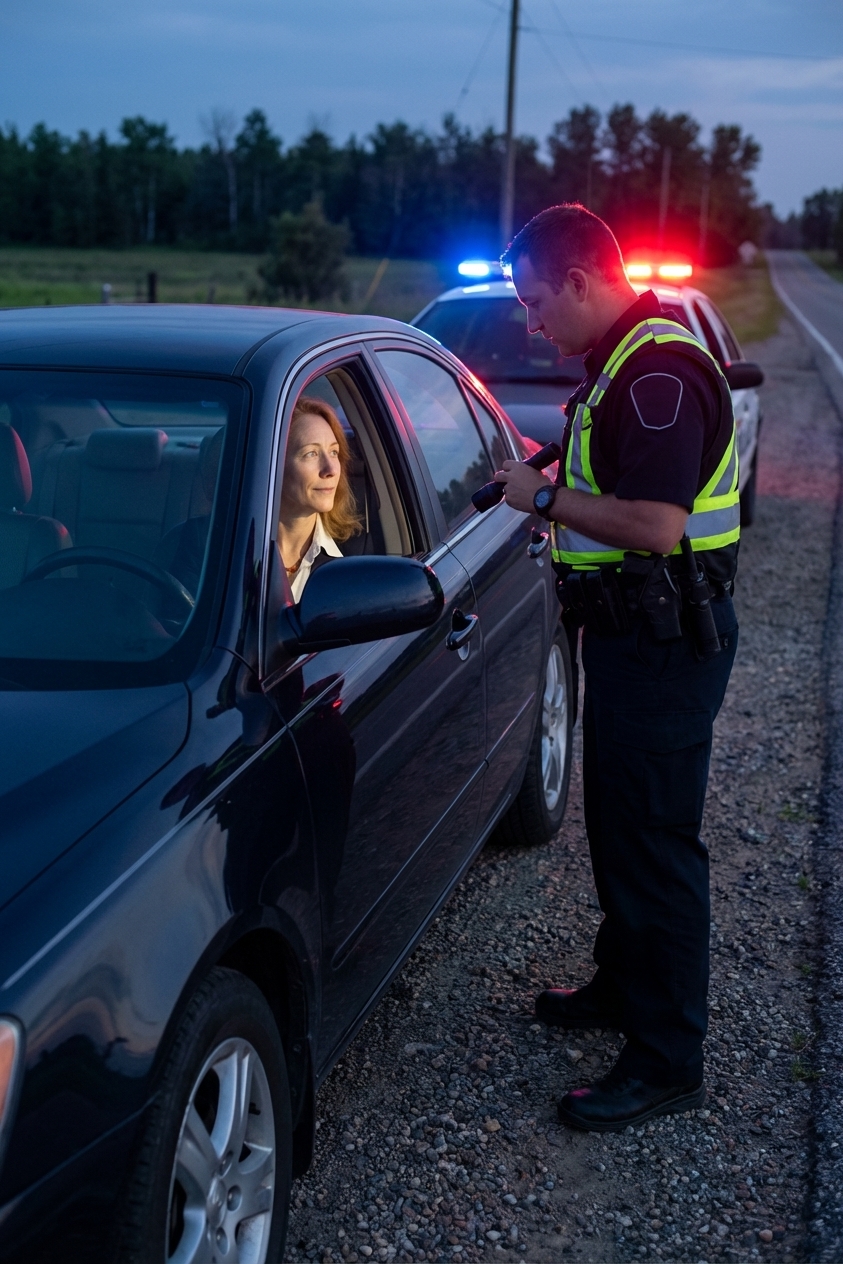
First: what kind of stop is this?
Your rights change depending on whether you are:
- In a traffic stop (you are “seized” under the Fourth Amendment, even if the officer is polite).
- In a pedestrian stop (often called a Terry stop, after Terry v. Ohio), where police briefly detain you based on reasonable suspicion.
- In a consensual encounter (you are not detained and can leave, but many people do not realize it is optional).
- Under arrest (probable cause and a full custodial situation).
If you are unsure which one it is, one sentence clarifies the ground rules:
“Am I being detained, or am I free to go?”
If the officer says you are free to go, you can leave calmly. If the officer says you are detained, you should assume the Fourth and Fifth Amendment issues are now active and treat your words carefully.
Quick signs: consensual or detained?
- Often consensual: the officer says you can leave, does not block your path, and does not keep your ID.
- Often detained: the officer tells you to stay put, keeps your documents, blocks your car or path, or uses a tone that makes leaving unrealistic.
The Fifth Amendment: silence (and how it works)
The Fifth Amendment protects you from being compelled to incriminate yourself. That is the constitutional core behind the familiar phrase “You have the right to remain silent.”
Two practical clarifications:
- On the roadside, most stops are not “custody” for Miranda purposes. That means officers can ask questions without reading Miranda, and asking for a lawyer may not require them to stop questioning right then.
- Still, your safest move is to clearly decline to answer investigative questions. Even when Miranda rules do not apply, your words can still be used against you.
What “custody” usually means: you are formally arrested or your freedom is restrained in a way similar to arrest (for example, handcuffed in the back of a patrol car). It is fact-specific, but that is the general idea.
What you can do
- Decline to answer investigative questions. You can refuse to explain where you are going, where you have been, whether you have been drinking, or whether there are drugs in the car.
- Ask for a lawyer if you are in custody and being questioned. In that setting, requesting counsel can trigger stronger protections (and is a reason to stop talking immediately).
- Provide required identification information where law requires it, without answering broader questions.
What you cannot do
- You should not lie to police. False statements can be a crime in many situations. Common examples include giving a false name, filing a false report, or lying in federal matters (for example under 18 U.S.C. § 1001). Even when a lie is not separately charged, it can escalate the encounter and damage your credibility later.
- You usually cannot refuse to provide license, registration, and proof of insurance during a traffic stop. That is not “talking,” it is compliance with the stop’s basic administrative requirements.
Quick facts: Silence
- Constitutional source: Fifth Amendment (plus Miranda rules in custodial interrogation)
- A clear phrase many lawyers recommend: “I’m exercising my right to remain silent. I’m not answering questions.”
- Then do this: Stop talking. Do not fill the silence with explanations.
- Common mistake: Answering “small” questions that become a timeline, an admission, or consent.
If the officer keeps asking questions, you can repeat yourself once and return to silence. Calm repetition is more effective than debating constitutional law on the roadside.
Quick note: Miranda myths
- Miranda warnings are required only for custodial interrogation. No Miranda warning does not automatically make a stop illegal.
- Miranda mostly affects statements. It does not automatically suppress physical evidence found in a search.
The Fourth Amendment: searches and “reasonableness”
The Fourth Amendment is not a blanket ban on searches. It is a rule about reasonableness, and over time courts have built a set of exceptions that matter a lot during police stops.
Warrants and the reality of exceptions
Many people assume police need a warrant to search a car. Often, they do not. Courts recognize several major warrant exceptions during vehicle encounters, including:
- Consent searches (you say yes).
- Probable cause searches of a vehicle (the “automobile exception”).
- Search incident to arrest in narrower circumstances (generally limited after Arizona v. Gant).
- Protective frisk or sweep for weapons in limited contexts (more common in pedestrian stops).
- Inventory searches after lawful impoundment, under departmental policies.
Your strongest protection in the real world is often the simplest: do not consent, do not escalate, and do not physically interfere.
Quick facts: Searches
- Constitutional source: Fourth Amendment
- Key idea: Police need a warrant or a recognized exception.
- What helps you later: Clearly refusing consent while staying physically cooperative.
- Common myth: “They must have a warrant to search my car.”
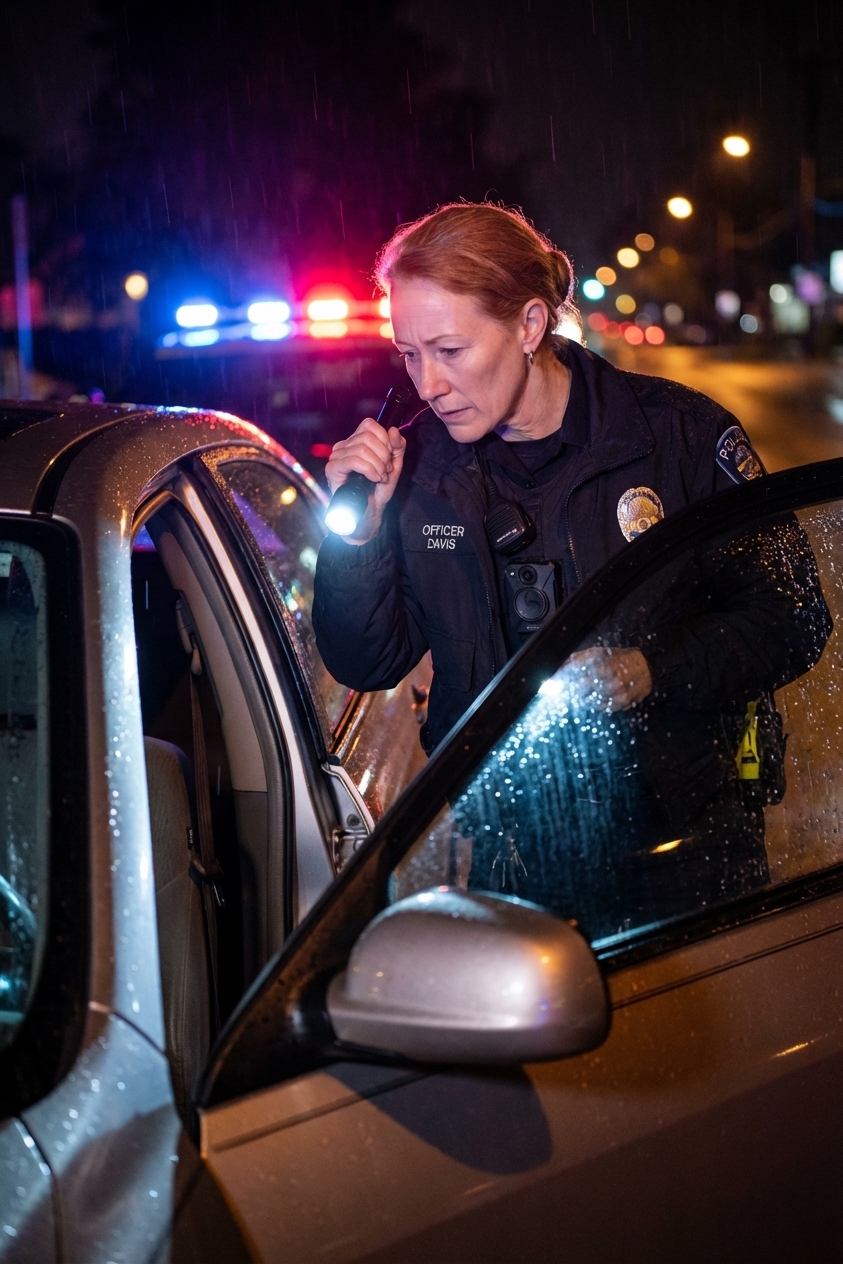
Refusing consent to a search
You can refuse consent to search your car, your bags, and in many cases your person. This is not being “uncooperative.” It is exercising a constitutional boundary.
What to say
Use clear, non-argumentative language:
- “I do not consent to any searches.”
- “I do not consent to a search of my car.”
- “I do not consent to a search of my bag.”
If they search anyway
If an officer searches after you refuse consent, it does not automatically mean the search is illegal. The officer may claim another legal basis, like probable cause. Your refusal still matters because it removes the easiest justification and preserves your argument later.
What not to do
- Do not physically block the search. Resisting can escalate and can create new charges, even if the search is later ruled unlawful.
- Do not argue on the roadside. The courtroom is where “unreasonable” gets sorted out.
Quick facts: Refusing consent
- Constitutional source: Fourth Amendment doctrine
- A clear phrase many lawyers recommend: “I do not consent to any searches.”
- Still comply with: lawful orders to exit the vehicle
- Do not do: physically interfere
One important detail: during a traffic stop in the U.S., police can generally order drivers and passengers out of the vehicle for officer safety (see Pennsylvania v. Mimms and Maryland v. Wilson). That order is separate from whether you consent to a search.
Do you have to show ID?
This is where constitutional principle meets state-by-state reality.
Traffic stops
If you are the driver, you are generally required to provide your driver’s license and, in most states, registration and proof of insurance. Refusing can lead to citations or arrest under state law.
Pedestrian stops and stop-and-identify laws
If you are on foot, whether you must identify yourself depends on your state and on whether the officer has lawfully detained you. The Supreme Court has upheld statutes requiring a person to state their name during a lawful Terry stop in some circumstances.
What “identify” can mean varies: some places focus on a name, others may require additional information (like date of birth or address). In many jurisdictions, refusal becomes an issue only if the detention itself is lawful.
Consensual encounters
If the interaction is truly voluntary, you can decline to provide ID and leave. The hard part is recognizing voluntariness in the moment, which is why the question “Am I free to go?” is so useful.
Quick facts: ID
- Constitutional source: Fourth Amendment (seizure rules) plus state law
- Driver: usually must provide license and required documents
- On foot: varies by state and by whether you are lawfully detained
- Best clarifying question: “Am I being detained?”
If you want the safest middle path, provide the required driving documents during a traffic stop, and avoid volunteering extra information.
Recording the police
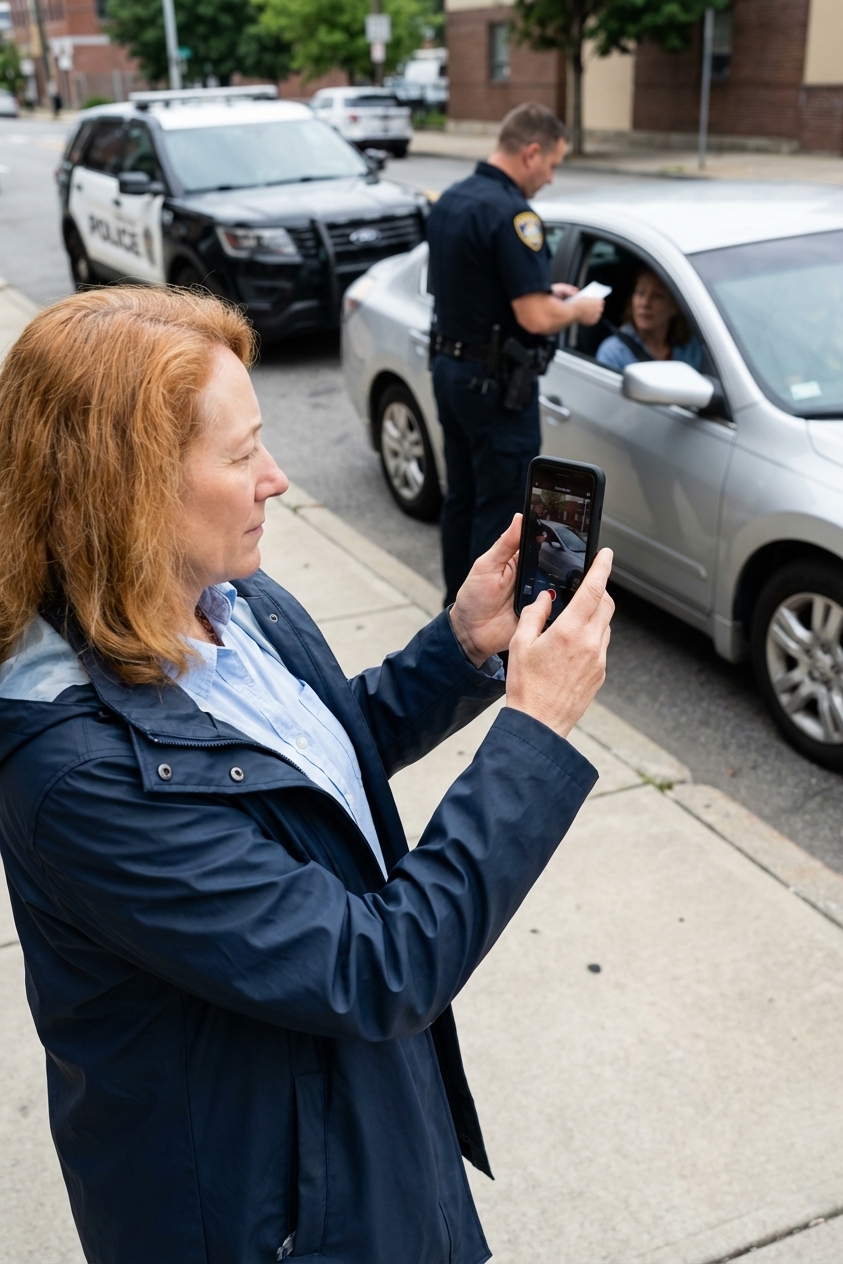
In much of the country, courts have recognized a First Amendment right to record police officers performing their duties in public. The reasoning is straightforward: gathering information about government conduct is part of a free press and free speech tradition.
That said, the details are not perfectly uniform everywhere, and limits can vary by jurisdiction and by what the officer says is necessary to control the scene.
What that means in practice
- You can often record so long as you are not interfering.
- You can record from a safe distance. Interference laws and officer safety concerns can limit how close you can get.
- You may be ordered to move back for safety or scene control. Comply physically, and keep recording if you can do so without interfering.
Two important cautions
- Audio recording rules vary: Most recording disputes today involve video in public, but audio recording laws still exist and differ by state. Open, obvious recording is safer than secret recording, and some edge cases remain unsettled.
- Phone searches and seizures: Police generally need a warrant to search the contents of your phone (see Riley v. California), with limited exceptions like consent or exigent circumstances. In some situations they may seize a device as evidence. If you record, use a passcode and enable automatic cloud backup ahead of time.
Quick facts: Recording
- Constitutional source: First Amendment (as developed by federal courts)
- Rule of thumb: record openly, do not interfere
- Protect your footage: passcode, backup
- Common mistake: moving closer after being told to step back
Orders you must follow
Rights are not a license to disobey every instruction. During stops, courts give police leeway to control the scene for safety.
Common lawful orders
- Exit the vehicle during a traffic stop.
- Keep your hands visible and avoid sudden movements.
- Move to a specific location nearby for safety.
How to handle it
Comply physically, but preserve your rights verbally:
- “I will comply. I do not consent to any searches.”
- “I’m not refusing. I’m exercising my right not to answer questions.”
This combination is boring, which is exactly why it works. You are not giving consent, not giving statements, and not giving the officer a “resisting” narrative.
Reasonable suspicion and probable cause
These phrases are legal thresholds that control what police can do next.
- Reasonable suspicion is a lower standard that can justify a brief detention and, in limited circumstances, a pat-down for weapons.
- Probable cause is a higher standard that can justify an arrest and can justify some searches, including many vehicle searches under the automobile exception.
You do not need to win an argument about these standards on the roadside. The goal is to avoid creating probable cause for something else, avoid consenting, and make it to a later stage where the law is applied calmly and on the record.
How long can a stop last?
A traffic stop is not supposed to last longer than necessary to handle the reason for the stop. Police generally cannot extend a stop for unrelated investigation without additional justification (often discussed under Rodriguez v. United States).
K-9 sniffs
A dog sniff around the outside of a vehicle is often treated differently than a full search, but a key practical point is timing. If a K-9 sniff measurably extends the stop beyond the time needed to handle the traffic purpose, courts may require reasonable suspicion for that extension.
Sobriety tests: a common trap
Sobriety investigations are one of the most common places where people talk themselves into trouble.
- Field sobriety tests (walking a line, eye tests, etc.) are optional in some states and effectively mandatory in others. The consequences for refusal vary.
- Preliminary breath tests (roadside breath devices) also vary by state.
- Chemical tests after arrest (breath or blood under implied-consent laws) have their own rules and penalties for refusal, and they differ widely.
Jurisdiction varies: If you are unsure, the safest approach is to be polite, ask what is required, and avoid guessing your way into a refusal that triggers penalties.
If you are a passenger
Passengers have rights, but the practical reality is that a traffic stop often controls everyone in the car.
- You may be detained for the duration of the stop, even if you did nothing wrong.
- You can be ordered out of the vehicle in many situations.
- Your ability to leave depends on the officer’s instructions and the situation. You can still ask, calmly: “Am I free to go?”
What to do during the stop: a simple script
If you want something actionable to hold onto, use this sequence.
Step 1: Be predictable
- Pull over safely, turn off the engine, lower the window.
- Keep hands visible on the wheel.
- At night, turn on the interior light.
Step 2: Exchange required documents
- Provide license, registration, and insurance when requested.
- Tell the officer before reaching: “My registration is in the glove box. I’m going to reach for it now.”
Step 3: Limit the conversation
- If asked investigative questions: “I’m exercising my right to remain silent. I’m not answering questions.”
Step 4: Refuse consent clearly
- If asked to search: “I do not consent to any searches.”
Step 5: Clarify status
- “Am I free to go?”
This is not about being difficult. It is about preventing a routine stop from becoming an evidence-gathering session built out of your own words.
If your rights are violated: what next
In the moment, your priority is safety. After the encounter, your priority is documentation.
Right after the stop
- Write down everything while it is fresh: time, location, patrol car number, badge names, exact phrases, witnesses.
- Save evidence: photos, video, receipts showing where you were, and any messages you sent immediately after.
- Seek medical attention if you were injured, and keep records.
Legal tools that may apply
- Suppression of evidence: If an unlawful search produced evidence, a lawyer can seek to keep it out under the exclusionary rule.
- Internal complaints: You can file with the department, but do not assume this replaces legal advice.
- Civil lawsuits: In some cases, people sue under federal civil rights law (often discussed as “Section 1983” claims). Qualified immunity and other defenses are real hurdles, which is why facts and documentation matter.
Quick facts: After a violation
- Do not fight on the roadside. Document and challenge later.
- Preserve evidence quickly. Memories fade, videos disappear.
- If charged, get counsel. Suppression arguments are time-sensitive.
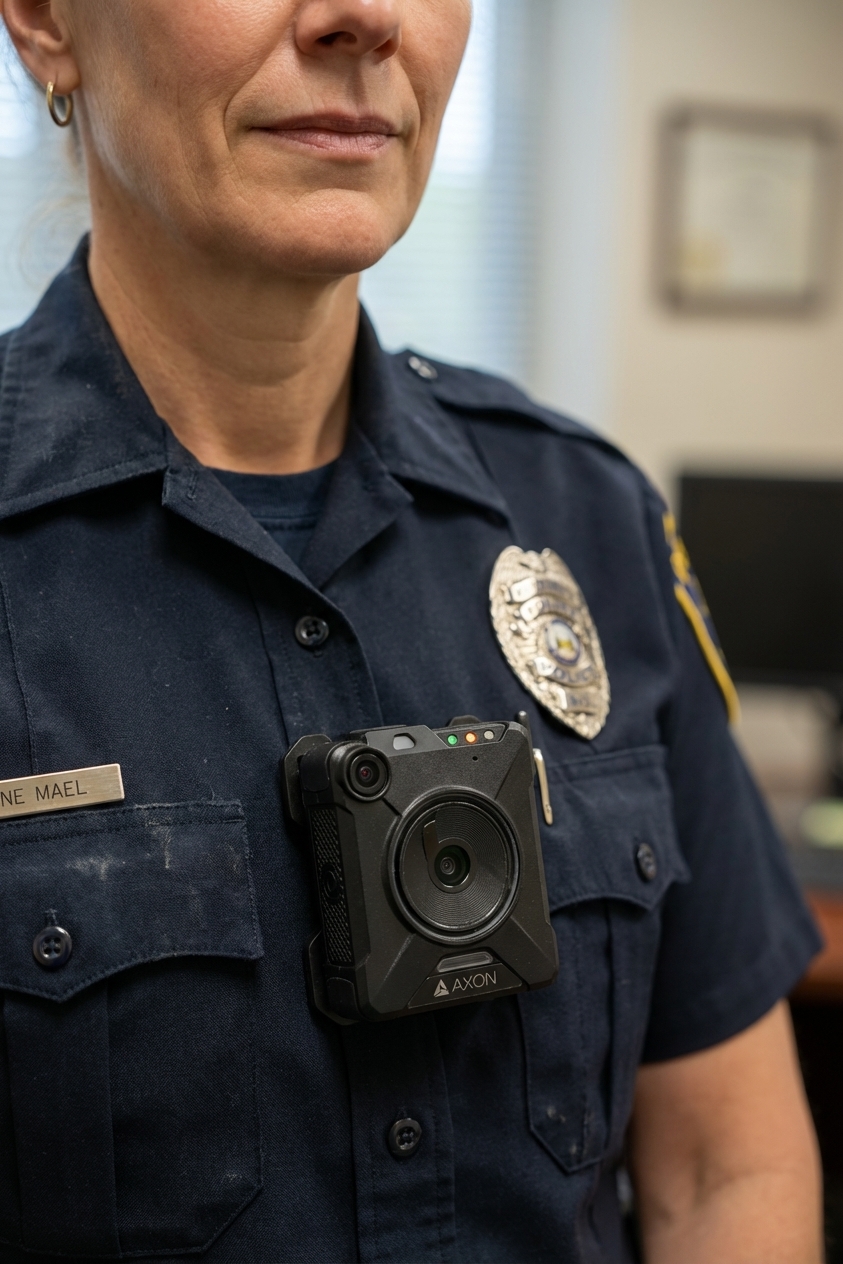
- Ask for records. Body camera footage may be requestable under state public records laws, depending on exemptions.
Common myths that get people in trouble
- Myth: “If I refuse to answer questions, they have to let me go.” Reality: Silence is a right, not a release button.
- Myth: “If I say ‘I do not consent,’ they cannot search.” Reality: They may search under a different legal theory, but your refusal matters later.
- Myth: “If they did not read Miranda, the case is over.” Reality: Miranda is mainly about custodial interrogation and the admissibility of statements, not the legality of the stop itself.
- Myth: “I can physically stop an unconstitutional search.” Reality: Physical resistance is one of the fastest ways to turn a legal dispute into a safety crisis.
The Constitution is powerful, not automatic
The Bill of Rights is not a force field. It is a set of rules that courts enforce later, often long after the flashing lights are gone.
That is why the most effective thing you can do during a police stop is usually the least dramatic: be calm, be clear, do not consent, exercise your right not to answer investigative questions, and save the argument for the place where facts and law actually get heard.
Not legal advice: This article is general information about U.S. constitutional principles and common stop scenarios. State laws vary, and individual facts matter. If you face charges or believe your rights were violated, consult a qualified attorney in your jurisdiction.