
You do not need a law degree to attend a protest. But you do need to understand one uncomfortable truth: the First Amendment can protect a lot of protest speech and expressive conduct, but it does not turn every tactic into a constitutional right.
The Constitution gives you real leverage against government retaliation and sets boundaries for police conduct in public. It also gives police real authority to keep order. The friction between those two truths is where most protest arrests and lawsuits live.
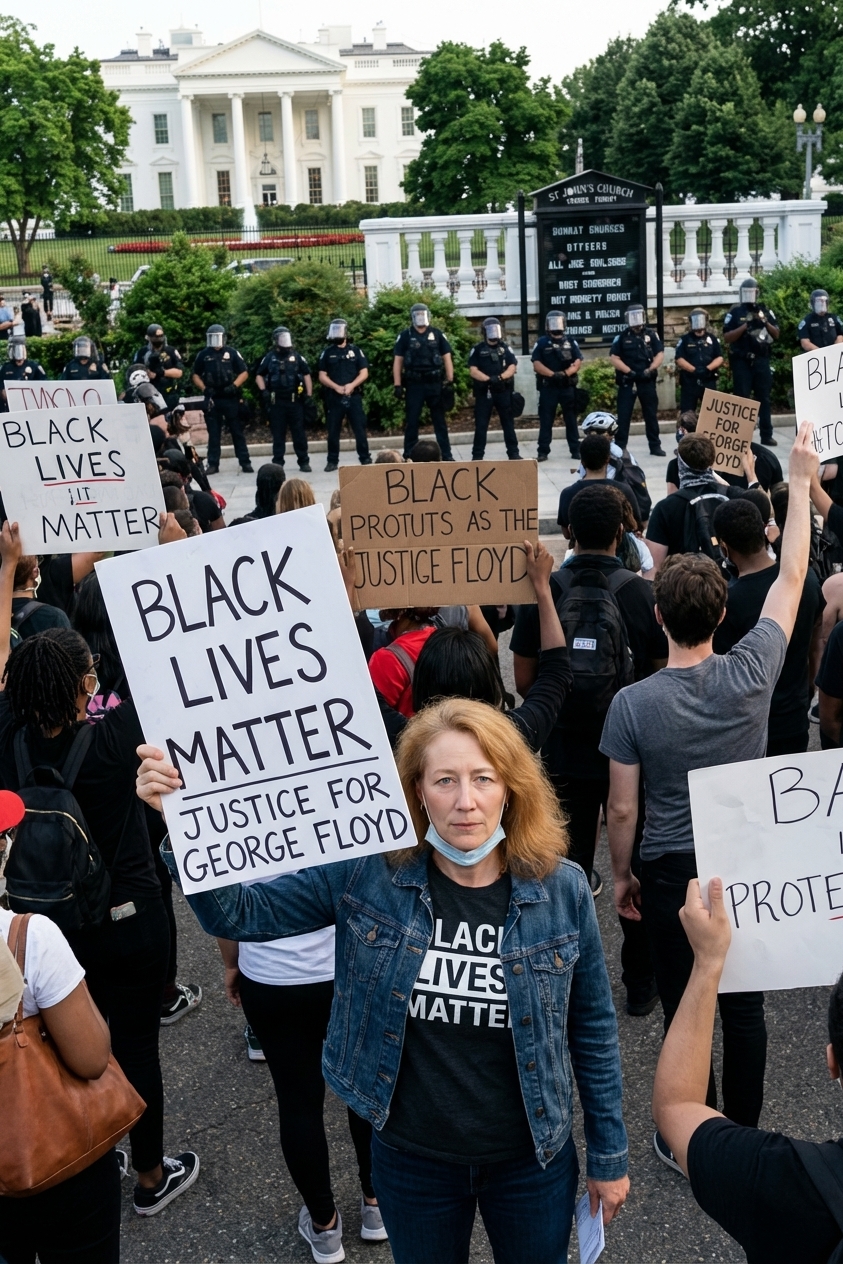
Quick answers before you step outside
Do I have a constitutional right to protest?
Yes. The First Amendment protects speech, peaceful assembly, and the right to petition the government. Those protections apply whether your message is popular or infuriating.
But the First Amendment does not guarantee you the right to protest anywhere, any time, or in any manner. Governments can enforce reasonable rules about where, when, and how protests happen, especially to manage safety and traffic.
Does the First Amendment protect me from arrest at a protest?
It protects your right to express a viewpoint. It does not immunize you from arrest for conduct that is illegal independent of the message, like blocking a highway, vandalism, assault, or refusing a lawful and clearly communicated order to disperse.
If an order is unlawful, vague, or impossible to comply with, it can be challenged later. But the street is rarely the place where that argument helps you.
Can I be searched just for being at a protest?
Not automatically. The Fourth Amendment still applies. But searches can happen under several common protest scenarios: a lawful arrest, a lawful stop with reasonable suspicion, a weapons frisk, or screening at certain secured entrances.
Important nuance: a frisk is not automatic during a stop. Under Terry, officers generally need reasonable suspicion that you are armed and dangerous, not just that you might have committed some crime.
If I am arrested, do I have to talk?
No. The Fifth Amendment protects you from being compelled to incriminate yourself. In practice, your safest default is to identify yourself if your state requires it, then say you want to remain silent and you want a lawyer.
Also remember: police do not have to read you Miranda rights on the spot unless they are doing custodial interrogation. Do not wait for a Miranda warning to stop talking.
Scenario 1: You are protesting on a sidewalk or in a park
What is clearly protected
- Holding signs, chanting, singing, and handing out leaflets in traditional public forums like sidewalks and parks.
- Peaceful marching that follows lawful instructions and does not unlawfully block traffic.
- Being loud and critical of public officials, including police, as long as you are not making true threats or inciting imminent violence.
What the government can regulate
Even in classic public spaces, officials can enforce time, place, and manner rules that are:
- Content-neutral (not based on your viewpoint)
- Narrowly tailored to a significant governmental interest (safety, traffic flow, preventing fights)
- Leaving open alternative channels to communicate your message
This framework comes from cases like Ward v. Rock Against Racism (1989), which upheld New York City sound rules for a bandshell because the rules were aimed at noise control, not silencing a message.
What is not protected just because it is political
- Blocking roads or bridges without authorization.
- Entering restricted areas, including certain government buildings or fenced perimeters.
- Damaging property, even if you think the cause is morally urgent.
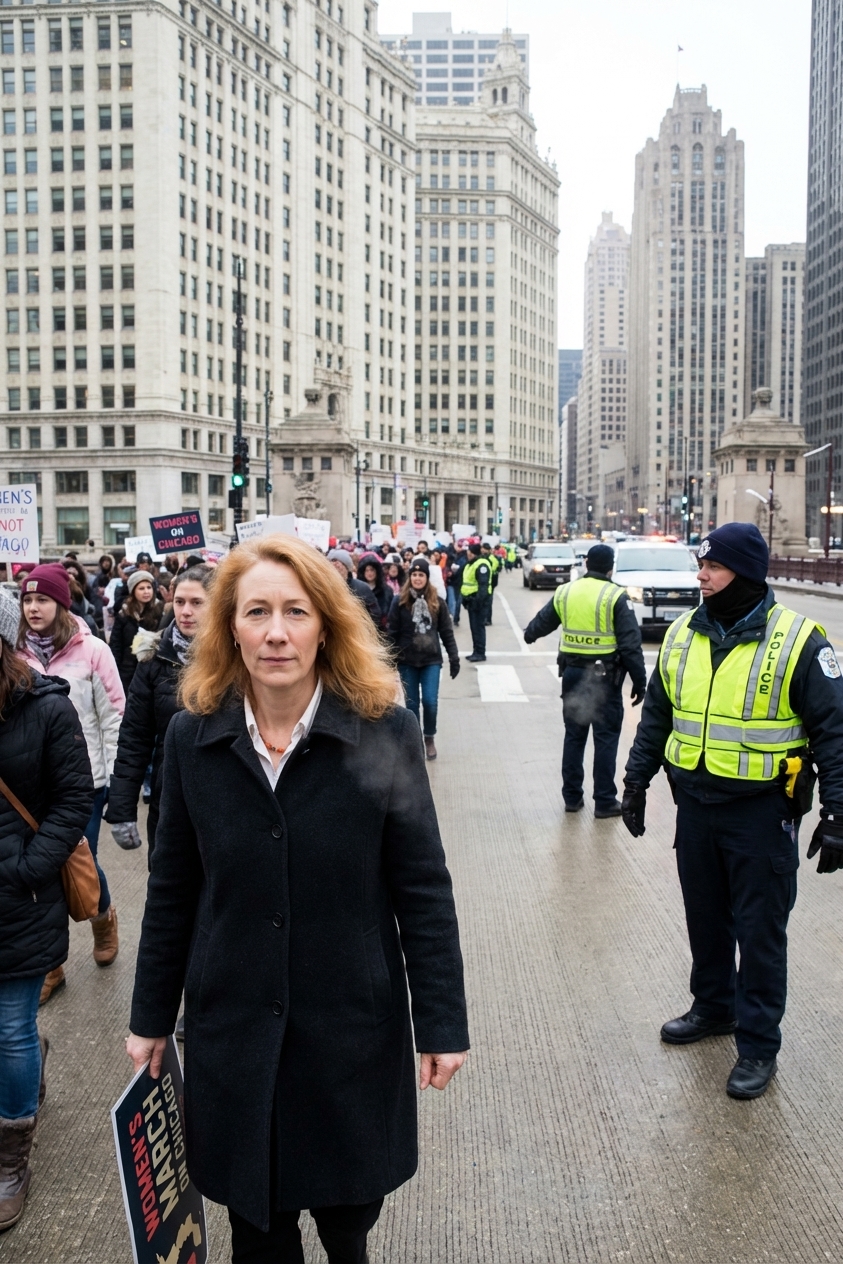
Scenario 2: Police declare an unlawful assembly or order the crowd to disperse
When can police disperse a protest?
Police can order dispersal when a crowd is no longer peaceful or when officials can point to specific, legitimate safety concerns, such as violence, property destruction, or a serious and articulable risk of it. They can also disperse groups in certain locations if a lawful order is needed to clear traffic or enforce a curfew or emergency order.
Standards and statutory triggers vary widely by state and city. But there are a few common pressure points: the order should be lawful, communicated clearly, and give people a reasonable opportunity to comply.
The key legal idea is that the First Amendment protects peaceable assembly. Once a gathering becomes violent or poses a credible threat of violence, courts often give governments more room to act.
When dispersal orders become constitutionally suspicious
Dispersal orders can be challenged when they are:
- Viewpoint-based (aimed at silencing one side)
- Vague or impossible to comply with (no clear exit routes, conflicting commands, blocked paths)
- Used as a pretext to arrest people who are trying to comply
Courts have also been wary of laws that let officials shut down speech too easily. In Hague v. CIO (1939), the Supreme Court emphasized that streets and parks are held in trust for public use for assembly and discussion. And in Edwards v. South Carolina (1963), the Court reversed breach of the peace convictions of peaceful civil rights protesters, rejecting the idea that the government can punish a demonstration simply because onlookers are hostile.
If you hear a dispersal order, what should you do?
- Listen for specifics: where to go, which streets are open, what the deadline is.
- Move calmly and avoid being pulled into running crowds, which can escalate police response.
- Do not debate on the street: arguing in the moment rarely helps. Preserve your challenge for later and focus on getting out safely.
- Record if safe, but prioritize exiting if police are pushing the crowd.
One more reality check: sometimes crowds get boxed in or exits get blocked. If you cannot safely leave, document that fact if you can, stick with calmer movement, and avoid doing anything that gives police an extra justification to single you out.
Scenario 3: You are told you need a permit
Do protests always require permits?
No. Many places do not require a permit for small gatherings on sidewalks that do not block traffic. Permits are more common for large marches, amplified sound, street closures, or events that require city resources.
When permit rules are allowed
Permit systems can be constitutional if they use clear, objective criteria and do not give officials open-ended discretion to say yes to friendly groups and no to everyone else.
The Supreme Court has been especially skeptical of licensing schemes that let officials deny permits based on vague standards. In Shuttlesworth v. City of Birmingham (1969), the Court struck down a parade permit system that gave officials too much discretion and was used to suppress civil rights demonstrations.
When permit rules cross the line
- Unclear standards (permits granted or denied based on what officials think is “appropriate”)
- Excessive fees designed to price out speech
- Delays that make timely protest impossible, especially for fast-moving political events
In Forsyth County v. Nationalist Movement (1992), the Court invalidated a permit fee scheme that let officials raise fees based on anticipated hostility. The government cannot make speakers pay more because the public might react badly.
Scenario 4: Public vs. private property
Why this matters
The First Amendment mainly restrains the government, not private owners. That means your rights look very different depending on whether you are protesting on public property (sidewalks, parks) or private property (shopping malls, privately owned plazas, corporate campuses, many private universities).
If you are on private property
If the owner or their agent tells you to leave, you generally have to leave. If you refuse, you can be removed and possibly arrested for trespassing, even if your protest is peaceful.
There are exceptions and edge cases. Some states provide broader speech protections in certain privately owned spaces open to the public, and some campuses have their own rules and obligations. But do not assume the U.S. Constitution guarantees you a right to demonstrate in a mall or inside a private building.
If you are in or near government buildings
Even though government property is public, it is not all the same. Inside buildings, courthouses, secured entrances, and sensitive facilities, speech restrictions and recording limits are often tighter than on sidewalks outside.
Scenario 5: You want to record police
Is there a constitutional right to record police in public?
Many federal courts have recognized that recording police performing their duties in public is protected by the First Amendment, subject to reasonable limits. A leading case is Glik v. Cunniffe (1st Cir. 2011), where the court held that a bystander had a clearly established right to record police making an arrest in a public place.
This is not yet a neat, universal Supreme Court rule, and the exact standards can vary by jurisdiction. But the general direction is consistent: if you are in a place you have a right to be, and you are not interfering, recording is strongly protected.
What counts as “interference”?
Interference is not “the camera makes us uncomfortable.” Interference is conduct that actually hinders police activity, like physically obstructing, refusing to back up after a lawful command, shining lights in officers’ faces during a tense encounter, or entering a secured perimeter.
What about wiretapping or eavesdropping laws?
Many readers worry about this. Recording on-duty police in public, where there is usually no expectation of privacy, is often lawful. But state laws vary, and rules can change if you are recording inside private property, secured facilities, or capturing audio in unusual circumstances. If you are unsure, focus on staying in a lawful place and not interfering.
Can police make you delete video?
Generally, no. Forcing deletion raises serious First and Fourth Amendment issues.
An officer may sometimes seize a phone as evidence under limited circumstances, but accessing its contents generally requires a warrant. In Riley v. California (2014), the Supreme Court held that police generally need a warrant to search the contents of a cell phone seized incident to arrest, with narrow exceptions like true exigencies.
Practical recording tips that help you stay inside the law
- Keep distance and zoom in instead of stepping closer.
- Say as little as possible while filming. Narrating can escalate tension.
- Back up files automatically if you can.
- Be mindful of location: recording inside courthouses, secured areas, or behind police lines can trigger different rules.
- Do not physically resist if an officer tries to take your device. Contest it later with counsel.
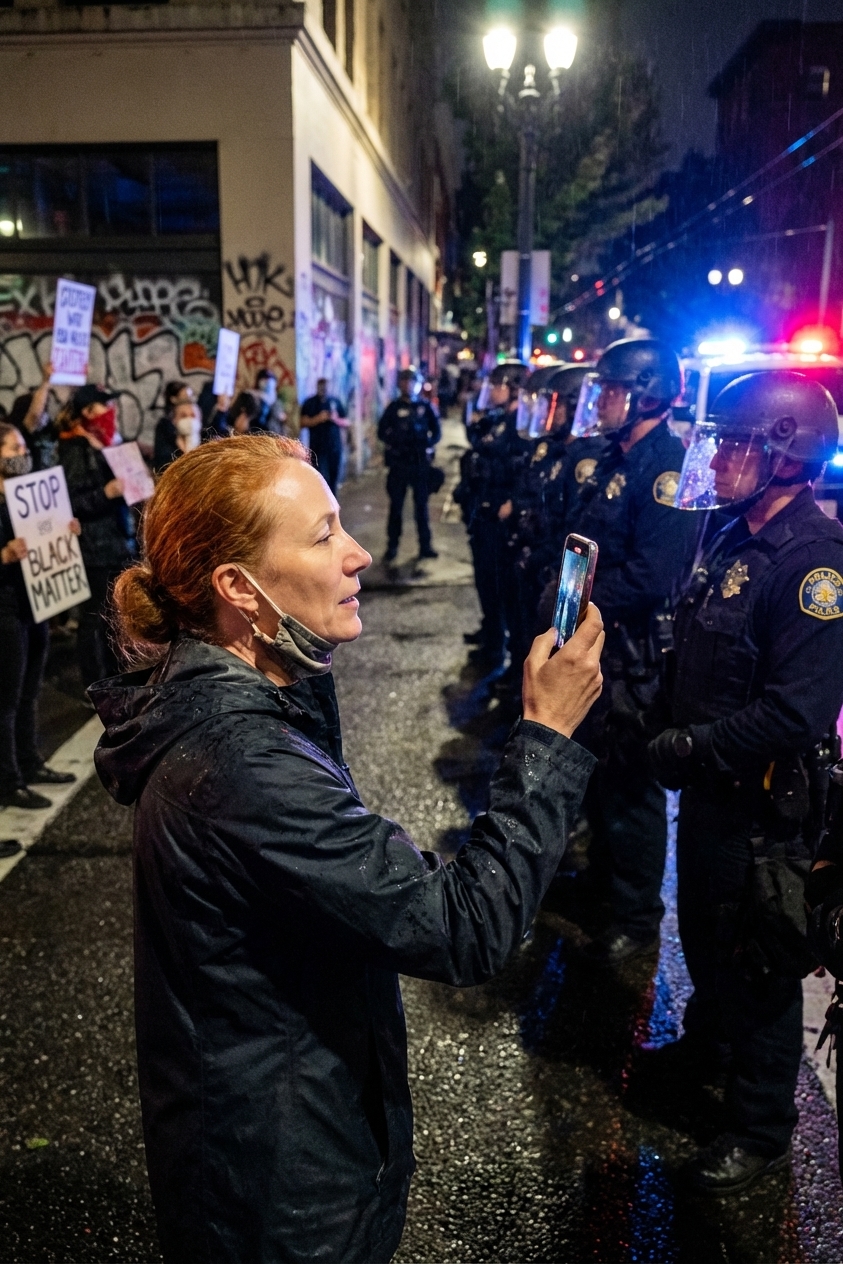
Scenario 6: You are stopped, questioned, or told to leave
Do you have to show ID?
It depends on your state and the situation. Some states have “stop and identify” laws that can require you to provide your name during a lawful stop. In Hiibel v. Sixth Judicial District Court of Nevada (2004), the Supreme Court upheld a law requiring a suspect to state his name during a valid Terry stop.
Two key limits: police still need a lawful basis to stop you in the first place, and Hiibel did not create a nationwide rule that you must always produce physical identification on demand.
Being present at a protest is not, by itself, reasonable suspicion of a crime.
Can police order you to move?
Often, yes. Police can enforce crowd-control orders tied to safety and traffic management, especially in tense conditions. Your strongest position is compliance in the moment and documentation for later review if the order was unlawful or selectively enforced.
One tactical principle that helps: comply physically when you can, and do not waive rights verbally. You can say “I do not consent” and still step back.
What should you say?
- Ask: “Am I free to leave?”
- If yes, leave calmly.
- If no, say: “I am going to remain silent. I want a lawyer.”
Scenario 7: You are detained or arrested
Detained vs. arrested
Detained usually means a temporary stop. Police need reasonable suspicion. Arrested means you are taken into custody. Police need probable cause.
What police can do if you are arrested
- Search you incident to arrest
- Take your belongings for inventory
- Transport you to a station or processing area
What you should do if you are arrested
- Do not physically resist, even if you believe the arrest is unlawful.
- Do not consent to searches beyond what officers claim they are authorized to do.
- Say you want a lawyer and then stop talking.
- State medical needs clearly if you have them, and ask that they be documented.
- Remember details: badge numbers, vehicles, time, location, witnesses.
What about mass arrests?
Mass arrests are where constitutional ideals meet logistical reality. Police sometimes make broad arrests for offenses like curfew violations, unlawful assembly, or failure to disperse. Courts later scrutinize whether probable cause existed for each person, not just for the crowd as a whole.
If you were arrested in a group while trying to leave, that fact can matter later. So can your video, witness contacts, and the exact wording of dispersal orders.
After arrest, timelines vary. You may be held for processing before release, bail, or a first court appearance depending on local rules and the charges.
Limits that surprise people
“Free speech zones” and fenced perimeters
Governments sometimes set restricted areas around events, especially where security is a concern. Some restrictions survive in court, especially near sensitive sites. Others are struck down if they effectively ban meaningful protest or are used to hide dissent from public view.
Think of this as the protest version of airport security: the state has more room to impose boundaries when it can show a credible safety justification.
Counterprotesters have rights too
The First Amendment does not belong to one side. The government can separate opposing groups to prevent violence, but it cannot silence one side simply because the other side threatens trouble. The Supreme Court has repeatedly rejected a “heckler’s veto,” including in Terminiello v. Chicago (1949), emphasizing that speech can be provocative and still protected.
Threats and incitement are not protected
Political anger is protected. True threats and intentional incitement of imminent lawless action are not. The modern incitement standard comes from Brandenburg v. Ohio (1969), which protects advocacy of force or law violation in the abstract but allows punishment for speech directed to inciting imminent lawless action and likely to produce it.
A simple “stay protected” checklist
- Know the terrain: sidewalks and parks are generally strongest First Amendment ground; private property is different.
- Expect rules: permits and sound limits can be legal if content-neutral and not discretionary.
- Record smart: film from a lawful place and do not interfere.
- Dispersal orders are a pivot point: once declared, the risk of arrest rises quickly, even for peaceful people.
- If stopped: ask if you are free to leave; if not, invoke silence and counsel.
- If arrested: do not resist; do not explain; do not consent; ask for a lawyer; state medical needs.
Key cases worth knowing
- Hague v. CIO (1939): Streets and parks are traditional places for assembly and debate.
- Edwards v. South Carolina (1963): Peaceful protest cannot be criminalized as “breach of the peace” because it is unpopular.
- Shuttlesworth v. City of Birmingham (1969): Permit schemes cannot give officials broad discretion to suppress speech.
- Ward v. Rock Against Racism (1989): Time, place, and manner rules can be valid if content-neutral and reasonable.
- Forsyth County v. Nationalist Movement (1992): Government cannot raise permit costs based on anticipated hostile reactions.
- Brandenburg v. Ohio (1969): Incitement standard, protecting abstract advocacy but not imminent incitement.
- Hiibel v. Sixth Judicial District Court (2004): Some states can require you to state your name during a lawful stop.
- Glik v. Cunniffe (1st Cir. 2011): Recording police in public is protected by the First Amendment in many jurisdictions.
- Riley v. California (2014): Police generally need a warrant to search cell phone contents.
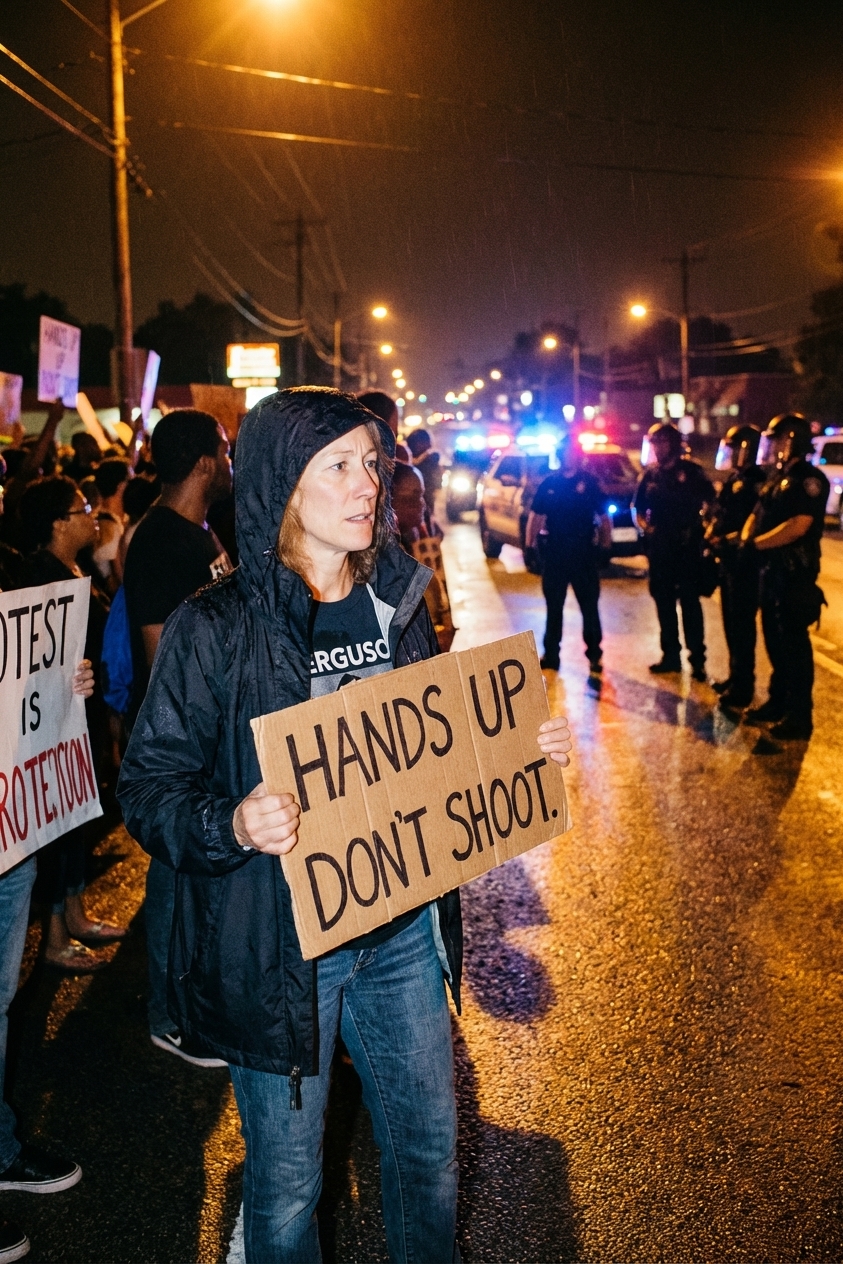
The Constitution is not a protest permit. It is a boundary.
At a demonstration, the First Amendment does not promise comfort, agreement, or safety from consequences. What it promises is something more fragile and more powerful: the government cannot punish you simply for speaking, assembling, or demanding change.
Your job is to stay on the protected side of the line. The government’s job is not to move that line just because your message is inconvenient. When either side fails, that is when courts get involved. And that is when constitutional rights stop being theory and start being the only thing you have left.