
Presidential power is easiest to defend when it looks like competence. A crisis hits, an industry freezes, a strike threatens supply chains, and the President acts. The harder question is not whether the action was useful. The question is whether it was lawful.
That tension is why Youngstown Sheet & Tube Co. v. Sawyer (1952) remains the case modern executive-power fights keep circling back to. Not because the facts are timeless, but because Justice Robert H. Jackson’s concurrence offered a clean way to frame what emergencies often try to blur: Is the President acting with Congress, without clear guidance from Congress, or against Congress?
Join the Discussion
What happened in Youngstown
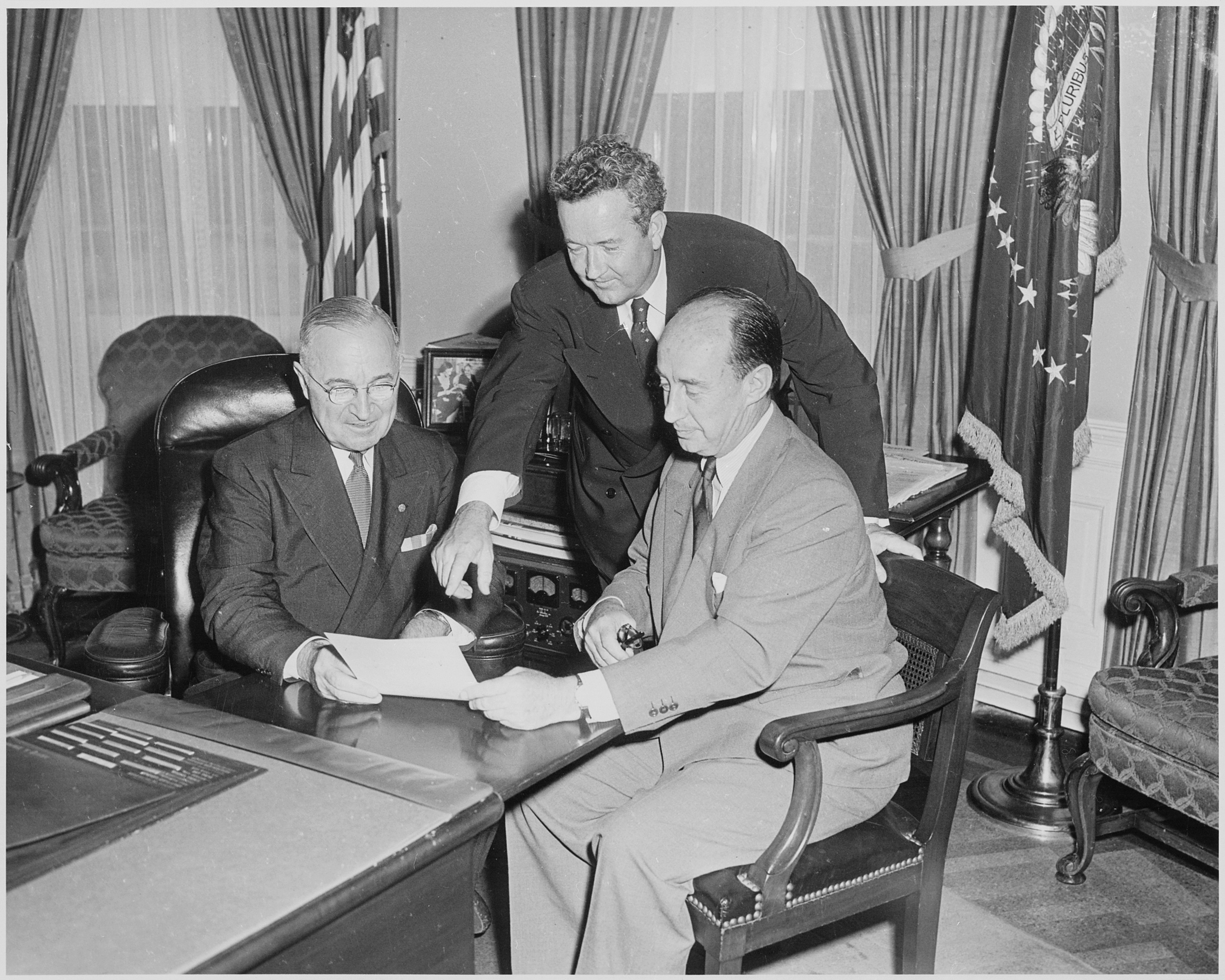
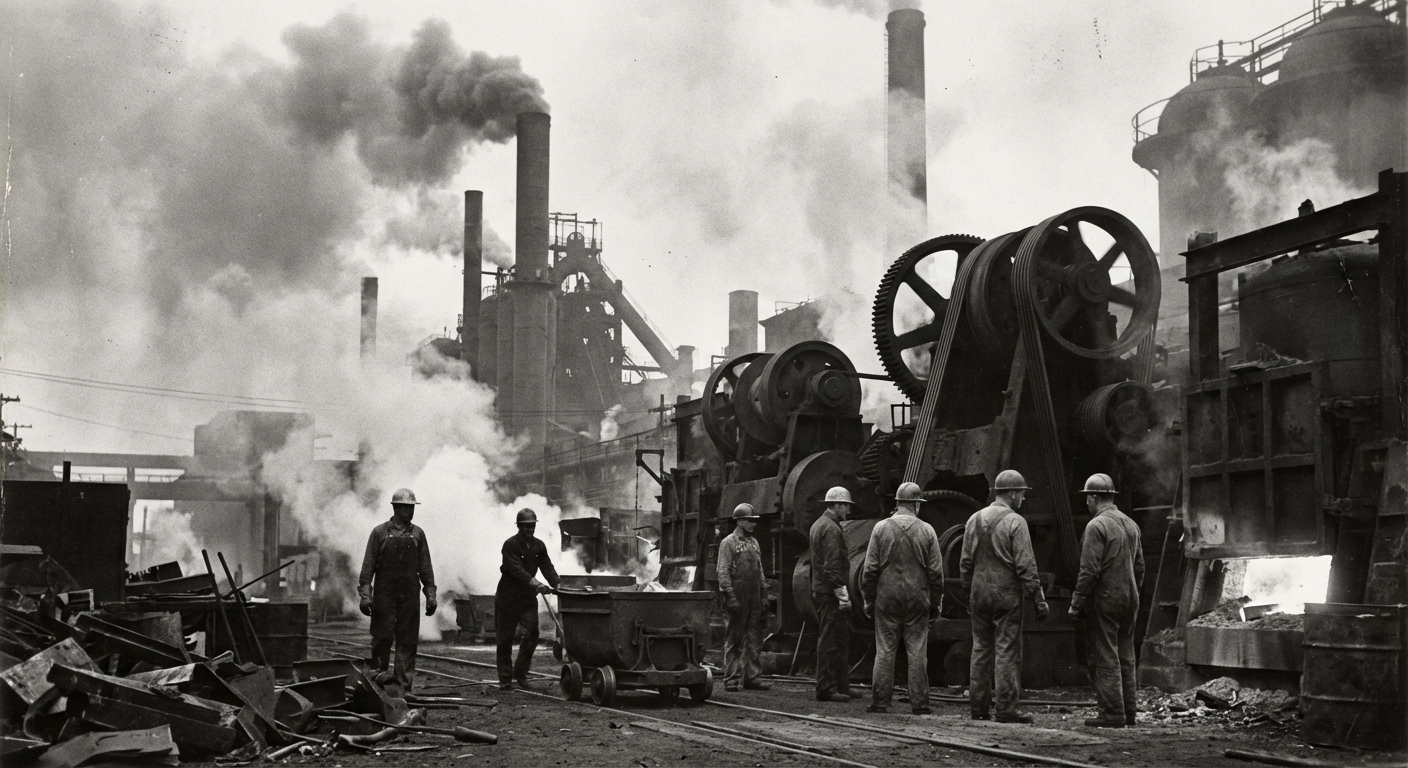
In 1952, the United States was fighting the Korean War. Steel was the backbone of tanks, ships, weapons, and domestic infrastructure. When a nationwide steel strike threatened production, President Harry S. Truman chose a dramatic solution: he ordered the federal government to seize and operate the nation’s major steel mills.
Truman did not rely on a statute explicitly authorizing seizure. He relied on his inherent power as Commander in Chief and on the argument that the war effort required uninterrupted steel production.
The steel companies sued. The Supreme Court ruled 6 to 3 that Truman’s seizure order was unconstitutional. Justice Hugo Black wrote the Court’s plurality opinion, emphasizing a textual point that still lands: the President executes the law, Congress makes it. If the government is going to take control of private property, Congress must authorize that power.
Youngstown also produced multiple concurrences and dissents. But the opinion that ended up shaping decades of executive power disputes was not Black’s. It was Jackson’s concurrence.
Why Jackson’s concurrence became the legacy
Jackson did not pretend the Constitution gives a neat checklist for every separation-of-powers fight. Instead, he described a practical reality: presidential power rises and falls depending on Congress’s posture.
That is the core insight of the three-tier framework. It takes executive power out of the realm of slogans and puts it into a structure courts can apply.
And while it began as a concurrence, it did not stay a mere academic gloss. In later cases, the Supreme Court repeatedly treated Jackson’s categories as the working standard for evaluating executive power, including in decisions such as Dames & Moore v. Regan and Zivotofsky v. Kerry.
Jackson’s three categories are often taught as a simple ladder. In practice, they function more like a map. Before a judge weighs necessity or policy, they ask: Which legal landscape are we in?
Tier One: With Congress
Category 1 is when the President acts “pursuant to an express or implied authorization of Congress.” Jackson called this the President’s power at its maximum.
Why? Because the President is not just using Article II power. He is also using power that Congress validly gave him under Article I.
What it looks like today
- Statute-backed emergency actions where Congress has written a trigger and delegated tools, such as authorities that activate once an emergency is declared under a statute.
- Sanctions and export controls operating through congressional frameworks, with the President selecting targets or adjusting terms within boundaries set by law.
- Enforcement and resource prioritization where Congress has assumed a measure of discretion will exist, though the hard cases turn on whether the executive is staying within statutory limits rather than rewriting them.
Tier One is not a free pass. Courts can still strike down actions that exceed the statute, violate individual rights, or collide with other constitutional limits. But as a structural matter, Jackson’s point is that judges are least likely to second-guess the President when Congress has clearly said “you may do this.”
Tier Two: Twilight zone
Category 2 is the most famous phrase in the concurrence: the zone of twilight. This is when the President acts in an area where Congress has not spoken clearly, or where legislative signals are mixed.
Jackson’s warning here is subtle. In the twilight zone, the law often depends on “imperatives of events and contemporary imponderables.” That sounds like flexibility. It is also a confession that separation-of-powers disputes can turn on context, historical practice, and how much judges trust the claimed necessity.
What courts look at
- History and practice: Have past presidents done similar things, and did Congress accept it or push back?
- Congressional acquiescence: Silence is not consent, but repeated silence in the face of a known practice can matter.
- The subject matter: Foreign affairs and national security often get more deference, though not unlimited deference.
- How specific the action is: Narrow, time-limited, and administrable actions tend to fare better than sweeping domestic control.
How this connects to executive orders
Many executive orders live here because they are not really “new laws.” They are instructions about how the executive branch will use discretion Congress already granted, or how agencies will coordinate under the President’s supervisory authority.
The legal fight starts when an order looks less like management and more like a substitute for legislation. Reasonable lawyers can disagree about where that line sits in close cases, which is part of why Tier Two is where so many modern disputes land.
Tier Three: Against Congress
Category 3 is when the President takes measures “incompatible with the expressed or implied will of Congress.” Jackson called this power at its lowest ebb.
This is the Youngstown posture. Congress had provided other tools for labor emergencies, such as Taft Hartley’s injunction procedures, and it had not authorized the kind of across-the-board seizure Truman ordered. Jackson’s framework treats that as the worst possible setup for unilateral executive power.
What “against Congress” means
It does not require Congress to pass a statute that says, “the President may not do X.” Courts can infer congressional opposition when:
- Congress creates a detailed statutory scheme and the President tries to build an alternative system by executive action.
- Congress sets conditions on a power and the President tries to bypass those conditions.
- Congress declines to authorize a requested tool, and the President claims inherent power to do it anyway.
Tier Three is where courts are most skeptical and where the President must rely almost entirely on Article II’s own text and structure, not on borrowed legislative authority.
Emergency powers and Youngstown
Modern debates over executive power often begin with a dramatic noun: emergency, crisis, national security, public health. Jackson’s framework forces a less dramatic question: What did Congress authorize, and what did Congress withhold?
That matters because “emergency” is not a free-floating constitutional power source. Emergencies can increase the pressure on presidents to act. They do not automatically expand the lawful toolbox. In practice, many emergency tools come from statutes, which is exactly the point: Congress often supplies the levers, the triggers, and the limits, through frameworks like the National Emergencies Act, IEEPA, or the Stafford Act.
Youngstown is the case that teaches this civic lesson plainly: a crisis does not dissolve the separation of powers. It tests it.
How to use the framework
You do not need to memorize every executive order category to think clearly about executive power. You need a few disciplined questions. Jackson’s concurrence gives you the right ones.
1) Did Congress authorize this?
If there is a statute with a grant of discretion, an emergency trigger, or a delegation to an agency that the President supervises, you are likely in Tier One. The real dispute then becomes whether the President stayed inside the statute.
2) Is Congress unclear?
If Congress has not squarely addressed the action, you are likely in Tier Two. Then history and practice do more work than many civics classes admit.
3) Did Congress say no, in substance?
If Congress built a comprehensive scheme, imposed conditions, declined to authorize a tool, or otherwise signaled opposition, the President’s action drifts toward Tier Three. That is where judges are more likely to treat the dispute as a constitutional limit, not just a policy disagreement.
The deeper point
It is tempting to read Jackson’s tiers as a scorecard for who “wins” power disputes. But the more durable takeaway is about constitutional legitimacy.
When presidents act with Congress, executive power looks like democratic governance. When presidents act without clear congressional direction, power looks like administration and practice. When presidents act against Congress, power starts to resemble unilateral rule, even when the motive is public safety or national strength.
Youngstown did not end emergencies. It made them harder to use as a blank check.
If you want to understand modern fights over executive action, start here. Not with the headline about the crisis, but with the Jackson question underneath it: Which tier are we in?