
The short version is straightforward, and it is procedural, not mystical: when presidential clemency documents are filed in a federal criminal case after conviction, the court can enter an order implementing them. That kind of order requires the court to stop enforcing whatever parts of the federal criminal judgment the clemency instrument actually covers, even while the court can still describe Jan. 6 as an attack on democratic government.
The constitutional version is the one that matters long after any single headline: the President’s Article II pardon power can remove the federal government’s authority to continue imposing federal punishment for covered offenses, and courts must recognize the legal effect of a valid pardon even when the underlying facts are grave. That does not mean a pardon rewrites the record, or that it erases every consequence. It means the court must implement the Constitution’s allocation of powers, including the limits and scope of the clemency grant the President actually issued.
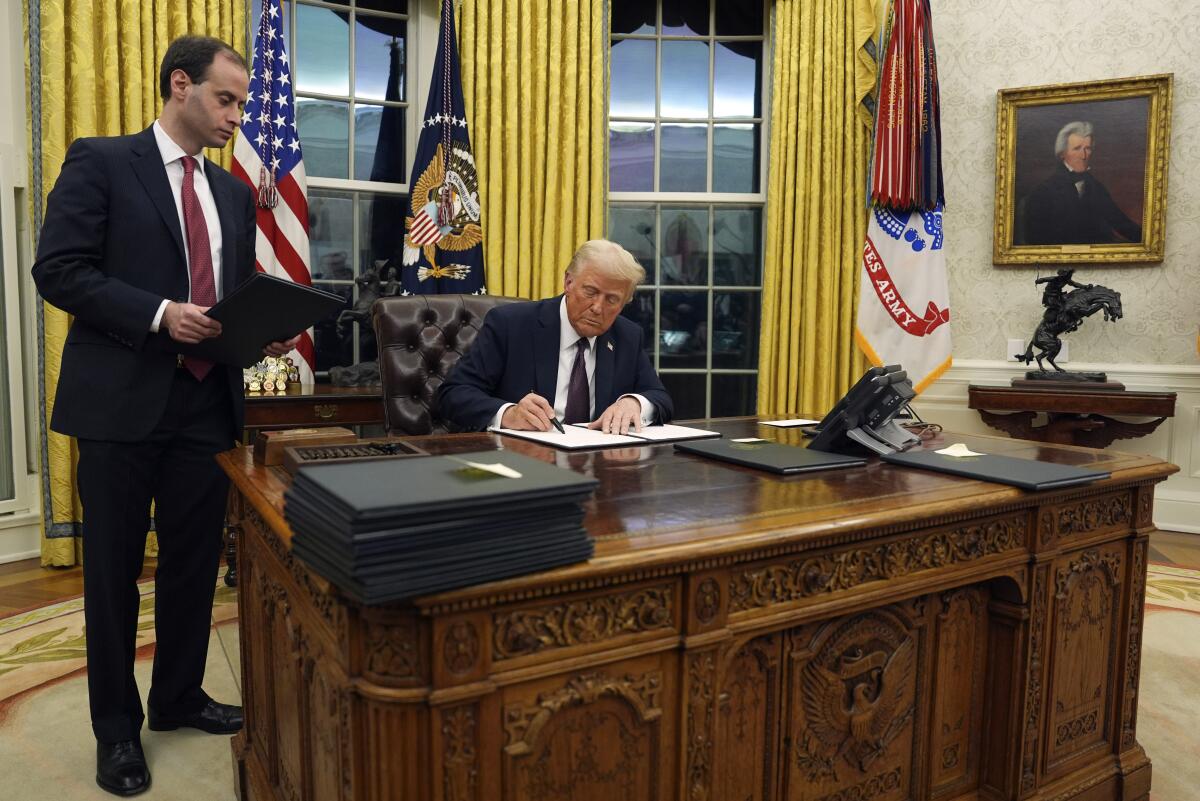
This article explains what courts do when a presidential pardon or related clemency arrives after conviction, what clemency does and does not erase, and how a judge can condemn the conduct while still concluding the Constitution leaves no lawful path to keep enforcing federal punishment for the covered offenses.
Join the Discussion
What this covers
This is an evergreen explainer about how federal courts implement presidential clemency after conviction. It does not assume any particular defendant or docket entry. When a specific case is in the news, the same framework applies, but the outcome depends on the exact text of the clemency document and the sentence components still being enforced.
Because public discussion sometimes uses the Proud Boys leadership prosecution as shorthand for larger Jan. 6 issues, it helps to be precise about what a well known caption can and cannot tell you. The Proud Boys case commonly captioned United States v. Nordean et al., No. 1:21-cr-00175 (D.D.C.), before U.S. District Judge Timothy J. Kelly, involved defendants including Ethan Nordean, Joseph Biggs, Zachary Rehl, Dominic Pezzola, and Enrique Tarrio. But a single caption can conceal separate procedural tracks and individualized outcomes. Clemency based relief is individualized. It applies only to the specific recipient and only to the counts and punishment components the clemency instrument actually reaches.
As a practical matter, a clemency driven post conviction order does not re litigate the trial. It addresses what remains after conviction: the judgment, the sentence, and the court’s authority to keep enforcing the sentence. Once the court concludes that clemency validly reaches a particular punishment component, the court must enter whatever implementing relief is necessary to bring enforcement in line with the Constitution and the instrument’s terms.
One way to think about the implementing order is this: it typically does not say the conviction never happened. It says, in effect, that the court will no longer enforce the covered punishment components going forward because the President has granted clemency as to them.
At the same time, a judge can still speak plainly about Jan. 6. A court can condemn the conduct and characterize the event as a violent assault on the peaceful transfer of power, even while recognizing that Article II requires the court to honor the legal effect of valid federal clemency.
Article II basics
The provision doing the work is Article II, which grants the President power to issue reprieves and pardons for federal offenses, with one explicit exception: cases of impeachment.
A few mechanics matter:
- A pardon is an executive act, not a judicial one.
- It applies only to federal crimes, not state prosecutions.
- Courts still have a role in interpreting the document’s scope, meaning whether it applies to the person, the offense(s), and the punishment component at issue.
- In practice, courts typically treat the filed clemency document as authoritative and may address authenticity if it is disputed or unclear, even if the “confirmation” is implicit rather than a formal factual finding.
- Courts generally do not review the President’s reasons for granting clemency. The judicial role is about application, not second guessing the choice.
- If a pardon validly covers an offense for which the federal system is still imposing punishment, it removes the legal basis for continuing to enforce that covered punishment, subject to the implementation details the court must resolve.
This is why clemency implementation orders can sound almost mechanical. The judge is not endorsing the conduct. The judge is implementing a constitutional allocation of authority that assigns clemency to the President, while leaving courts to interpret scope and enter an order that gives the clemency instrument legal effect.
For the core propositions, the Supreme Court has long treated pardons as constitutionally significant executive acts that courts must recognize according to their terms. Classic statements appear in cases such as Ex parte Garland, and later doctrine addresses acceptance and conditions in cases such as Burdick v. United States and Schick v. Reed.
What courts change
It can feel counterintuitive: defendants were tried, convicted, and yet a court later enters an order that halts some enforcement.
The key is that a federal criminal case is a sequence of legal steps rooted in constitutional authority. Congress defines crimes. The executive prosecutes. The judiciary adjudicates and imposes sentence. Then Article II gives the President power to grant clemency that can, depending on its text, eliminate the federal government’s authority to keep imposing federal criminal penalties for covered federal offenses.
There is not one mandatory form of order. Implementation can look different case to case. Depending on the posture and the instrument’s wording, a court might terminate supervised release, deem a fine satisfied, order release from custody if the custody is solely attributable to the covered counts, or close out certain remaining proceedings. The through line is the same: the court cannot continue to enforce punishment that the clemency instrument lawfully reaches.
Pardon vs commutation
Readers often lump clemency together, but the distinction matters in court.
- Pardon: forgiveness of the federal offense for purposes of federal criminal penalties. A pardon can relieve the recipient of federal punishment for the covered offense, and in some contexts it may help restore rights, but it does not necessarily vacate the conviction or erase the judgment from the record. How a pardon is treated for particular downstream purposes can vary by legal context.
- Commutation: reduction of a sentence without forgiving the offense itself. A commutation changes how much punishment is left to serve, and it often results in a narrower implementation order than a full pardon.
Because “clemency” can refer to either, and to other forms like remission, any account of what a judge did must track the document’s language: what type of relief it is, what it covers, and what it leaves untouched.
How courts apply it
Clemency has to be presented to the court. Typically, the defense or the government files the clemency instrument and asks for relief consistent with its terms. Procedurally, courts often treat this as a post judgment request to modify, terminate, or otherwise conform the judgment’s enforcement to controlling law, with the exact vehicle varying by posture and the relief sought, for example a motion to terminate supervised release, a joint motion to amend the judgment, or a motion to deem financial penalties satisfied.
The judge then determines what follows as a matter of law, including:
- whether the instrument is applicable as filed,
- which counts or punishment components it covers, and
- what parts of the sentence or judgment must be terminated or modified to give it effect.
This is also where drafting matters. Broad language can have broad effects. Narrow language can leave portions of a judgment intact.
Older doctrine includes disputes about acceptance of a pardon, often discussed through Burdick. In modern post conviction practice, acceptance is rarely litigated. The disputes are usually document driven: scope, and the specific implementing relief the court must enter.
Clemency can also be conditional. Under cases like Schick, the President may attach conditions to a commutation or pardon. If conditions are violated, the consequences depend on the instrument’s terms and the governing procedures, but the central point remains that conditions can matter, and courts will look to the text of the grant.
What it does not do
Clemency is powerful, but it is not a universal eraser.
- It does not rewrite history. A judge can still describe the facts and condemn the conduct in a judicial opinion.
- It does not bind states. State charges, if any, are outside Article II.
- It is not an acquittal. The legal mechanism is executive mercy and authority, not a finding that the government failed to prove guilt.
- It does not automatically expunge records. Court records and public documentation generally remain unless another legal process changes them.
- It may not remove all collateral consequences. Civil, regulatory, licensing, immigration, congressional, or private consequences can still turn on the underlying conduct, depending on the specific legal framework.
One common shorthand is that a pardon “wipes out” a conviction. In many contexts, the more accurate description is narrower: it can remove the federal government’s ability to keep imposing punishment for the covered offense. Whether any part of a judgment is vacated, satisfied, or simply no longer enforceable is a separate question that depends on the implementing order and the posture of the case.
Restitution and forfeiture
Restitution and forfeiture require extra care. Unlike imprisonment, supervised release, fines, and special assessments, restitution and forfeiture can be governed by distinct statutory schemes and are often treated differently by courts. In federal practice, restitution is frequently described as compensatory and mandatory under statutes such as the MVRA, even though it arises in a criminal judgment and can carry enforcement consequences that feel punitive.
That compensatory versus punitive characterization, plus the specific statutory authority for the obligation, is often what drives whether and how clemency affects restitution or forfeiture in a given case.
The practical takeaway is the cautious one: do not assume restitution, forfeiture, or collection obligations disappear automatically. Whether those obligations survive depends on the statute, the judgment, the terms of the clemency grant, and controlling law in the relevant circuit. Courts have not treated these questions uniformly across contexts, so outcomes can vary.
Not double jeopardy
Readers often reach for the Fifth Amendment’s Double Jeopardy Clause when they see convictions rendered unenforceable. Double jeopardy can be decisive in other post conviction contexts, especially when a court finds the evidence legally insufficient and the Constitution bars a retrial.
But that is not the core mechanism in a clemency driven result. Here, the federal system stops enforcing punishment because the executive branch has invoked clemency that removes the legal authority to punish for the covered federal offenses. The court’s role is to interpret scope and implement that constitutional consequence.
Limits and open issues
Even when a pardon stops federal punishment, other legal questions can remain separate from the criminal sentence itself.
- Impeachment: Article II clemency cannot be used in cases of impeachment.
- Contempt and court authority: Depending on the nature of the contempt and the instrument’s scope, contempt related issues can raise distinct separation of powers questions and may not track the ordinary criminal sentence analysis.
- Civil judgments: A pardon does not, by itself, undo civil liability or a civil judgment based on the same conduct.
- Congressional and constitutional disqualifications: Some consequences arise from constitutional provisions or separate statutes and may not be resolved by a criminal case implementation order.
Condemnation and duty
It is not a contradiction for a judge to rebuke the Capitol riot and still grant clemency driven relief. Constitutional criminal procedure is not a reward for good behavior. It is a restriction on government power and a set of assignments about which branch controls which decisions.
Article II clemency is one of those assignments. The judiciary can state its factual and moral assessments in the language of an opinion. But when it comes to whether the federal system will continue to enforce punishment for a covered offense, the Constitution gives the President extraordinary power, and the court’s job is to interpret scope and enter an implementing order that matches the grant.
Other Jan. 6 cases
A clemency based order in one Jan. 6 case does not automatically end other prosecutions. Clemency affects other cases only to the extent it covers the specific federal offenses and applies to the specific defendant in question.
More broadly, Jan. 6 prosecutions are individualized: different defendants, different counts, different evidence, different procedural postures. A clemency based order in a high profile matter does not, by itself, dissolve unrelated convictions that are not within the clemency instrument’s terms.
The takeaway
This framework is a reminder that the Constitution does two things at once in criminal cases:
- It empowers the federal government to prosecute federal crimes through Congress’s laws and the executive branch’s enforcement.
- It restrains that power through individual rights and through structural choices, including the President’s power to end enforcement of federal punishment through clemency.
If you want a durable takeaway, it is this: the same constitutional safeguards and structural powers that can frustrate punishment in a notorious case are the features that keep criminal justice from becoming purely a contest of public outrage. Sometimes that comes from the Bill of Rights. Here, it comes from Article II and separation of powers.
Quick answers
Why would a court grant relief?
Because once a valid clemency instrument is presented and is found to cover particular federal offenses or punishment components, the court must enter an order that brings the judgment’s enforcement into line with the instrument’s legal effect.
What constitutional provision does the work?
Article II’s pardon power, which requires courts to recognize the legal effect of valid federal clemency, except in impeachment, while still allowing courts to interpret scope.
Does this wipe out Jan. 6 prosecutions?
No. It affects only those defendants and federal offenses, and only those punishment components, covered by the clemency instrument’s terms.
Does clemency mean innocence?
No. It is not an acquittal. It is clemency, which can forgive an offense or reduce punishment without declaring the person factually or legally innocent.