
From the Oval Office on Friday, after weeks of exercising direct federal control over Washington, D.C., the President turned his attention to a new target. “Chicago’s a mess,” he declared, before adding ominously, “We’ll straighten that one out probably next.”
This is not a mere political boast. It is a direct threat to deploy the power of the federal government against a major American city. But this threat now runs headlong into a powerful constitutional firewall – a set of principles and laws that separates the President’s unique authority over the nation’s capital from his limited power in a sovereign state like Illinois.

There’s A Constitutional Difference Between D.C. And Chicago
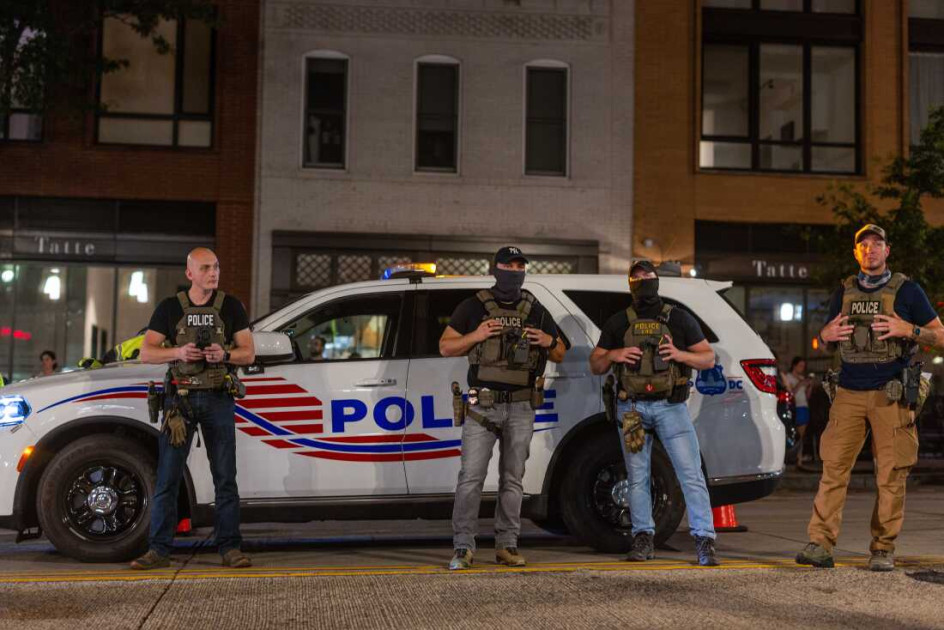
The recent federal takeover of Washington, D.C.’s police force was a raw display of executive power, but it was made possible only by the capital’s unique constitutional status.
The District Clause of Article I gives Congress – and by extension, the President – a level of direct authority over D.C. that exists nowhere else.
Chicago is not Washington, D.C. The power to police the city of Chicago belongs to the state of Illinois, a sovereign entity protected by the principles of federalism and the 10th Amendment.
The President cannot unilaterally “take over” the Chicago Police Department or deploy troops against the will of the state’s governor. To do so would be a flagrant and unconstitutional violation of the state’s sovereignty.

The Last Resort: The Insurrection Act of 1807
The President does have one, historically rare, and constitutionally extreme tool he could attempt to use: the Insurrection Act. This law, dating back to 1807, grants the President the authority to deploy federal troops domestically to suppress a rebellion or enforce federal law when a state is either unable or unwilling to do so itself.
This is a constitutional “nuclear option,” intended for moments of genuine insurrection or a complete breakdown of a state’s ability to uphold the law.
The critical question is whether a high crime rate, however serious, meets the incredibly high legal bar for invoking this powerful and dangerous statute. To declare a city’s crime problem an “insurrection” would be a radical and unprecedented interpretation of the law.
The Wall Between Soldier and Police
The framers of the Constitution, and generations of Americans since, have been deeply wary of using the military to police our own citizens. This principle is codified in the Posse Comitatus Act of 1878, which generally forbids the use of the U.S. military for domestic law enforcement.
The Insurrection Act is the primary, narrow exception to this fundamental rule. The President’s casual threat to “straighten out” Chicago, therefore, is a direct challenge to this historic American principle that there must be a wall between the soldier and the police officer.
The President may see crime in a major American city as a national problem requiring a federal solution. But the Constitution, through the principles of federalism and the strict limits on domestic military deployment, says otherwise. For the President to make good on his threat against Chicago, he would have to invoke one of the most extreme and constitutionally perilous laws on the books – a line that, for the health and stability of the republic, has almost never been crossed.