
Everyone learns the civics version early: Congress declares war, the President fights it.
Then you grow up, watch the United States enter major conflicts without a formal declaration of war, and realize the neat division is real, but incomplete. The Constitution does assign war-related powers. It just does not supply a single on and off switch labeled “WAR” that someone flips.
So who declares war under the Constitution? The literal answer is Congress. The functional answer is Congress plus the President, shaped by two centuries of practice, modern authorizations for use of military force, and a recurring argument about what counts as “war” in the first place.
Join the Discussion
The text
The Constitution’s war powers start with Article I, Section 8, which gives Congress the power to:
“declare War”
“grant Letters of Marque and Reprisal”
“make Rules concerning Captures on Land and Water”
raise and support Armies (with a two-year appropriations limit)
provide and maintain a Navy
make rules for the armed forces
call forth the militia to execute laws, suppress insurrections, and repel invasions
Congress also holds the broader spending power. In practice, appropriations and conditions on funding are among Congress’s most important war tools, even when no one uses the words “declare war.”
Article II, Section 2 then makes the President the Commander in Chief of the armed forces and the militia when called into federal service.
That is the basic architecture: Congress is constitutionally assigned the power to decide whether the nation will enter a legal state of war and to fund the machinery; the President directs that machinery once it is lawfully in motion. The long-running dispute is how much lawful motion the President can generate without Congress.
Why split the power
The Declaration of Independence accused King George III of dragging the colonies into violence and keeping standing armies at the ready. The Constitution responds by scattering military power across branches.
James Madison made the underlying point in his 1793 “Helvidius” essays: executives are most prone to war, so the Constitution deliberately placed the war decision in the legislature. The President could repel sudden attacks. But the decision to change the nation’s legal condition from peace to war was supposed to belong to the people’s representatives.
This is also why Congress controls the purse. Even a bold Commander in Chief cannot sustain a conflict Congress refuses to fund.
Declare vs make war
A persistent misconception is that Congress must issue a formal “declaration of war” before any military force is constitutional. The text does not expressly require a declaration for every use of force. It assigns Congress the power to declare war.
Historically, “declare war” did not always mean a single parchment-like proclamation. Declarations could be formal, but Congress also authorized hostilities through statutes short of declarations. The key idea was the legal decision to recognize and authorize a state of hostilities, with consequences that could include:
Changes to the rules of international engagement.
Effects on commerce and enemy property.
Clearer authority for detention, capture, and prize.
Stronger signaling to allies and adversaries.
One concrete early example: in the Quasi-War with France (1798 to 1800), Congress authorized limited naval hostilities and related measures without issuing a formal declaration of war. That pattern, authorization without a declaration, is not new.
In modern terms, the Constitution builds a spectrum. Formal declarations are one end. Limited hostilities are another. The hard question is where today’s sprawling “limited” conflicts actually fall on that spectrum.
What the President can do
The Constitution does not provide a tidy list of “President may use force in these scenarios.” Instead, we infer categories from text, structure, and historical practice.
1) Repel sudden attacks
Most scholars and many executive branch legal opinions accept that the President can respond to sudden attacks or imminent threats, including defending U.S. forces. The logic is practical and structural. Congress cannot deliberate fast enough to direct every defensive move, and the President is responsible for executing the laws and protecting the nation.
2) Limited operations
Modern presidents have claimed authority to use force abroad when the expected scope and duration are limited and when the action serves significant national interests. This is where controversy lives, because “limited” can stretch.
3) Operations authorized by statute
When Congress passes an authorization, the President’s role becomes clearer: execute that authorization as Commander in Chief.
Even then, conflicts arise over what Congress actually authorized and how far the President can go beyond it.
AUMFs
Because formal declarations of war are politically weighty and legally sweeping, Congress has often preferred a more tailored tool: the Authorization for Use of Military Force, or AUMF.
An AUMF is a statute. Like any other law, it must pass both houses of Congress and be signed by the President (or passed over a veto). It typically authorizes the President to use the armed forces against a named enemy, in a named region, under certain conditions, or for certain objectives.
How they differ
They can be narrower than a declaration of war, at least in theory.
They often delegate discretion to the President about tactics, targets, and timelines.
They can be open-ended, which turns “limited authorization” into a long-running conflict by inertia.
Key examples
2001 AUMF (Authorization for Use of Military Force, Pub. L. 107-40): passed after September 11, authorizing force against those responsible and associated forces. It became the legal backbone for counterterrorism operations across multiple countries for years.
2002 Iraq AUMF (Authorization for Use of Military Force Against Iraq Resolution of 2002, Pub. L. 107-243): authorized force to address perceived threats from Iraq and enforce U.N. Security Council resolutions. Its continued relevance became contested long after the initial invasion.
Whether these authorizations are faithful to the Declare War Clause depends on your view of what the Clause requires. If the Clause demands congressional buy-in, AUMFs satisfy it. If it demands clarity, specificity, and a genuine decision to enter war as a legal state, many AUMFs look like a workaround.
What the Court has said
The Supreme Court has touched war powers repeatedly, but it has rarely delivered a single, sweeping definition of when hostilities become “war” requiring a declaration.
Instead, the Court tends to do two things:
Recognize Congress’s central role when Congress has acted by statute, appropriation, or formal authorization.
Avoid direct showdowns between Congress and the President by treating many disputes as political questions or by resolving narrower issues like detention authority and due process.
A few anchor points readers often see cited:
The Prize Cases (1863), recognizing that a state of war can exist in fact, even without a formal declaration, and addressing presidential action in the context of rebellion.
Youngstown Sheet & Tube Co. v. Sawyer (1952), not a battlefield case, but the modern classic on executive power limits during wartime conditions.
Hamdi v. Rumsfeld (2004) and Hamdan v. Rumsfeld (2006), showing how congressional authorization (or the lack of it) shapes detention and military commission authority.
The pattern is consistent: when Congress authorizes force, the President’s wartime powers are usually at their strongest. When Congress has not authorized, the President’s claims are more vulnerable. But “vulnerable” is not the same thing as “invalid.” The gap between those two words is where modern war powers fights live.
Practice since 1945
The United States has issued formal declarations of war only a handful of times, clustered around major conflicts such as the War of 1812, the Mexican-American War, the Spanish-American War, World War I, and World War II.
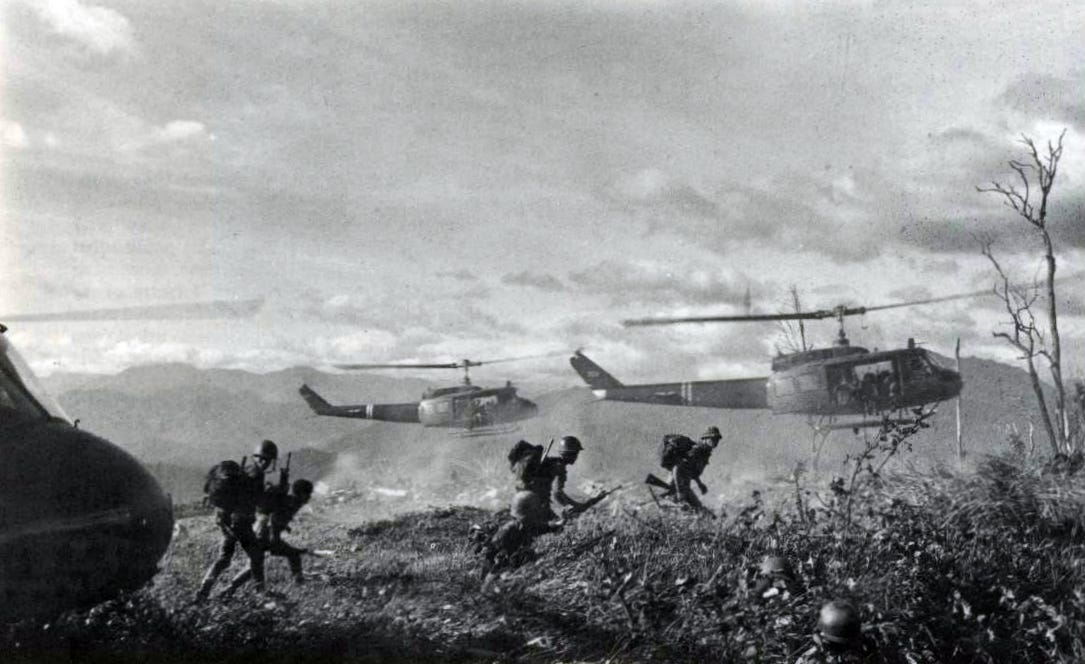
After World War II, the pattern shifted. Korea proceeded under U.N. Security Council resolutions and presidential action, alongside substantial congressional appropriations and political support, and also real domestic controversy, without a declaration. Vietnam relied on the Gulf of Tonkin Resolution and later appropriations, and the resolution’s scope and credibility became bitterly contested. The Persian Gulf conflict relied on a specific authorization. Post-9/11 operations relied heavily on the 2001 AUMF.
This is not mere trivia. Constitutional meaning is shaped by practice, especially when both political branches repeatedly behave as if a tool is legitimate. But practice can also be a slow constitutional drift: the longer Congress tolerates unilateral or loosely authorized war-making, the more normal it becomes.
War Powers Resolution
Here is the cleanest way to keep the layers straight:
The Constitution assigns powers. Congress declares war and controls funding and related authorities. The President commands forces.
AUMFs are how Congress often exercises its war-related powers in modern conflicts.
The War Powers Resolution (WPR) is a statute designed to manage how presidents introduce U.S. forces into hostilities and how Congress can respond.
The WPR does not rewrite the Constitution. It tries to operationalize shared war powers by creating reporting requirements and timelines. Most notably, it requires a report within 48 hours of introducing forces into hostilities (or imminent hostilities) and sets a 60-day clock (with up to 30 more days for withdrawal) absent congressional authorization.
But the WPR also reveals the underlying constitutional tension: if the President truly cannot initiate hostilities without Congress, why do we need a statute to force consultation after the fact? If the President truly can initiate hostilities, can a statute meaningfully cabin that power?
If you want the statutory mechanics in full, see our separate explainer on the War Powers Resolution. This page is the upstream question: what the Constitution itself assigns, and why modern practice keeps straining that assignment.
What it looks like today
In modern U.S. government, “declaring war” rarely looks like a formal proclamation. In practice, the closest equivalents are usually about authorizing, endorsing, or acquiescing in major hostilities through one of three patterns:
1) Congress passes an AUMF
This is the most common modern analogue to a declaration. It is Congress saying yes, in statutory form, sometimes with broad language that gives the President wide latitude.
2) Congress funds the conflict
Appropriations are not a formal declaration, but funding can function as political and legal endorsement. Critics argue that treating funding as authorization lets Congress avoid accountability. Supporters argue that money is power, and Congress knows it.
3) Congress does nothing
Sometimes inaction is the story. If Congress neither authorizes nor cuts off funds, the President may continue operations, and the constitutional “shared power” becomes a one-branch reality by default.
What counts as war
If Congress alone can declare war, the obvious question is: when does military force become war?
Presidents have often argued that some uses of force fall short of “war” in the constitutional sense, especially when operations are limited in duration, casualties are expected to be low, or the mission is framed as protecting U.S. nationals or enforcing international obligations.
Congressional critics respond that modern warfare does not need a formal invasion to be war. Air campaigns, special operations, drone strikes, cyber operations, and long-term advisory missions can amount to sustained hostilities even without a declared war.
That debate matters because it determines whether the Declare War Clause is a meaningful barrier or, as some argue, at risk of becoming more ceremonial than constraining. The Constitution does not define the threshold. The political branches have been defining it through conflict, precedent, and, often, mutual convenience.
What you can say
The Constitution gives Congress the power to declare war. That is explicit in Article I.
The President is Commander in Chief. That is explicit in Article II.
Modern conflicts usually begin without formal declarations. Congress often authorizes force through AUMFs, and sometimes supports conflicts through funding and oversight rather than a declaration.
The real fight is over the boundary. It is the line between defensive or limited force (claimed executive power) and war (constitutionally assigned to Congress).
If the Constitution is a structure, war powers are one of its stress tests. The Founders tried to prevent a single person from taking the nation to war. Modern practice has not repealed that idea, but it has repeatedly found ways to blur it.
And that is the civic question lurking underneath all of this: if the decision to go to war is supposed to be collective and accountable, what should it look like in an era where “war” can be launched in an afternoon and sustained for decades?