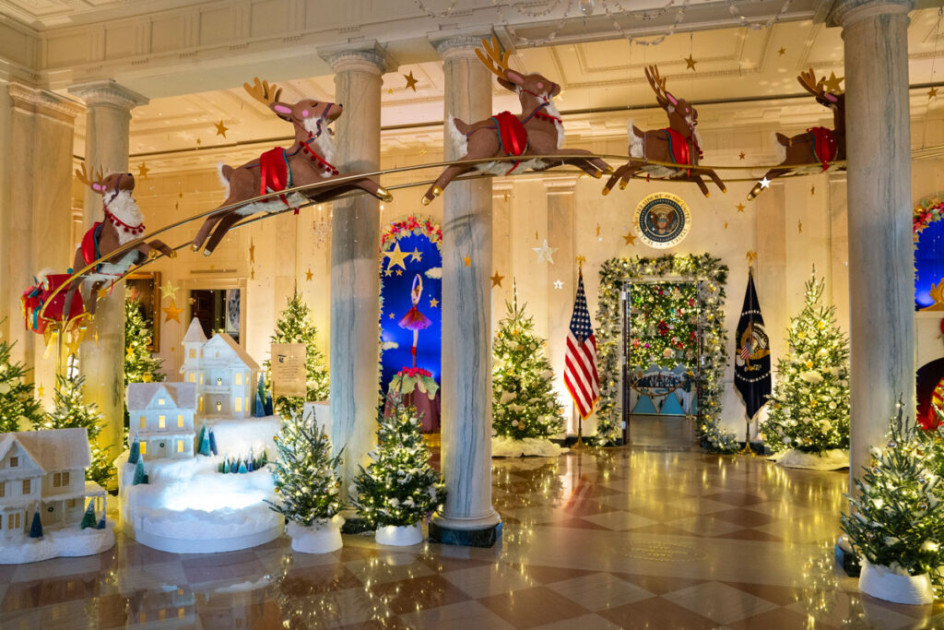
The White House Christmas is more than a holiday celebration; it is a curated projection of the presidency. For nearly a century, First Families have used ornaments, trees, and themes to signal everything from wartime austerity to booming prosperity.
Below is a chronicled journey through over 40 distinct years of White House history. Each image represents a moment in time, capturing how the “People’s House” adapts to the ever-changing American cultural landscape.
The Roosevelt & Truman Era: War and Peace (1939–1952)
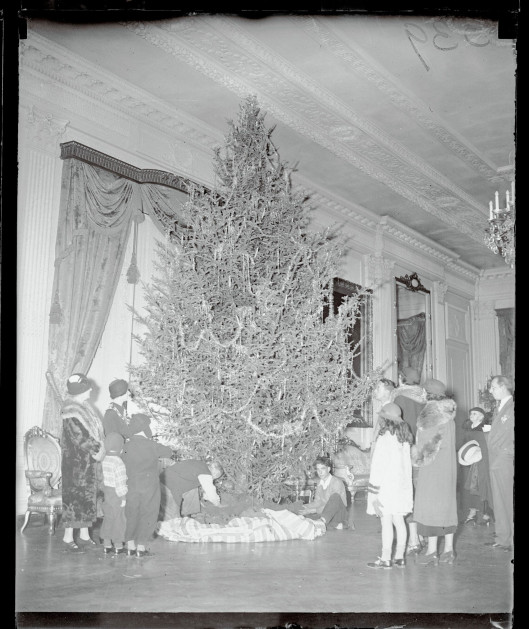
1939: The Depression Aesthetic Before professional designers took over, the tree was a family affair. FDR’s 1939 tree reflects the era’s reliance on heavy “lead tinsel” (icicles), a cheap way to make a tree sparkle when electric lights were still a luxury for many.
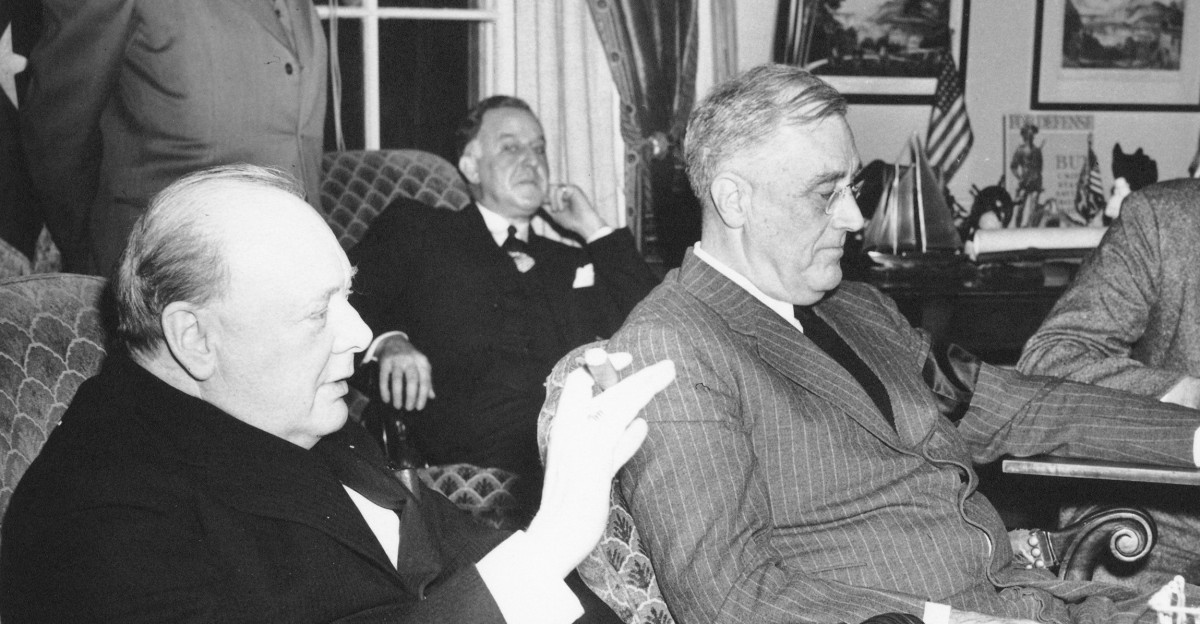
1941: The War Christmas Just weeks after Pearl Harbor, Winston Churchill joined FDR for the lighting of the National Christmas Tree. The mood was somber, marking the transition of the holiday from a domestic celebration to a symbol of Western resolve against fascism.
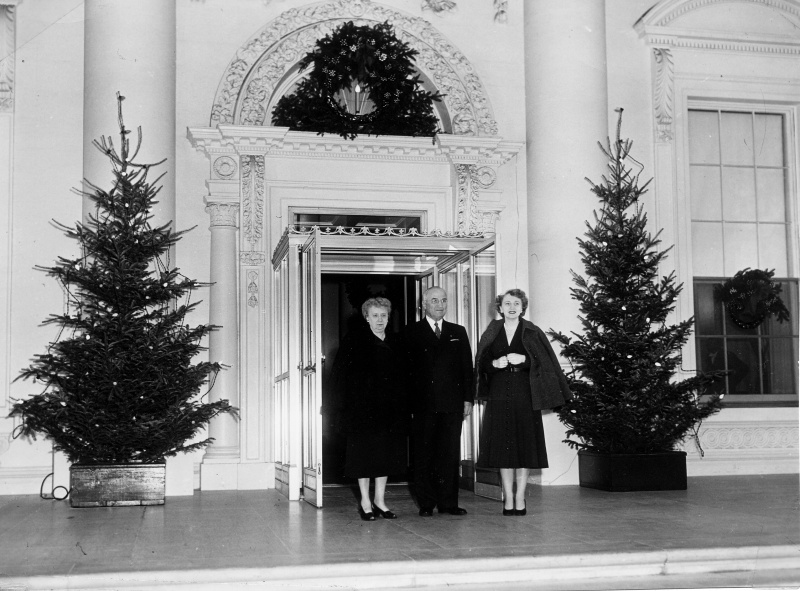
1945: The First Peacetime Christmas With the war over, Harry Truman celebrated a return to normalcy. However, the White House itself was falling apart; this would be one of the last Christmases before the Trumans had to move out for the massive gut renovation of the Executive Mansion.
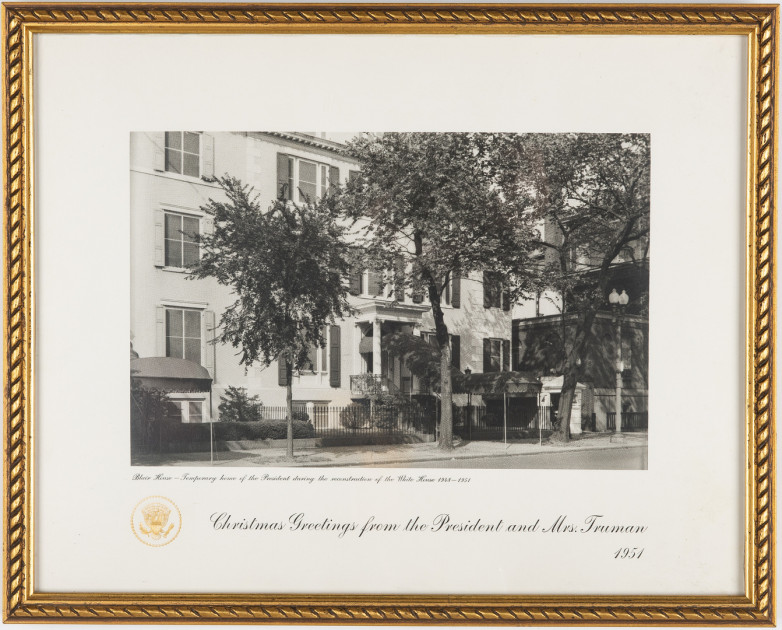
1948: The Renovation Exile There was no tree inside the White House this year because the building was gutted to the steel beams. The Trumans spent the holiday at Blair House across the street, a stark reminder of the fragility of the institution itself.
1952: The Farewell In their final year, the Trumans returned to a newly fortified White House. The decor was traditional and modest, reflecting the no-nonsense personality of the man from Missouri.
The Eisenhower Era: Mid-Century Modern (1953–1960)
1953: The Eisenhower Boom Ike’s first Christmas reflected the booming post-war economy. The trees became larger, and the decorations began to incorporate the bright, saturated colors of 1950s consumer culture.
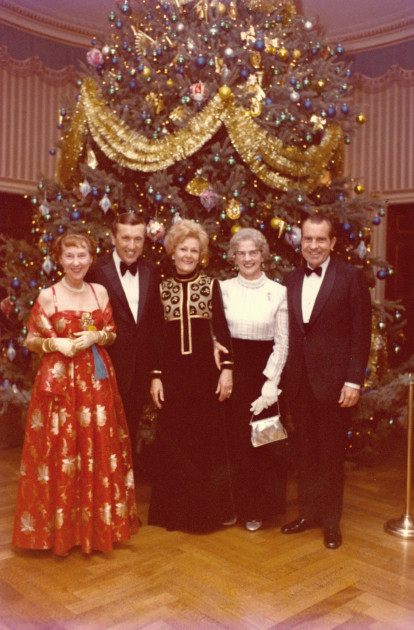
1955: The “Blue Room” Tradition By the mid-50s, the placement of the main tree in the Blue Room became standard. Mamie Eisenhower favored a “snow-frosted” look, often using white flocking that was incredibly popular in suburban America.
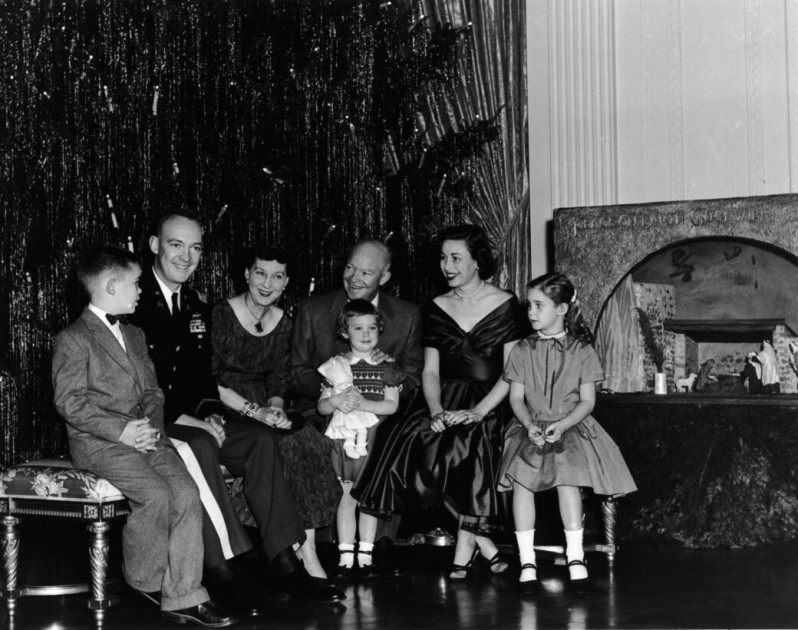
1957: The Sputnik Christmas While the Soviets were launching satellites, the White House kept it grounded. The 1957 decor was notably traditional, perhaps offering a sense of stability during the dawn of the Space Age anxiety.
1958: The Youngest Generation Photos from this era often feature the Eisenhower grandchildren. The administration used these images to project the ideal “nuclear family,” a core component of Cold War cultural propaganda.
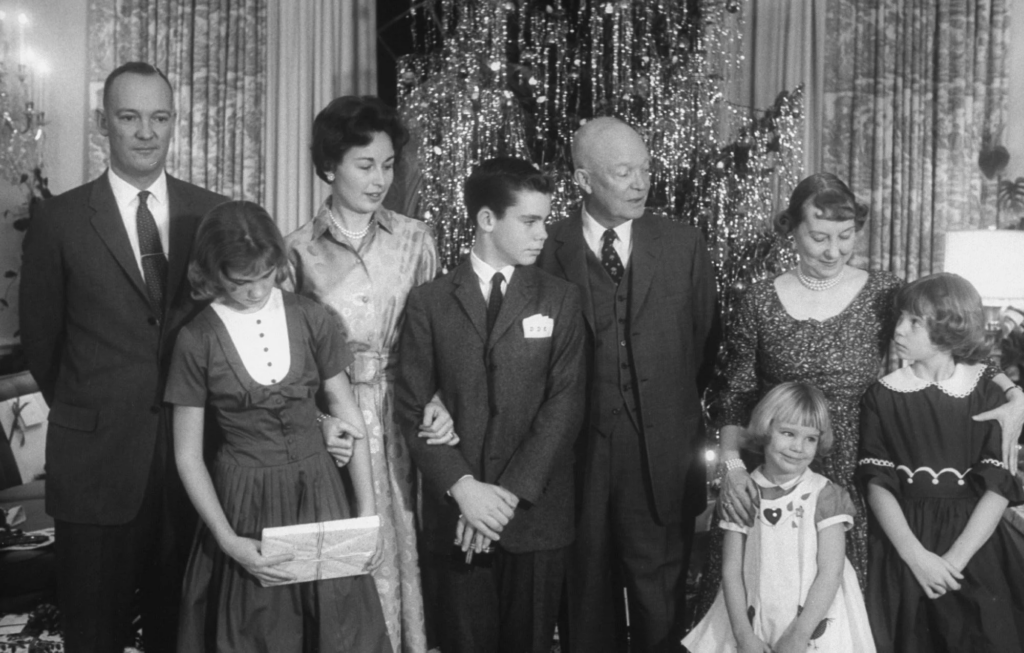
1960: The End of an Era In their final year, the Eisenhowers stuck to their “silver rain” tinsel aesthetic. It was the last gasp of the 1950s style before the Kennedys would sweep in and modernize the mansion’s look.
The Kennedy & Johnson Years: Camelot to the Great Society (1961–1968)
1961: The Nutcracker Suite Jacqueline Kennedy revolutionized the decor by introducing a specific “theme.” Her “Nutcracker” tree in the Blue Room featured ornamental toys and sugarplum fairies, treating the decor as high art rather than just home celebration.
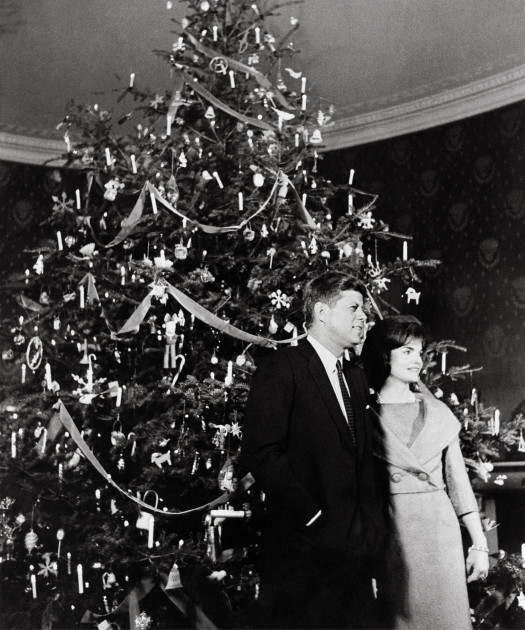
1962: The Children’s Hour This iconic year focused on childhood wonder. The tree was adorned with bright ornaments and candy canes, creating a sharp contrast to the terrifying tension of the Cuban Missile Crisis just months earlier.
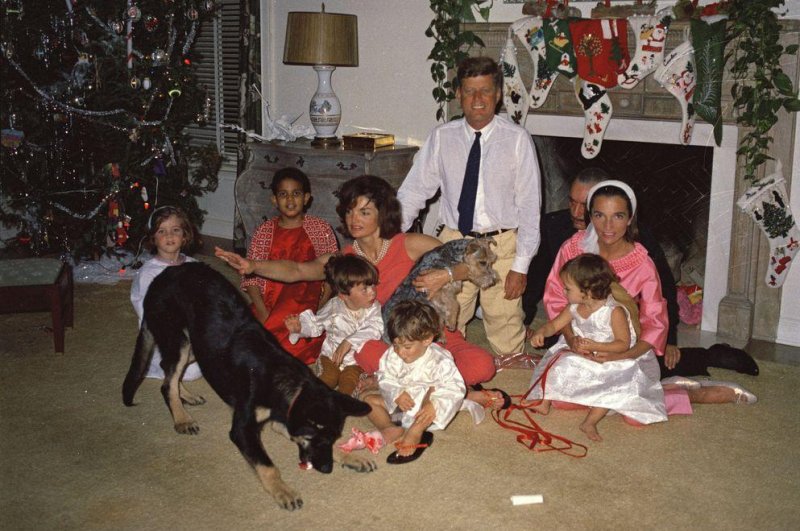
1964: The Texas Touch Following the tragedy of the assassination, Lady Bird Johnson brought warmth back to the mansion. She introduced comforting, folksy elements, and yes, even a piñata, acknowledging the cultural diversity of the Great Society.
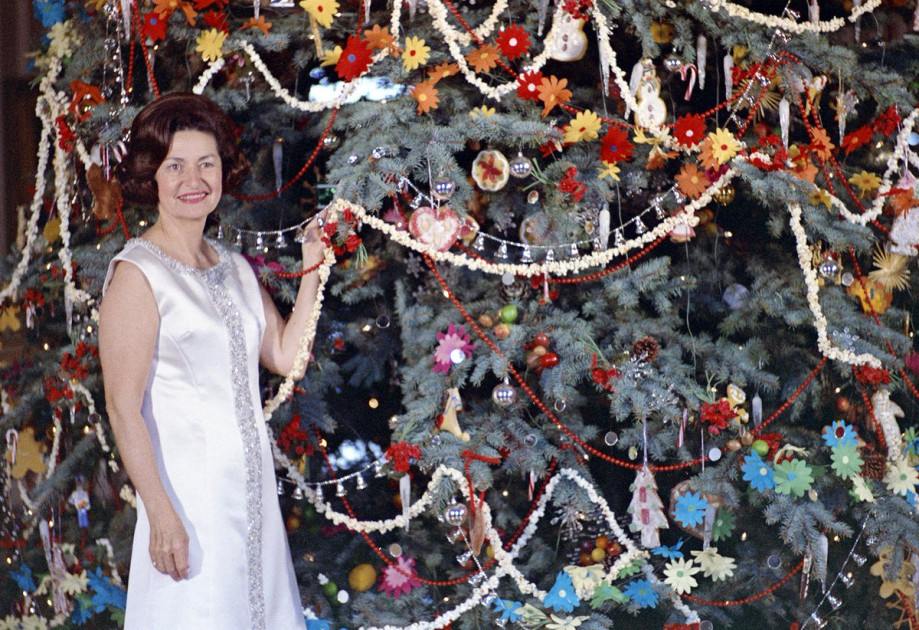
1965: A Warmer Welcome The Johnson trees were famously full and lush. Lady Bird focused on “Americana,” using popcorn strings and gingerbread, moving away from the high-fashion sterility of the Kennedy years.
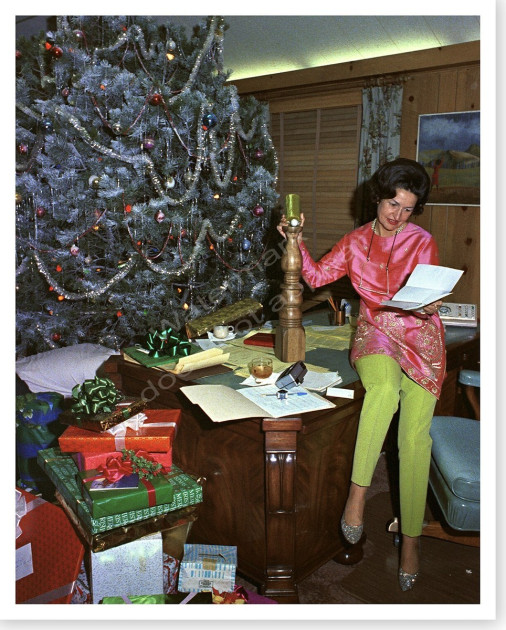
1967: The Turbulent Year As Vietnam protests raged, the White House interior remained a sanctuary of calm. The decor was traditional, seemingly attempting to hold onto a sense of “domestic tranquility” that was fraying outside the gates.
The Nixon, Ford & Carter Years: Transition and Tradition (1969–1980)
1969: The Velvet Bows Pat Nixon loved velvet. Her first Christmas featured trees adorned with velvet bows and balls made of satin, projecting a formal, stiffer elegance that matched the administration’s “Law and Order” vibe.
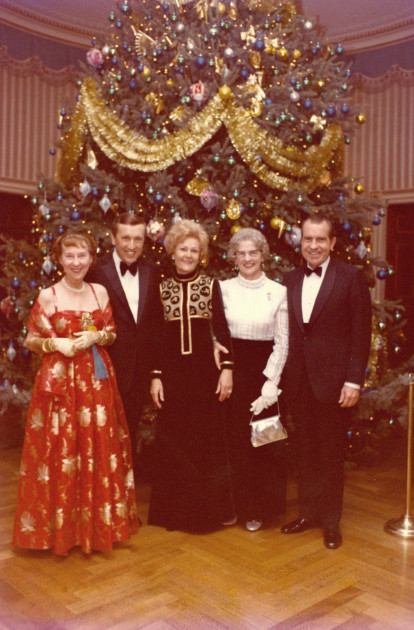
1971: The Tinsel Returns Nixon’s team wasn’t afraid of a little flash. The 1971 tree was loaded with gold foil and tinsel, reflecting the “Silent Majority’s” taste for traditional, sparkly holiday aesthetics.
1973: The Watergate Winter A somber year. With the scandal closing in, the decorations were notably scaled back to comply with the energy crisis, with fewer lights used on the outdoor trees to set an example.
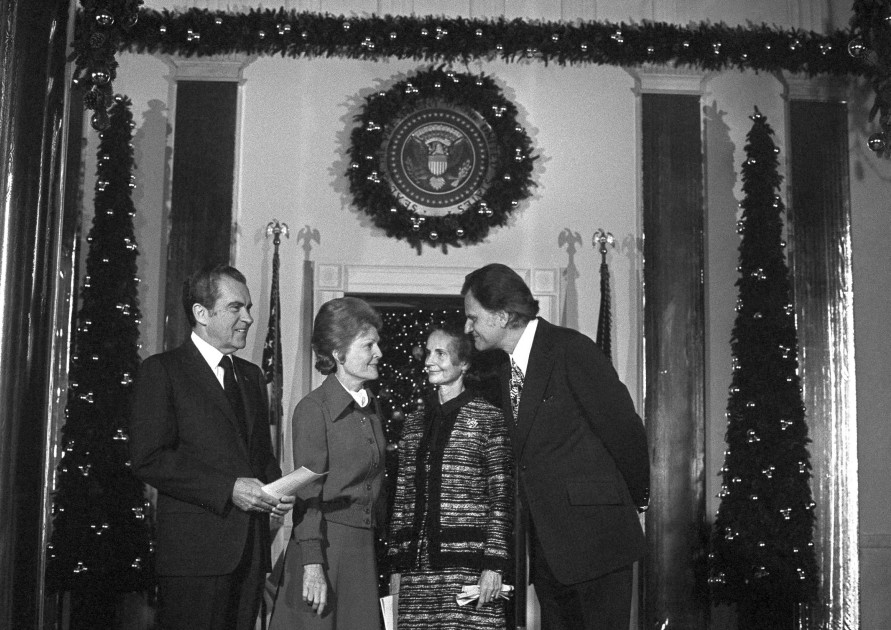
1974: The Healing Christmas Betty Ford arrived like a breath of fresh air. Her 1974 decor was bright, patchwork, and focused on crafts, symbolizing an attempt to stitch the country back together after Nixon’s resignation.
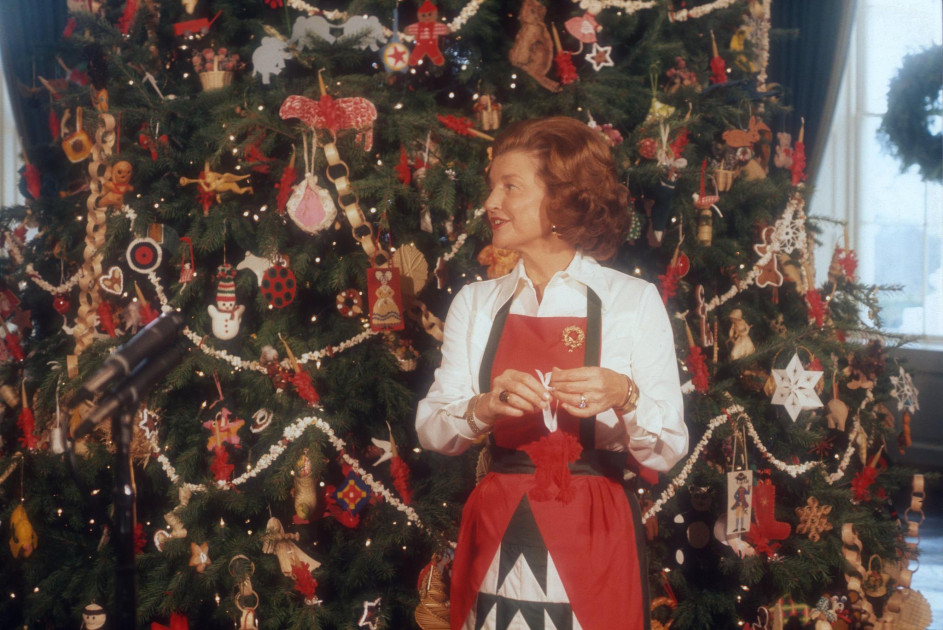
1975: The Bicentennial Preview Looking ahead to 1976, the Fords used the holiday to celebrate American history. The tree featured paper chains and colonial-style dolls, tapping into a surge of patriotism.
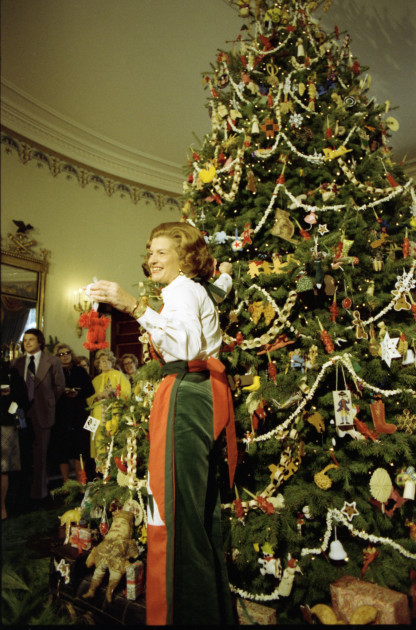
1977: The Energy Crisis Tree Rosalynn Carter took the energy crisis seriously. She famously used low-wattage lights and natural decorations like dried flowers and popcorn to signal that the White House was conserving energy just like ordinary Americans.
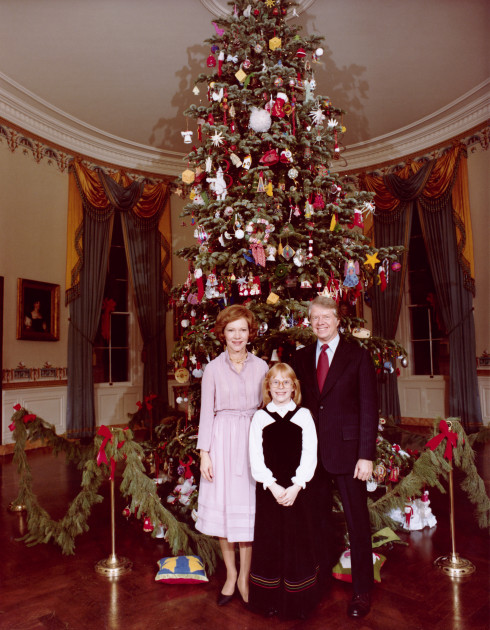
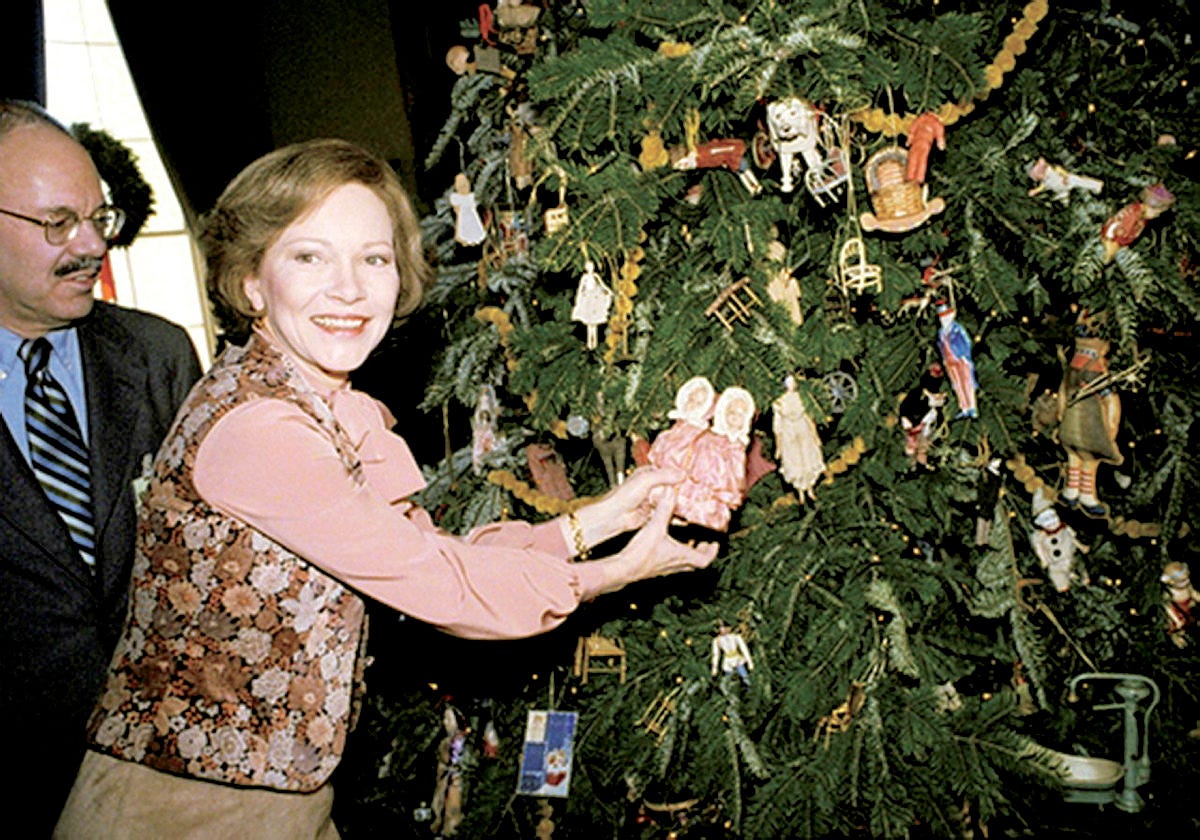
1978: The Victorian Look The Carters pivoted to a Victorian theme, featuring antique dolls and toys. It was a nostalgic look back to a “simpler time,” a common political tactic when the present is complicated by inflation and unrest.
The Reagan & Bush Era: Opulence and Nostalgia (1981–1992)
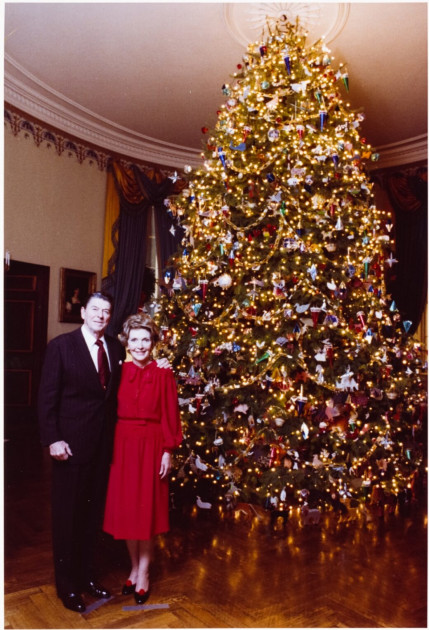
1981: Hollywood Glamour Nancy Reagan brought the “wow” factor. Her first tree was decorated with museum-quality ornaments and gold lace, signaling that the era of malaise was over and the era of opulence had begun.
1983: Mr. T as Santa A surreal moment in cultural history. First Lady Nancy Reagan sat on the lap of Mr. T (dressed as Santa) to promote her “Just Say No” campaign, proving that the 80s were a unique fever dream.
1985: The Gold Standard By the mid-80s, the “Reagan Red” and gold aesthetic was dominant. The trees were impeccably styled, dense, and rich, mirroring the booming stock market and the administration’s projection of strength.
1987: The Musical Theme Nancy Reagan dedicated this year to music, using golden instruments as ornaments. It was classic, high-culture conservatism on display.
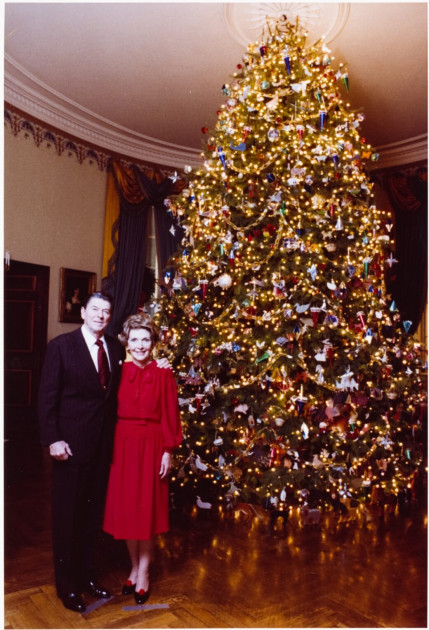
1989: The Storybook Start Barbara Bush, “America’s Grandmother,” debuted with a “Storybook” theme. It featured characters from classic children’s literature, softening the image of the presidency.
1990: The Needlepoint Tree Barbara Bush famously honored American craft by inviting needlepoint guilds to create ornaments. It was a democratic touch that invited the public’s skills into the Blue Room.
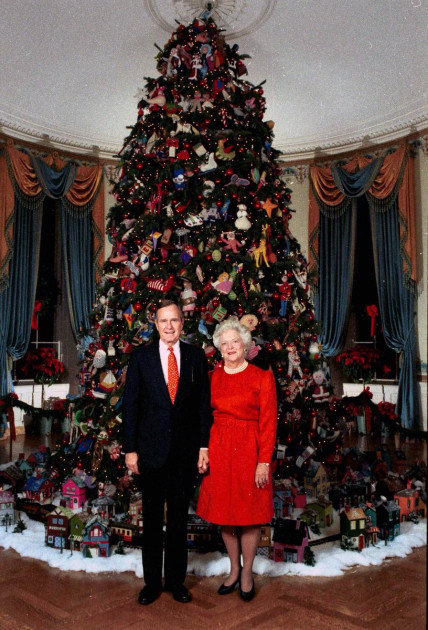
1991: The Victory Lap Following the Gulf War, the mood was patriotic and triumphant. The tree featured red, white, and blue ribbons, celebrating the troops and the “New World Order.”
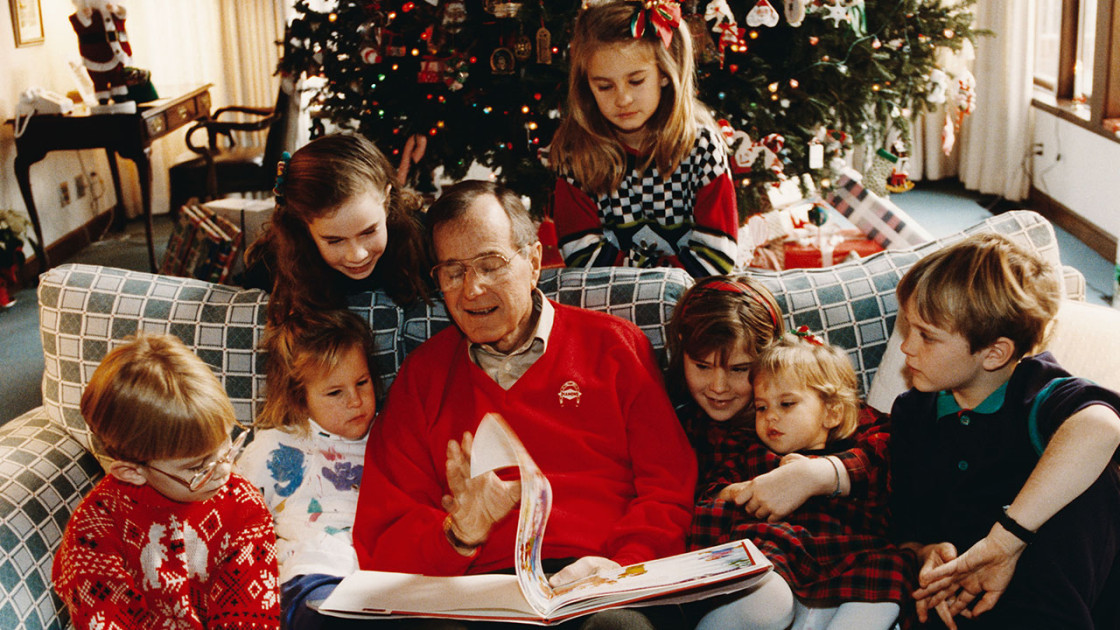
The Clinton & Bush 43 Era: Maximalism and Meaning (1993–2008)
1993: The Angel Tree Hillary Clinton’s first theme was “Angels,” featuring thousands of reflective ornaments. It was criticized by some as “too busy,” but it set the tone for the 90s maximalist aesthetic.
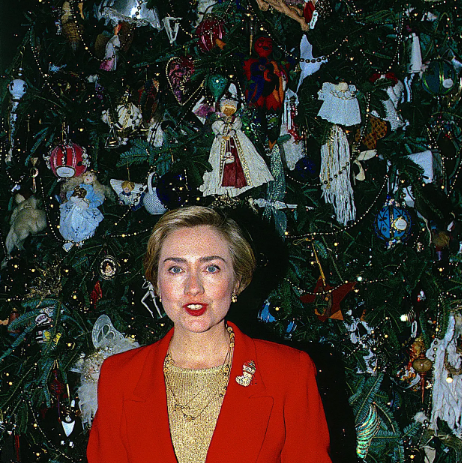
1995: The Chocolate White House The Clinton era saw the scaling up of the gingerbread house into a massive architectural feat. In 1995, the “Twas the Night Before Christmas” theme featured a stunningly detailed edible replica.
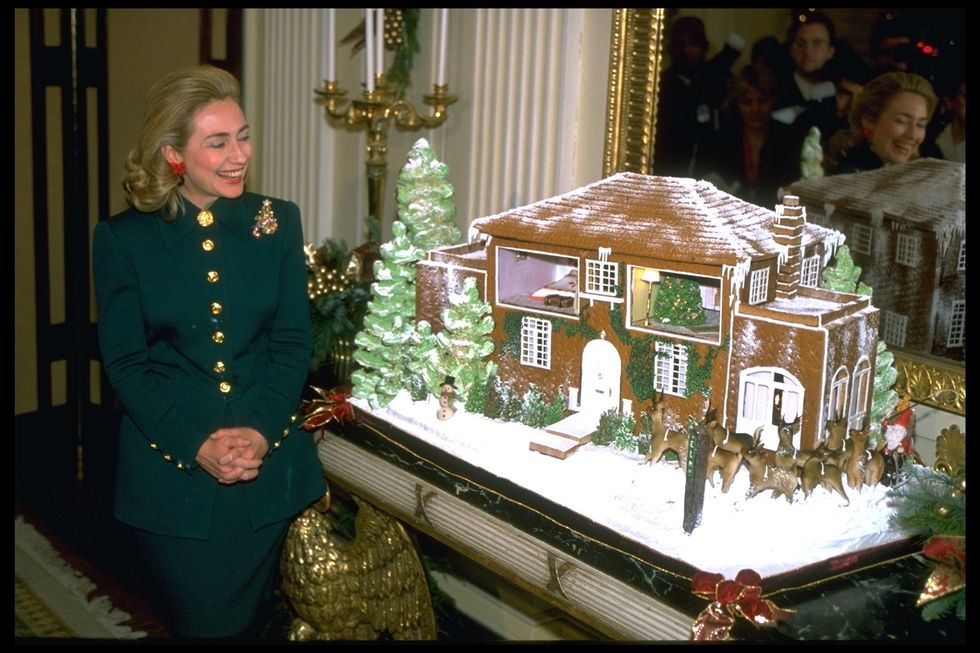
1997: Santa’s Workshop Hillary leaned into whimsy with a “Santa’s Workshop” theme, featuring elves and toys. It was a deliberate move to focus on children and education, key pillars of her policy platform.
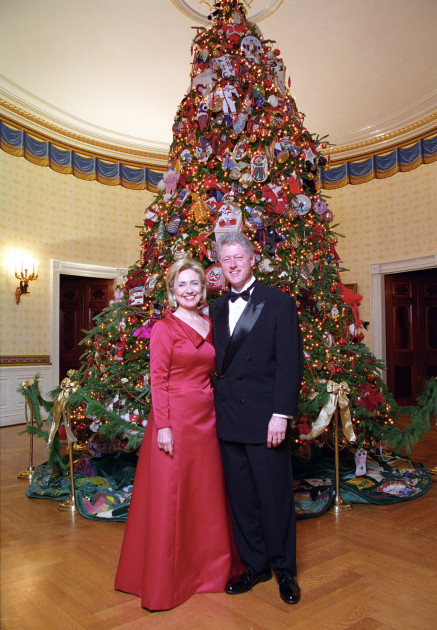
1999: The Millennium Tree To close out the century, the Clintons created a “Holiday Treasures” theme featuring dolls representing American history. It was a retrospective looking back at the 20th century.
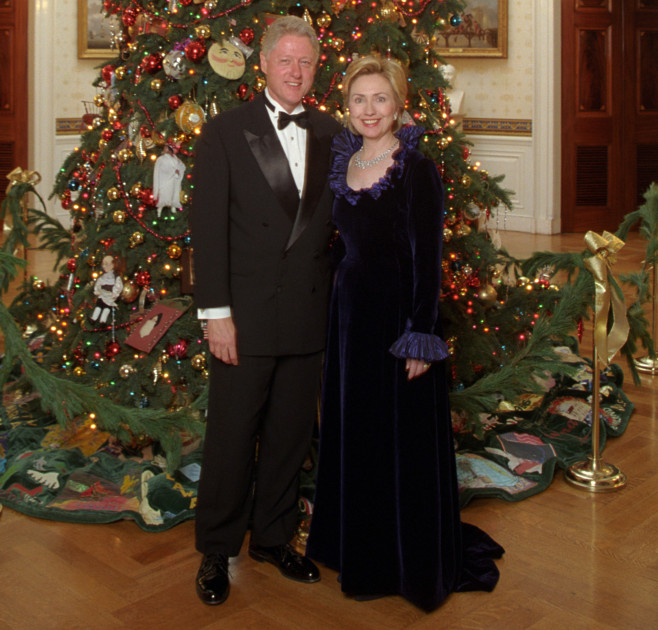
2001: The Red, White, and Blue Just months after 9/11, Laura Bush chose “Home for the Holidays.”.
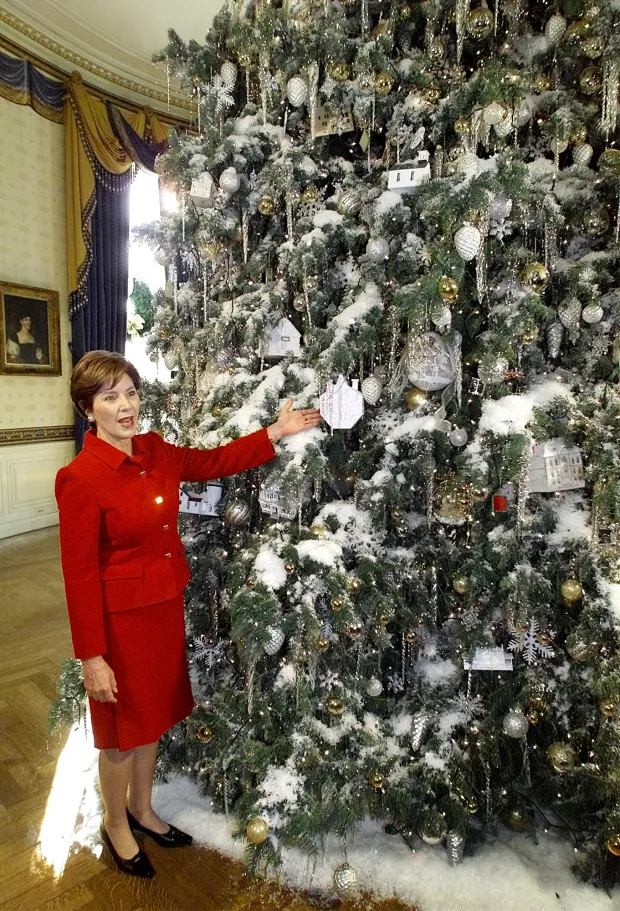
2002: All Creatures Great and Small Laura Bush celebrated her love of animals (and her Scottish Terriers, Barney and Miss Beazley) with a theme featuring bird ornaments and animal statues, lightening the mood.
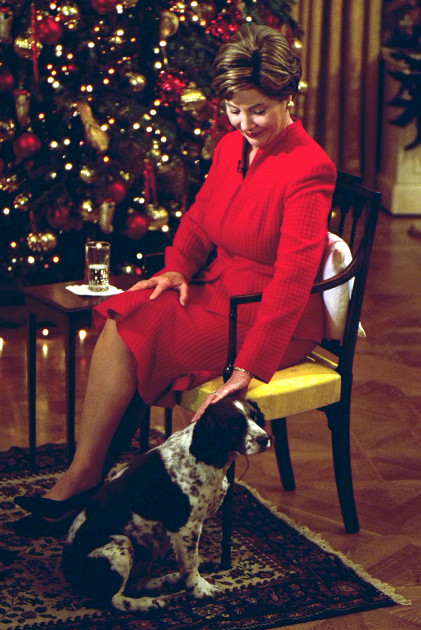
2005: The Natural Look Reflecting a “Tangerine and Lime” color palette, this year was a departure from traditional red and green. Laura Bush experimented with fresh flowers and fruit, giving the mansion a garden-like feel.
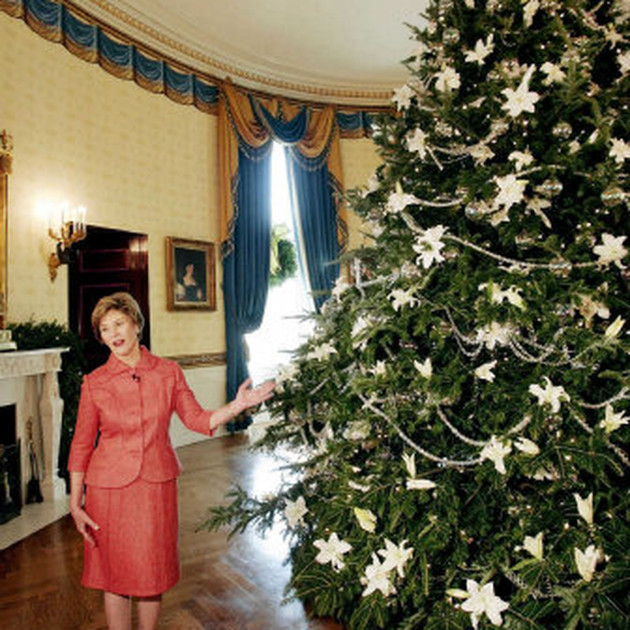
2008: The Red, White, and Blue Finale For their final Christmas, the Bushes returned to strict patriotism. The tree was covered in ribbons bearing the names of U.S. counties, a nod to the entire electorate on their way out.
The Obama, Trump & Biden Era: The Modern Style Wars (2009–2023)
2009: Reflect, Rejoice, Renew Michelle Obama’s first theme was ecologically conscious. They used energy-saving LED lights and repurposed ornaments, signaling a modern, progressive approach to tradition.
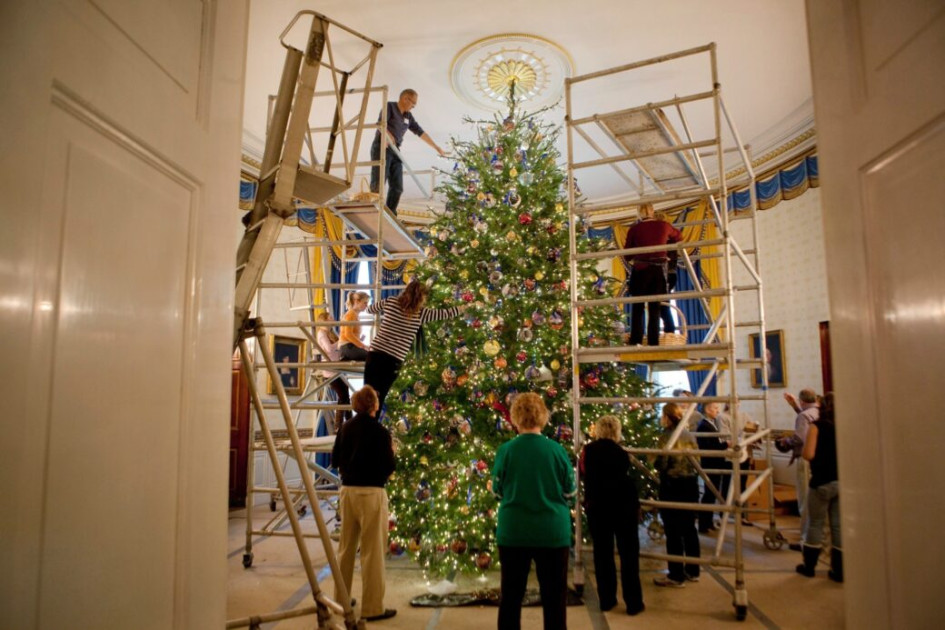
2011: Shine, Give, Share The Obamas focused on military families this year. The Gold Star tree honored the fallen, while the main decor featured medals and service-oriented messaging.
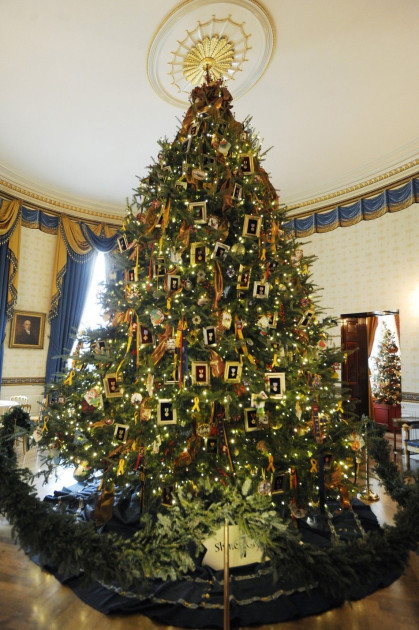
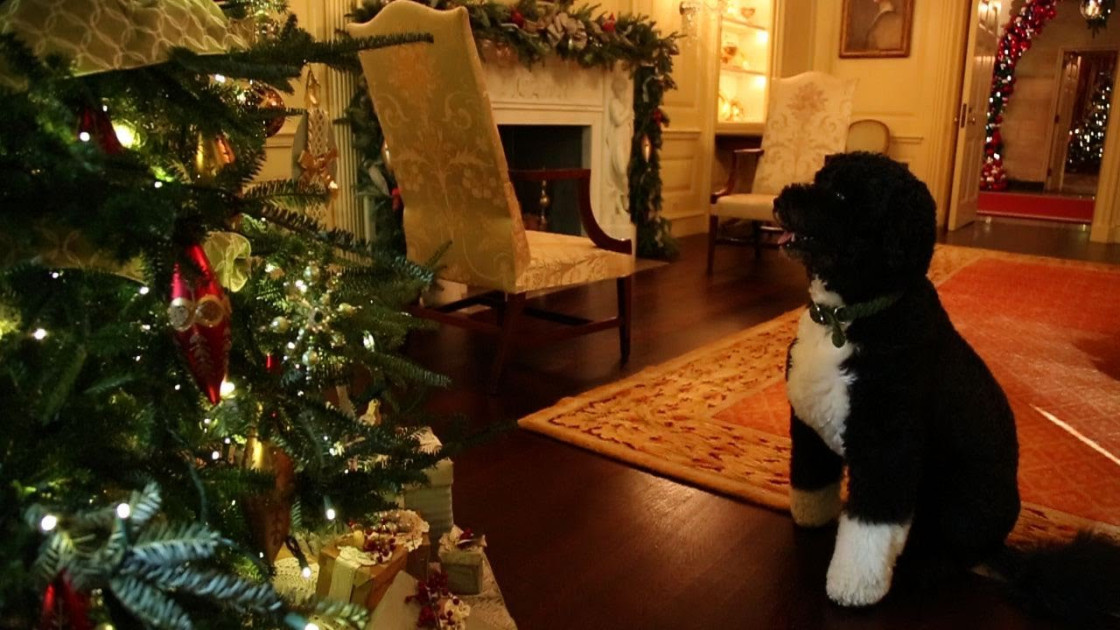
2012: Joy to All Bo, the Portuguese Water Dog, became a star. He was featured as a massive statue inspecting the decorations, proving that pets poll better than politicians.
2014: The Winter Wonderland This year featured white branches and mirrored ornaments, creating an icy, sophisticated look that moved the White House closer to high-end retail design.
2015: Timeless Traditions A return to classic Americana. The decor featured nutcrackers and vintage ribbons, perhaps anticipating the turbulent election year ahead by grounding the house in history.
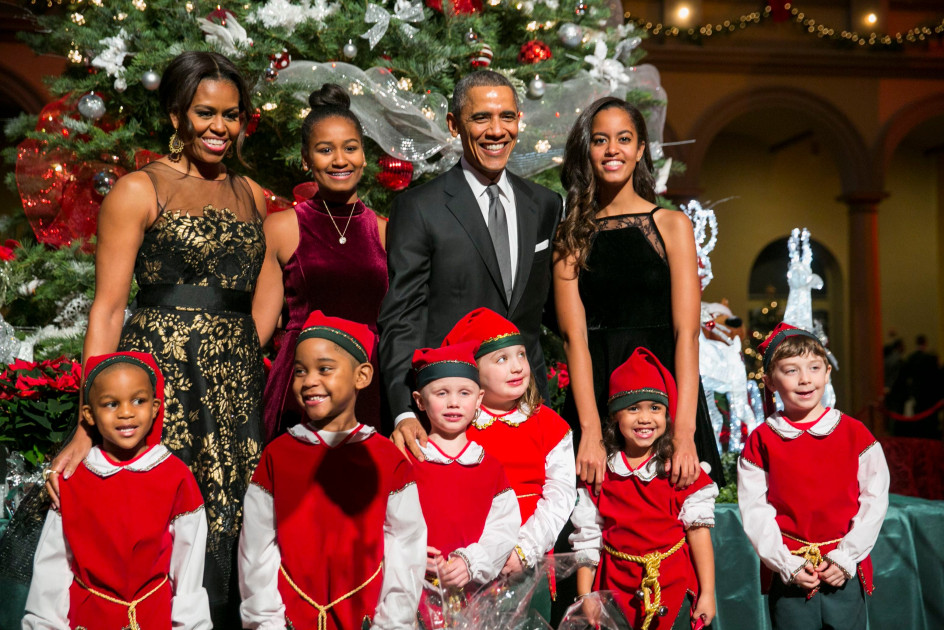
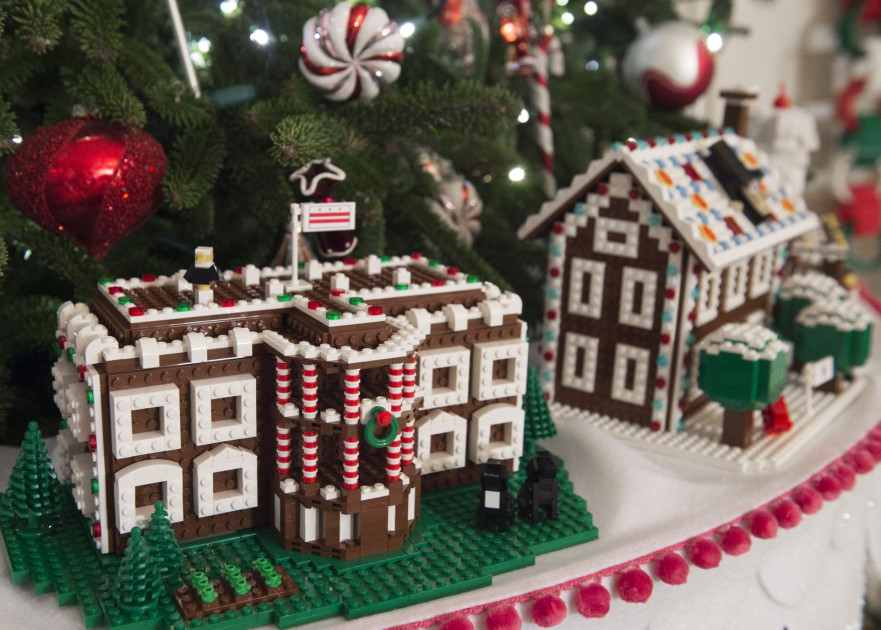
2016: The Gift of the Holidays For their farewell, the Obamas went big with LEGO houses and massive yarn representations of their dogs, Bo and Sunny. It was playful, colorful, and distinctly modern.
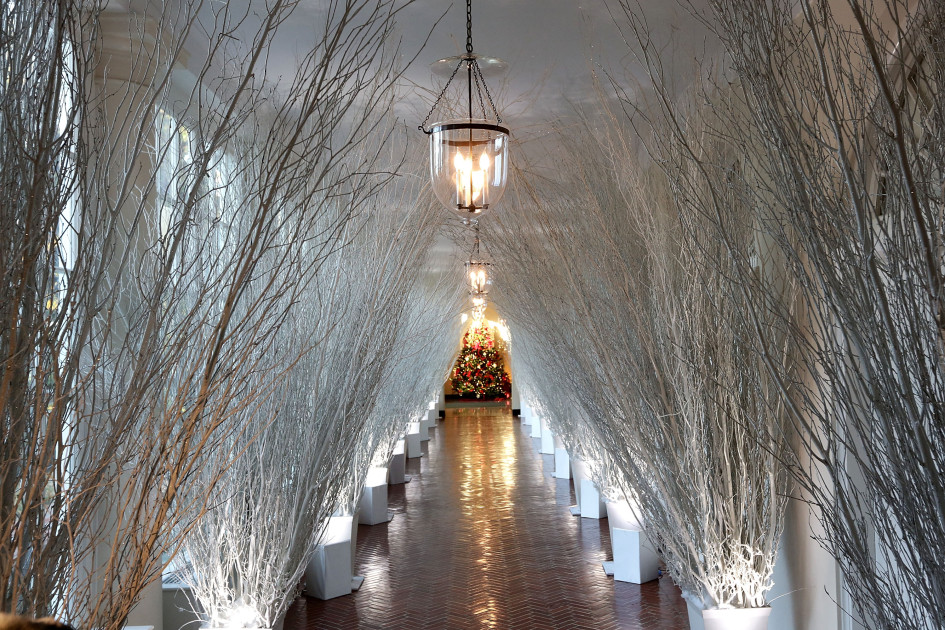
2017: The White Branches Melania Trump’s debut was stark. The East Colonnade was lined with white, leafless branches cast in dramatic shadows. Critics called it “The Chronicles of Narnia” meets “The Shining”; fans called it architectural genius.
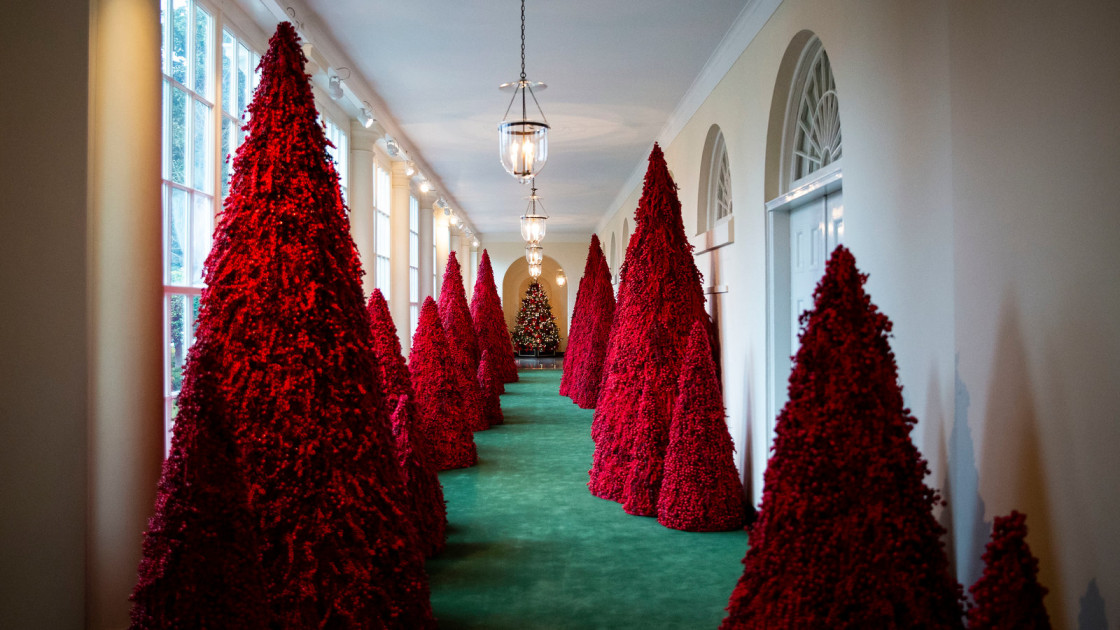
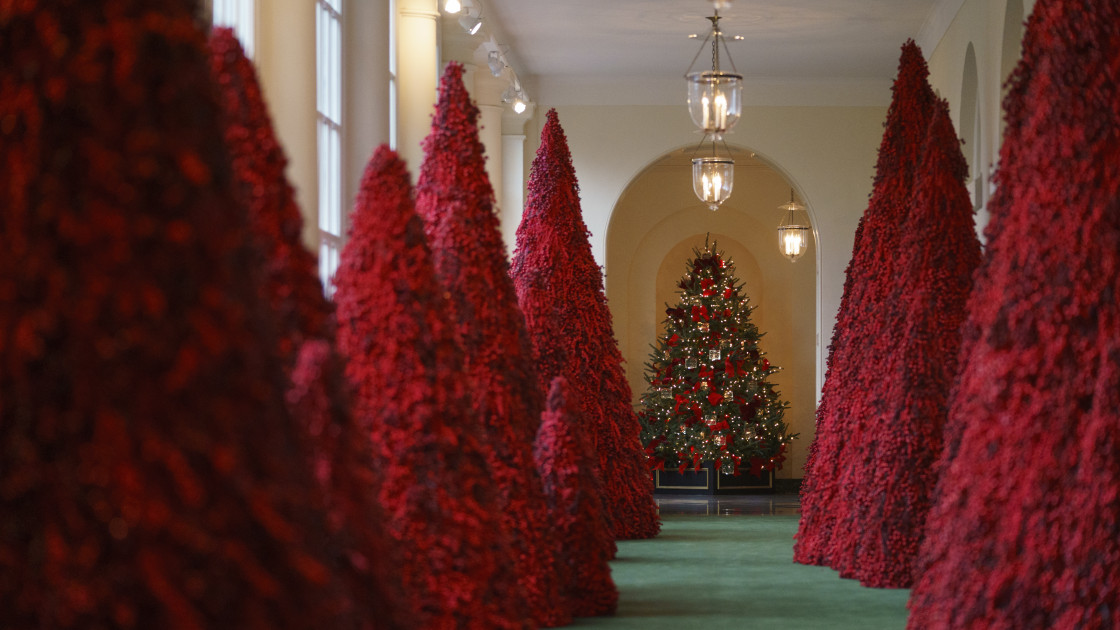
2018: The Red Trees The most controversial decor in history. Melania lined the hallway with topiary trees made of blood-red cranberries. The visual was striking, aggressive, and instantly viral, dominating the news cycle.
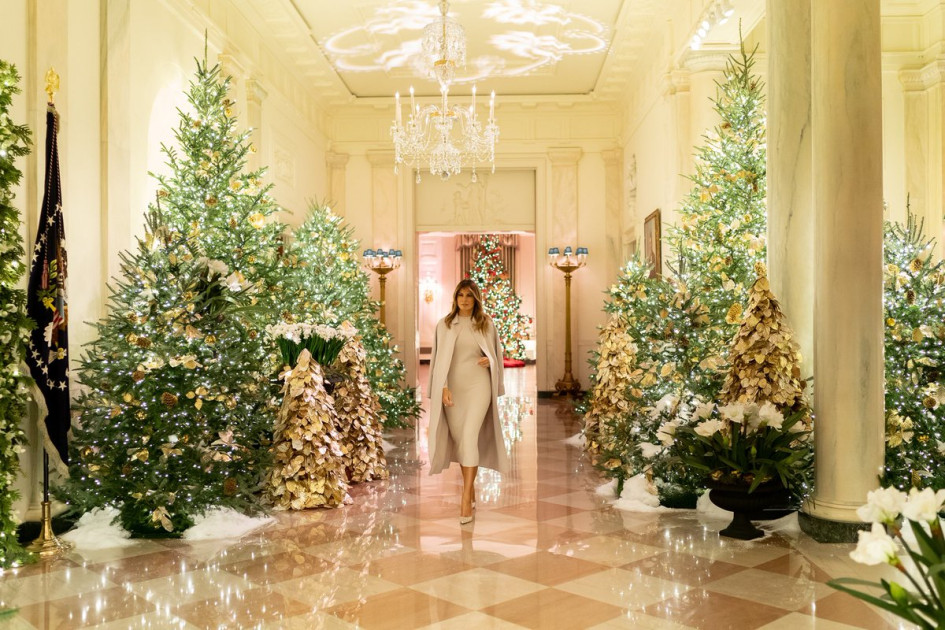
2019: The Spirit of America Pulling back from the avant-garde, Melania used “Be Best” ornaments and traditional green trees, though she kept her signature monochromatic color palette of creamy whites.
2020: America the Beautiful In the midst of the pandemic, the decorations were viewed largely virtually. The theme celebrated American landscapes, but the mood was inevitably subdued by the empty halls.
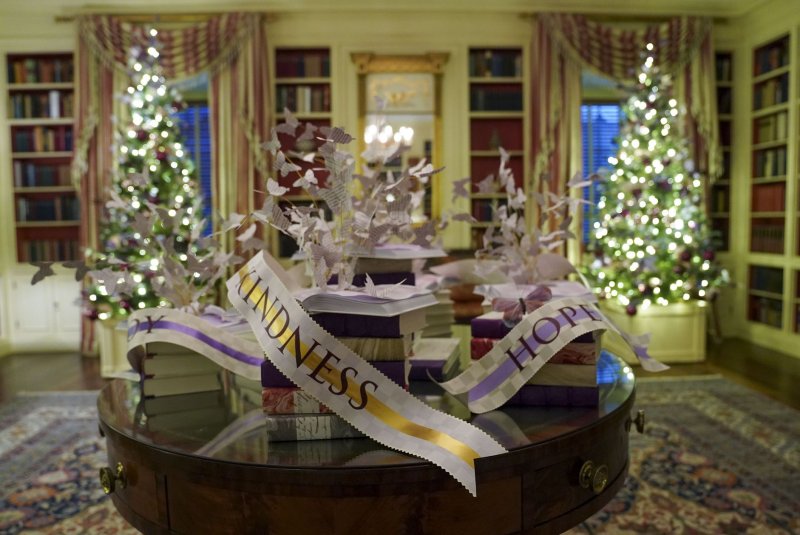
2021: Gifts from the Heart Dr. Jill Biden pivoted hard to sentimentality. The hallway featured giant floating doves and “Kindness” banners, rejecting the cool austerity of the previous term for a “teacher’s classroom” vibe.
2022: We the People A populist theme. The tree featured handmade ornaments from every state, and the gingerbread house included a sugar replica of Independence Hall, grounding the holiday in civic duty.
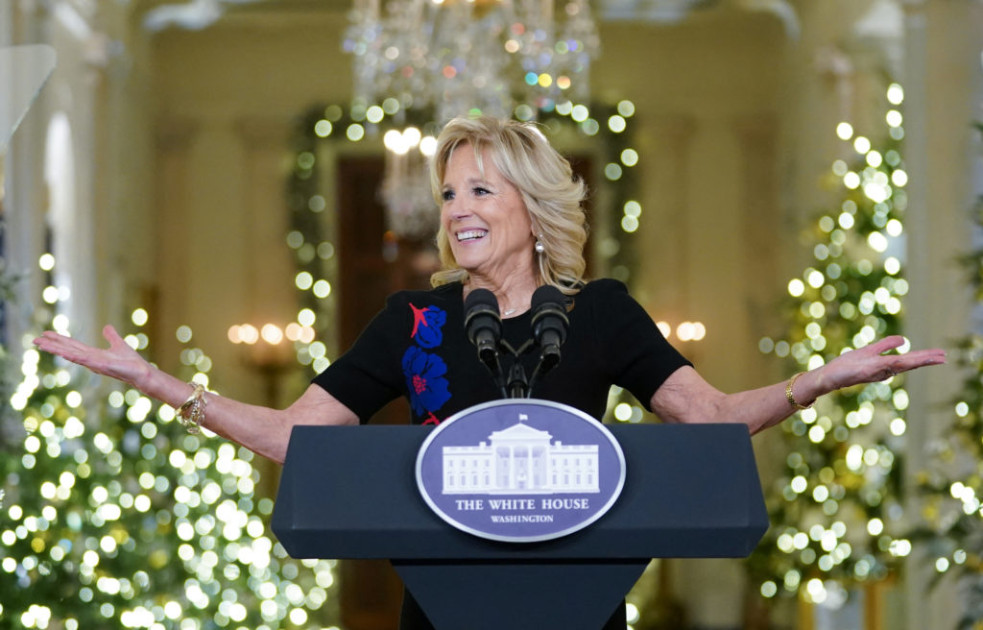
2023: Magic, Wonder, and Joy The Biden team embraced “Grandma-core.” The foyer featured flying papier-mâché reindeer and oversized candy props, leaning entirely into the childlike whimsy of the season.