
On Easter morning, President Donald Trump posted a message that ricocheted across social media: profane, belligerent, and aimed at Iran. At the time of writing, a familiar constitutional phrase is trending in the public conversation: the 25th Amendment.
Some commentators and lawmakers did not merely criticize the substance of the post. They presented it as evidence of something more sweeping: that the president is mentally unfit to serve, and that the constitutional process for replacing him should begin.
That shift matters. In a constitutional system, we are always balancing two legitimate realities at once: the public’s right to condemn a president’s words and conduct, and the nation’s need to treat removal mechanisms as serious, structured tools rather than rhetorical shortcuts.

Join the Discussion
What Trump posted
Here is the line that drew the most attention, posted by the 79-year-old president on Truth Social during the Easter holiday:
"Tuesday will be Power Plant Day, and Bridge Day, all wrapped up in one, in Iran. There will be nothing like it!!! Open the F--kin’ Strait, you crazy b-----ds, or you’ll be living in Hell - JUST WATCH! Praise be to Allah. President DONALD J. TRUMP," — President Donald J. Trump
In ordinary civic life, people can and should debate whether that kind of message is appropriate, wise, strategic, or moral. But the reaction went further than that. The language “unhinged” began circulating as a label, and the label became the premise for a constitutional demand: remove him.
From outrage to incapacity
Several public figures explicitly framed the Easter post as a 25th Amendment issue.
- Mehdi Hasan wrote: “An Easter message from the president which should really force the VP and the cabinet to invoke the 25th Amendment.”
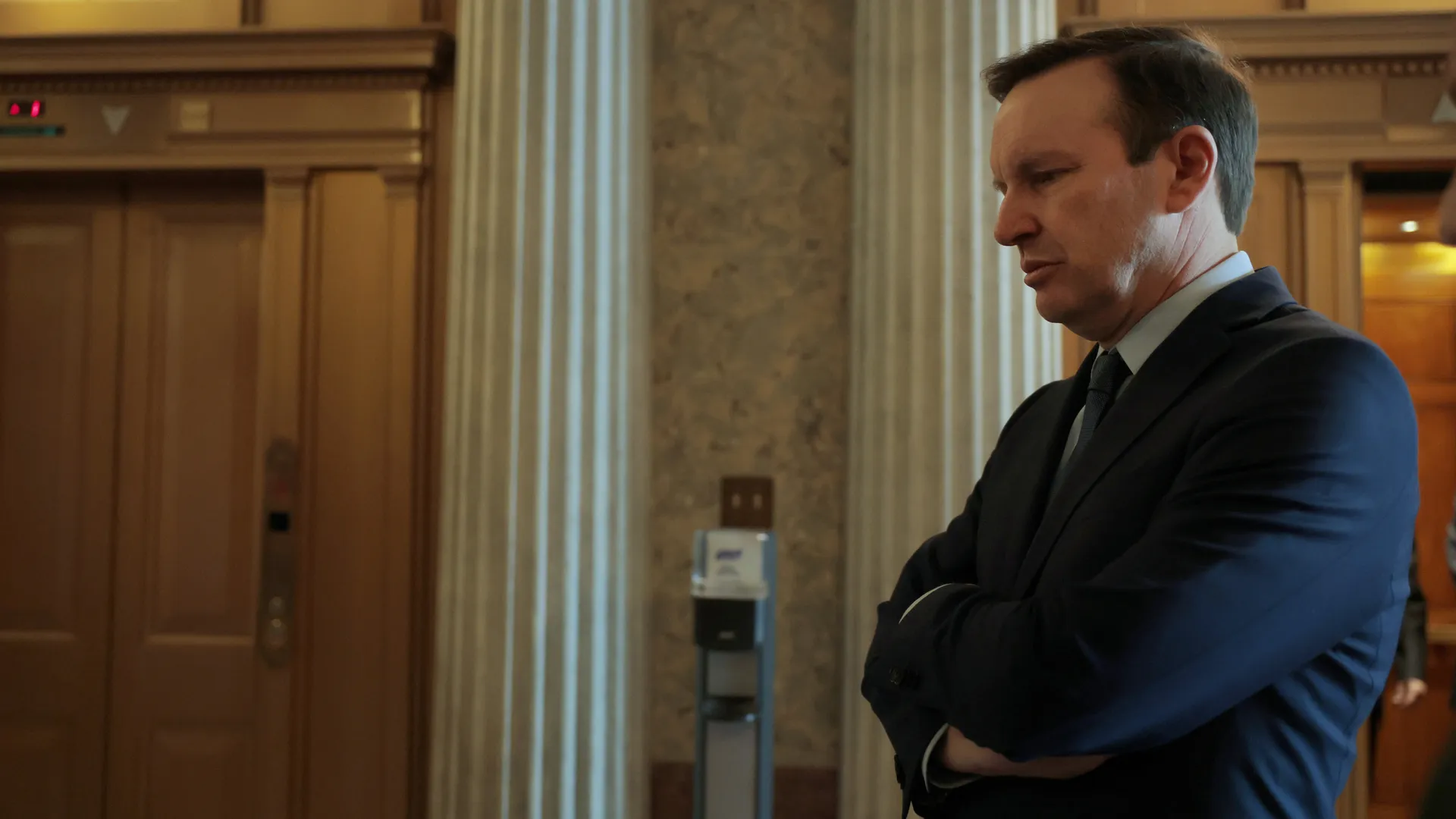
- Sen. Chris Murphy wrote: “If I were in Trump’s Cabinet, I would spend Easter calling constitutional lawyers about the 25th Amendment.”
- Rep. Yassamin Ansari wrote: “The 25th Amendment exists for a reason.”
- Rep. Melanie Stansbury wrote: “The emperor has no clothes. Time for the #25thAmendment. Congress and the Cabinet must act.”
Others broadened the push in similar terms.
- S.V. Dáte replied to Marjorie Taylor Greene’s criticism: “‘He has gone insane.’ That would be 25th Amendment territory.”
- Former GOP congressman Joe Walsh wrote: “He will forever be a stain on this country. And the world. 25th Amendment. Now.”
- Anthony Scaramucci wrote: “It was at this point that our Founders thought the best thing to do would be to remove a mad man who has the executive office. It became more formalized with the 25th amendment, but more people now should be calling for this man’s removal.”
Even Marjorie Taylor Greene, once a prominent Trump ally, urged internal intervention and wrote: “I know all of you and him and he has gone insane, and all of you are complicit.”
This is the pattern worth noticing: the conversation moves from what a president said to whether the president is capable of serving at all, often in the span of a single news cycle.
What the 25th does
The 25th Amendment is not a general-purpose method for handling unpopular decisions, offensive rhetoric, or even dangerous policy. It addresses a narrower constitutional problem: what happens when a president cannot perform the job.
The mechanism most people reference in moments like this is the provision that allows the vice president and a majority of the Cabinet to declare that the president is unable to discharge the powers and duties of the office. In that scenario, the vice president becomes acting president.
One clarity point that gets blurred in fast-moving debates: this process is about temporarily transferring authority to an acting president during an “unable” period, not a casual, one-step rewrite of an election result.
Two points are easy to miss in viral debates:
- It is an internal executive-branch process at the front end. The vice president and Cabinet are the key first actors, not Congress and not the courts.
- “Unable” is not the same as “unpopular.” The amendment was designed for incapacity scenarios, not as a substitute for elections or impeachment.
It has been used in different ways. The amendment was first used by Nixon in 1973 in response to his vice president’s resignation, and most recently used by Biden in 2021 to make Vice President Kamala Harris acting president for 85 minutes while he underwent a procedure under anesthesia.
Trump’s 25th remark
One reason the Easter flare-up spread so fast is that the idea had already been floating in the air. At a March 26 press conference, when asked about plans related to Iran, Trump said he could not reveal them and then invoked the concept himself.
“If I did, I wouldn’t be sitting here for long. I’d probably, what is it called, the 25th Amendment?” Trump asked, before adding: “They’d institute the 25th Amendment.”
He then contrasted it with Biden, adding: “Which they didn’t do with Biden, which is shocking.”
Why unfit language sticks
Calling a president’s remarks “unhinged” is not just an insult. It is a framing device. It suggests that the speaker is not merely wrong, but irrational, beyond persuasion, and outside the normal boundaries of political disagreement.
That kind of framing can be tempting because it does two things at once:
- It raises the stakes. If a leader is portrayed as unstable, ordinary criticism can feel insufficient.
- It narrows the options. If the problem is “madness,” then compromise, debate, and even elections can be painted as inadequate compared to removal.
To be clear, presidents can behave in ways that legitimately raise questions about judgment. Citizens are not obligated to soften criticism for the sake of decorum. But there is a civic cost when the most extreme explanation becomes the default explanation, especially when it is paired with constitutional language that many people do not fully understand.
When removal talk is routine
In modern politics, delegitimization can be an explicit strategy: to argue not only that an opponent should lose power, but that they do not rightfully hold it, or are incapable of holding it.
That dynamic shows up on the right and the left in different forms. The details change, but the logic is familiar: if you can convince the public that the other side is not merely wrong but fundamentally unfit, then extraordinary measures start to feel normal.
This is not a claim about any one person’s private motives. It is a reminder about how quickly our public arguments can slide from disagreement into diagnosis.
The Constitution anticipates extraordinary measures. But it also expects them to be used with care. When constitutional tools become everyday talking points, they can lose their precision and, over time, their credibility.
Context: Iran and public support
The Easter post did not land in a vacuum. It arrived amid an escalating U.S. war against Iran, which critics have described as unauthorized, alongside visible signs of public unease about any move toward boots on the ground.
One national poll conducted in late March of this year found that only 14 percent of Americans support sending U.S. troops to Iran, while 62 percent oppose it and 24 percent were unsure.
Meanwhile, insiders have confirmed U.S. intelligence assessments that Iran is nowhere near as “decimated” as the president claims.
How to weigh the claims
If you are trying to follow this debate without getting pulled into the loudest framing, I recommend three simple questions.
1) Is the claim about policy, character, or capacity?
The 25th Amendment is about capacity. Impeachment is about misconduct. Elections are about overall performance and direction. Those categories overlap in real life, but they are not interchangeable.
2) Who is being asked to act?
When you hear “Invoke the 25th,” remember the practical reality: it starts with the vice president and Cabinet. If the demand is aimed at Congress or “the public,” it is often functioning more as political pressure than as a realistic legal pathway.
3) What evidence is actually offered?
A single post can be disturbing. But incapacity is a high bar. If the argument relies mostly on mockery, shock, or one viral moment, it is worth slowing down and asking what is being proven, and what is merely being implied.
The official silence
The White House was contacted for comment.
The bigger lesson
The Constitution gives us more than one way to respond to presidential behavior we find alarming. That is a feature, not a flaw. But each tool has a purpose, and the health of the system depends on using the right tool for the right problem.
Criticize harshly when criticism is warranted. Demand accountability when accountability is necessary. Just be cautious about turning a charged label like “unhinged” into a constitutional diagnosis. In a democracy, delegitimizing a sitting president is easy. Rebuilding public trust afterward is the hard part.