
There is a certain kind of government power that feels almost magical when it is aimed at someone else. A form gets updated. A policy shifts. An email goes out. And a life that was lawful yesterday becomes deportable today.
That is the core tension in a new federal court ruling out of Boston, where U.S. District Judge Allison D. Burroughs concluded that the Department of Homeland Security unlawfully terminated the immigration parole of nearly 900,000 people who entered the United States through the CBP One process. The government insists it can revoke parole. The judge did not deny that. The problem, she found, was how it was done, and whether DHS followed the process required by statute and its own regulations.

Join the Discussion
What the judge ruled
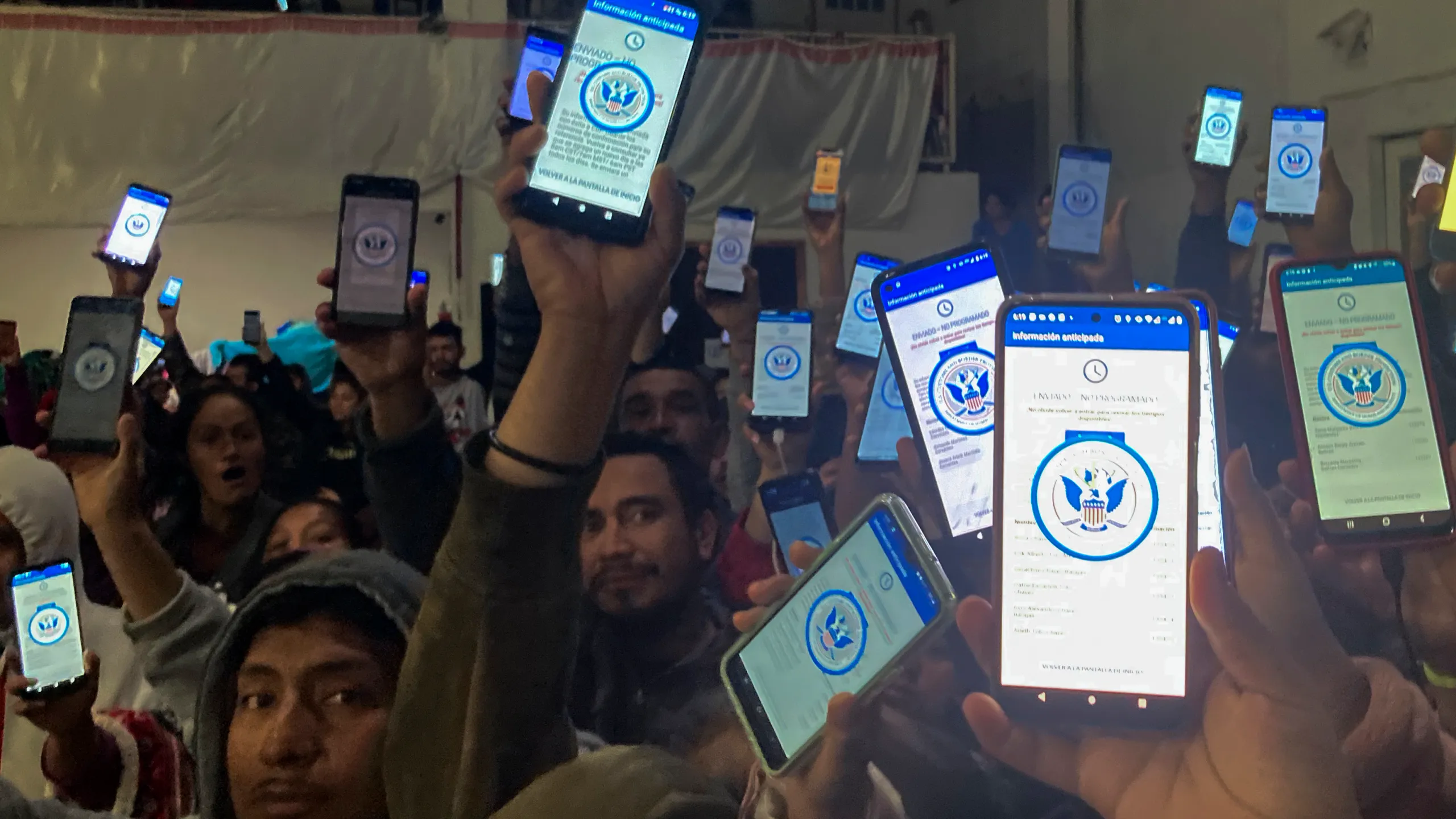
The people affected entered the U.S. after using CBP One, a Biden-era program started in 2023 that allowed migrants waiting in Mexico to schedule an interview at a port of entry along the U.S.-Mexico border. After being vetted, they were allowed into the country on parole while their asylum claims were pending in court.
The Trump administration abruptly canceled the CBP One program in April of last year and sent emails notifying migrants that their status had been revoked and encouraging them to leave the U.S. as soon as possible.
Judge Burroughs held that the mass terminations violated the legal process required by statute and DHS’s own regulations. In her words, when Defendants terminated the impacted noncitizens' parole without observing the process mandated by statute and by their own regulations, they took action that was 'not in accordance with law.'
The ruling covers migrants paroled through CBP One from May 16, 2023 to Jan. 19, 2025. It reinstates parole status for those in that group whose parole was terminated, meaning nearly 900,000 people could be temporarily protected from deportation, unless the decision is narrowed, stayed, or overturned on appeal.
Discretion has limits
If you have ever heard a civics teacher say, “The government must follow its own rules,” this case is the grown-up version of that lesson.
Immigration parole sits in a strange middle space. It is not a visa. It is not citizenship. It is a permission slip issued by the executive branch to allow someone to enter and remain temporarily. DHS is right about one thing: parole is discretionary, and the executive branch has real authority to grant and revoke it.
But discretion is not the same thing as lawlessness. The executive branch cannot build a parole system, invite people to rely on it, vet them, admit them, and then erase that lawful status through a one-size-fits-all cancellation that skips required procedures.
The point is simple: even in immigration, where courts often give the political branches breathing room, the government must still act through law, not impulse.
Procedure is the point
“Due process” sounds like a courtroom phrase, but it is really a human one. It asks: before the government takes something away, did it use a fair method?
This ruling, as described by the court’s own language, is grounded in something more concrete than a broad constitutional announcement. It turns on statutory and regulatory procedure, on what Congress and the agency’s rules require before parole can be terminated.
In immigration, the temptation is to treat status like a light switch. On. Off. No explanation required. But parole, once granted, becomes a legal condition that shapes a person’s ability to work, live openly, and pursue an asylum claim without immediate removal pressure.
Judge Burroughs’s ruling does not declare that parole can never be revoked. It says that when the government revokes it, it must use the process statute and the agency’s own rules demand. Call that due process if you want, but the holding lives in the discipline of procedure: the rules matter most when the government wants speed.
The power argument
The modern presidency loves to treat immigration as a pure “control the border” issue. That framing is politically useful because it implies emergencies, and emergencies are where executive power tends to grow.
This ruling drags the debate back to something less theatrical and more legal: is the executive branch bound by procedure when changing the legal status of hundreds of thousands of people already inside the country?
DHS blasted the decision as blatant judicial activism
and argued that, Under federal law, DHS had full authority to revoke parole.
The agency also framed the cancellations as a “promise kept” to secure the border and protect national security. Those lines capture a familiar executive branch instinct: if the power exists, the method does not matter.
The court’s answer is the opposite: if the power exists, the method matters even more. A government that can lawfully do something can still do it unlawfully, by cutting the corners that law requires it to walk.
Who benefits now
For people in the covered CBP One window, the most immediate impact is practical: parole status that had been terminated is reinstated under the ruling. That reinstatement is what creates the possibility, not a promise, that nearly 900,000 people could be temporarily protected from deportation.
That does not mean everyone is granted asylum. It does not mean permanent residency. It means the government cannot treat parole like a bulk subscription it can cancel overnight without the process the law requires.
In plain English, the decision blocks a particular kind of deportation pressure: the kind created not by an immigration judge after a hearing, but by a rapid administrative termination that tries to outrun procedural safeguards.
A civics test
Here is the question I want readers to sit with, because it is bigger than CBP One: When the government gives lawful status, can it take it back with the click of a button?
Skye Perryman, president of Democracy Forward, the organization representing the plaintiffs, praised the decision as a clear rejection of an administration that has tried to erase lawful status for hundreds of thousands of people with the click of a button.
Whether you sympathize more with enforcement or with the migrants who relied on the program, the legal issue is the same.
If the executive branch can end a legally granted status for nearly 900,000 people through mass notice and minimal process, then the limiting principle is not law. It is will. And “will” is exactly what our system tries to restrain, often through the unglamorous discipline of statute, regulation, and procedure.
What to watch
- Appeals and stays: The government may ask an appeals court to narrow the ruling or pause it while an appeal moves forward.
- Reworked terminations: DHS may try again with a process that more closely tracks statutory and regulatory requirements.
- Judicial patience: Immigration is often where courts hesitate. This ruling suggests at least one federal judge is not willing to treat procedure as optional.
Executive power over immigration is real, but it is not self-validating. The law does not demand open borders, and it does not demand closed doors. It demands something more difficult: a government strong enough to enforce the rules, and disciplined enough to be governed by them.