
When powerful people get named anywhere near the Jeffrey Epstein story, the public reflex is predictable: someone is hiding something. That reflex is understandable. It is also dangerous. In a constitutional republic, outrage is not evidence, and vibes are not due process.
That is why First Lady Melania Trump’s rare public statement from the White House matters, even if you do not believe a single word of it. Not because it settles anything, but because it clarifies the central tension Americans keep stumbling over: What are we entitled to know when prominent figures are implicated, and what do we do with what we know?
It also matters because it landed like a political interruption. At a moment when the administration had been publicly signaling that the country was ready to move on from Epstein and his victims, the first lady did the opposite: she pulled the subject back into the center of the national conversation.
Join the Discussion
What she said
In her remarks Thursday, the first lady attacked what she called “lies linking me to the disgraceful Jeffrey Epstein” and sought to draw a clean line between social proximity and personal involvement.
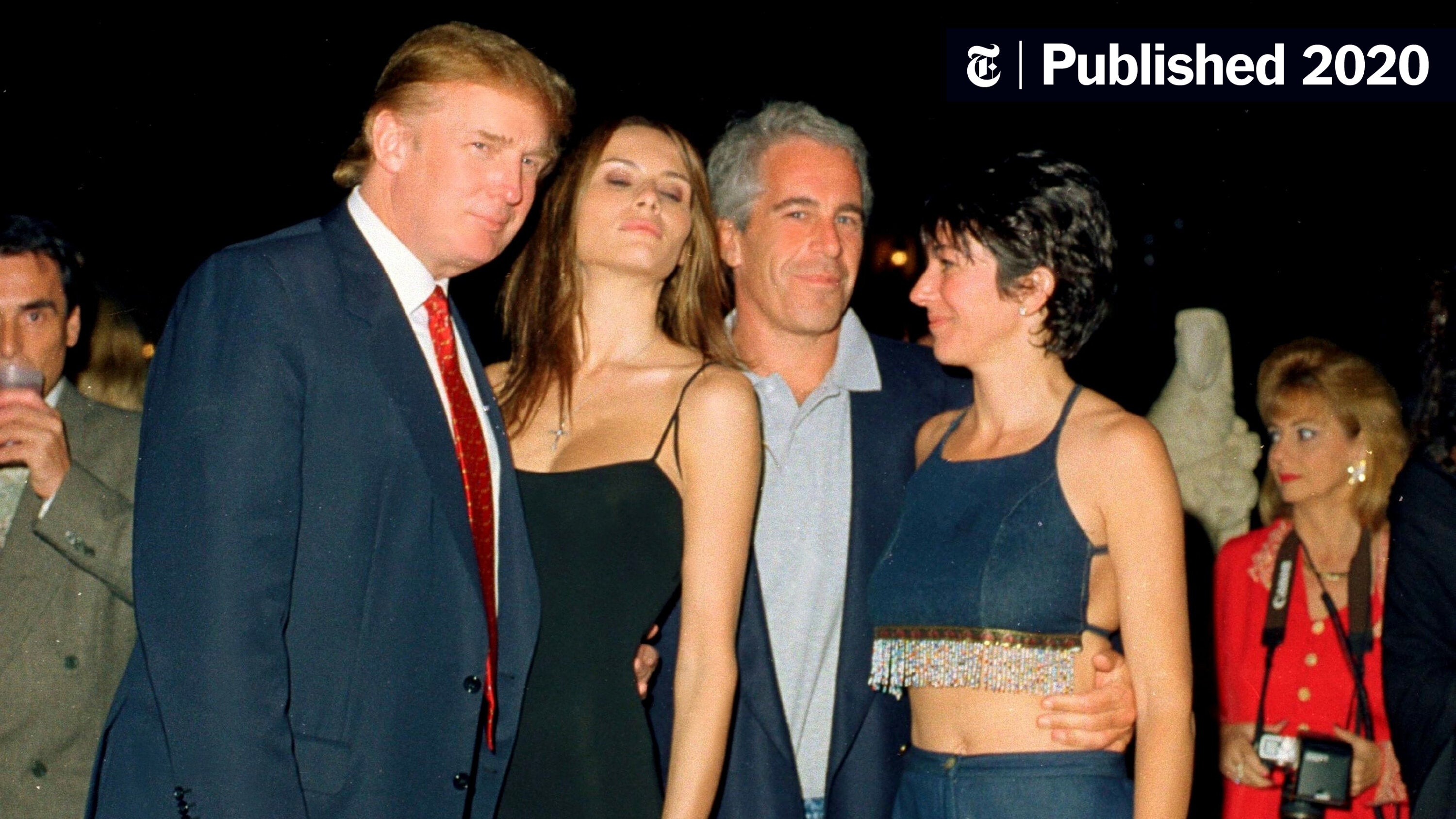
She put her defense in ordinary, almost procedural language, emphasizing shared rooms rather than shared responsibility: “I’ve never been friends with Epstein. Donald and I were invited to the same parties as Epstein from time to time, since overlapping in social circles is common in New York City and Palm Beach,” she said.
Her denial was direct: “To be clear, I never had a relationship with Epstein or his accomplice, (Ghislaine) Maxwell.” She also said, “I was not a participant. I was never on Epstein’s plane, and never visited his private island,” and described Epstein’s actions as “repulsive.”
What she asked for
But the most consequential part of the statement was not the denial. It was the demand for a public process centered on survivors:
“I call on Congress to provide the women who have been victimized by Epstein with a public hearing specifically centered around the survivors, give these victims their opportunity to testify under oath in front of Congress with the power of sworn testimony,” she said. “Each and every woman should have her day to tell her story in public, if she wishes, and then her testimony should be permanently entered into the congressional record.”
That is not a throwaway line. That is an argument about accountability, records, and public proof.
The White House split
The subtext was impossible to miss. The first lady’s call for hearings directly undercut the broader messaging coming from the president and the West Wing, who had been trying to downplay Epstein and his victims and insist the country was ready to move on.
Then came the strange bit of distance. A person familiar with the matter said the president was aware she planned to make the statement. After her remarks, however, President Donald Trump said in an interview that he did not “know anything about” it ahead of her appearance.
That contradiction is not gossip. It is part of why the remarks read as extraordinary. In politics, a denial is one thing. A denial paired with an internal shrug is another.
The constitutional issue
Americans say they want “the truth” about Epstein. What they often mean is something vaguer: a satisfying narrative with villains and a neat ending. The Constitution does not promise closure. It promises procedures: investigations grounded in lawful authority, accusations tied to evidence, and judgments issued through institutions that can be challenged and reviewed.
So here is the hard question: Do we want accountability, or do we want spectacle?
A congressional hearing can be either. It can also be both at once.
What you can demand
Let’s put some guardrails on this, because democratic self-government depends on it.
What you are entitled to know
- Sworn testimony that can be challenged and compared against other evidence.
- Official records released through lawful channels, with provenance and context.
- Charging decisions, declinations, and explanations from officials empowered to make them, especially when the public interest is overwhelming.
What you are not entitled to
- Unverified claims “everyone knows” because they circulate widely.
- Guilt-by-association logic that treats shared party photos or overlapping social circles as proof of criminal behavior.
- Selective leaks without enough context to test what they mean or whether they are even authentic.
That distinction is not a nicety. It is the difference between a republic and a mob.
Why the hearing idea hit
Congressional hearings are an imperfect tool, but they serve a legitimate constitutional purpose: oversight. They can force public officials to answer questions, preserve testimony, and expose failures that would otherwise be buried in bureaucratic silence.
The first lady’s request aims at something the Epstein story has often denied its victims: a public record that cannot be casually brushed away later.
But the immediate reaction also showed how unusual her move was. Several Epstein survivors were surprised to see, if not totally unaware of, her remarks. Sources on Capitol Hill echoed that confusion, saying they were unsure what had prompted the statement, even as it quickly garnered bipartisan support.
Rep. Robert Garcia, the top Democrat on the House Oversight Committee, urged the committee’s chairman to schedule a public hearing immediately. Rep. Tim Burchett, a Republican member of the committee, said he looked forward to working with the first lady on the issue.
Hearings also raise ethical landmines. Survivors can be retraumatized. Partisan members can grandstand. And sensational coverage can turn testimony into content rather than civic evidence.
One advocate for the victims described the moment in a way that ought to shape any next step: acknowledgement is welcome, but survivors need legal mechanisms to pursue the truth without being harmed again.
Accountability is not Congress
There is a popular habit in American life: treating Congress as a national confessional booth. When something ugly happens, we demand a hearing and assume the hearing equals justice.
But Congress does not prosecute. The Department of Justice does. That is not just practical. It is structural.
Lawmakers who have pushed for greater disclosure made that point again after the first lady spoke. Rep. Thomas Massie argued it is up to Acting Attorney General Todd Blanche to bring charges, not Congress. Former Rep. Marjorie Taylor Greene similarly said it was up to the DOJ to get justice for the victims, while praising the first lady for raising the issue at a time when it had fallen out of the news cycle.
If Congress holds hearings, the responsible standard is simple: oversight should support justice, not substitute for it.
Media standards
This story produces a constant temptation to treat suspicion as a public service. The standard cannot be “publish because people will click.” The standard has to be: Can we show our work?
In this case, the first lady’s statement specifically disputes the premise of claims linking her to Epstein. She also addressed a previously disclosed email exchange with Maxwell, characterizing it as “casual” and a “polite reply.” Those details are the right kind of raw material for responsible coverage, because they can be evaluated. The wrong move is the lazy leap from “contact existed” to “abuse occurred.”
It is also part of the context that she has fought this fight before. She said Thursday that past efforts to tie her to Epstein were “smears” that were “mean-spirited and politically-motivated,” and she has filed lawsuits over such claims. She has successfully received retractions and apologies from HarperCollins Publishers, Democratic strategist James Carville and The Daily Beast.
Three questions
If you want to act like a citizen instead of a consumer, try these questions whenever a scandal involves the powerful:
- What is the claim, exactly? Not the implication. Not the vibe. The claim.
- What is the evidence? Documents, sworn testimony, verified records, or just repetition?
- What would accountability look like? Prosecution? Policy change? Institutional reform? Or just another week of performative outrage?
Those questions do not protect the powerful. They protect the rest of us from becoming unserious.
The bottom line
Melania Trump’s statement does two things at once: it rejects allegations and it calls for a public process where survivors can speak under oath if they choose. It also exposes an uncomfortable reality about modern political life: even inside one administration, “move on” and “open the record” can exist in direct conflict.
If Congress takes her invitation, the country will face a test bigger than any one family’s reputation. The test is whether we can demand transparency without abandoning standards, pursue accountability without turning victims into props, and insist on truth without surrendering to rumor.
That is not a partisan project. It is what self-government requires.