
People talk about “getting hit with RICO” the way they talk about getting hit by lightning. Sudden. Dramatic. Basically reserved for the worst villains in the story.
But the Racketeer Influenced and Corrupt Organizations Act, better known as the RICO Act, is not a mob-only relic. It is a federal law from 1970 that lets prosecutors do something the regular criminal code often struggles to do: tell the story of a long-running criminal operation as a single, connected case.
That shift matters. Because if the government can prove you were part of an “enterprise” that committed a pattern of specified crimes, RICO can let prosecutors charge separate acts as evidence of a broader RICO offense, with steep penalties, asset forfeiture, and in civil cases, triple damages.
Join the Discussion
What RICO is and where it came from
RICO stands for the Racketeer Influenced and Corrupt Organizations Act. Congress enacted it as part of the Organized Crime Control Act of 1970, during an era when prosecutors said traditional tools were not enough to dismantle entrenched criminal organizations.
The problem was structural. A crime boss could insulate himself from liability by ordering others to commit the actual offenses. The street-level actors took the fall. The enterprise lived on.
RICO’s move was to target the relationship between people, crimes, and the organization behind them, not just one isolated event.
The basic idea: RICO targets patterns
Most criminal laws focus on a specific event: a robbery, a bribe, a wire fraud scheme, an assault. RICO focuses on repeated conduct connected to an enterprise, captured through the law’s “pattern” requirement.
At its core, RICO makes it a crime to:
- Use income from racketeering activity to acquire or operate an enterprise
- Acquire or maintain an interest in an enterprise through racketeering
- Conduct an enterprise’s affairs through a pattern of racketeering activity
- Conspire to do any of the above
That is the heart of federal criminal RICO, codified at 18 U.S.C. §§ 1961 to 1968.
Key terms in plain English
1) “Enterprise”
An enterprise can be a formal organization like a corporation, union, or government agency. It can also be an informal group of people working together, often called an association-in-fact.
The enterprise is not required to be a traditional “crime family.” It is enough that there is a continuing unit with a common purpose. The structure can be minimal. It does not have to look like a corporate org chart.
One technical but important note: in many § 1962(c) cases, the defendant (the “person”) generally must be distinct from the enterprise. In other words, RICO is often framed as a person conducting the affairs of an enterprise, not the person simply being the enterprise.
2) “Racketeering activity”
RICO does not criminalize “being shady.” It relies on a list of specific predicate offenses defined in the statute. These are often called RICO predicates.
Common predicate offenses include:
- Bribery and extortion
- Mail fraud and wire fraud
- Money laundering
- Drug trafficking
- Gambling offenses
- Obstruction of justice and witness tampering
- Sex trafficking and forced labor offenses, and certain immigration-related crimes that are specifically listed in the statute
- Selected violent crimes that can qualify in certain settings (for example murder, kidnapping, robbery, or arson), including some state-law offenses when they fall within RICO’s categories and are punishable by more than one year
The exact list is technical, and it matters, because a RICO case lives or dies on whether the government can prove qualifying predicates.
3) “Pattern of racketeering activity”
A RICO pattern generally requires at least two predicate acts within a 10-year period (excluding time in prison).
But two acts are not automatically a pattern. Courts look for relatedness and continuity. In other words, do these acts connect to each other and to an enterprise, and do they show ongoing criminal conduct rather than a one-off episode.
4) “Conduct or participate”
RICO does not require you to be the boss. Under § 1962(c), liability generally requires some role in directing the enterprise’s affairs, sometimes described as the “operation or management” idea. That does not mean you need a formal title. It can include people who help run the scheme in a meaningful way.
And under § 1962(d) (RICO conspiracy), the net can be broader. The government generally has to prove an agreement to pursue the unlawful objective. A person can be exposed even if they do not personally commit the predicate acts, depending on the facts and how the conspiracy is proved.
A quick example
Imagine a group that uses a real LLC as a front to “consult” for vendors. Over two years, members repeatedly demand payments to “make problems disappear” (extortion) and route the money through fake invoices and interstate emails (wire fraud). If prosecutors can prove that ongoing enterprise plus related, repeated predicate acts, those separate crimes can become the building blocks of a RICO charge.
Criminal RICO vs civil RICO
RICO comes in two main forms, and they are easy to confuse.
Criminal RICO
This is brought by the government, usually federal prosecutors. If convicted, defendants can face:
- Prison (often up to 20 years per RICO count, and more in certain circumstances, including potential life sentences when the predicate offense allows it)
- Fines
- Forfeiture of proceeds and interests connected to the racketeering, which is a central feature of RICO and is often treated as a mandatory consequence upon conviction
Civil RICO
This can be brought by private plaintiffs who claim they were injured in their business or property by a RICO violation. The major hook is the remedy:
- Treble damages (triple the amount of proven damages)
- Attorney’s fees in many cases
Civil RICO is controversial because it can turn what looks like a business dispute into high-stakes federal litigation. Courts often police these claims closely.

How prosecutors build a RICO case
RICO is powerful, but it is not magic. Prosecutors still have to prove specific elements, and they usually do it by building a narrative that ties many facts together.
Step 1: Identify the enterprise
Who are the participants? What is the common purpose? What makes it a continuing unit rather than a temporary collaboration?
Step 2: Prove the predicate acts
Each predicate act is typically a separate crime with its own elements. That means a RICO case can feel like multiple prosecutions inside one.
Step 3: Show the pattern
Prosecutors must connect the acts to each other and to the enterprise’s affairs. Evidence can include communications, financial records, insider witnesses, and a timeline of repeated conduct.
Step 4: Connect the defendant to the operation
RICO is not supposed to be guilt by association. The government generally must show that the defendant knowingly participated in conducting the enterprise’s affairs through the racketeering pattern, or knowingly joined a RICO conspiracy.
Why RICO is so powerful
RICO changes leverage in three main ways.
- It bundles conduct. Multiple crimes can be presented as a unified enterprise story rather than isolated charges.
- It expands liability. Enterprise and conspiracy theories can reach higher-level participants who do not personally commit every predicate act.
- It hits money and infrastructure. Forfeiture and civil damages aim at the enterprise’s ability to operate, not just individual punishment.
That is also why RICO is controversial. It is designed to be a heavy tool, and the legal system has to decide when that level of force is justified.
Constitutional issues that come up
RICO is not a constitutional amendment. It is a statute. But RICO cases regularly collide with constitutional principles in practice.
Due process and vagueness
Defendants sometimes argue that RICO terms like “enterprise” or “pattern” are too vague to give fair notice, which is a core Due Process concern. Courts have generally upheld RICO, but they still require prosecutors to prove the statutory elements, including relatedness and continuity, and not treat RICO as a free-floating “bad person” charge.
First Amendment concerns
RICO can intersect with the First Amendment when the alleged enterprise involves political activity, advocacy groups, or expressive association. The constitutional line is that speech and association are protected, but crimes are not. In real cases, the difficulty is separating protected activity from criminal predicates and proving intent without punishing mere membership or unpopular viewpoints.
Double jeopardy and charge stacking
RICO can be charged alongside the underlying predicate offenses. Defendants sometimes argue this is unfair stacking, whether framed as Double Jeopardy, multiplicity, or legislative-intent problems. Courts often treat RICO as a distinct offense with distinct elements, which can allow both RICO and predicate charges.
Eighth Amendment and forfeiture
Because RICO can trigger aggressive forfeiture, defendants sometimes raise Excessive Fines Clause arguments under the Eighth Amendment. Courts evaluate whether forfeiture is grossly disproportionate, though outcomes are fact-specific.
Common misconceptions
- “RICO is only for the mafia.” No. It was built with organized crime in mind, but it can apply to any qualifying enterprise and pattern of predicates.
- “Two crimes automatically equal RICO.” Not necessarily. The pattern requirement is about more than counting to two.
- “RICO means you are guilty because of who you know.” In theory, no. In practice, enterprise prosecutions test how well courts enforce the distinction between association and participation.
- “RICO is a single crime.” It is more like a framework that creates specific RICO offenses (like conducting an enterprise through a pattern, or conspiring to do so) proved through predicate acts.
State RICO laws
Many states have their own RICO statutes, often modeled on the federal law but with important differences. State RICO laws can:
- Use different lists of predicate offenses
- Have different proof requirements for a “pattern”
- Be deployed in state court by state prosecutors, sometimes in ways that look very different from federal practice
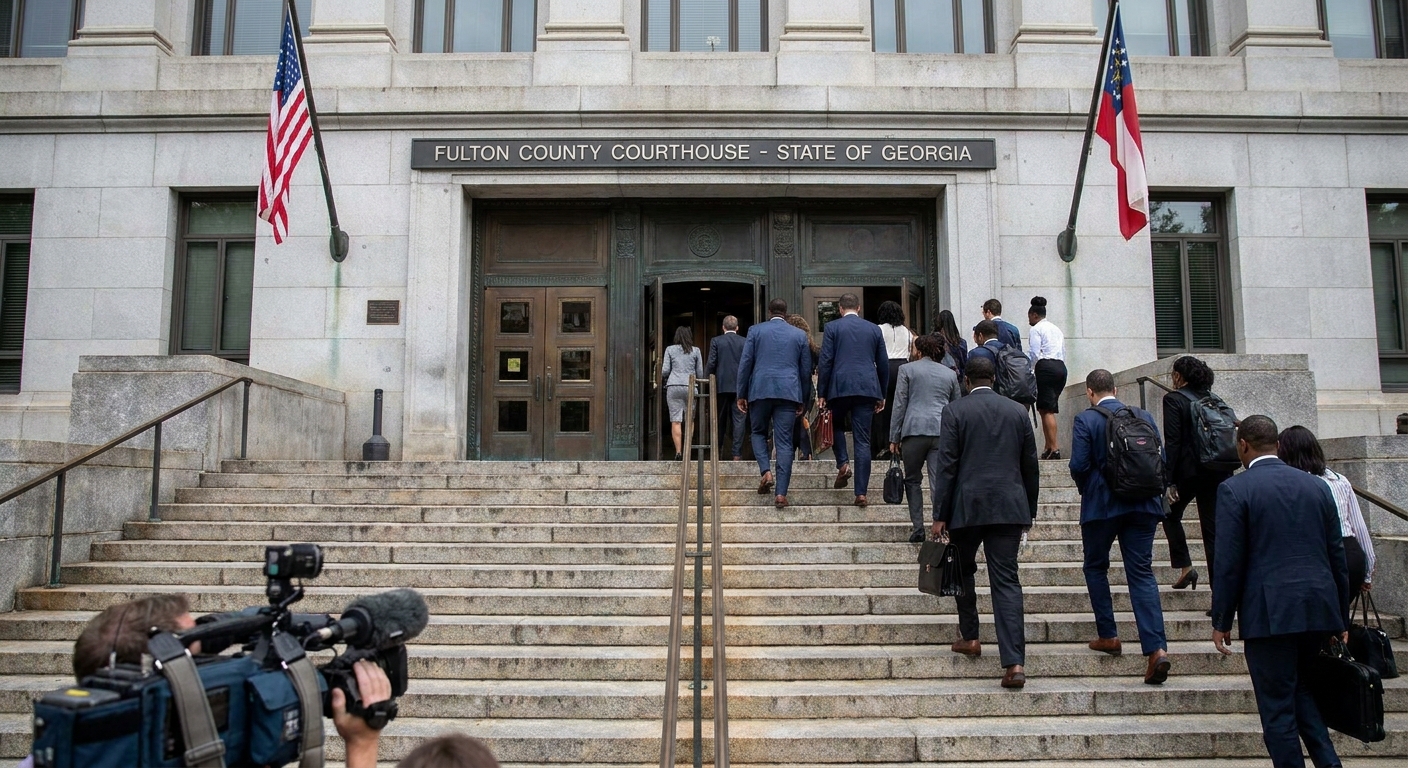
If you hear about “RICO charges” in the news, it is worth checking whether the case is federal RICO, state RICO, or both.
Time limits
Like most federal crimes, RICO is also shaped by deadlines. Many criminal RICO prosecutions operate under a five-year statute of limitations, though exceptions and tolling issues can matter. Civil RICO has its own judge-made accrual rules and timing fights, which can be decisive in real litigation.
Why RICO matters
RICO is one of those laws that reveals how American criminal justice actually functions. Not as a set of isolated rules, but as a system of pressure, incentives, and narrative building.
It is also a reminder that the Constitution sets the stage, but statutes do the day-to-day work. The Bill of Rights shapes what government may not do. Laws like RICO shape what government tries to do, and how far it can go before a judge says: stop.
If you want to read the next headline about “RICO” with clearer eyes, here is the question to ask first: What is the alleged enterprise, and what are the specific predicate crimes that supposedly form the pattern? Everything else is commentary.
Note: This is general information, not legal advice. RICO is fact-specific, and small details can change the analysis.
Quick glossary
- Predicate act: A specific crime on RICO’s list that can count as racketeering activity.
- Enterprise: A formal entity or an ongoing group associated for a common purpose.
- Pattern: Related predicate acts showing continuity, not just isolated incidents.
- Forfeiture: Government seizure of property tied to criminal proceeds or enterprise interests.
- Civil RICO: A private lawsuit version of RICO that can lead to triple damages.