
The filibuster is one of those Washington words that sounds like a dusty procedural relic until it suddenly becomes the main character of American lawmaking.
When the Senate “filibusters” a bill or nomination, what is really happening is simple: a minority of senators is using the Senate’s rules to keep the Senate from reaching a final vote, or even from getting to the vote that would allow a final vote. They may not have the numbers to win outright, but they do have enough votes to prevent the Senate from ending debate and moving forward.
In today’s Senate, the filibuster is less about marathon speeches and more about math. It turns many ordinary decisions into a 60-vote hurdle. That single fact shapes what Congress can realistically pass, which policies die quietly, and why so much of modern legislation is either scaled down, stuffed into budget bills, or never brought to the floor at all.
What a filibuster is, in plain English
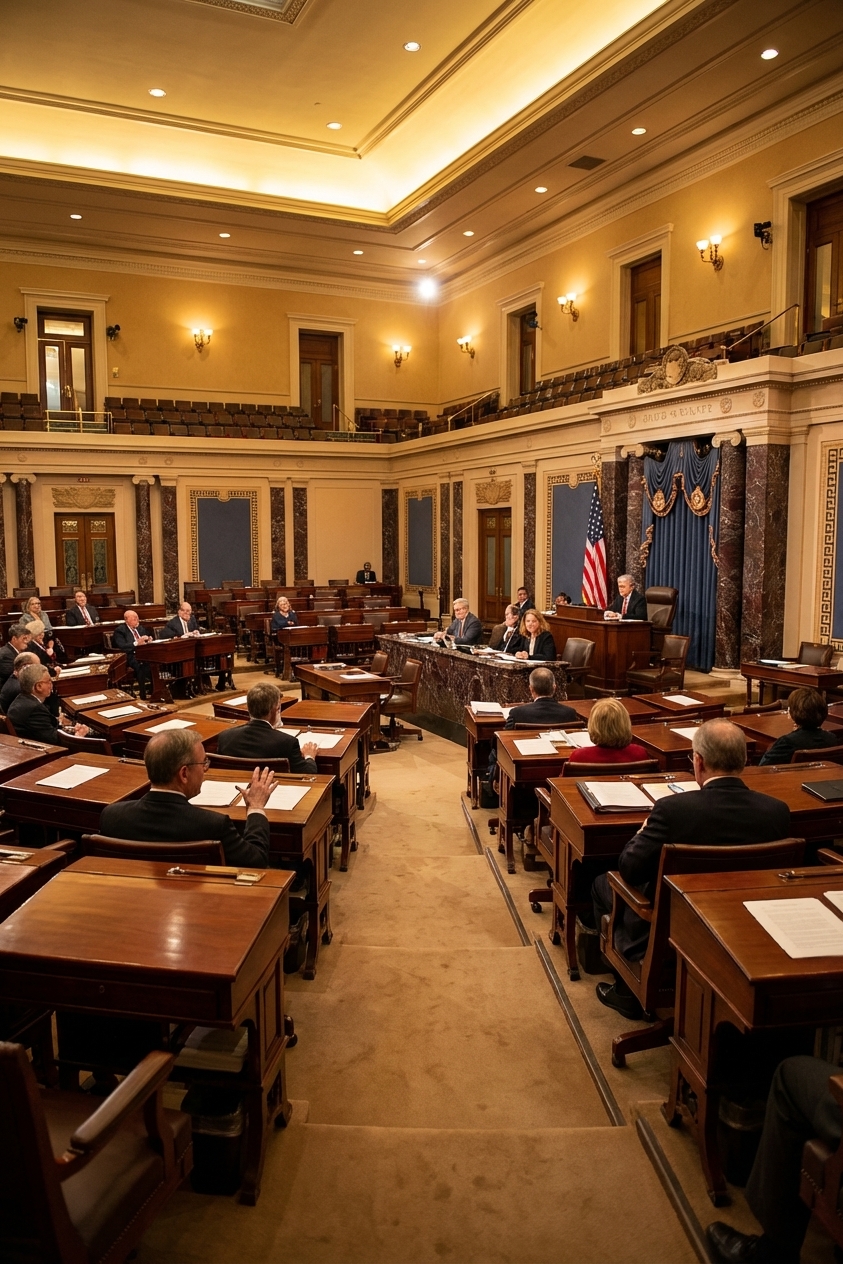
A filibuster is a tactic to keep the Senate from reaching a final vote. Under Senate practice, most measures cannot reach a final vote unless the Senate first agrees to end debate. If a determined minority refuses to let debate end, the Senate is stuck.
It helps to think of the filibuster less as a single act and more as a condition: if you cannot get the votes for cloture, you cannot reliably get to a final vote.
The Senate is built for delay
The House of Representatives is designed to run on majorities. The Senate is designed to slow things down. It has fewer members, longer terms, and rules that prize extended debate. That is not accidental. The Senate was meant to be a brake.
The filibuster takes that “brake” idea and turns it into leverage. It allows a minority to force compromise, or to force inaction, depending on how you see it.
Where the filibuster came from
The Constitution does not mention the filibuster. There is no Filibuster Clause tucked into Article I.
The filibuster grew out of Senate rules and Senate culture, especially the idea that debate can continue as long as senators want to keep talking. The origin story is often traced to an early rules change: in 1806, during a cleanup of its rulebook, the Senate dropped a motion known as the “previous question,” which in other settings can be used to cut off debate. That did not instantly create the modern filibuster, but it removed a straightforward majority off switch. Over time, as norms evolved and obstruction became more strategically useful, senators learned they could exploit the resulting flexibility to delay or block action.
Did the Founders intend it?
Not in the direct sense. The Founders intended the Senate to be deliberative and to resist temporary passions. They also built in supermajorities for specific actions: treaties, convictions in impeachment trials, overriding vetoes, proposing amendments.
But they did not require supermajorities for ordinary legislation. The modern filibuster effectively adds a supermajority requirement to much of the Senate’s work, and that is why it remains controversial. It is a powerful policy filter created by rules, not by constitutional text.
Rule XXII and cloture
If the filibuster is the lock, Rule XXII is the key that sometimes opens it.
In 1917, after senators blocked President Woodrow Wilson’s push to arm merchant ships in the run-up to U.S. entry into World War I, the Senate adopted a formal procedure to end debate: cloture. That procedure became Rule XXII.
Over the decades, the cloture threshold changed. The modern version generally requires three-fifths of the full Senate duly chosen and sworn, which is usually 60 votes, to end debate on most matters. Once cloture is invoked, debate becomes limited and the Senate can finally reach a final vote.
What “60 votes” really means
The key detail is this: the 60 votes are not always the votes to pass the bill. They are often the votes to allow the Senate to vote.
That changes everything. A bill might have 51 votes to pass, but if it cannot get enough votes to invoke cloture, it may never reach final passage. The practical result is that many measures need broad bipartisan support, or they die.
How cloture works
The cloture process sounds technical, but its effect is easy to feel: it determines whether the Senate will move on or remain frozen.
A senator files a cloture motion. This is essentially a request to end debate.
The Senate waits. Under the rule, the cloture vote happens after an intervening day. In practice, that often means it is about two days later depending on timing and the schedule.
The Senate votes on cloture. On most legislation, it takes 60 votes to succeed.
If cloture passes, debate becomes limited. The Senate moves into a structured, time-limited phase where debate and amendments are constrained.
The Senate proceeds to final passage. Passing a bill typically requires a simple majority, but the hardest part may already have been clearing the cloture threshold.
The practical lesson is that the Senate has two gates: the cloture gate and the final passage gate. The filibuster lives at the first gate.
Why time limits still matter
Even after cloture, the Senate often has to burn floor time to get to the finish line. Traditionally, post-cloture debate can run up to 30 hours on many questions, and that “clock” can become its own kind of obstruction, especially when the Senate is juggling dozens of priorities. This is one reason the modern filibuster is as much about controlling the calendar as it is about winning votes.
Talking vs today’s filibuster
When most people picture a filibuster, they picture a senator speaking for hours, refusing to sit down, reading phone books, holding the floor by force of voice.
That is a real thing historically, but it is not how the modern Senate usually operates.
The talking filibuster
In a classic talking filibuster, senators must continuously hold the floor. This creates physical and political costs. It also creates a public spectacle that can backfire on the filibustering side.
The two-track shift
A big reason the spectacle faded is the Senate’s move in the 1970s toward a “two-track” system, associated with Majority Leader Mike Mansfield. Instead of forcing the chamber to grind to a total halt on one blocked item, the Senate began allowing other business to proceed while a filibustered measure sat on a separate track. The Senate could keep functioning, but the blocked bill could still be effectively frozen unless it could clear cloture.
The modern, “silent” filibuster
Today, the Senate often operates on the assumption that a bill will face a filibuster unless it can clear the cloture threshold. The threat is often enough. Instead of forcing continuous speeches, the Senate’s schedule and leadership decisions treat many items as 60-vote business from the start.
This is why the filibuster can feel both invisible and omnipresent. You may not see anyone talking, but you will see legislation stall.
What it applies to
The filibuster is not a universal Senate weapon. It depends on the type of question the Senate is considering.
Usually subject to the filibuster
Most bills and many major motions related to legislation.
Many procedural steps needed to bring legislation to a final vote, including motions to proceed in many cases.
Often not subject to the filibuster
Budget reconciliation bills, which can pass with a simple majority if they meet strict budget-related rules (often associated with the Byrd Rule).
Some fast-track procedures created by statute with time limits, including tools used for trade and certain budget processes.
Congressional Review Act resolutions, which are time-limited and not subject to a Senate filibuster.
Most nominations after rule changes in 2013 and 2017 lowered the cloture threshold for executive branch and federal judicial nominees, including the Supreme Court, to a simple majority.
This is why modern policy fights often look oddly shaped. If you can squeeze a policy into reconciliation or another expedited process, it becomes plausible. If you cannot, it often becomes a 60-vote long shot.
The nuclear option
The “nuclear option” is Senate slang for a procedural maneuver that effectively changes the Senate’s interpretation of its rules by majority vote, rather than by formally amending the rules through the usual, harder process.
It is called “nuclear” because it breaks a norm: the idea that Senate rules, especially the rules governing debate, should not be changed by bare majorities in the heat of partisan conflict.
What it changed
The biggest nuclear-option changes involved nominations:
2013: The Senate lowered the threshold to end debate on most executive branch and lower federal court nominations to a simple majority.
2017: The Senate extended the simple-majority cloture standard to Supreme Court nominations.
As a result, you can still hear “filibuster” in the news about judges, but in practice the filibuster is no longer the decisive barrier for most nominations the way it once was.
Legislation is different. The legislative filibuster remains largely intact, and that is where the modern 60-vote Senate continues to shape national policy.
Why it matters now
The filibuster matters because it turns narrow Senate majorities into weak governing coalitions. A party can win the presidency, win the House, and control 51 Senate seats, and still find itself unable to pass much of its agenda.
It changes what gets written
When 60 votes are required, lawmakers write bills differently. They narrow them, carve out controversial sections, or avoid topics entirely. That is not just strategy. It is a structural incentive.
It shifts power
The filibuster often shifts influence toward:
Moderate swing senators who can make or break a 60-vote coalition.
Party leadership that controls the floor schedule and decides what is worth the time.
Committees and negotiators who can craft compromise language.
It also encourages governing through tools that avoid the filibuster, including reconciliation, executive action, and agency regulation. Those tools have limits, and they can be reversed more easily than statutes. So the filibuster can indirectly make policy less stable over time.
Timeline
The filibuster’s story is really a series of moments where a Senate minority discovered a new way to delay, and then the Senate reacted with a new rule, a new norm, or a new workaround.
1917: The Senate adopts Rule XXII and creates cloture after filibusters obstruct Wilson-era national security measures, including arming merchant ships.
1935: Senator Huey Long stages a dramatic talking filibuster, reading recipes and other material to delay business.
1957: Senator Strom Thurmond delivers the longest single-person talking filibuster in Senate history, over 24 hours, opposing the Civil Rights Act of 1957.
1964: A major filibuster against the Civil Rights Act ends when the Senate successfully invokes cloture, a landmark moment for civil rights legislation and for the cloture tool itself.
1975: The Senate lowers the cloture threshold from two-thirds of those present and voting to three-fifths of the full Senate, creating the modern 60-vote standard in most cases.
2013: The Senate uses the nuclear option to end the 60-vote threshold for most nominations other than the Supreme Court.
2017: The Senate applies the nuclear option to Supreme Court nominations, cementing confirmation by simple majority.
2021 to 2022: Intense public debate over whether to reform or abolish the legislative filibuster, driven by voting rights, policing reform, and other stalled priorities.
Each of these moments reflects the same tension: the Senate wants to protect debate, but it also wants to function. The rules try to balance both, and the balance keeps shifting.
The case for keeping it
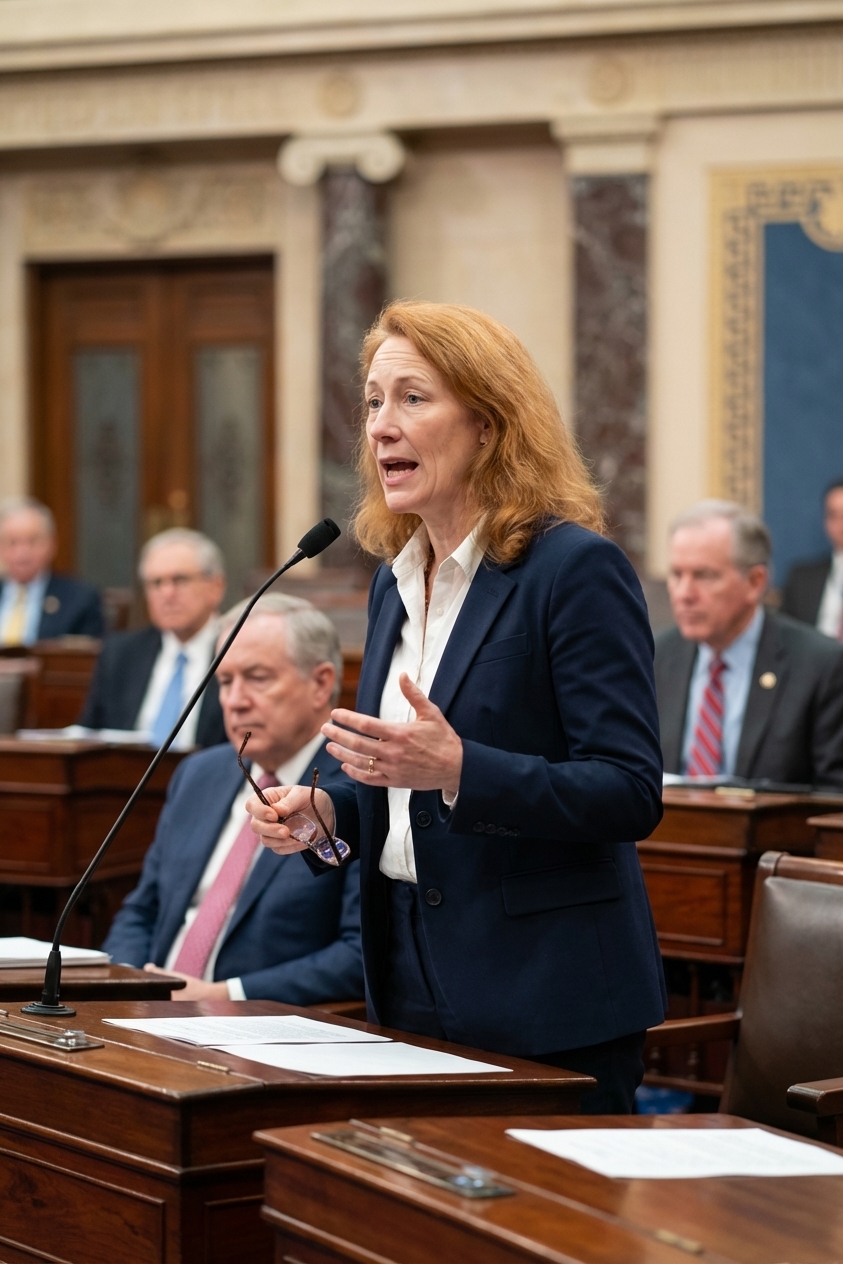
Supporters of the filibuster tend to describe it as minority protection, not minority rule.
It forces compromise. If major legislation needs 60 votes, it often must attract at least some bipartisan support.
It prevents whiplash. Without a filibuster, a party could pass sweeping laws with 51 votes, and the next majority could repeal them just as quickly.
It preserves the Senate’s identity. The Senate is supposed to be different from the House. Extended debate is part of that tradition.
Underlying these claims is a constitutional instinct: in a large republic, slowing down can be a feature, not a bug. The question is whether the filibuster slows down deliberation or simply blocks it.
The case for reform or repeal
Critics respond that the filibuster is no longer a tool for debate. It is a routine requirement that effectively changes the constitutional baseline for lawmaking.
It enables a minority veto. When 41 senators can stop most legislation, the Senate can drift away from majority governance.
It rewards obstruction. If stopping the other party’s agenda is politically valuable, the filibuster makes “no” the easiest vote to cast.
It distorts accountability. Voters punish or reward parties for results, but the filibuster can make results structurally hard even when one party “controls” Congress.
There is also a historical critique: the filibuster was repeatedly used to delay civil rights legislation for decades. That history still colors today’s arguments, especially when the subject is voting rights or equal citizenship.
Reform ideas
The debate is not only “keep it” or “kill it.” Many proposals aim to keep some minority leverage while reducing routine gridlock.
Bring back the talking filibuster
Require senators to continuously hold the floor to sustain a filibuster. This raises the cost of obstruction and makes it visible to the public.
Lower the threshold over time
Some proposals would start at 60 votes and then gradually reduce the number required after repeated votes, making indefinite blockage harder.
Create carveouts
The Senate could exempt particular categories from the filibuster, as it effectively did for nominations. Proposals have included voting rights, debt limit increases, or other high-stakes governance issues.
Shift the burden
Instead of requiring 60 votes to end debate, require the minority to produce 41 votes to continue it. This would change the day-to-day power dynamic, especially when senators are absent.
Each reform choice reflects a value judgment: how much should a Senate minority be able to slow the majority, and at what cost to governing?
The constitutional bottom line
The filibuster is not in the Constitution, but it lives in the space the Constitution leaves to each chamber to set its own rules. Article I, Section 5 gives Congress the power to determine the rules of its proceedings. The Senate used that authority to create a system where debate can be prolonged and where ending debate often requires a supermajority.
So the filibuster is constitutional in the sense that the Senate has the authority to adopt it. But it is not constitutionally required. The Senate could change it, narrow it, or abolish it through its own procedures and precedents, and that is why the fight over the filibuster is always, at its core, a fight over what the Senate is for.
If the Senate is meant to protect minority voices, the filibuster looks like a shield. If the Senate is meant to translate elections into workable law, it can look like a padlock on the front door of legislation. Either way, it is a reminder that some of America’s most consequential governing rules are not written in the Constitution at all. They are written in the margins of how we choose to run it.