
RICO is one of those laws people name-drop like it is a magic word. “They should hit him with RICO.” “That is a RICO case.” “RICO is for the mob.”
Sometimes they are right. Often they are not.
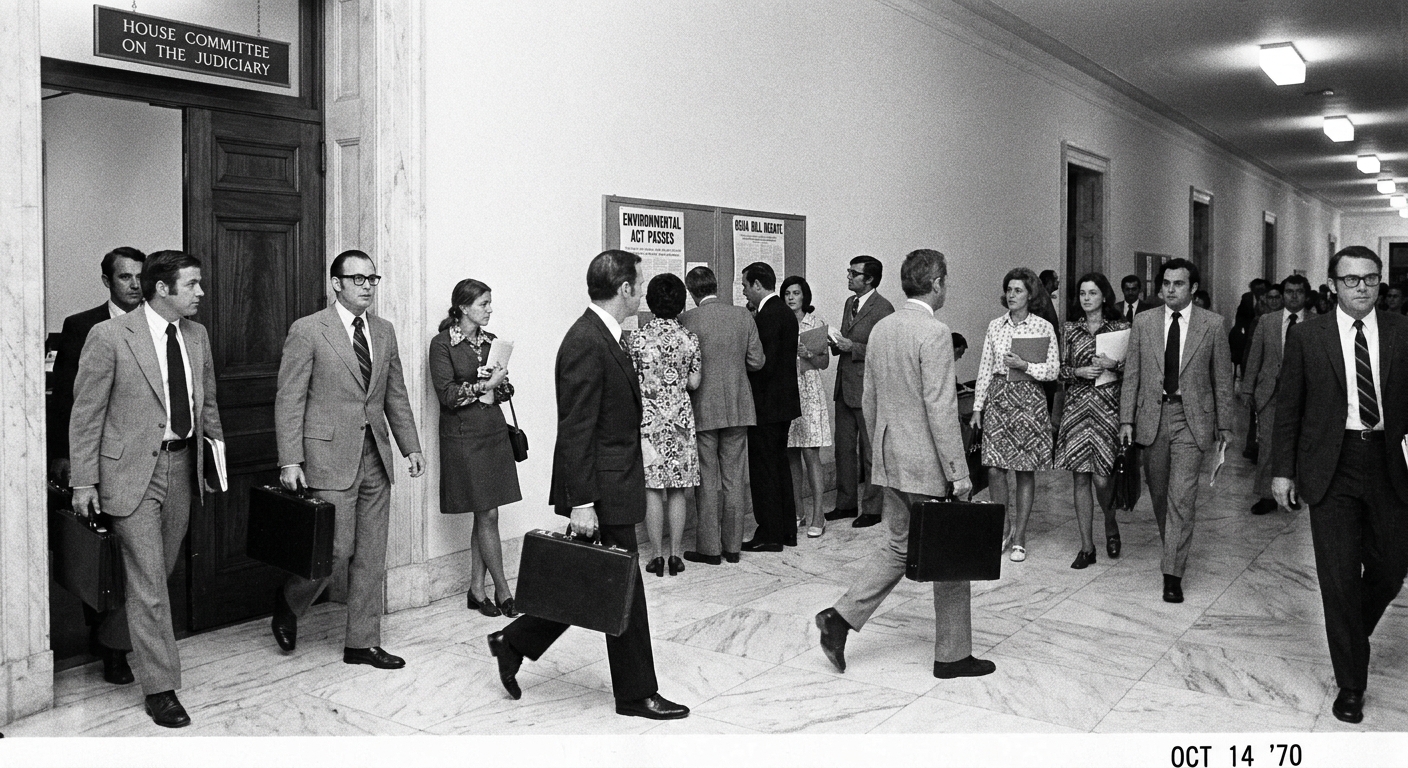
RICO stands for the Racketeer Influenced and Corrupt Organizations Act, a federal statute passed in 1970 as part of a larger push to dismantle organized crime. Its basic idea is simple: if a group functions like an ongoing criminal machine, prosecutors should not have to treat each crime as an isolated event. They should be able to charge the pattern, the enterprise, and the people who direct it.
Join the Discussion
What RICO Actually Is
RICO is codified at 18 U.S.C. §§ 1961 to 1968. It makes it a crime to:
- Use or invest income from a pattern of racketeering in an enterprise (§ 1962(a)),
- Acquire or maintain an interest in an enterprise through a pattern of racketeering (§ 1962(b)),
- Conduct or participate in an enterprise’s affairs through a pattern of racketeering (§ 1962(c)), or
- Conspire to do any of the above (§ 1962(d)).
People hear “racketeering” and picture one specific offense. In RICO, racketeering is more like a menu. The statute lists many qualifying crimes, called predicate acts, and RICO charges are built by stitching those acts together into a prosecutable pattern.
The Core Pieces
1) The “enterprise”
An enterprise can be a formal legal entity like a corporation, union, or partnership. It can also be an “association-in-fact,” meaning a group of people who function together for a common purpose, even if they do not have a business license or a neat org chart.
The Supreme Court has said an association-in-fact enterprise must have at least three structural features: a purpose, relationships among those associated with it, and longevity enough to pursue the purpose (Boyle v. United States, 2009). It also does not need a formal hierarchy, a chain of command, fixed roles, or the kind of structure you would see in a legitimate organization.
2) The “pattern”
A pattern of racketeering activity requires at least two predicate acts within 10 years (18 U.S.C. § 1961(5)). The clock excludes any time the defendant spent in prison during that period. But two acts alone are not enough. Courts also require relatedness and continuity, meaning the acts are connected and show ongoing criminal conduct, or a threat that it will continue. This framework comes from H.J. Inc. v. Northwestern Bell Telephone Co. (1989).
Continuity can look like:
- Closed-ended continuity, meaning repeated conduct over a substantial period of time.
- Open-ended continuity, meaning the way the scheme is set up creates an ongoing threat of repetition, even if you only see a slice of it.
3) Predicate acts
Predicate offenses include a wide range of crimes. Common examples include:
- Bribery and extortion
- Mail fraud and wire fraud
- Money laundering
- Drug trafficking offenses
- Witness tampering and obstruction of justice
- Kidnapping
- Some serious violent and property crimes, but only if they fit what the statute actually lists (often as certain state felonies “chargeable under State law” and punishable by more than one year, or as specific federal offenses)
This is a major reason RICO reaches far beyond classic mafia prosecutions. Fraud-based predicates, especially mail and wire fraud, can put a surprising amount of modern conduct into RICO territory.
4) “Conduct or participate” (what that really means)
One of the most misunderstood parts of RICO is § 1962(c): you have to “conduct or participate” in the enterprise’s affairs through racketeering. The Supreme Court’s shorthand for this is the operation or management test (Reves v. Ernst & Young, 1993). In plain English, it is not always enough that someone helped, did work for the group, or benefited from it. The government (or civil plaintiff) typically has to show the defendant played some role in directing the enterprise’s affairs, even if that role is minor compared to the people at the top.
Why RICO Was Created
In the mid-20th century, federal prosecutors often had a frustrating problem: they could prove the crimes, but not the boss. Organized crime leaders insulated themselves. Orders were indirect. Money moved through intermediaries. Witnesses disappeared or changed their stories.
RICO was designed to target the people who run the system, not only the people caught holding the bag for a single offense. It also added powerful tools: significant prison exposure, forfeiture, and in civil cases, triple damages.

Criminal vs. Civil
RICO has two main lives: criminal prosecutions brought by the government, and civil lawsuits brought by private parties. The structure is the same, but the goals, remedies, and practical hurdles can look very different.
Criminal RICO
Criminal RICO is brought by government prosecutors. A conviction can carry up to 20 years in prison per racketeering count, or life if the underlying predicate can be punished by life. It can also trigger forfeiture of property connected to the racketeering activity or the enterprise.
Civil RICO
Civil RICO is what surprises many people. Under 18 U.S.C. § 1964(c), private plaintiffs can sue if they are injured in their business or property by reason of a RICO violation. The statute allows treble damages (triple damages) and attorney’s fees.
As a rule of thumb, personal injuries are generally not recoverable under civil RICO, because the statute is aimed at business or property harm. There are edge-case disputes in the courts, but for most readers, that is the practical takeaway.
In practice, civil RICO claims show up in business disputes, fraud allegations, and sprawling litigation where plaintiffs argue the defendant’s misconduct was not a one-off, but a repeatable scheme.
Courts scrutinize civil RICO closely. Many cases are dismissed because the plaintiff cannot show a qualifying enterprise, a true pattern, or the required causal link between the predicates and the alleged injury.
Common Myths
- Myth: RICO is only for the mafia.
Reality: The statute was born in the era of organized crime prosecutions, but it has been used against gangs, corrupt officials, corporate schemes, and more. - Myth: Any two crimes equal RICO.
Reality: RICO requires an enterprise and a pattern that satisfies relatedness and continuity, not just two bad acts near each other. - Myth: RICO automatically means “federal case.”
Reality: Many states have their own RICO-style laws. Also, a case can involve both state and federal charges depending on the facts. - Myth: RICO is just a “charge enhancer.”
Reality: It is its own statutory structure with its own elements, even though it often sits on top of predicate crimes.
How RICO Cases Are Built
RICO cases are narrative-heavy. Prosecutors typically try to show the same basic arc:
- Identify the enterprise and who is part of it.
- Show the enterprise’s purpose, usually money, power, or control of a market or territory.
- Prove predicate acts committed by defendants, often using documents, cooperating witnesses, surveillance, and financial tracing.
- Connect the acts to the enterprise’s affairs, not merely to personal freelancing.
- Establish the pattern by showing repetition and ongoing threat.
In criminal RICO, prosecutors also use the statute’s conspiracy provision frequently. Conspiracy can widen the net by focusing on agreement and participation rather than personally committing every predicate act.
Constitutional Questions
RICO is a statute about structure, and that is exactly why it produces constitutional friction. The Constitution is not just a list of rights. It is also a blueprint for how government power is supposed to be used and limited. RICO tests those boundaries.
Due process and vagueness
Critics argue that RICO can be too flexible, especially with broad predicates like mail and wire fraud. If ordinary people cannot tell what conduct could make them part of a racketeering pattern, the law risks due process problems under the Fifth Amendment’s requirement of fair notice.
Courts have largely upheld RICO against facial vagueness challenges, but vagueness arguments still appear in specific cases depending on how the government frames the enterprise and pattern.
First Amendment issues
When alleged enterprises involve political movements, advocacy networks, or controversial associations, First Amendment concerns can surface. Membership or association alone cannot be criminalized. The government must prove participation in the enterprise’s affairs through racketeering, not simply shared ideology or protected speech.
Eighth Amendment and forfeiture
RICO forfeiture can be sweeping. That raises questions under the Eighth Amendment’s Excessive Fines Clause when forfeiture becomes disproportionate to the offense. Courts analyze this fact by fact, especially when the forfeited property is large relative to the proven criminal conduct.
Federalism and federal reach
RICO sits on top of many crimes that states also prosecute. That overlap puts federalism questions in the background, including the scope of Congress’s Commerce Clause power and the practical reality of dual sovereignty.
In real cases, federal jurisdiction is often grounded through the statute’s requirements that the enterprise affect interstate commerce, and through predicates that are themselves tied to interstate channels, like mail and wire fraud.
Plain English
If you strip the acronym away, RICO is a legal theory about systems.
Not “Did one person commit one crime?”
But: “Did a group operate over time in a way that repeatedly used specific crimes as tools, and did the defendants participate in running that operation?”
That framing is why RICO can feel both satisfying and unsettling. Satisfying, because it can reach people who profit from wrongdoing while keeping their hands clean. Unsettling, because a law that powerful depends heavily on how prosecutors define the enterprise and how courts police the edges.
Quick FAQ
Is RICO a single crime?
RICO is a statute that defines several offenses. A RICO charge is usually built from other underlying crimes, called predicate acts, connected to an enterprise and a pattern.
Do you need to be in a gang to face RICO?
No. An enterprise can be an informal association-in-fact or a formal entity. What matters is the structure, purpose, and longevity, plus the pattern of predicate crimes.
Can a person be charged with RICO without committing the predicate acts personally?
In some cases, yes, especially under conspiracy theories. But the government still has to prove the legal elements, and courts require more than guilt by association.
Is RICO used in every big case people talk about?
No. Many large, high-profile prosecutions rely on traditional fraud, conspiracy, or corruption statutes. RICO is just one option in the toolbox.
Why It Still Matters
RICO did not just change how the government prosecutes organized crime. It changed how the legal system talks about power and accountability.
In a republic built on the idea that law should bind the strong as much as the weak, statutes like RICO are always going to be tempting. They promise leverage against coordinated wrongdoing. They also demand restraint, because leverage can become overreach if courts stop requiring precision.
The question RICO keeps asking is not only “Who broke the law?” It is “What kind of machine were they operating, and how far should the government be allowed to go to shut it down?”