
Americans tend to talk about money in politics like it is one big, shadowy bucket. But election law does not treat political spending as one thing. It sorts it into categories, draws bright lines between some of them, and then spends the next decade litigating whether those lines still mean anything.
A Super PAC is one of those categories. It is a political committee that can raise and spend unlimited amounts of money to influence elections, so long as it does not coordinate its spending with a candidate’s campaign and follows federal source prohibitions.
That one sentence contains the whole controversy. Unlimited money, yes. Direct donations to candidates, no. Independence is the legal hinge that makes the entire structure swing.
Join the Discussion
What a Super PAC is, in plain English
Super PAC is the nickname for an independent-expenditure-only political action committee.
Its job is to spend money on political messages that help elect or defeat candidates, usually through:
- TV and radio ads
- Digital ads
- Mailers and texting programs
- Get-out-the-vote operations
- Opposition research and messaging campaigns
What makes it “super” is not that it is more official. It is that it can take checks of virtually any size from permissible sources, then spend that money advocating for or against candidates.
Super PAC vs. regular PAC
The easiest way to understand Super PACs is by comparing them to the older model most people think of when they hear “PAC.”
Regular PAC (traditional PAC)
- Can give money directly to candidates, but only up to strict limits.
- Has contribution limits on what it can accept from donors.
- May also make independent expenditures, but those spending decisions still cannot be coordinated with a candidate’s campaign under FEC rules.
Super PAC
- Cannot give money directly to candidates or a candidate’s campaign committee.
- Can accept unlimited contributions from many domestic sources (individuals, corporations, unions, and certain nonprofits), subject to federal source prohibitions such as bans on foreign national money, federal contractor contributions, and contributions made in someone else’s name.
- May spend unlimited amounts on independent expenditures that expressly advocate election or defeat of a candidate.
- Must remain independent from the candidate’s campaign when planning and paying for those expenditures.
Think of it like this: a regular PAC is a regulated pipeline into campaigns. A Super PAC is a regulated firehose aimed at voters.
How we got here
Super PACs did not appear out of thin air. They are a product of modern First Amendment doctrine applied to campaign finance, especially two key court decisions.
Citizens United (2010)
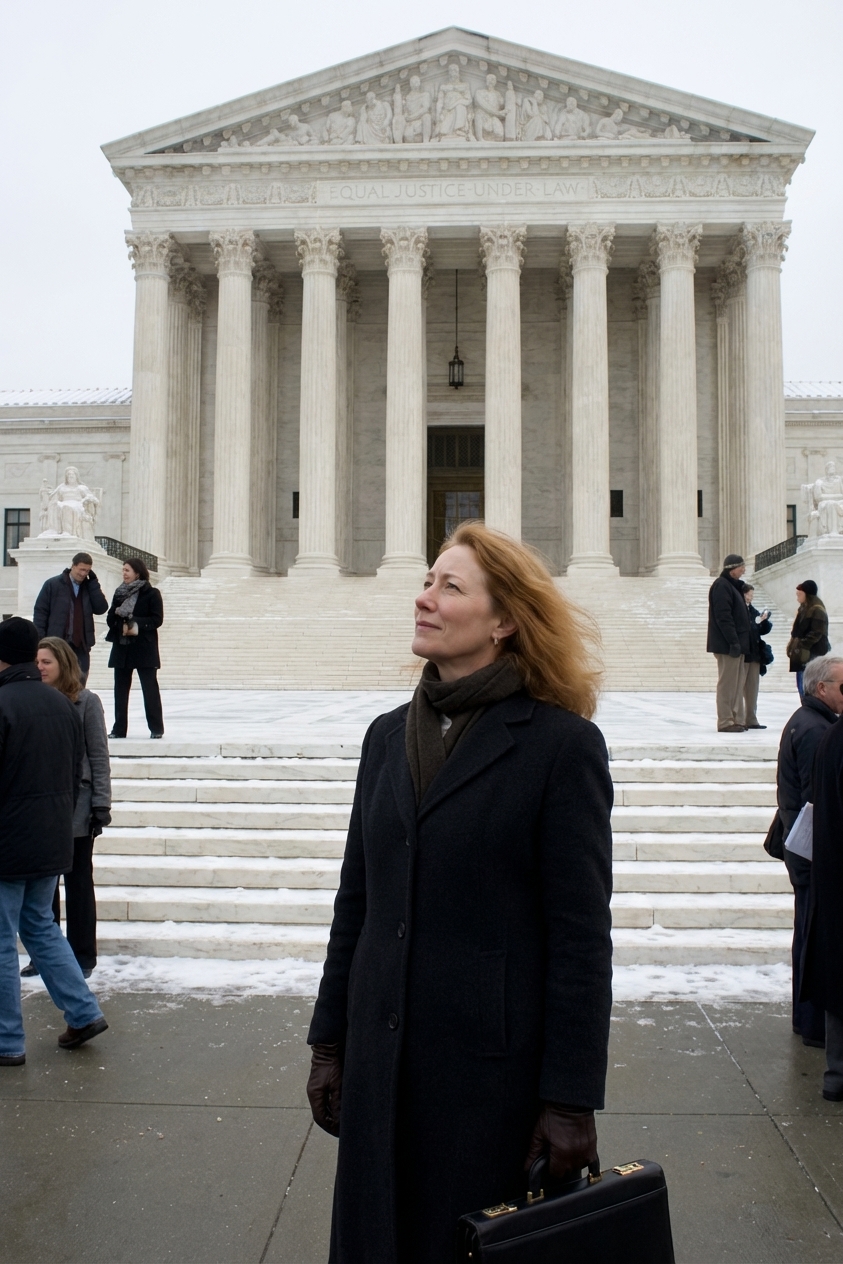
In Citizens United v. Federal Election Commission (2010), the Supreme Court held that the government cannot ban independent political spending by corporations and unions. The Court treated independent expenditures as core political speech, and it rejected the idea that independent spending could be limited to prevent corruption in the same way direct contributions can be.
Citizens United did not itself create Super PACs. What it did was clear constitutional space for large independent expenditures by organizations.
SpeechNow (2010) and the Super PAC model
Later that same year, a federal appeals court in SpeechNow.org v. FEC applied Citizens United’s logic to contributions made to groups that only do independent expenditures. The court reasoned that if independent spending cannot be limited in the same way contributions to candidates can, then contributions to an independent-expenditure-only group also cannot be capped.
After SpeechNow, the FEC’s enforcement posture and guidance allowed committees to operate and register as independent-expenditure-only political committees. That is the modern Super PAC.
This is the constitutional bargain the system currently runs on: limit direct contributions to prevent quid pro quo corruption, but treat independent political spending as protected speech.
Where the money comes from
Super PACs can accept funds from many types of donors, including:
- Individuals, including very wealthy donors making multi-million dollar contributions
- Corporations
- Labor unions
- Other political committees
- Some nonprofit organizations (depending on structure and reporting)
This is where the public often gets confused. People hear “unlimited” and assume “anonymous.” Those are not the same thing.
Super PACs generally must disclose their donors to the Federal Election Commission on a regular reporting schedule. But that disclosure is typically of the Super PAC’s direct donors. If money reaches the Super PAC through an intermediary entity, including certain nonprofits that do not publicly list their own donors, the public may not see the ultimate original sources even though the Super PAC reports the intermediary.
Also, “unlimited” is not “anything goes.” Federal law still bars certain sources and methods, including foreign national involvement, contributions by federal contractors, and contributions made in the name of another person.
What they can and cannot do
What they can do
- Spend unlimited money supporting or opposing federal candidates through independent expenditures
- Run express advocacy ads that explicitly say “vote for” or “defeat” a candidate
- Pay for voter outreach, canvassing, and turnout efforts, so long as those programs are planned and executed independently of the campaign
- Criticize candidates with issue messaging and opposition ads
What they cannot do
- Donate directly to a candidate for federal office
- Pay for something in coordination with a campaign if it counts as a coordinated communication under FEC rules
- Use prohibited sources of money in connection with U.S. elections, including foreign national money, and accept barred contributions such as those from federal contractors
The centerpiece is coordination. If a Super PAC’s spending is not independent, it can be treated as an in-kind contribution to the candidate, which triggers contribution limits and potential enforcement.
Independence and coordination
The law assumes there is a meaningful difference between a campaign speaking for itself and a legally independent group speaking “on its own.”
In practice, that distinction can feel thin. You will often see:
- Former campaign staffers running outside groups
- Super PACs formed specifically to support one candidate
- Candidates publicly signaling strategy through speeches and social media while outside groups respond
None of that is automatically illegal. The legal question is whether there is coordination as defined by campaign finance rules, which generally involves content, conduct, and timing tests, plus evidence of material involvement or substantial discussion.
Concrete examples that can create coordination risk include things like a campaign helping shape an outside ad, an outside group using campaign-provided footage or strategic plans, or spending decisions made after private, strategy-focused discussions with campaign agents. By contrast, responding to public information, including speeches, interviews, or publicly posted campaign materials, is usually treated differently than behind-the-scenes collaboration.
This is why Super PACs have become a constitutional flashpoint. They are legal largely because they promise independence. Critics argue that independence is often more formal than real. Supporters argue that independent spending is protected speech and that policing “independence” too aggressively risks censoring political advocacy.
What they spend money on
Most people picture TV ads, and that is still a major category. But modern Super PAC spending also includes:
- Digital ad buys targeted by geography, age, and interests
- Data and analytics firms that shape turnout and persuasion strategy
- Field operations, including door-knocking and phone banking
- Rapid-response messaging designed to define a candidate early
Because the spending is independent, Super PACs can take hard-edged approaches that campaigns sometimes avoid. Campaigns must think about governing coalitions. Outside groups can focus on winning a single news cycle.
Do Super PACs decide elections?
They do not “buy” elections in a mechanical way, but they can change the terrain.
In close races, a flood of outside spending can:
- Force a candidate to spend time fundraising instead of campaigning
- Shape the first impression voters get through early ad saturation
- Keep a weak candidate alive longer in a primary
- Nationalize a local race by importing national money and narratives
And even when Super PACs fail to elect their preferred candidate, they can still succeed in narrowing the range of viable messages. Money does not guarantee persuasion, but it reliably guarantees volume.
The constitutional argument
Super PACs exist because of a particular constitutional choice: treating independent political spending as protected speech under the First Amendment.
The Court has long allowed stricter limits on contributions to candidates because those look like potential quid pro quo corruption. But it has been far more skeptical of limits on independent expenditures, which are framed as speech to the public rather than money handed to an officeholder.
That is the doctrinal split that built the modern campaign finance system. If you want to understand why Super PACs are legal, you have to understand that the Constitution, as currently interpreted, draws a line between money that is given to a candidate and money that is spent to persuade voters.
Whether that line still matches political reality is the live debate. It is also why every election cycle seems to re-litigate the same question: when does “speech” become “power,” and what can the law do about it without breaking the First Amendment?
Quick facts
Super PAC definition: An independent-expenditure-only political committee that can raise and spend unlimited funds, but cannot donate directly to candidates and must not coordinate spending with campaigns.
Key legal turning points: Citizens United v. FEC (2010) and SpeechNow.org v. FEC (D.C. Cir. 2010).
Who can fund them: Individuals, corporations, unions, and other domestic sources, subject to source prohibitions (including restrictions involving foreign nationals and federal contractors).
Disclosure: Super PACs generally report donors and expenditures to the FEC. Disclosure is typically of the Super PAC’s direct donors, and original sources can be harder to trace when money passes through intermediary entities.
Spending scale: In recent election cycles, outside spending tracked in federal races, including Super PAC independent expenditures, has reached into the billions of dollars, especially in presidential years. Totals vary by cycle and by what is included in “outside spending.”
Where to verify current totals: Federal Election Commission filings and public trackers like OpenSecrets, which compile cycle-by-cycle Super PAC receipts and independent expenditures.
FAQ
Is a Super PAC the same as dark money?
No. “Dark money” usually refers to political spending by certain nonprofit organizations that do not publicly disclose their donors in the same way Super PACs do. Super PACs are often part of the same ecosystem, and intermediaries can obscure original sources, but they are not identical.
Can a candidate run their own Super PAC?
No. A candidate cannot legally operate a Super PAC supporting themselves, and a Super PAC cannot coordinate with the candidate’s campaign. However, supporters can create a Super PAC focused on that candidate.
Why not just ban Super PACs?
A ban would collide with the current First Amendment framework protecting independent political expenditures as speech. Changing that would likely require a major shift in Supreme Court doctrine, new legislation crafted to survive constitutional review, or a constitutional amendment.
Do state rules work the same way?
Not always. This article is about federal law. States have their own campaign finance systems, and the rules for independent spending and disclosure can differ significantly.