
You have a constitutional right to a trial. Everyone knows that.
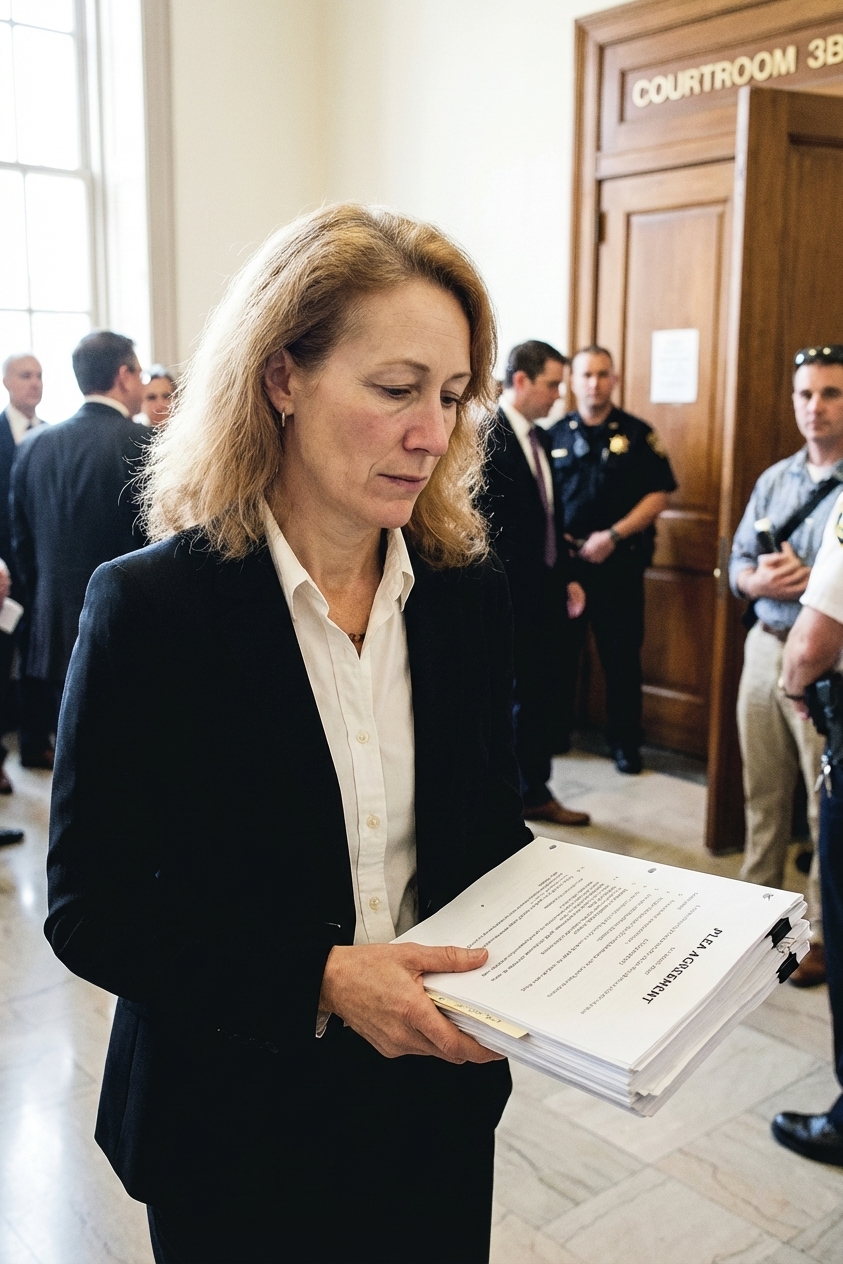
Except most criminal cases never reach one. They end with a deal, negotiated in conference rooms and courthouse hallways, then entered on the record in a short court hearing.
That deal is a plea bargain, and it is not a side feature of the American criminal justice system. It is the main way cases are resolved. In recent years, roughly 90% or more of federal convictions have resulted from guilty pleas rather than trials. Many state systems rely on pleas at similarly high rates, though the exact percentage varies by state and by how the data is counted.
Plea bargaining is where constitutional ideals meet practical limits: limited court time, crowded dockets, uneven resources, risk for both sides, and a defendant forced to choose between certainty today and uncertainty tomorrow.
Join the Discussion
What a plea bargain is
A plea bargain is an agreement in a criminal case where the defendant pleads guilty, usually in exchange for something the government offers. That “something” is typically one or more of the following:
- Fewer charges (or a reduced charge)
- A lower sentencing recommendation or a sentencing cap
- A promise to drop certain allegations that would raise the guideline range or mandatory minimum exposure
- A position on bond, restitution, forfeiture, or cooperation
In plain terms: the defendant trades the right to make the government prove guilt at trial for a more predictable outcome.
Not every plea is the result of a negotiated bargain. A defendant can also enter an “open plea” with no agreement, pleading guilty and leaving sentencing arguments to the parties and the judge. But when people say “plea deal,” they usually mean a negotiated agreement.
Why plea bargains exist
The Constitution assumes trials. The Sixth Amendment promises a speedy and public trial, an impartial jury, the right to confront witnesses, and the right to counsel. The Fifth Amendment guarantees due process and protects against self-incrimination. Article III frames criminal adjudication around juries.
But trials are expensive and slow. They require investigators, motions, expert witnesses, juror time, judge time, and appellate-ready records. If every felony charge went to a full trial, courthouses would seize up.
Plea bargaining is the pressure valve. Supporters call it efficiency. Critics call it coercion. Both are describing the same reality from different angles.

How plea bargaining works
Plea bargaining is negotiation under uncertainty. Neither side knows exactly what a judge or jury will do later. Both sides are betting on risk.
1) Charges are filed
The process typically starts after arrest and charging, or after an indictment in felony cases. Early hearings address counsel, bail, discovery schedules, and deadlines.
2) Discovery and evaluation
Defense counsel evaluates what the government can prove: police reports, body camera footage, lab results, witness statements, prior records, and any potential constitutional issues such as an unlawful search under the Fourth Amendment.
Prosecutors evaluate the strength of evidence and the cost of taking the case to trial, including the reliability of witnesses and how a jury is likely to react.
3) Offer and counteroffer
Offers can be informal, oral, written, or presented through a formal plea agreement. Defense counsel may counter with a different charge, a different sentencing recommendation, or conditions involving restitution, treatment, or cooperation.
4) The defendant decides
Lawyers advise. Prosecutors propose. Judges often set deadlines. But the decision to plead guilty belongs to the defendant.
5) The plea hearing
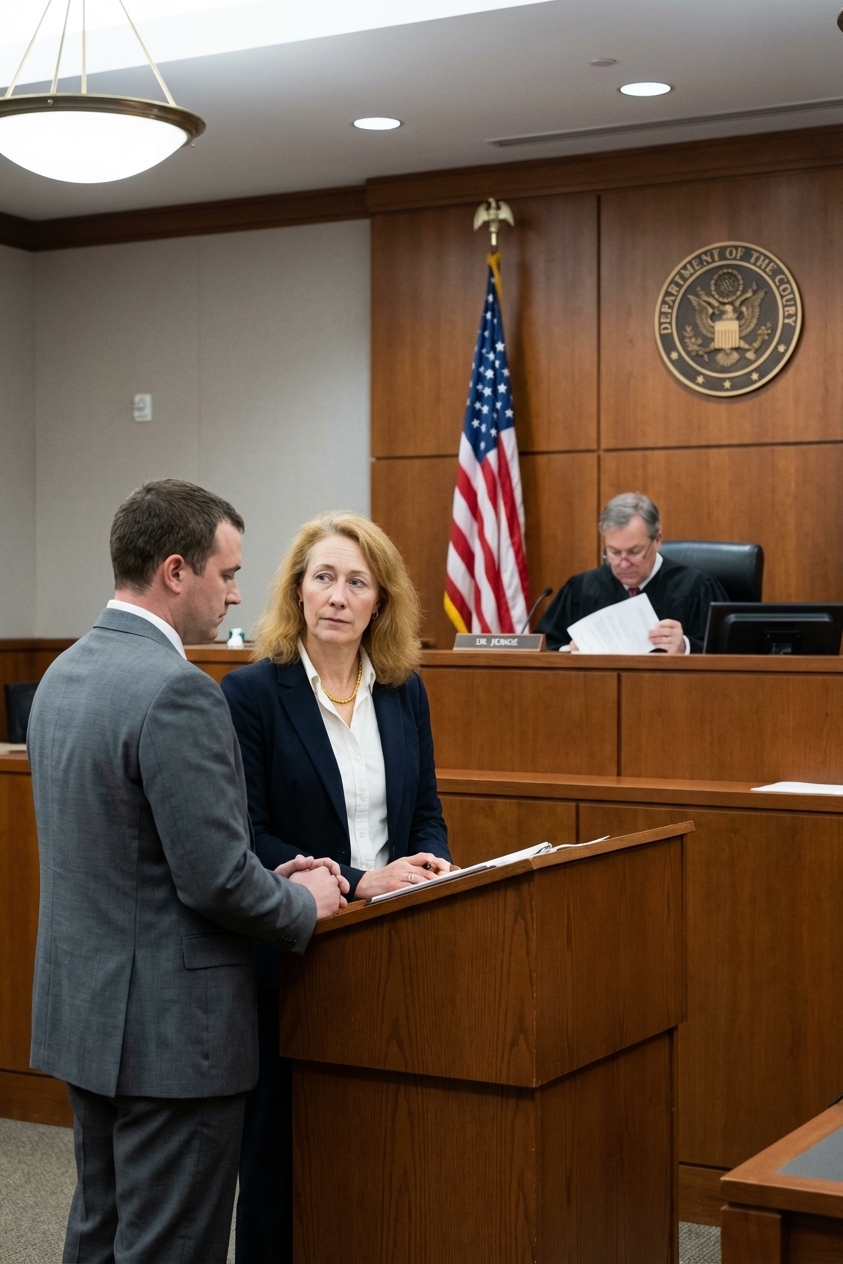
If the defendant accepts a deal, the court holds a plea hearing. The judge asks a series of questions to ensure the plea is knowing, intelligent, and voluntary.
The court must also establish a factual basis for the plea. In federal court, this is required by Rule 11. It does not always require a detailed personal narrative from the defendant. The factual basis can come from the defendant’s admissions, a written stipulation, or the prosecutor’s proffer, depending on the court’s practice.
In some jurisdictions, defendants may be permitted to enter an Alford plea, maintaining innocence while accepting conviction, so long as the court finds a strong factual basis and the plea is voluntary.
6) Sentencing
Sentencing may happen immediately, but often occurs later after a presentence report (PSR), a document prepared to help the judge determine an appropriate sentence.
The judge usually is not required to follow a prosecutor’s recommendation. In federal court, many agreements are structured as a nonbinding recommendation under Rule 11(c)(1)(B). Some agreements are structured to bind the court to a specific sentence or range if the judge accepts the agreement under Rule 11(c)(1)(C). If the judge does not accept a binding agreement, the defendant generally has the option to withdraw the plea.
Types of plea bargains
Plea bargaining is not one thing. It is a family of deals, each one trading something different.
Charge bargaining
Charge bargaining means the defendant pleads guilty to a lesser offense or to fewer counts than originally charged. This is common when:
- One charge carries a mandatory minimum sentence the parties want to avoid.
- The evidence is strong on some counts and weaker on others.
- The prosecution wants certainty and finality without a trial.
Example: a felony charge reduced to a misdemeanor, or multiple counts consolidated into one.
Sentence bargaining
Sentence bargaining focuses on punishment rather than the label of the offense. The defendant pleads guilty as charged, but the prosecutor agrees to recommend a particular sentence or a sentencing range.
In federal court, this often intersects with the U.S. Sentencing Guidelines. A guideline range is a recommended sentencing range calculated using offense characteristics and criminal history. In state court, the offer may be framed as “time served,” a cap, probation, or a specific number of months.
Fact bargaining
Fact bargaining is the least visible and sometimes the most consequential. The defendant pleads guilty, but the parties agree on which facts will be admitted or emphasized. That matters because specific facts can trigger sentencing enhancements, guideline increases, or collateral consequences.
Example: agreeing to a loss amount in a fraud case, or agreeing that a weapon was present but not “brandished,” depending on the statute and sentencing scheme.
What each side wants
Prosecutors
Prosecutors represent the government, and their incentives vary by office and case. Common priorities include:
- Certainty: a guaranteed conviction instead of the risk of acquittal.
- Resource management: saving trial time for the cases they must try.
- Victim considerations: avoiding repeated testimony or public exposure.
- Cooperation: obtaining information about other crimes or defendants.
Defense attorneys
Defense counsel’s job is to protect the defendant’s rights and minimize legal harm. That often means negotiating for:
- Lower sentencing exposure and reduced risk of a worst-case outcome.
- Charge reduction to avoid lifelong collateral consequences.
- Better conditions: treatment, diversion, probation terms, or jail credit.
- Preserving issues for appeal when possible.
The defendant
The defendant often wants what the system rarely offers at trial: predictability. But the defendant also bears the heaviest cost of uncertainty. A plea can end the case quickly, but it also locks in a conviction and the consequences that come with it.
Rights in plea bargaining
Plea bargaining is negotiation, but it is still constitutional terrain. Several core rights shape what a plea can be.
Right to counsel
The Sixth Amendment right to counsel is central because plea bargaining is a “critical stage” of a criminal case. In Missouri v. Frye (2012) and Lafler v. Cooper (2012), the Supreme Court recognized that ineffective assistance of counsel can violate the Constitution when it causes a defendant to miss or reject a favorable plea offer.
Trial rights that are waived
A guilty plea typically waives several trial rights, including:
- the right to a jury trial
- the right to confront and cross-examine witnesses
- the right to require the government to prove guilt beyond a reasonable doubt
- the privilege against self-incrimination at trial, because the plea is an admission
This is why judges question defendants carefully in open court. The Constitution tolerates plea bargaining only if the waiver is voluntary and informed.
Due process and voluntariness
Under the Due Process Clause, a plea must be voluntary, knowing, and intelligent. The court must ensure the defendant understands the nature of the charge, the consequences of pleading guilty, and the rights being waived.
Disclosure of favorable evidence
Under Brady v. Maryland (1963), prosecutors must disclose material exculpatory evidence. But what that duty requires before a guilty plea is more contested than many people realize.
The Supreme Court held in United States v. Ruiz (2002) that the Constitution does not require the government to disclose impeachment information before a plea agreement. Lower courts vary on how far pre-plea disclosure obligations extend for exculpatory evidence, and local rules and office policies may require more than the constitutional minimum.
The practical point still matters: plea bargaining works best, and most fairly, when defendants can assess the case with a clear view of evidence that meaningfully bears on guilt or innocence.
No right to a deal
A defendant has a constitutional right to a trial. A defendant does not have a constitutional right to be offered a bargain. Prosecutors can offer deals, withdraw deals, or decline deals, subject to ethical rules and limits on discriminatory or vindictive practices.
Why so many cases end in pleas
The plea rate is not an accident. It is the predictable result of structural incentives.
- Risk of trial penalties: sentences after trial can be substantially higher, especially when a defendant loses “acceptance of responsibility” reductions under the Guidelines or faces added counts.
- Mandatory minimums: statutes can create cliffs where one charge dramatically changes sentencing exposure.
- Guideline leverage: prosecutors often control charging decisions and, in cooperation cases, whether to seek certain reductions.
- Limited resources: public defenders and prosecutors carry heavy caseloads, and courts have limited trial capacity.
- Certainty: both sides can lock in an outcome rather than gamble on a jury.
There is also a quieter reason: trials are unpredictable in human ways. Witnesses falter. Jurors disagree. Judges make evidentiary calls that reshape a case. A plea deal is a hedge against the chaos of trial.
When the judge accepts a plea
A plea bargain is not final until it survives the courtroom.
In the plea hearing, the judge typically:
- confirms the defendant is competent and not being coerced
- explains the charge and maximum penalties
- reviews the rights the defendant is giving up
- asks whether any promises were made outside the written agreement
- establishes a factual basis for the plea
Judges can reject plea agreements in some circumstances, particularly if the proposed disposition is inconsistent with law or the court’s view of justice. But in most routine cases, the deal sets the track and sentencing follows it closely, even when the judge is not formally bound.
Costs beyond the sentence
A plea can resolve the immediate case, but it can also trigger collateral consequences that outlive the courtroom. Depending on the charge and jurisdiction, a conviction can affect:
- immigration status (including deportation risk)
- housing and public benefits
- employment background checks and professional licensing
- firearm rights
- family court outcomes
This is one reason plea negotiations often focus not just on “how much time,” but on the exact offense, the precise facts admitted, and the wording of the judgment.
Criticisms and tensions
Plea bargaining is often criticized for turning constitutional rights into bargaining chips.
The biggest concern is leverage. When the difference between pleading guilty and going to trial is measured in years, the “choice” can feel less like consent and more like triage. Add pretrial detention, lost jobs, family strain, and legal fees, and the pressure to plead can become its own kind of punishment.
Supporters respond that the alternative is not a golden age of universal jury trials. It is a system that collapses under its own weight. The disagreement is not over whether plea bargaining is powerful. It is over whether its power is compatible with what the Sixth Amendment promised in the first place.
That is the question plea bargains always raise, even when the paperwork looks routine: if a right exists mostly on paper because using it is too risky, what kind of right is it?
Key takeaways
- A plea bargain is an agreement where a defendant pleads guilty in exchange for a benefit, usually reduced charges or a sentencing recommendation.
- The main types are charge bargaining, sentence bargaining, and fact bargaining.
- Plea bargaining dominates because trials are resource-intensive and sentencing structures create strong incentives to plead.
- Defendants retain core constitutional protections during the process, including the right to counsel and due process requirements that the plea be voluntary and informed.
- In federal court, the effect of a plea agreement depends in part on whether it is a nonbinding recommendation or a binding agreement accepted by the judge under Rule 11.
Sources to cite
- Federal plea statistics: U.S. Sentencing Commission data and/or Administrative Office of the U.S. Courts (recent years typically show 90%+ of convictions by guilty plea).
- State plea prevalence: National Center for State Courts and state court administrative reports (rates vary by state and methodology).
- Federal plea procedure: Federal Rule of Criminal Procedure 11 (including 11(c)(1)(B) and 11(c)(1)(C)).
- Pre-plea disclosure and counsel standards: Brady v. Maryland (1963), United States v. Ruiz (2002), Missouri v. Frye (2012), Lafler v. Cooper (2012).