
When you hear that someone was “indicted,” it can sound like a judge reviewed the evidence, weighed the arguments, and issued a formal accusation.
That is not what happened.
In most serious federal criminal cases, an indictment is the product of a grand jury, a group of ordinary citizens meeting behind closed doors, listening to a prosecutor, and deciding whether there is enough evidence to charge someone with a crime. Not enough to convict. Not enough to prove guilt. Just enough to justify moving the case into open court.
There is a key exception: in federal court, a defendant can waive indictment and agree to be charged by information instead (Federal Rule of Criminal Procedure 7(b)).
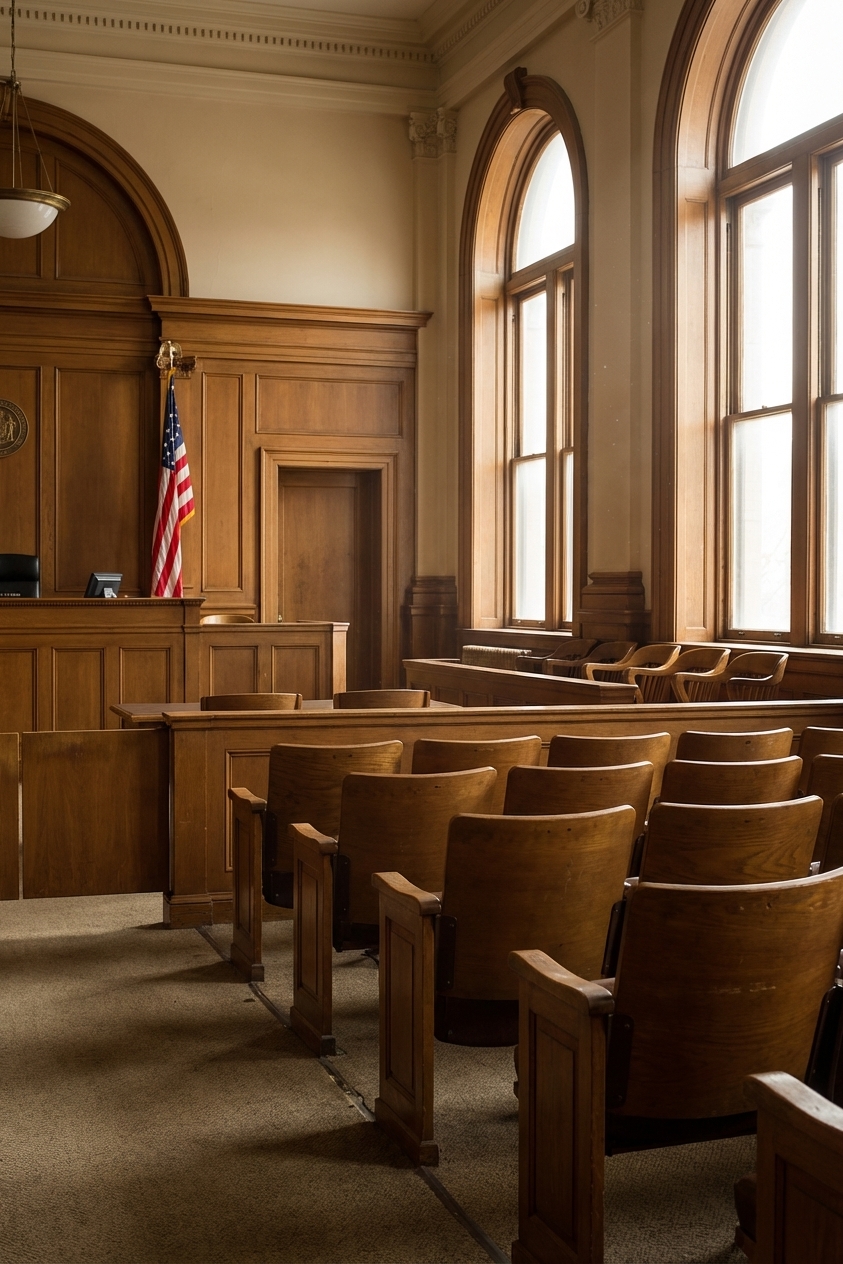
The constitutional basis: the Fifth Amendment
The grand jury is not a modern procedural add-on. It is written into the Bill of Rights.
The Fifth Amendment says:
“No person shall be held to answer for a capital, or otherwise infamous crime, unless on a presentment or indictment of a Grand Jury…”
Two details matter right away.
- It is a gatekeeping requirement for serious federal crimes, meaning the government generally cannot prosecute a felony in federal court without a grand jury indictment (unless the defendant waives it and proceeds by information).
- It applies directly to the federal government. The Supreme Court has held that the Fifth Amendment’s grand jury clause is not incorporated against the states through the Fourteenth Amendment (Hurtado v. California). In other words, states may use grand juries, but they generally are not constitutionally required to. Many states use them sometimes. Some rely heavily on other charging procedures.
You may also notice the word presentment in the Amendment. Historically, a presentment was a grand jury accusation initiated by the jurors themselves rather than handed up by a prosecutor. In modern federal practice, indictments are the standard charging vehicle.
This is one of the quieter examples of federalism in action. The Constitution mandates grand juries for federal felonies, but leaves states wide latitude to design their own front-end criminal process.
Grand jury vs. trial jury
“Jury” makes most people think of a trial. That is the petit jury, the group that sits in a public courtroom and decides whether the government proved guilt beyond a reasonable doubt.
A grand jury does something earlier and more limited: it decides whether there is probable cause to believe a crime was committed and that the suspect committed it.
Key differences
- Stage of the case: Grand jury usually happens before felony prosecution proceeds on an indictment. In many cases, an arrest and criminal complaint come first, then the government seeks an indictment to keep the case moving. Trial jury happens after charges.
- Decision standard: Grand jury uses probable cause. Trial jury uses beyond a reasonable doubt.
- Size: Federal grand juries usually have 16 to 23 jurors. Federal trial juries usually have 12 (with alternates).
- Unanimity: A federal criminal trial generally requires a unanimous verdict. A federal grand jury indictment requires the agreement of at least 12 jurors.
- Secrecy vs. publicity: Grand jury proceedings are secret. Trials are public.
- Defense participation: At trial, the defense can cross-examine witnesses and present evidence. In the grand jury room, the defense is usually absent. Judges are typically absent too.
How a grand jury works
Grand juries do not function like mini-trials. They function like investigative hearings, guided largely by the prosecutor.
1) Selection and instructions
Grand jurors are drawn from the community, typically through the same general jury selection system used for trial jurors. A judge swears them in and gives basic instructions on the law and their role.
2) The prosecutor presents the case
The prosecutor, often an Assistant U.S. Attorney in federal court, decides what evidence to present and which witnesses to call. The rules of evidence are looser than at trial. Hearsay can come in. Documents can often be summarized. The pace can be fast.
It is also worth knowing what does not operate here the way people assume. The exclusionary rule generally does not apply at the grand jury stage, so evidence that might be suppressed at trial can often still be shown to a grand jury.
Prosecutors are expected not to mislead the grand jury. But federal law generally does not require prosecutors to present substantial exculpatory evidence to the grand jury (United States v. Williams (1992)). In practice, the prosecutor controls the flow of information.
3) Witnesses testify
Witnesses appear one at a time. The prosecutor questions them. Grand jurors can ask questions as well, often through the prosecutor or the foreperson.
Who is in the room matters. Typically you will see the grand jurors, the prosecutor, the witness, and a court reporter. There is usually no judge. Defense counsel is not allowed inside.
Witnesses can invoke the Fifth Amendment privilege against self-incrimination. Some witnesses receive immunity to compel testimony. Others appear under subpoena and may be forced to produce documents.
4) The grand jury votes
When the prosecutor asks for a charging decision, the jurors vote on whether to return an indictment. If at least 12 jurors agree in federal court, the grand jury issues a true bill, which becomes the indictment. If they refuse, it is called a no bill.
5) Indictment filed and the case moves forward
An indictment is filed in court and the criminal case proceeds through arraignment, motions, and either a plea or a trial. Often it becomes public quickly, but indictments can be sealed at first in some cases, especially when there are concerns about flight, ongoing investigation, or witness safety.
What an indictment means
An indictment is not a verdict. It is not a finding of guilt. It is the legal document that lists the charges and the basic allegations. Its core message is narrow:
- There is probable cause to believe a federal felony was committed.
- There is probable cause to believe the defendant committed it.
That is it.
This is why indictment headlines can mislead. “Indicted” means the case has been allowed to move forward. It does not mean the evidence is airtight. It does not mean the government will win. It does not even mean the grand jurors heard both sides.
The prosecutor’s role
The grand jury is often described as a shield between the citizen and the state. Historically, that was the point: before the government could prosecute a serious crime, it needed a group of citizens to agree the accusation was justified.
But the grand jury is also a sword. It is a powerful investigative tool. Prosecutors can use grand jury subpoenas to gather documents, compel testimony, and lock in witness statements early.
Because prosecutors control what the grand jury sees, the grand jury’s independence depends heavily on prosecutorial restraint and on jurors who are willing to ask hard questions.
That tension explains why grand juries have two reputations at the same time:
- In theory: a democratic check on government power.
- In practice: a process that often ratifies the prosecutor’s charging decision.
Why proceedings are secret
Grand juries operate behind closed doors. In federal court, that secrecy is reinforced by Rule 6(e) of the Federal Rules of Criminal Procedure, which limits what prosecutors, grand jurors, and others may disclose.
Secrecy is not just tradition. It is justified with several practical goals:
- Protecting the innocent: If the grand jury returns a no bill, secrecy helps prevent someone from being publicly branded a criminal without charges.
- Encouraging candid witnesses: Some witnesses speak more freely if they know their testimony will not immediately become public.
- Preventing flight or tampering: If targets learn what evidence is being developed, they can destroy documents, intimidate witnesses, or flee.
- Protecting jurors: Secrecy reduces pressure and retaliation risks.
Critics respond with a simple point: secrecy also makes abuse harder to detect. It becomes difficult for the public to evaluate whether the process was fair, whether exculpatory evidence was withheld, or whether the prosecutor steered the jury toward a predetermined outcome.
The “ham sandwich” criticism
You may have heard the line that a prosecutor can “indict a ham sandwich.” It is commonly associated with a quip attributed to Judge Sol Wachtler, a former Chief Judge of New York’s highest court.
The phrase survives because it captures something real about the incentives and structure of the grand jury:
- The standard is low: probable cause is not hard to meet.
- The defense is usually absent: no cross-examination, no competing narrative, often no obligation to present contrary evidence.
- The prosecutor frames the story: which witnesses appear, which documents matter, how the law is described, and when the jury votes.
That does not mean grand juries never resist. They do. They sometimes return no bills, ask for more evidence, or narrow charges. But indictment rates are often high enough that the “ham sandwich” line continues to feel less like satire and more like a warning label.
Notable grand jury moments
Grand juries rarely make history on their own because their work is secret. We tend to notice them only when an indictment becomes a turning point in a public story.
Watergate (1974)
A federal grand jury investigating the Watergate break-in and cover-up issued indictments against high-level officials and famously labeled President Richard Nixon an “unindicted co-conspirator.” That activity fed the wider constitutional crisis over executive power, obstruction, and accountability.
The Pentagon Papers case (1971 to 1973)
After the publication of the Pentagon Papers, the government pursued a criminal case against Daniel Ellsberg. Grand jury proceedings were part of that push. In 1973, the trial judge dismissed the case after revelations of government misconduct, a reminder that the machinery of prosecution can be powerful and still be constrained by constitutional limits and judicial oversight.
Public corruption and organized crime
Throughout the twentieth century, grand juries became central to organized crime investigations, where secrecy, subpoenas, and compelled testimony were essential. In many of these cases, the grand jury was not merely a charging body but the engine of the investigation itself.
Modern special counsel investigations
In recent decades, special counsel investigations have relied on grand juries to issue subpoenas, hear witness testimony, and return indictments. Even when a final report becomes public, the grand jury record often remains sealed, shaping what the public can and cannot know.
Common questions
Do you have a right to testify?
Not usually. In many jurisdictions, targets do not have a right to appear. Sometimes prosecutors invite testimony, but it is risky, because anything said can be used later and the defense lawyer cannot be in the room.
In federal practice, a witness who testifies is typically allowed to have counsel nearby, usually waiting outside in the hallway. The witness can step out to consult with the lawyer before answering questions (though the prosecutor and grand jury can set reasonable limits on repeated interruptions).
If prosecutors consider someone a likely defendant, they may send a target letter. This is a formal notice that the person is a target of the investigation and it may invite them to testify before the grand jury. It is not required in every case, but it is a common feature of federal practice.
Can a grand jury subpoena you?
Yes. Grand juries can subpoena documents and witnesses. Failing to comply can lead to contempt proceedings.
Can grand juries investigate the police?
Yes. Prosecutors may bring police use-of-force cases to grand juries, especially when the political and legal stakes are high. Those cases also highlight perceived weaknesses, because the prosecutor’s relationship with law enforcement can affect how the evidence is presented.
Is a grand jury required in every case?
No. Even in federal court, the Fifth Amendment requirement applies to “capital, or otherwise infamous” crimes, which is generally understood as felonies. Misdemeanors can be charged differently. In state court, many prosecutions proceed by information or complaint without any grand jury at all.
What grand juries are for
The grand jury is best understood as a constitutional threshold. It is meant to prevent the federal government from launching serious criminal prosecutions based purely on an official’s say-so. It forces a prosecutor to persuade a group of citizens that the case is at least plausible.
But it is not designed to be the main event. It is not built to decide guilt, air both sides, or resolve factual disputes. That job belongs to the trial, where the defendant has the full set of constitutional protections that the grand jury room largely lacks.
If you want a single sentence to keep your bearings, it is this:
A grand jury decides whether a case may proceed. A trial jury decides whether the government proved its case.
And in a constitutional system that assumes government power will be used aggressively unless checked, that distinction is not a technicality. It is the architecture.