
The Senate has 100 members, debate can be extended on many questions, and it has a reputation for procedural gridlock in practice. Yet most days, it still manages to move quickly through stacks of routine work. The tool that makes that possible is unanimous consent, usually shortened to UC.
UC is not a constitutional phrase. It is a Senate habit turned into a governing logic: if nobody objects, the chamber can do many things faster. And if anybody objects, the Senate often snaps back to its slow default settings, where every step can take time, votes, and stamina.
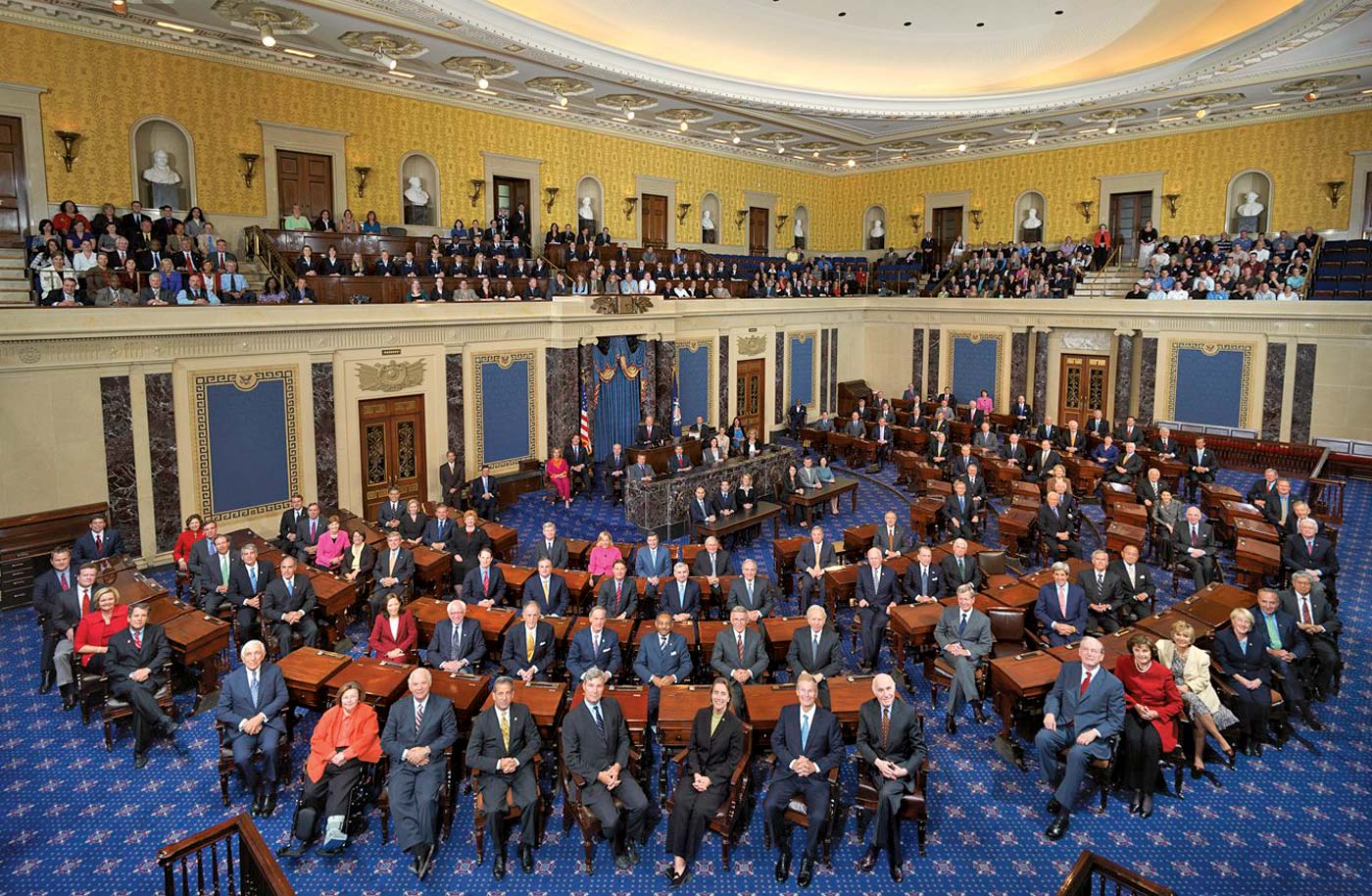
Understanding UC is like learning the hidden wiring behind the Senate’s public drama. It helps explain how bills pass “by voice vote” with little floor debate, how nominations get stuck for weeks over issues that have nothing to do with the nominee, and why a single senator can force leaders to file cloture even when the eventual outcome is not in doubt.
Join the Discussion
What unanimous consent is
Unanimous consent is exactly what it sounds like: the Senate agrees to do something without objection when the presiding officer asks if any senator objects.
Often that means the Senate acts without a recorded roll call vote, such as passing a routine measure by voice vote or adopting an order in seconds. But UC is also used to structure what happens next, for example setting debate limits, waiving readings, or scheduling later votes that can be recorded.
In practice, UC requests come in two common forms:
- On-the-spot consent for routine actions, often delivered in a sentence or two on the floor.
- Negotiated UC agreements that function like contracts between both parties and affected senators, laying out how debate and votes will happen.
The presiding officer does not “grant” consent as a personal decision. The presiding officer asks whether there is objection. If there is none, the request is agreed to. If there is, it fails.
Why the Senate relies on UC
The Senate’s rules are built around the idea that, on many matters, debate can continue until the chamber chooses to stop it. That design protects minority rights and encourages deliberation. It also means that if senators insisted on using the full formal process for every motion, amendment, and scheduling question, the Senate would drown in its own procedures.
UC is the workaround. It is how the Senate borrows efficiency without rewriting its basic commitment to extended debate, even though there are notable exceptions where debate is limited by statute or special procedures.
What UC is used for
UC is not only for passing bills. It is used to manage time, waive steps, and bundle routine business that would otherwise consume hours.
1) Passing noncontroversial items quickly
Many measures are cleared by UC because nobody wants to spend floor time on them, even if senators have minor disagreements. These include:
- Simple or symbolic resolutions
- Renaming post offices and federal buildings
- Technical corrections to previously passed laws
- Some bipartisan bills negotiated off the floor
When you hear that the Senate passed something “by unanimous consent,” it often means: no roll call vote, little to no debate on the floor, and a decision made in seconds.
2) Time agreements
One of the most important uses of UC is to create a time agreement, sometimes called a UC time agreement or simply a consent agreement. This is how the Senate simulates something like a schedule.
A time agreement can specify:
- How many hours of debate are allowed and how they are divided between the parties
- Which amendments may be offered and in what order
- When votes will occur, including whether votes will be voice votes or recorded roll calls
- When the Senate will recess or resume
This matters because the Senate does not have a House-style Rules Committee that routinely imposes debate limits. UC is the Senate’s substitute, but only when every senator is willing to live with it.
3) Hotlining and clearing matters
Much UC work happens off the floor. Party leaders and floor staff often try to “clear” items by contacting offices in advance, typically through the party cloakrooms. In Senate slang this is sometimes called hotlining, meaning an item is circulated to see if any senator intends to object. It is a leadership and staff practice, not a formal rule-based procedure.
If nobody objects during that pre-check, leaders can bring the matter up and pass it quickly by UC. If someone signals an objection, leaders can decide whether to negotiate, delay, or use the formal process.
4) Speeding nominations and routine motions
UC is a major reason confirmations can move quickly when the Senate wants them to. Even when Senate rules or statutes allow debate time on nominations, UC can be used to yield back time, schedule votes, or confirm groups of nominees together. When UC is blocked, the majority leader often has to run the chamber through time-consuming procedural steps, even if the votes are there to win.

The power of one objection
UC works on a simple premise: silence equals permission. But the flip side is the Senate’s most famous pressure point.
Any one senator can stop a UC request on the floor by saying: “I object.”
No explanation is required. No debate is required. No vote is required. An objection can be strategic, substantive, or personal. It can be temporary, meaning “not now,” or absolute, meaning “not at all.”
Holds and objections
In practice, objections often connect to the Senate custom of a hold, where a senator signals they intend to object to moving a bill or nomination. Holds are not a formal parliamentary motion embedded in the standing rules the way many people assume. They are a practice built around a simple reality: if a senator will object anyway, leaders would rather know early.
There are also disclosure rules that require certain holds to be made public after a period of time, even though the hold itself remains an informal tool.
Holds can be used for leverage. A senator may place a hold on a nominee to extract a commitment on unrelated policy, request documents from an agency, or demand a vote on an amendment. Critics see this as hostage-taking. Defenders see it as one of the few tools individual senators have against leadership control.
Sometimes this plays out in ways that make headlines, such as when senators publicly announce they will object to expedited UC consideration of categories of nominations until the administration takes action on an unrelated issue.
Why leaders negotiate
Because the formal alternative is slow. The Senate is designed so that refusing consent can turn minutes into days. That is why leaders frequently negotiate with objectors, even when the objection comes from a single member of the minority or from a majority senator acting independently.
When UC breaks down
When UC fails, the Senate falls back on formal procedures. Those procedures differ depending on what leaders are trying to do, but they almost always require more time and more floor action.
The basic problem: time
The Senate can move fast only when it chooses to. Without consent, even routine steps can require:
- Waiting periods required by Senate rules or statutes
- Multiple motions and intervening days
- Roll call votes that take floor time
- Extended debate that must be managed, negotiated, or cut off
Cloture is the escape hatch
When an objection blocks an easy path to a vote or a predictable schedule, leaders may respond with cloture, the formal process for ending debate. Leaders can also negotiate a different UC agreement, try other motions, or set the matter aside. But cloture is the classic response when leaders decide they need to force the timeline.
Cloture is why UC and the filibuster are neighbors. If unanimous consent is the Senate’s shortcut, cloture is the Senate’s crowbar: slower to use, but powerful when enough senators support it.
Here is the practical chain reaction:
- Leaders seek UC to set terms, limit debate, or line up votes.
- One senator objects, so the shortcut disappears.
- Leaders file cloture to force the Senate toward a final vote under the rules.
- The Senate holds cloture votes and spends time in the required procedural window and post-cloture consideration.
Even when the majority ultimately wins, the price is time. That is often the objector’s real goal.
The time tax
Suppose the majority leader wants to bring up a noncontroversial bill and have the Senate vote on it the same afternoon.
With UC, the leader can ask to proceed, limit debate, and schedule the vote. If no one objects, the Senate runs like a well-managed meeting.
If a senator objects, the leader may need to:
- Use motions that require debatable time
- File cloture to limit debate
- Wait through required intervals before cloture votes
- Spend additional hours in post-cloture consideration
The bill might still pass by an overwhelming margin. But the Senate may have spent days to do what could have taken minutes.
This is why UC breakdowns are not just about disagreement. They are about the Senate’s core currency: floor time.
Limits and guardrails
UC is powerful, but it is not magic. The Senate cannot use UC to erase constitutional requirements, and it cannot always waive statutory deadlines or special procedures that set their own terms. In many situations, any senator can also insist on more formal handling, such as demanding a recorded vote or forcing the chamber to follow the longer path laid out in the rules.
That is the central trade: UC speeds things up only so long as every senator is willing to let it.
Why UC breaks more often now
UC relies on trust, restraint, and the shared belief that routine business should stay routine. When those norms erode, objections become more common.
1) A closely divided Senate
In a closely divided Senate, every vote matters and every delay can change outcomes. The incentive to slow the other side increases, because the next election or the next vacancy can flip control.
2) Higher national stakes
As national politics becomes more centralized, senators have more reasons to use Senate procedure as a stage for national fights. What once would have been a quiet objection can become a message to voters, donors, or interest groups.
3) More individual leverage
UC gives individual senators leverage precisely because it requires unanimity. In a polarized environment, that leverage becomes attractive. If leadership needs speed, a single senator can demand a price.
4) The filibuster ecosystem
Even when an objection is not technically a filibuster, it often functions like one. It forces the majority to go through cloture, and cloture consumes floor time. UC and cloture are two sides of the same procedural coin.

Glossary
Senate language can sound like a ritual because it is. These are common UC-related phrases translated into plain English.
- “I ask unanimous consent that…”
A senator is requesting permission to do something quickly without going through the full formal process. - “Without objection, it is so ordered.”
No senator objected, so the request is approved. - “Reserving the right to object…”
A senator is about to speak and signal concern before deciding whether to block the request. - “I object.”
The request fails immediately. The Senate must use formal procedures or renegotiate. - “That the Senate proceed to…”
A request to begin considering a bill, nomination, or other matter. Often done by UC to avoid time-consuming steps. - “That further proceedings be dispensed with.”
A request to skip routine steps that would otherwise take time, typically used for efficiency. - “That the reading of the amendment be dispensed with.”
Normally, amendments can be read aloud. UC allows the Senate to skip the reading and move straight to debate. - “That debate time be equally divided.”
A request to split a set number of minutes or hours between the two sides. - “That the time be yielded back.”
Even when debate time exists, senators can agree not to use it, speeding up the next vote. - “That the motion to reconsider be considered made and laid upon the table.”
A mouthful that, in effect, helps finalize an action and prevents an immediate procedural do-over. - “That the vote occur at…”
A scheduling request. If anyone objects, the vote timing becomes uncertain or requires more procedure. - “For the information of Senators…”
A soft warning. It often precedes a statement like “I intend to object” or “I will not object if…”
What UC reveals
The Constitution created a Senate. The Senate created its own rules. And inside those rules, the daily work of governing often runs on something even less tangible than law: consent.
Unanimous consent is not a loophole. It is a bargain. Senators agree to speed up because they trust that their right to slow down is still there when needed.
When that trust collapses, the chamber does not merely become slower. It becomes more procedurally honest about what it always was: a place where time is power, and where a single voice saying “I object” can change the pace of government.