
Kevin Hassett, director of Trump’s National Economic Council, told reporters Thursday there’s enough tariff revenue to cover the $2,000 checks the president proposed. “If you look at how much tariff revenue has been coming in, then there would actually be enough room to cover those checks and not go into the rest of the budget.”
The Treasury Department’s own data contradicts him. The government raised $195 billion in customs duties through fiscal year 2025. Even excluding high earners, the $2,000 checks would cost nearly $300 billion according to the Tax Foundation.
That’s a $105 billion gap. Hassett didn’t explain how to close it.

This follows the DOGE pattern: Announce spectacular payments to Americans, claim the math works, ignore independent analysis, then let the proposal quietly die when Congress won’t appropriate funds or the numbers prove impossible.
The Constitutional Problem Hassett Briefly Mentioned
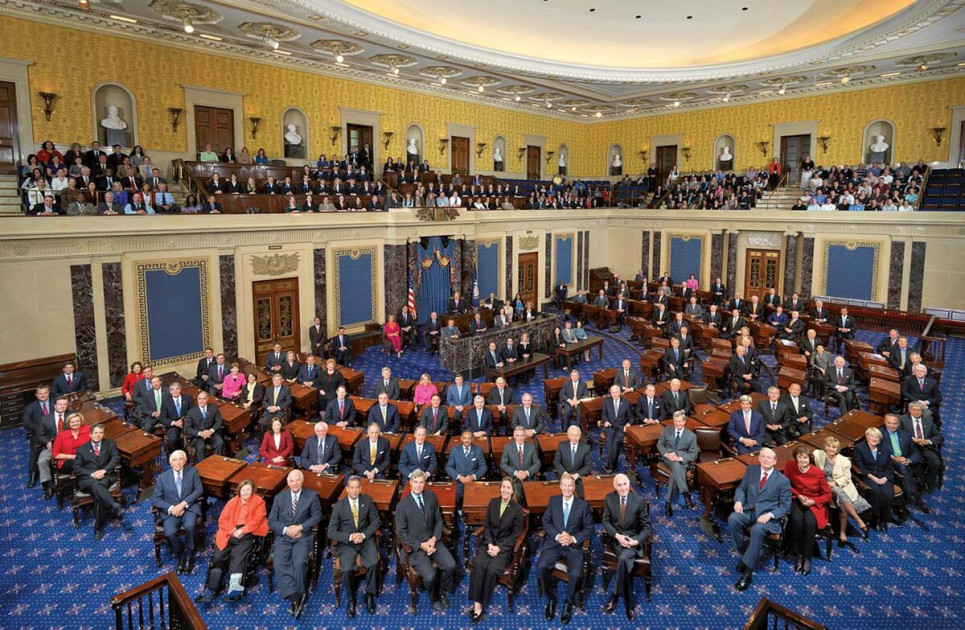
Buried in Hassett’s optimism was an admission: “It’s something that will require legislation.” The president can’t unilaterally send checks from tariff revenue without Congressional appropriation.
Article I, Section 9 is explicit: “No Money shall be drawn from the Treasury, but in Consequence of Appropriations made by Law.” Trump can announce dividends on social media, but he can’t spend the money without Congress.
When asked if he’s working with Congress on legislation, Hassett said the administration is “actively studying the matter and getting the numbers straight, so the president has all the choices he needs to decide what to do.”
Translation: No legislation exists. No Congressional negotiations are happening. The administration announced the policy first and will figure out if it’s actually possible later.
Congress just spent 43 days in the longest shutdown in history over far smaller amounts. The idea they’ll suddenly appropriate $300 billion for checks is fantasy.
Treasury Secretary’s Pivot From Checks To Tax Cuts
Treasury Secretary Scott Bessent told ABC News the “$2,000 dividend could come in lots of forms” including “tax decreases” like eliminating taxes on tips, overtime, and Social Security.
That’s definitional sleight of hand. Tax cuts aren’t dividends. A $2,000 check and potential future tax savings aren’t equivalent. And most Americans don’t earn tips or taxable overtime.
Bessent’s framing reveals the administration knows direct payment math doesn’t work. They’re preparing to claim whatever tax cuts eventually pass constitute the “dividend” Trump promised, even though Americans won’t receive $2,000 checks.
This is how the proposal dies: Announce checks, claim feasibility, pivot to describing unrelated tax policy as fulfilling the promise, declare victory when no checks arrive.
Who Actually Pays These “Dividends”
Goldman Sachs estimates 55% of tariff revenue comes from American consumers paying higher prices. Another 22% comes from U.S. businesses. That’s 77% domestic.
The “dividend” is taking money from Americans through higher prices, collecting it as tariff revenue, distributing some back as checks, then claiming generosity funded by “foreign countries.”
Michael Ryan, a finance expert, told Newsweek: “Tariffs are essentially a tax Americans pay at the checkout counter. Part of that ‘dividend’ gets clawed back through higher costs.”
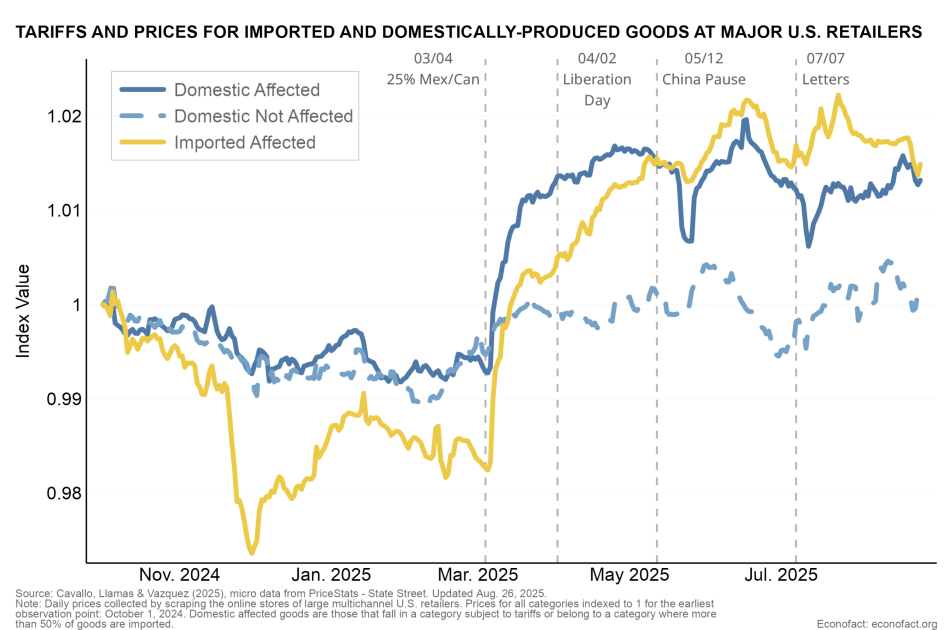
The most efficient version would be not imposing tariffs at all. Americans would keep 100% of the money instead of losing 77% to higher prices and maybe getting 20% back as checks.
But that doesn’t generate political credit for presidential generosity.
The DOGE Precedent Nobody’s Learning From
Earlier this year, the administration promised $5,000 “efficiency dividend” checks funded by DOGE spending cuts. Those checks never arrived. Government spending is actually up 6% year-over-year.
Kevin Thompson, CEO of 9i Capital Group, told Newsweek: “If anything does pass, it will be symbolic. Hard checks aren’t happening. That goes directly against the Republican agenda of debt reduction.”
The tariff dividend follows the same script: Big announcement, optimistic revenue claims, Congressional requirement that kills it, eventual pivot to claiming some other policy accomplished the same goal.
Thompson predicts this is “more of a policy adjustment than a true stimulus” – meaning the announcement is political theater and execution will be minimal or nonexistent.
The Eligibility Mystery That Lets Everyone Down
Trump said checks go to “middle-income people and lower-income people” without defining those terms. That ambiguity is strategic.
Most Americans consider themselves middle class regardless of actual income. The vaguer the eligibility, the more people think they’ll benefit, and the less accountability when they don’t receive anything.
If the administration wanted to distribute all $195 billion in tariff revenue, it could send roughly $1,280 to each household earning under $100,000. Not $2,000, but not nothing.
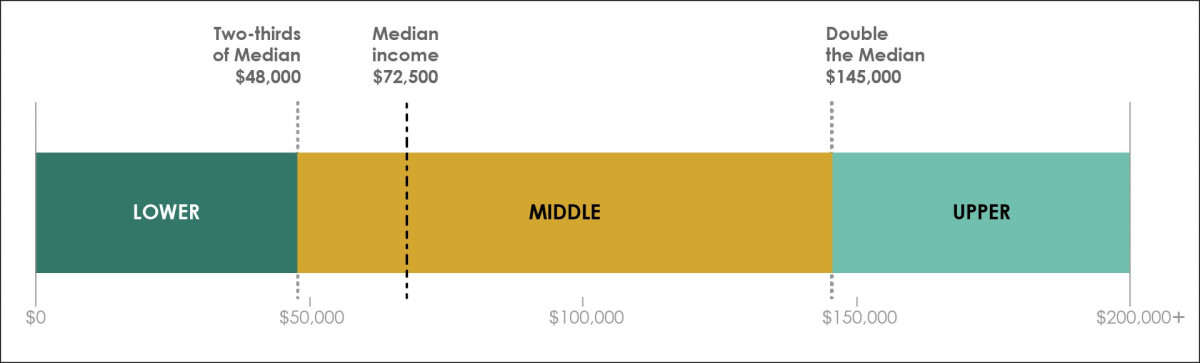
Alternatively, send $2,000 to approximately 97 million households – roughly the bottom two-thirds of earners. That requires dramatically narrowing “middle income” from what Trump implied.
Neither scenario delivers what was promised. Both require deciding that millions of Americans who think they qualify actually don’t.
The Supreme Court Case That Could End This Entirely
The Supreme Court is deciding whether Trump has authority to impose these tariffs without Congressional approval. Lower courts ruled he doesn’t.
If SCOTUS sides with lower courts, the tariff revenue stream funding these theoretical checks disappears. Trump would need Congressional authorization for tariffs before collecting revenue to fund dividends that also require Congressional authorization.
That double Congressional requirement makes the proposal politically impossible. Republicans won’t vote for what amounts to a tax increase (tariffs) to fund what amounts to welfare spending (direct payments).
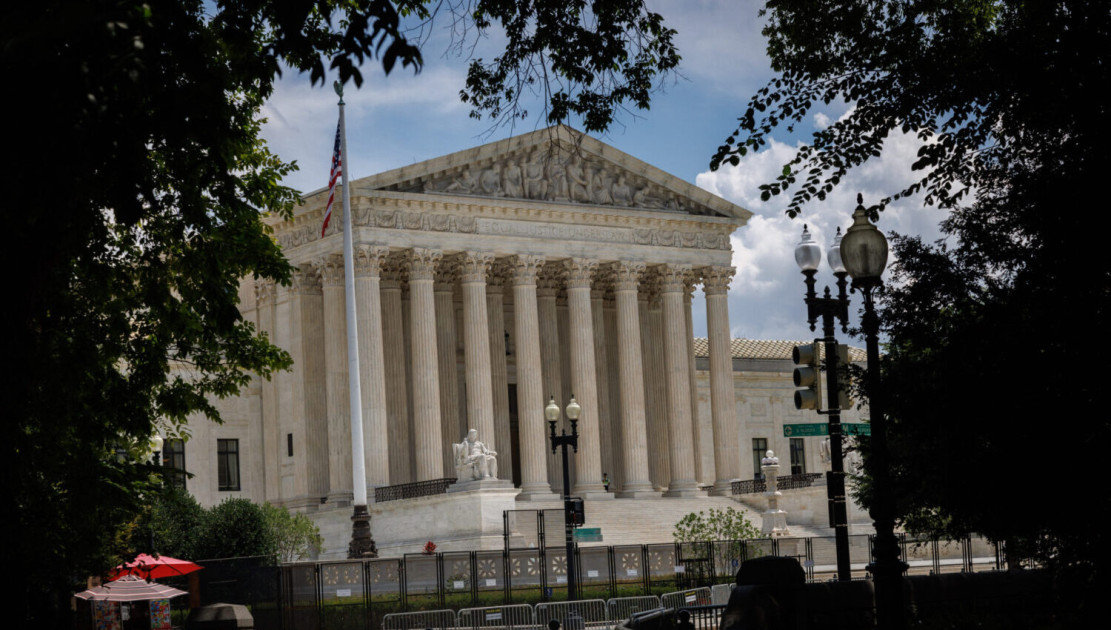
The timing reveals strategy: Announce dividends to generate political support for tariffs, use that support to pressure SCOTUS, then if tariffs get upheld claim vindication without actually sending checks.
The proposal is political leverage disguised as policy.
Why The Announcement Already Served Its Purpose
Trump announced tariff dividends while SCOTUS considers whether his tariffs are legal. The announcement frames tariff revenue as directly benefiting Americans, potentially influencing public perception.
That’s the real purpose. Not to send checks, but to create political pressure supporting tariffs by promising Americans will get money back. Whether money actually arrives matters less than whether the promise affects the political dynamics.
Hassett’s Thursday comments continue this strategy. A senior economic official claiming the math works reinforces the narrative, even though Treasury’s own data and independent analysis prove it doesn’t.
By the time SCOTUS rules and Congress fails to appropriate funds and Americans realize no checks are coming, the political moment will have passed. The announcement accomplished its purpose regardless of whether policy follows.
Hassett said the revenue covers the checks. The math says it doesn’t. Congress hasn’t appropriated anything. The Supreme Court might eliminate the revenue stream entirely.
But the announcement generated headlines about Trump wanting to give Americans $2,000. That political benefit is immediate. The accountability for checks that never arrive gets delayed indefinitely – or blamed on Congressional obstruction, or redefined as tax cuts that mostly benefit different people.
This is governance by press release. The announcement is the policy. Whether anything actually happens is optional.