
On the eve of the President’s high-stakes summit with Vladimir Putin, a challenge was issued from the most unlikely of sources. It came not from a friendly ally or a Republican senator, but from his fiercest political rival from the 2016 election.
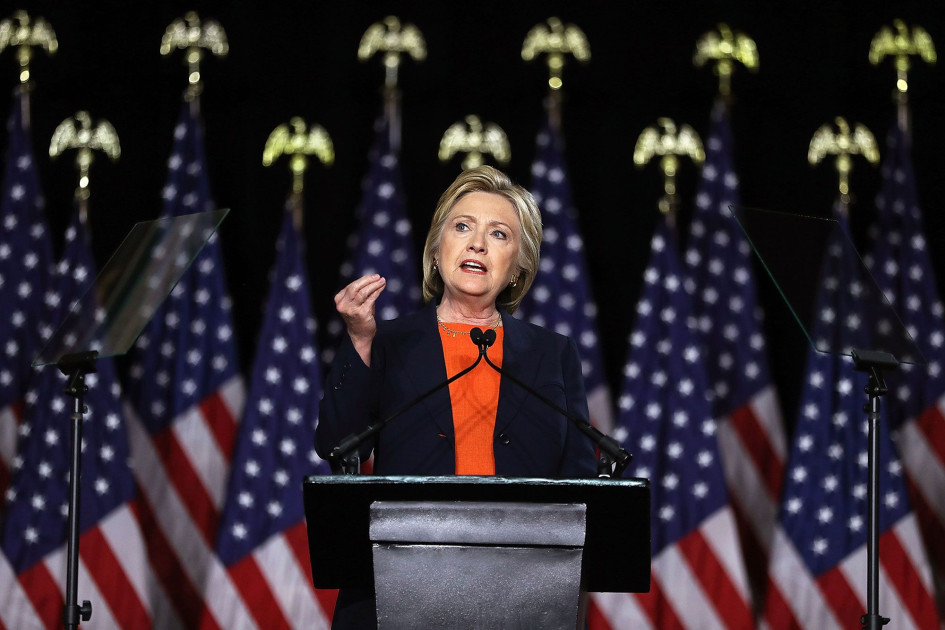
In a stunning and politically shrewd move, former Secretary of State Hillary Clinton declared that she would nominate President Donald Trump for a Nobel Peace Prize – but only if he secures a true and just peace in Ukraine.
This is not a political olive branch; it is a public dare for the President to use his immense diplomatic power to achieve a peace that upholds the rule of law, not just a deal that ends the fighting.
Clinton’s conditional offer is not an endorsement; it is a public dare. It is a challenge for the President to use his immense diplomatic power not just to get a quick and politically convenient deal, but to secure a lasting peace that upholds the principles of national sovereignty and the rule of law.
Join the Discussion
A High Bar for Peace
The conditions Hillary Clinton attached to her potential nomination are specific and stringent. She made it clear that a true peace, worthy of international acclaim, must include a full ceasefire, a declaration of “no exchange of territory,” and an eventual withdrawal of Russian forces from the Ukrainian lands they have seized.
“My goal here is to not allow capitulation to Putin, aided and abetted by the United States,” Clinton stated. “I think that’s a terrible, terrible precedent.”
With these words, she has publicly defined the terms of a successful negotiation. She is drawing a clear, principled line between a genuine peace that respects international law and a superficial “deal” that would simply reward aggression by allowing Russia to keep the territory it took by force.
The President as Chief Diplomat
The upcoming summit in Anchorage, Alaska, is a pure distillation of the President’s power under Article II of the Constitution. As the nation’s head of state and chief diplomat, the President – and the President alone – has the constitutional authority to sit face-to-face with a world leader like Vladimir Putin and negotiate on behalf of the United States.
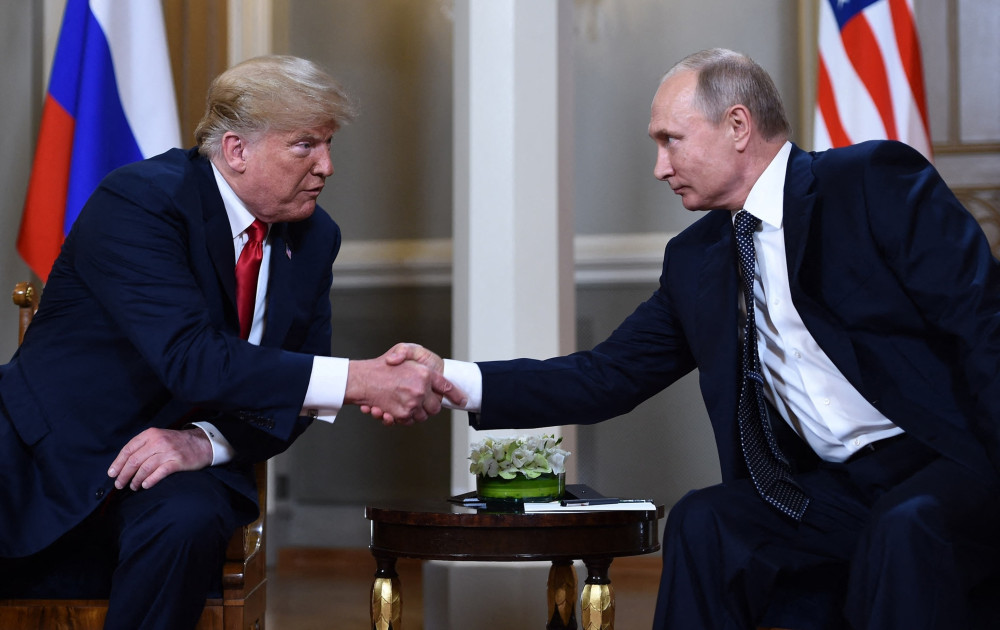
This is a role American presidents have historically embraced, most famously when Theodore Roosevelt won the Nobel Peace Prize in 1906 for mediating the end of the Russo-Japanese War. President Trump is now stepping onto that same world stage, wielding the immense power of his office to try and end a brutal conflict.
The Role of the Senate
While the President has the undisputed power to negotiate, the Constitution places a powerful check on his ability to finalize a deal. Any formal, binding peace treaty that results from these talks would require the “Advice and Consent of the Senate” – a two-thirds majority vote – for ratification.
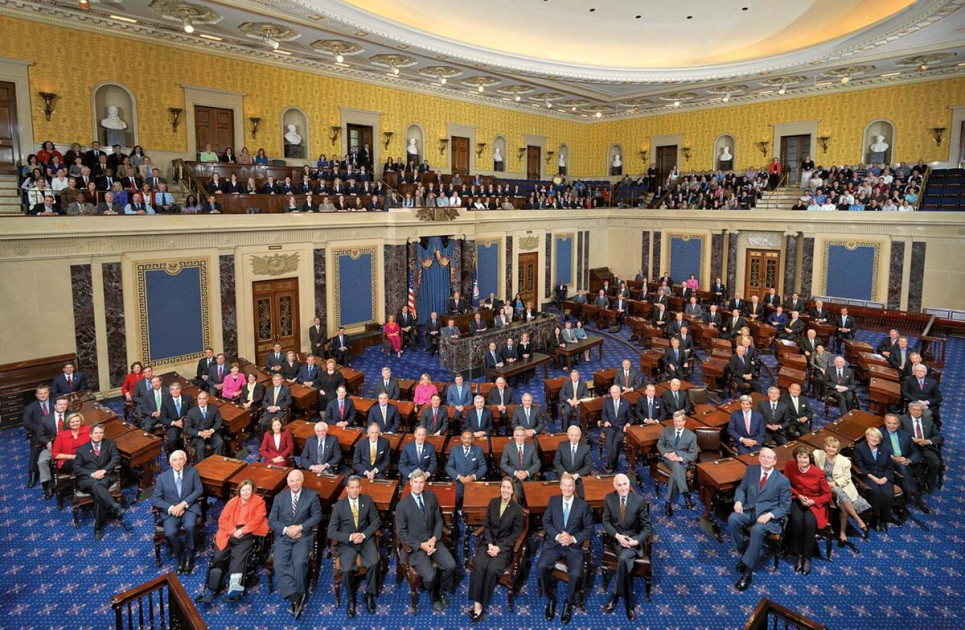
This is the ultimate constitutional guardrail on presidential diplomacy. The President can broker a ceasefire between Russia and Ukraine. He can facilitate an agreement on troop withdrawals.
But any aspect of a deal that legally binds the United States – such as providing long-term security guarantees or financial aid to enforce the peace – would almost certainly require the approval of the legislative branch.
The Senate has the final say on our nation’s formal commitments.
Hillary Clinton’s challenge has perfectly framed the constitutional and moral stakes of the Alaska summit. The President has the undeniable authority to seek peace. The question the nation must now ask is the one Clinton has implicitly raised: What is the definition of peace? Is it merely the absence of fighting, or is it the vindication of the rule of law? The answer will define the legacy of this summit and the character of American leadership in a dangerous world.