
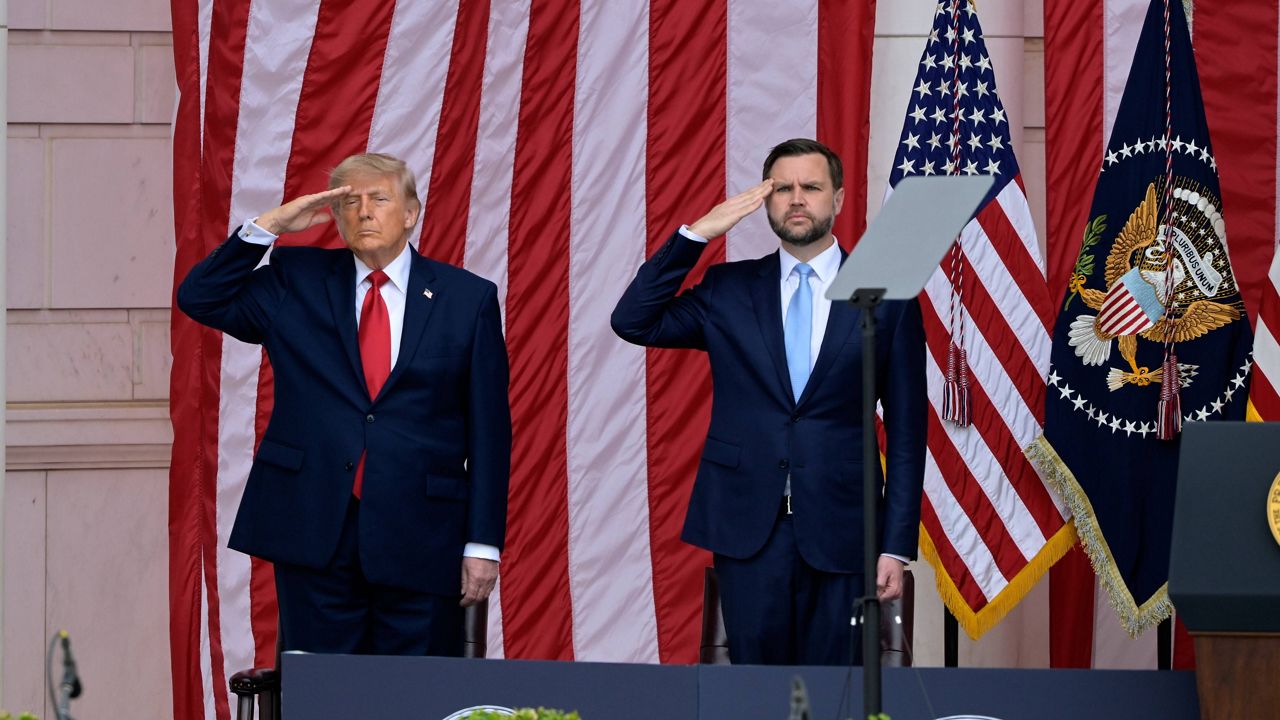
Over Memorial Day weekend, President Donald Trump posted a series of rapid, sometimes conflicting messages about negotiations with Iran. At one moment, he suggested a peace deal was essentially in hand. Less than 24 hours later, he tempered that assessment. By the end of the holiday, he floated a new option involving Iran’s enriched uranium and renewed a warning: if there is no agreement, it is back to the battlefield “bigger and stronger than ever before.”
If you felt whiplash reading along, you are not alone. But the civic question is bigger than confusion. It is constitutional: where is the line between presidential diplomacy messaging and the war powers that the Constitution assigns to Congress?
Join the Discussion
What he posted
The weekend’s public story moved in several directions at once:
- Saturday: After a call involving 10 Arab leaders, Trump wrote that a peace deal with Iran was “largely negotiated” and “will be announced shortly.”
- Sunday: He walked the “largely negotiated” language back, writing it was not “even fully negotiated yet.”
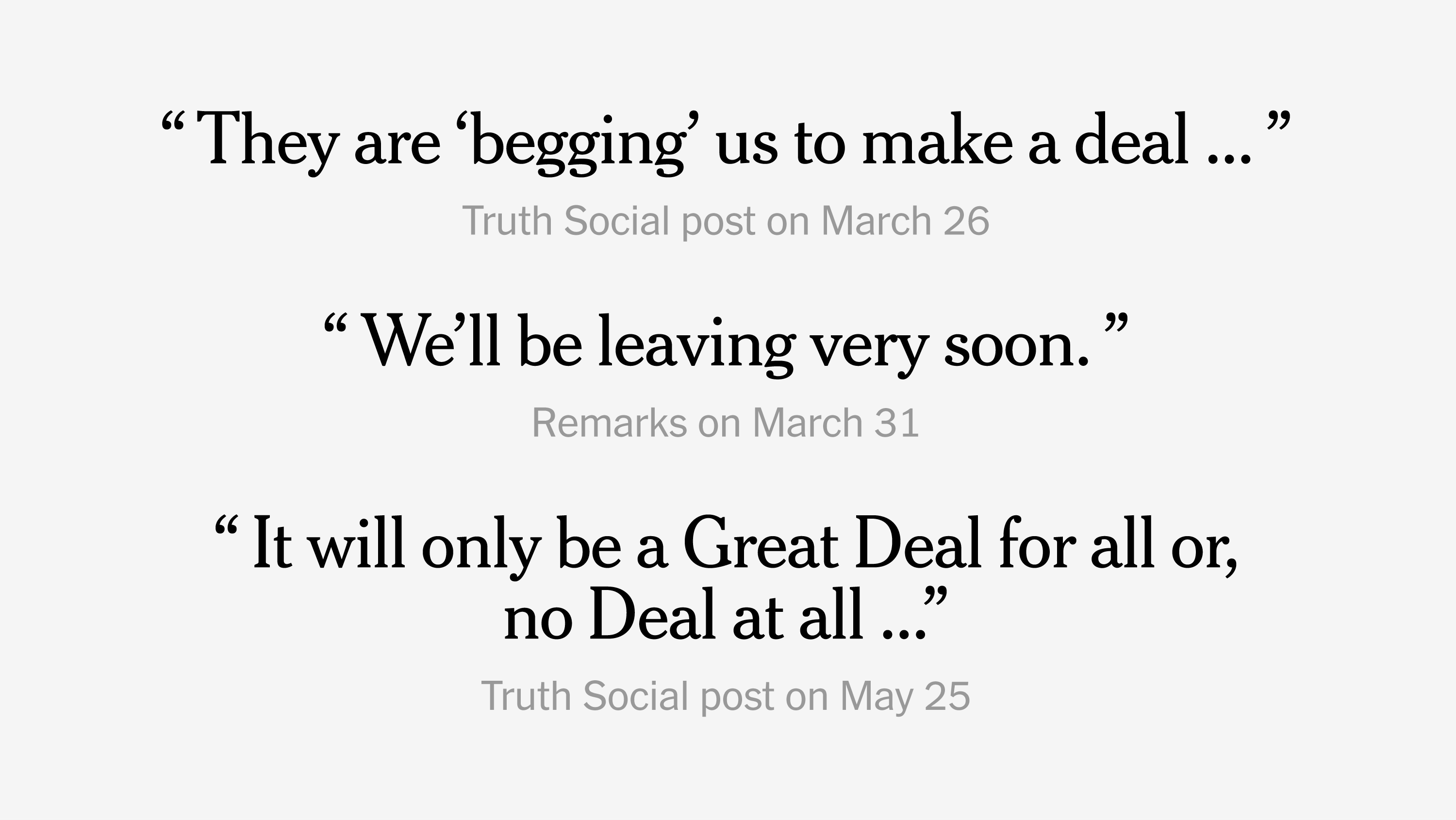
- Monday morning: He posted, “The deal with Iran will either be a great and meaningful one, or there will be no deal.”
- Two hours later: He said talks were “proceeding nicely” and asserted that all 10 Arab nations involved were now mandated to join the Abraham Accords. In that list, he included Egypt and Jordan, even though both have had peace treaties with Israel for decades (Egypt in 1979; Jordan in 1994).
- By the end of the holiday: He floated another option for Iran’s enriched uranium: that it be “immediately turned over to the United States” and “in conjunction and coordination with the Islamic Republic of Iran, destroyed in place or, at another acceptable location, with the Atomic Energy Commission, or its equivalent.”
One reason constitutional readers should pay attention is that messaging can create expectations. Threats, deadlines, and “finalized” style declarations can sound like commitments. But under our system, the President’s ability to talk about war and peace is not the same as the legal authority to start a war or to sustain one.
A pattern of mixed signals
The weekend did not happen in isolation. Since the U.S. and Israel began the bombing campaign on Feb. 28, the administration has offered conflicting public reports on the war. Trump initially said Iran’s military capabilities were wiped out, but official government assessments later indicated Iran was digging out its arsenal.
Earlier this month, Trump announced an effort to guide ships through the blocked Strait of Hormuz and his top allies publicly praised the plan. He then canceled it 36 hours later after backlash from Arab allies.
Those episodes matter here because they reinforce a basic reality of modern conflict: public messaging can shift quickly, while military operations, resources, and legal authorities do not.
Shared powers, by design
The Constitution intentionally splits national security powers.
- Congress (Article I) holds the power to declare war, raise and support armies, provide and maintain a navy, regulate the armed forces, and control funding through appropriations.
- The President (Article II) is Commander in Chief and conducts diplomacy, including negotiating agreements and managing day to day national security decisions.
That division is not a technicality. It is a democratic safety feature. The President can respond quickly and negotiate. Congress provides public authorization, long-term resources, and accountability when the nation is taken into, or kept in, sustained conflict.
This is analysis, not a verdict on what did or did not happen behind the scenes. The point is narrower: public posts can sound like national commitments even when the legal and political processes for sustaining war are far more complicated.
How to spot the boundary
Presidential posts about foreign policy often sit in a gray area, because presidents are both political leaders and constitutional officers. Here is a practical framework:
1) Messaging and bargaining
Statements like “talks are proceeding nicely,” criticism of past agreements, or public positioning about what a “great and meaningful” deal would look like fall into diplomacy messaging. A president can shape expectations and signal preferences. That is not the same thing as binding the United States to a treaty or committing the country to a sustained war.
2) Threats of force
When Trump writes that if no deal happens it is back to the battlefield “bigger and stronger than ever before,” the constitutional tension becomes harder to ignore. Presidents have some ability to order limited military actions, particularly in urgent or defensive contexts. But large or prolonged combat is precisely where Congress’s role becomes central, both legally and practically.
3) Options that imply enforcement
Ideas like immediate turnover of enriched uranium to the United States go beyond pure rhetoric. Even when framed as an option, they touch on enforcement, inspection, international verification, and potentially coercion. That is where Congress’s oversight, funding control, and statutory authorizations become pivotal.
Why Congress matters mid-conflict
This episode is unfolding against active fighting that began when the U.S. and Israel started a bombing campaign on Feb. 28. Over the weekend, Iran accused the United States of violating a ceasefire and threatened retaliation after a new set of strikes that the U.S. described as defensive.
In that kind of environment, social media can blur two different things:
- Operational claims (What did the strikes accomplish? What remains?)
- Legal authority and staying power (Who authorizes continued operations, and who funds them?)
Even if a president can order certain actions as Commander in Chief, Congress can still shape a conflict through appropriations. The Pentagon has faced depleted munitions as a result of operations launched Feb. 28. As of mid-May, it had not signed new contracts to replenish “dangerously low levels” of munitions. Sustained combat is never just a question of willpower. It is also a question of lawful authorization, supply, and budgeting.
The earlier Iran deal
Trump also used the weekend to attack the nuclear agreement reached under President Barack Obama 11 years ago, calling it “one of the worst deals ever made.” That agreement traded sanctions relief for nuclear constraints.
Two facts matter for evaluating claims about that earlier deal:
- Under the Obama-era agreement, Iran agreed to give up 97% of its enriched uranium stockpiles and 70% of its centrifuges.
- The International Atomic Energy Agency confirmed Iran had completed its nuclear disarmament commitments prior to the U.S. withdrawal. After the U.S. pulled out in 2018, the IAEA said Iran resumed uranium enrichment and grew its stockpiles.
Those facts do not settle what the best policy is today. But they help separate a constitutional question (who has which power) from an evidence question (what an agreement actually did, and what changed after withdrawal).
Precision matters
By Monday evening, Trump referenced destroying enriched uranium “with the Atomic Energy Commission, or its equivalent.” The Atomic Energy Commission was abolished more than 50 years ago. It is possible he meant the International Atomic Energy Agency, but the White House did not clarify.
This is not a pedantic gotcha. In national security, words are tools. Names of institutions, verification mechanisms, and legal authorities are the nuts and bolts of real agreements. When public statements are imprecise, the public cannot easily tell whether we are hearing a negotiating posture, a workable proposal, or something else entirely.
So where is the line?
The line is not located in a single post. It is located in the consequences.
- If messaging is aimed at shaping negotiations, reassuring allies, or applying public pressure, it generally stays in the President’s diplomatic lane.
- If messaging effectively signals escalations that would predictably require months of operations, major appropriations, and ongoing risk to U.S. forces, it presses into Congress’s constitutional responsibilities.
At Arlington National Cemetery, Trump said Americans lost their lives in part “to ensure that the world’s No. 1 state sponsor of terror will never have a nuclear weapon. Oh, and they won’t. They will never have a nuclear weapon. I’m sure you, I’m sure you know that.” The audience cheered.
Presidents can promise outcomes. The Constitution is built around process: shared powers, public accountability, and the idea that no single official should be able to carry the country from diplomacy into prolonged war alone.
What to watch
- Clarity in official policy: Do concrete terms emerge that match the President’s public messaging?
- Congressional involvement: Are members briefed, asked to authorize, or asked to fund expanded operations?
- Consistency and verification: Does the administration specify which inspectors, agencies, and mechanisms would handle nuclear materials?
- Operational reality: If fighting resumes or expands, does the U.S. have the munitions and contracts to sustain it?
By the end of the holiday weekend there was no clarity on whether Iran’s nuclear material or remaining “nuclear dust” would even be included in any final deal, if there was a deal.
When a president posts in real time about war and peace, it can feel like politics. It is also civics. The Constitution expects citizens to notice when persuasion starts to look like commitment, and when commitment starts to look like war.