
The first results of the federal takeover of Washington, D.C. are in. The administration is hailing its crime crackdown as an “extraordinary effort,” highlighted by the arrest of an MS-13 gang member and the seizure of dozens of firearms. At the same time, the city’s elected leaders are decrying the federal presence as an “authoritarian push” that “endangers our democracy.”
This clash is more than a political dispute over crime statistics. It is a powerful, real-time lesson in the unique and often misunderstood constitutional status of our nation’s capital. The events unfolding in D.C. are a stark illustration of the immense power of the federal government and a cautionary tale about the fragility of local self-governance.
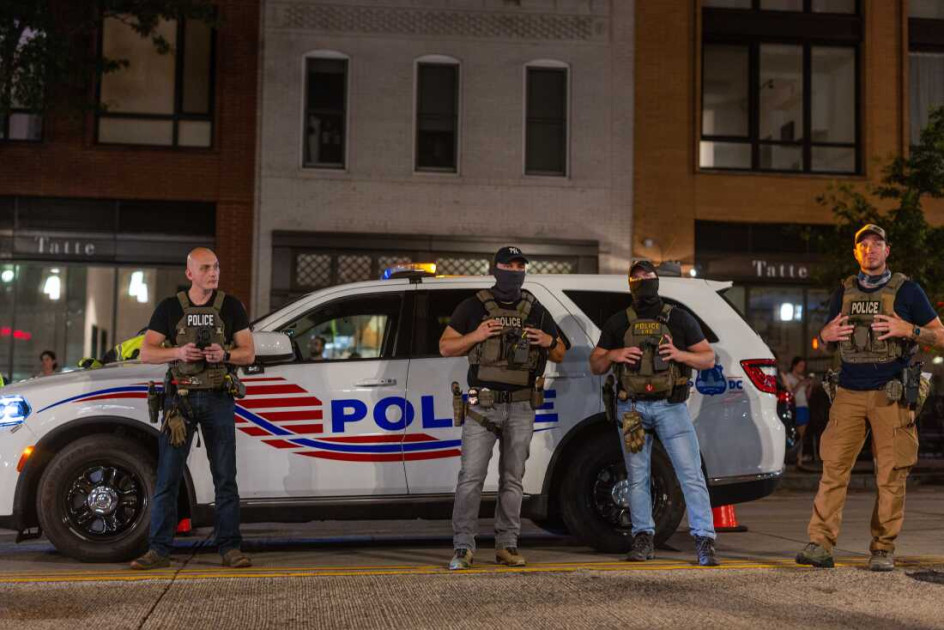
The Metrics of a Takeover
Attorney General Pam Bondi announced this week that the joint federal-local mission has resulted in 465 arrests and the seizure of 68 guns since it began. These numbers are being presented as clear evidence that the federal intervention is a success. The arrest of a previously convicted MS-13 gang member is being used as the prime exhibit.
A sober analysis, however, requires context. For a major metropolitan area like Washington, D.C., several hundred arrests over a multi-day period is not, in itself, an unusual statistic. While removing any violent criminal from the streets is a victory for public safety, the administration’s numbers do not yet prove that this federal surge is uniquely effective. They do, however, serve a powerful political purpose in justifying the takeover.
A Blow to Home Rule
The most constitutionally significant development is not an arrest, but a directive. Attorney General Bondi has issued an order superseding the capital city’s sanctuary policies, forcing the Metropolitan Police Department to “fully cooperate with federal immigration authorities.”
This is a direct and powerful blow to D.C.’s Home Rule. It is also a profound lesson in federalism. If the President or Attorney General were to issue such an order to the police department of Chicago or Los Angeles, it would be a flagrant violation of the 10th Amendment, which reserves powers not delegated to the federal government to the states. The Supreme Court has repeatedly affirmed that the federal government cannot “commandeer” state and local officials to enforce federal law.

But Washington, D.C. is not a state. Under the District Clause of Article I, Congress holds ultimate authority over the capital. Because the President is currently exercising that authority in a declared “public safety emergency,” his administration can take actions here – like nullifying a sanctuary city policy by decree – that would be unconstitutional anywhere else.
The Capital as a Constitutional Anomaly
This is what makes the situation in D.C. so critical for the entire nation to understand. The city is a constitutional anomaly. Its residents are American citizens who pay federal taxes but lack the full rights of sovereignty that protect the other 50 states from federal intrusion.
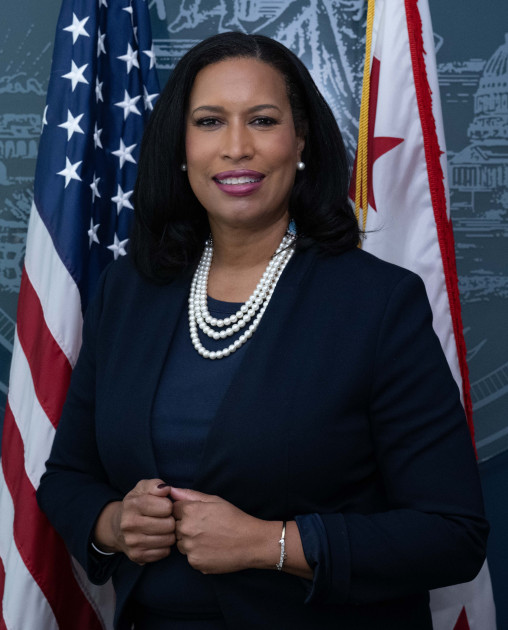
This unique status makes D.C. a laboratory for testing the limits of federal power. As local leaders have warned, the tactics being deployed in the District could be seen as a blueprint for how the administration would like to deal with other cities it deems to be failing.
While the arrest of an MS-13 gang member is being hailed as a victory, the true significance of this week is the quiet, procedural death of a local law by federal decree.
The administration is using D.C.’s constitutional vulnerability to demonstrate a model of centralized, executive-led law enforcement.
The question for all Americans is not just whether this model makes one city safer, but what precedent it sets for the delicate balance of power between federal and local governments across the entire republic.