
A new Justice Department move is drawing intense criticism and, understandably, a lot of public confusion. The department has announced a $1.776 billion “anti-weaponization” fund meant to compensate people who say they are victims of “lawfare and weaponization” by the federal government. Vice President JD Vance has described the idea as compensating Americans for “lawfare.” Critics call it a taxpayer-backed payout for political allies.
When a government creates a pot of money to decide who counts as a “victim” of federal enforcement, we are not just in the realm of politics. We are in the realm of constitutional design: who controls federal spending, how executive power is constrained, and how easily a tool meant to prevent abuse can become an instrument of abuse.
Join the Discussion
What it is and why it exists
Acting Attorney General Todd Blanche announced the fund on May 18 as part of a settlement agreement connected to a lawsuit brought by Donald Trump and his family against the Internal Revenue Service. The suit sought $10 billion in damages over the leak of Trump’s tax returns. The Trump family agreed to voluntarily drop the case, which means there will be no federal court ruling on the merits of the lawsuit.
The settlement did not just end litigation. It also set up the funding structure for a new compensation effort that would accept applications from people claiming “weaponization.” The agreement with the IRS also includes a guarantee that the tax agency will no longer pursue claims over tax liabilities it may have against Trump, his family members, and his companies.
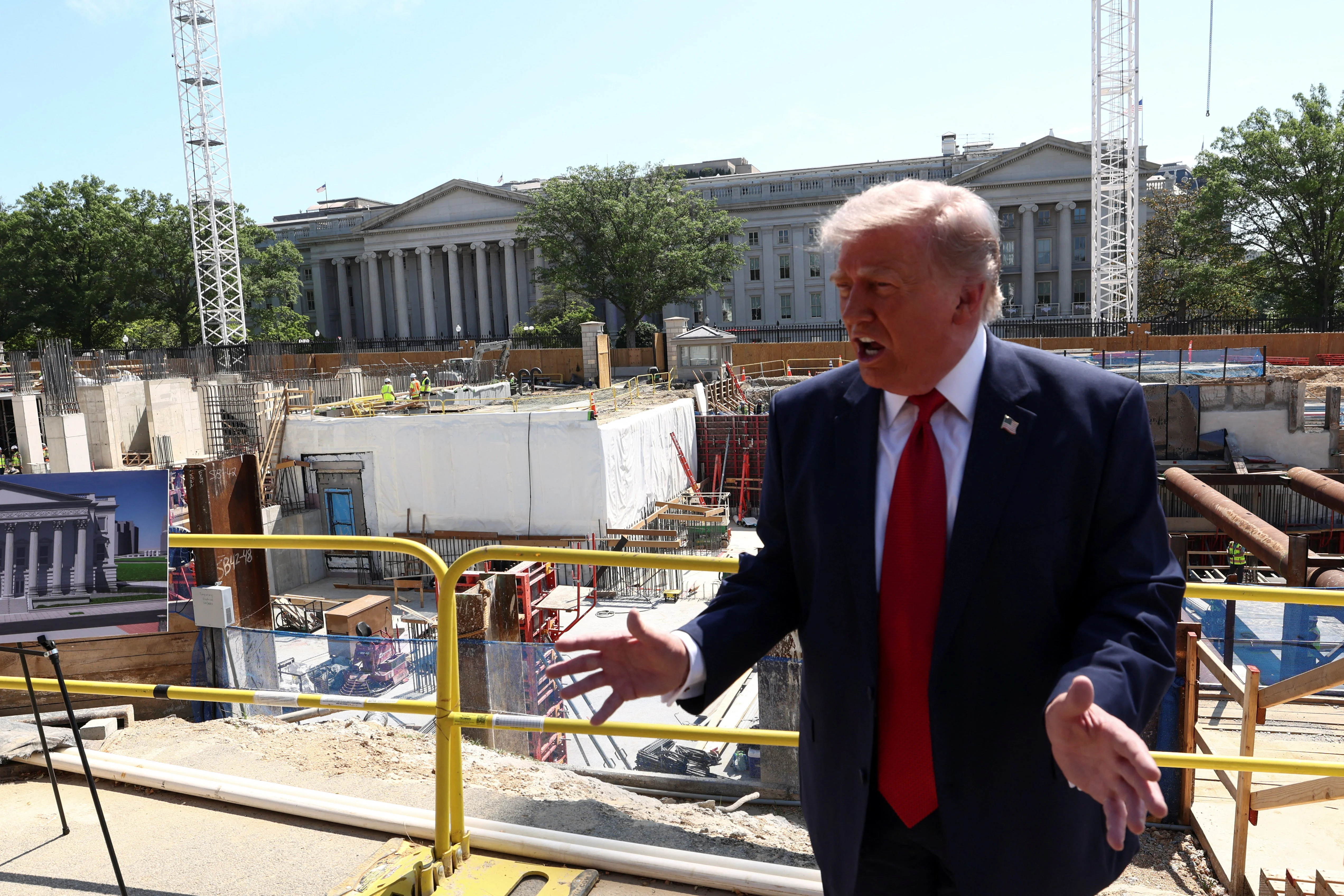
In public remarks on May 18, President Trump said he knew “very little” about the fund but called it “very well received.” He described it this way: “This is reimbursing people that were horribly treated … horribly treated.” He added, “They’ve been weaponized.”
Who could get money
This fund is controversial in part because it could include some Jan. 6, 2021 defendants, including people who attacked the Capitol and later faced federal prosecution.
The larger political context matters here. President Trump used presidential clemency to pardon or commute the sentences of about 1,500 Jan. 6 defendants on the first day of his second term, before going on to issue numerous pardons to wealthy and well-connected people accused of fraud or other white collar offenses. Clemency is constitutionally straightforward. The president’s pardon power is broad and explicit in Article II.
Paying people after the fact is something different. Money comes with its own constitutional rules, and it can blur lines between law enforcement accountability and political patronage.
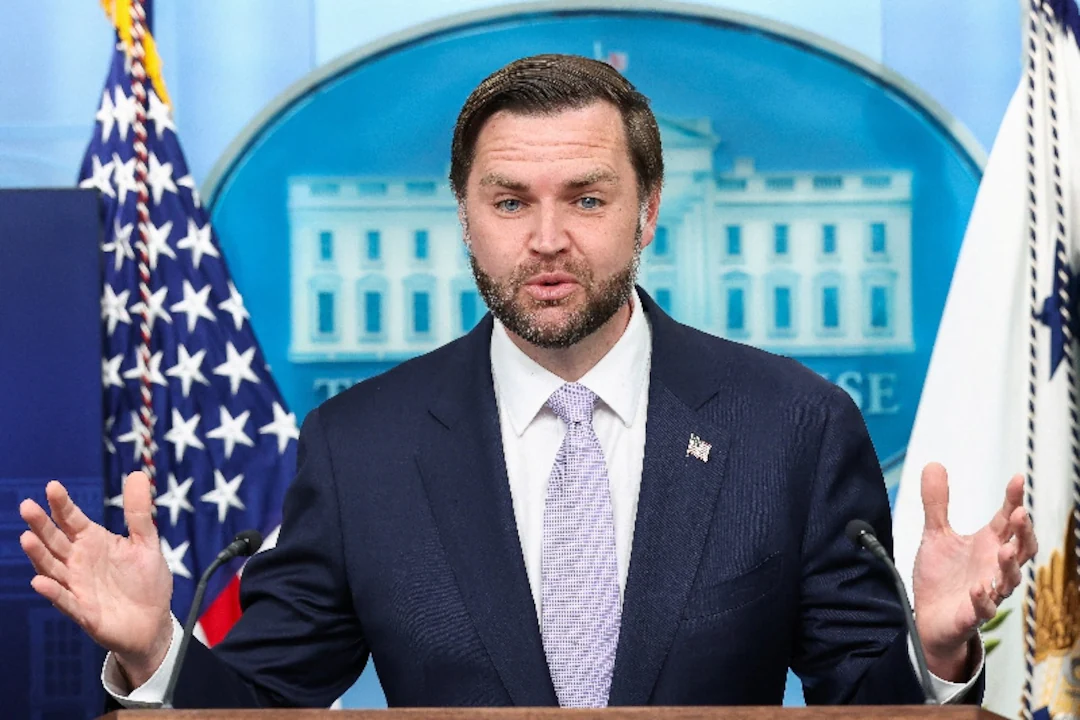
At a White House briefing, Vice President JD Vance did not rule out payments to Jan. 6 defendants, saying applications would be assessed on a “case-by-case basis” and adding, “We’re not making commitments to give anybody money.” Vance also emphasized that “anybody can apply,” and said, “If Hunter Biden wants to apply for this particularly fund, he is welcome to.”
How decisions would be made
Here is the structural detail that should jump out to any civics-minded reader: a five-person committee would determine who receives money from the fund, and each member is appointed by Acting Attorney General Todd Blanche.
That setup raises two immediate questions.
- What standards will govern eligibility? “Weaponization” is not a legal term with a fixed meaning like “due process” or “probable cause.” Without tight definitions and transparent criteria, decision-making can become subjective.
- What checks exist against favoritism? When a politically appointed official chooses the entire decision-making body, the appearance of bias is difficult to avoid, even if the program is administered in good faith.
A bullet-point agreement signed by Blanche also stipulates that after funds are allocated, the federal government “has no liability” for potential misuse by recipients. That clause may be intended to reduce later disputes. Critics argue it could also weaken accountability if money is misused, which can undercut public trust.
What critics are saying
At a May 19 hearing of the Senate Appropriations Committee, Sen. Chris Van Hollen condemned the idea of paying people convicted of crimes and framed the plan as an improper use of public money. He called it “pure theft of public funds” and said, “Rewarding individuals that committed crimes is obscene.” He also described the plan as an “illegal, corrupt, self-dealing scheme.”
Sen. Patty Murray argued the fund is a “slush fund” and criticized the priorities involved. “Instead of helping Americans get by, President Trump is literally using their tax dollars to set up a slush fund and enrich his friends,” she said. She added, “What we’re talking about is nothing short of a sitting president of the United States looting from the Treasury for his own gain.”
Whether you agree with those statements or not, they point to a constitutional reality: programs that distribute federal money are judged not only by legality, but by legitimacy. A plan can be technically permissible and still corrode confidence in the fair administration of justice.
The constitutional questions
1) Who controls federal spending?
The Constitution assigns Congress the power of the purse. In practical terms, that means the executive branch generally cannot create and spend large sums without legal authorization and appropriations. The announcement describes a fund, but the key constitutional question is the mechanism: what legal authority permits $1.776 billion to be reserved and distributed, and under what rules?
Even when money flows through settlements, the underlying authority and purpose matter. Settlements can be lawful tools to resolve disputes, but they cannot be a back door around Congress’s core role in budgeting and oversight.
2) Fairness and equal treatment
The federal government can create compensation systems. It does this in many contexts, including civil rights settlements. But a compensation scheme built around political concepts like “lawfare” has to confront a fairness problem: will similarly situated people be treated similarly, regardless of party or profile?
Blanche told senators that recipients would not be “limited to Republicans” and not limited to the “Biden weaponization.” That helps rhetorically, but constitutional culture is about more than promises. It is about procedures that make favoritism harder.
3) Separation of powers and enforcement
The Justice Department’s credibility depends on the idea that law enforcement decisions are not primarily political. Creating a program inside the department that pays people who claim they were targeted by the department risks sending the opposite message: that enforcement is a political battlefield, and the “winner” can later compensate their side.
Even if the goal is to deter genuine abuses, critics fear the structure could invite a mirror-image future program. In other words, you do not just build a fund. You build a precedent.
Wise, even if legal?
Blanche has acknowledged the fund is “unusual” but said it is “not unprecedented,” pointing to a 2011 settlement during the Obama administration that made $760 million available for Native American farmers in Keepseagle v. Vilsack, a case alleging long-running discrimination in access to federal grants. In that settlement, the arrangement was approved by a federal judge.
That comparison is useful because it highlights what usually makes compensation systems durable:
- Clear underlying harm grounded in recognized legal claims.
- Judicial oversight or at least transparent legal standards.
- Administrative independence strong enough to reassure the public that decisions are not rewards for loyalty.
A program framed around “weaponization” can be a legitimate attempt to address selective enforcement. But critics argue that if the public perceives it as a rewards program for the well-connected, it will deepen cynicism about whether the law applies evenly.
Questions to ask next
If you want to evaluate this fund on constitutional grounds, focus less on slogans and more on design details. Here are the questions I would ask if you were at my library desk:
- What is the specific legal authority for creating and capitalizing the fund?
- What are the written eligibility standards and what evidence must an applicant provide?
- Will the committee’s decisions be public in a way that protects privacy but allows accountability?
- Is there an appeals process for denied applicants?
- Is there an inspector general role or independent audit requirement?
Those questions are not partisan. They are constitutional hygiene. They help distinguish a genuine effort to prevent government abuse from a new apparatus that could institutionalize political retaliation.
The bottom line
The promise of an “anti-weaponization” fund is emotionally potent because the fear of politicized government is real. The Constitution is built on that same fear, which is why it splits power, demands accountability, and places so much emphasis on process.
But a program that asks the Justice Department to compensate people who claim the Justice Department treated them unfairly, using a committee fully appointed by the department’s leader, is exactly the kind of arrangement that invites constitutional scrutiny.
Whether this becomes a narrowly tailored remedy or a wide-open program that critics describe as a political payout will turn on transparency, standards, and oversight. Those are the guardrails that keep “fixing weaponization” from becoming weaponization by another name.