
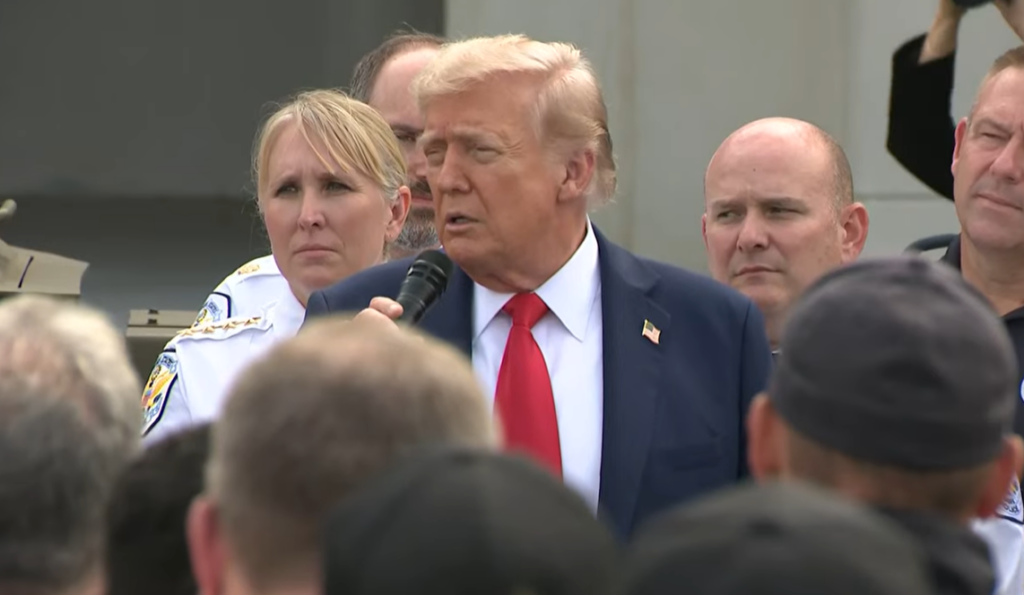
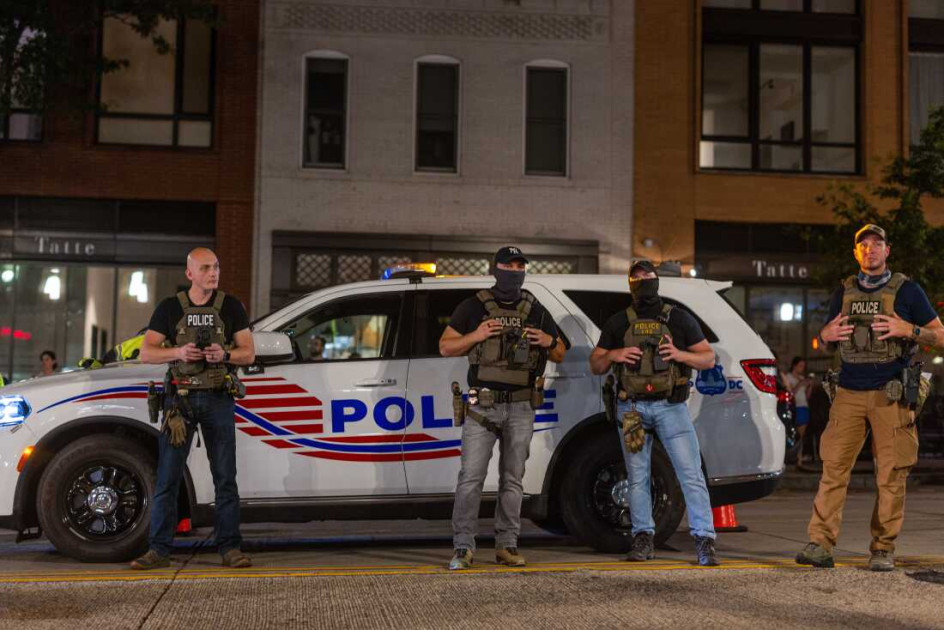
In a fiery speech celebrating the federal takeover of Washington, D.C., the President of the United States announced he would personally join federal and local police on the streets of the capital. This is not a routine visit with law enforcement. It is a powerful and constitutionally unprecedented act that shatters a long-standing norm separating the nation’s political leader from the operational duties of policing.
This moment is more than just political theater. It is a deliberate move to personalize the power of the state, blurring the sacred line between the President’s role as the head of the executive branch and the image of a street-level commander. It is a development that should be of grave concern to every citizen who believes in a government of laws, not of men.
A Speech of Personal and Political Triumph
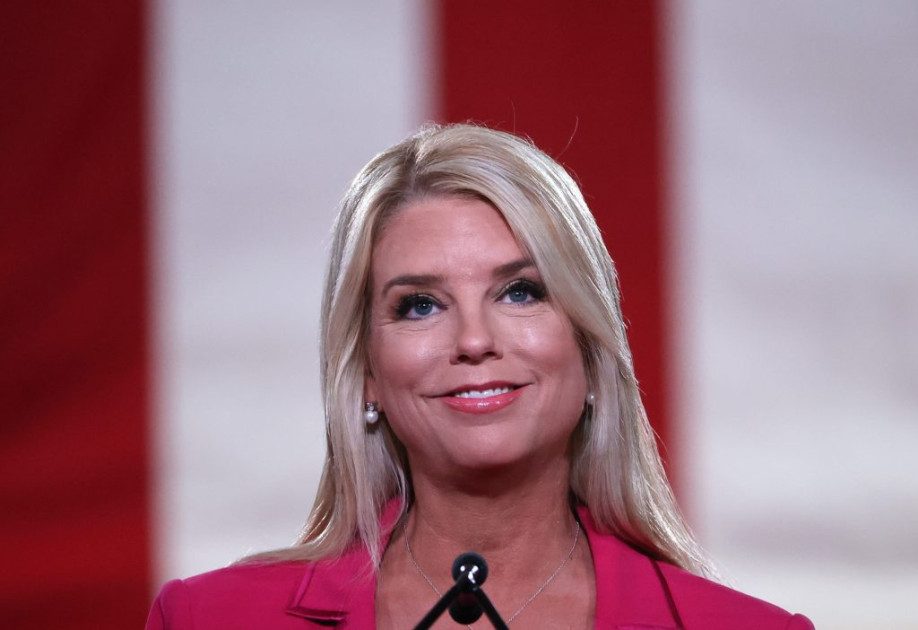
The President’s speech was a victory lap, seamlessly weaving together official government action with his own personal legal battles. He lavished praise on Attorney General Pam Bondi, declaring she will “go down as the greatest AG we ever had,” for her role in the D.C. crime crackdown.
In the next breath, he announced a major personal victory. He informed the crowd that the massive civil fraud judgment against him in New York – for what he called a “fake case” that “stole 550m dollars from me” – had been overturned on appeal. By blending these two events, the President presented a single, powerful narrative: his political agenda and his personal vindication are one and the same.
A Dangerous Precedent: The President on Patrol
The President’s plan to personally join police on the streets is, without question, an unprecedented act for a modern American leader. Constitutionally, the President’s role under Article II is one of oversight and policy direction, not personal, on-the-ground enforcement. The long-standing tradition has been to maintain a clear distinction between the political head of state and the operational duties of professional law enforcement.
Critics view this move as a dangerous blurring of those lines, an act that risks transforming police into a political prop for the commander-in-chief. They argue it creates a visual that is more common in authoritarian systems than in a constitutional republic.
However, another interpretation sees this not as a literal attempt to direct police operations, but as a powerful piece of political symbolism. In this view, the President is engaging in a “stunt” designed to project an image of strength and a hands-on commitment to “law and order,” sending a direct message of support to law enforcement and a warning to criminals. This analysis frames the act not as an unconstitutional power grab, but as an unconventional and potent use of the presidential bully pulpit.
The Blurring of Person and State
The content of the President’s speech further underscores this constitutional danger. His conflation of his private legal victory with the official federal action in D.C. is a deliberate blurring of the lines between his personal interests and the interests of the state.
In a healthy republic, these lines are kept bright and clear. The President’s personal business and legal troubles are separate from his official duties as the head of government. By weaving them together into a single narrative of triumph, he presents himself as the physical embodiment of the state, where an attack on him is an attack on the country, and a personal victory for him is a victory for the country.
The events in Washington are about more than fighting crime. They are about projecting an image of a President who is not just in charge of the law, but is the law. The framers of the Constitution created a system designed to prevent the concentration of such personalized power in a single figure. The sight of a President preparing to patrol the streets with his own police force is a sobering and constitutionally alarming step toward the very reality they feared.