
In a dramatic Oval Office ceremony, the President of the United States signed a new executive order. “If you burn a flag,” he declared, “you get one year in jail.” This is not, however, a simple act of patriotic enforcement.
It is an act of open political defiance. The President’s order is in direct and unambiguous conflict with a landmark Supreme Court precedent that has been the law of the land for more than three decades.
This is a story about the First Amendment, the limits of presidential power, and one of the most difficult and profound principles of a free society: the protection of speech we hate.
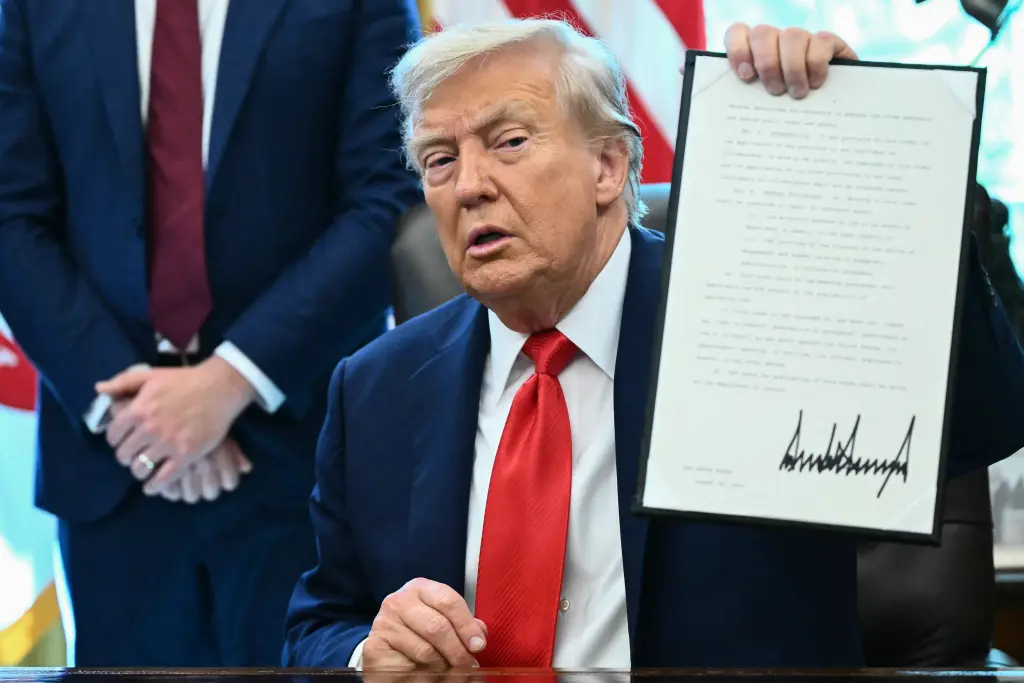
A Presidential Order vs. a Supreme Court Precedent
The President’s directive is clear. But the law of the land, as defined by the Supreme Court, is equally clear in the opposite direction.
In the 1989 case Texas v. Johnson, the Supreme Court ruled in a 5-4 decision that burning the American flag is a form of “symbolic speech” protected by the First Amendment. A year later, in United States v. Eichman, the Court struck down a federal law passed by Congress that tried to ban the practice. The Court’s position has been consistent and unwavering.
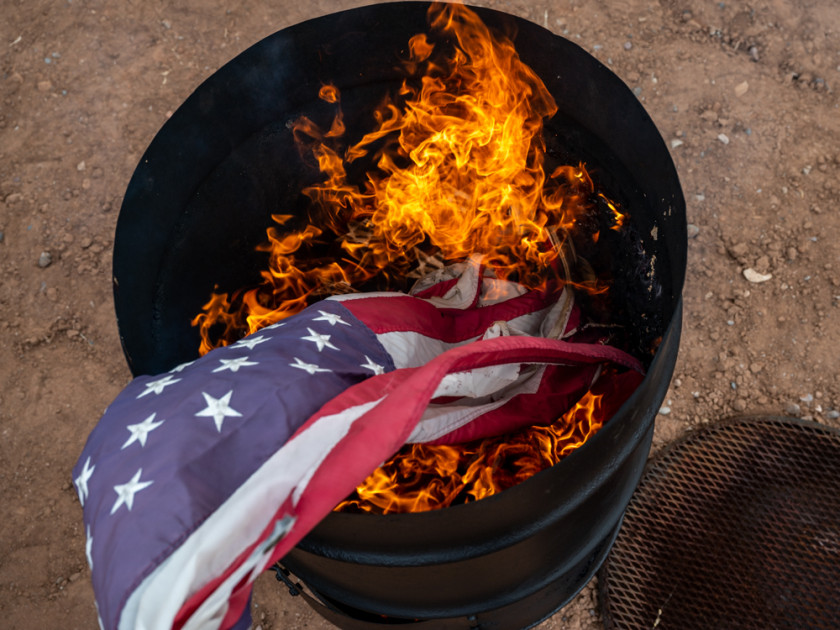
The Constitutional Principle: Protecting Hateful Ideas
The reasoning behind the Court’s decisions is the very bedrock of the First Amendment. Its purpose is not to protect popular or agreeable speech; it is to protect unpopular, offensive, and even deeply hateful expression from government censorship.
The majority in Texas v. Johnson argued that the government cannot mandate patriotism by punishing those who show contempt for its symbols.
The Court’s answer to an act like flag burning is not to jail the perpetrator, but for other citizens to engage in “more speech” – to wave their own flags, to salute them, to reaffirm their own love of country.
In the marketplace of ideas, the government cannot put its thumb on the scale.
The Scalia Paradox: A Lesson in Constitutional Duty
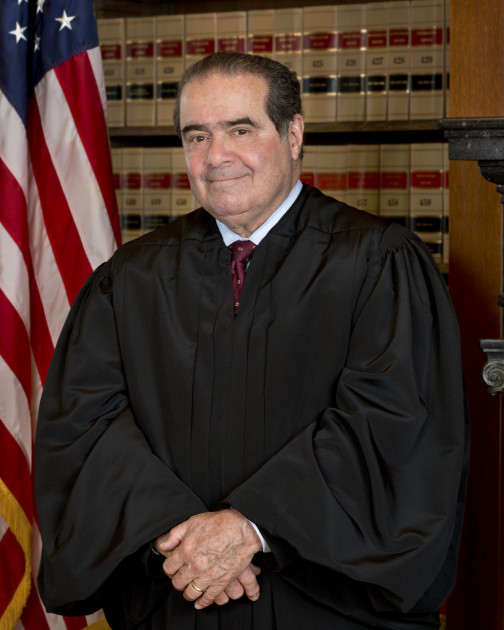
The most powerful lesson from the flag burning cases comes from one of the Court’s most revered conservative icons: the late Justice Antonin Scalia. Scalia personally detested the act of flag burning and said he would have jailed the “bearded weirdo” who did it if he were a king.
But, as he famously explained, he was not a king; he was a judge, sworn to uphold the Constitution. He cast the deciding fifth vote in favor of protecting flag burning, not because he liked the act, but because he believed the First Amendment’s protection of free expression demanded it.
It is the ultimate example of a judge separating personal feeling from constitutional duty.
This brings us to the President’s executive order, which is not a serious legal document, but an act of political theater. The White House’s own quiet admission that the DOJ will only bring charges “where prosecution wouldn’t fall afoul of the First Amendment” is a tacit acknowledgment that the order is legally unenforceable. It is a press release disguised as a presidential command.
This entire episode is a test for the American people. It forces us to ask if we still believe in the difficult principle that Justice Scalia so powerfully defended: that in a free society, we must protect the right of our opponents to express ideas we find repugnant.
The flag represents that very freedom, and the ultimate defense of the flag is the defense of the Constitution that gives it its meaning.