
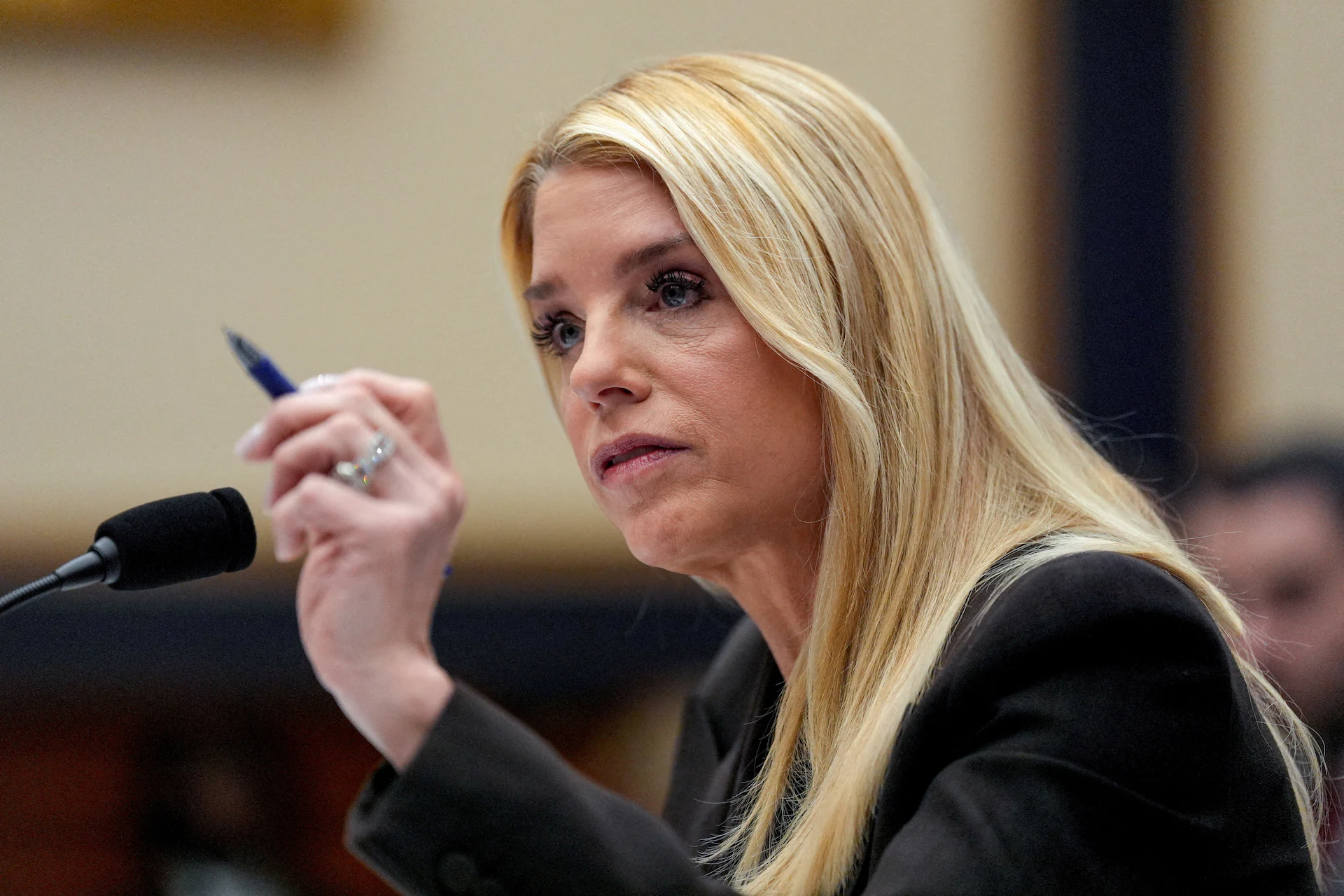
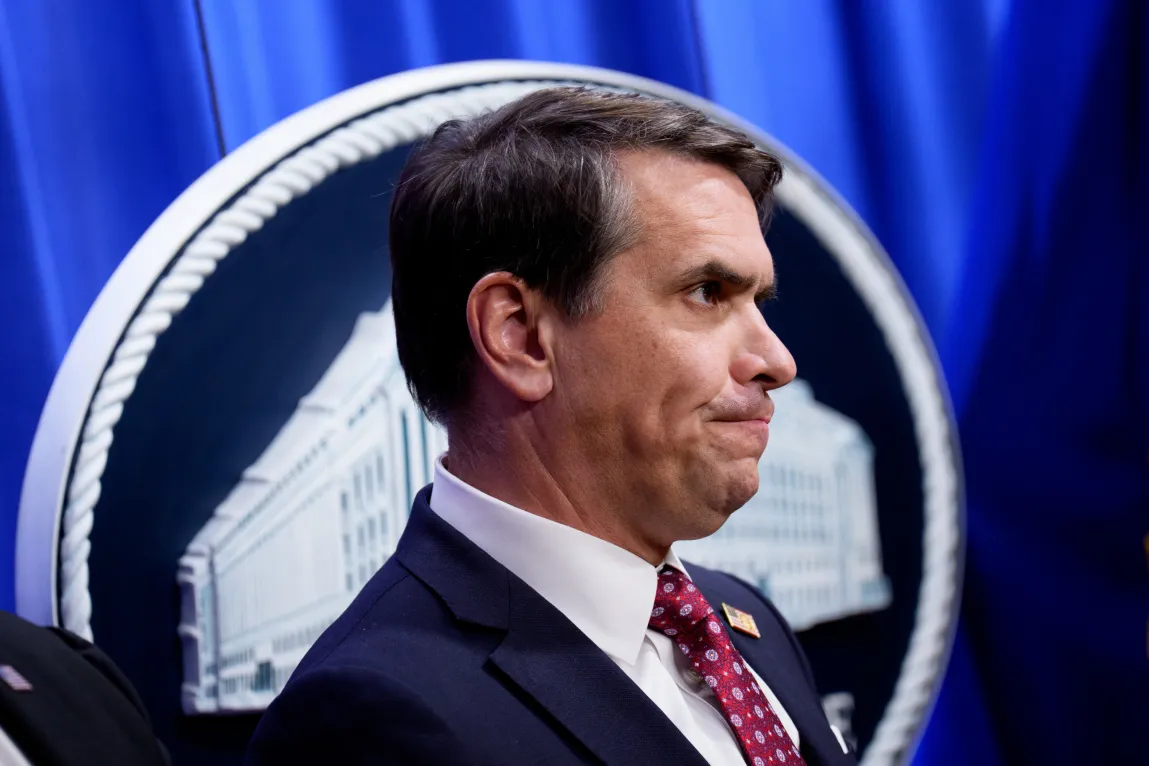
President Donald Trump announced Thursday that Attorney General Pam Bondi is leaving the Justice Department, a sudden shakeup that places Deputy Attorney General Todd Blanche in the role of acting attorney general. Trump framed the change as a transition, writing that Bondi would be moving to “a much needed and important new job in the private sector,” to be announced soon.
Behind the scenes, a senior administration official and a source familiar with the matter described the move more bluntly: Bondi was fired.
The exit also adds to a growing pattern of turnover at the top of the administration. Bondi is the second Cabinet member to be axed in recent weeks, after Homeland Security Secretary Kristi Noem was fired last month in a departure that followed a similar arc of public praise and private frustration.
Join the Discussion
What Trump said
Trump’s announcement came via a social media post. Alongside praise for Bondi, he said Blanche would step in as acting attorney general. Blanche, who previously served as one of Trump’s personal lawyers, publicly thanked the president and offered a complimentary assessment of Bondi’s tenure.
“Pam Bondi led this Department with strength and conviction and I’m grateful for her leadership and friendship,” Blanche wrote. “Thank you to President Trump for the trust and the opportunity to serve as Acting Attorney General. We will continue backing the blue, enforcing the law, and doing everything in our power to keep America safe.”
The immediate practical effect is straightforward: the department has an acting leader empowered to run day-to-day operations, manage staffing, and set litigation posture, even as the longer-term question of permanent leadership remains unresolved.
Why it matters
The Constitution does not create the Department of Justice, but it does vest executive power in the president. That includes broad authority to supervise the executive branch and to remove principal officers, including Cabinet officials. This is one of those moments where the civics lesson can feel uncomfortably immediate: the attorney general is supposed to represent the United States, yet the office sits within the president’s chain of command.
That tension is not new. Modern presidents routinely talk about “their” Justice Department, while attorneys general often describe their job as protecting the department’s independence and credibility. When a president removes an attorney general over whether the department is carrying out a preferred vision, it brings that uneasy balance into view.
What led to the break
People familiar with internal deliberations said Trump had become increasingly dissatisfied with Bondi in recent days. The core complaint was not personal animosity, but performance: he reportedly believed she had not “executed on his vision” in the way that he wanted.
Two people familiar with the situation said Trump and Bondi had a heated confrontation at the White House last week, though they did not detail the subject of the dispute.
The timing is striking. Bondi was visibly present at major moments this week, traveling with Trump to the Supreme Court on Wednesday for oral arguments in the birthright citizenship case and attending his prime-time White House address related to the Iran war. Those appearances made her removal feel even more abrupt to anyone watching for signs of stability inside the administration.
Bondi’s tenure
Bondi came into the job as a longtime Trump loyalist, selected after former Florida congressman Matt Gaetz withdrew from consideration for the position. Her history with Trump stretches back years, including a prominent role during the 2016 Republican National Convention and work on Trump’s legal team during his first impeachment trial. After the 2020 election, she also took part in efforts to challenge the results, including falsely claiming he had “won Pennsylvania.”
As attorney general, Bondi oversaw firings of scores of Justice Department attorneys and FBI agents connected to the earlier prosecutions of Trump. Her period in office also coincided with a larger voluntary exodus of lawyers, leaving the department with far fewer career employees who are beholden to law and not politics.
On policy, the department shifted away from certain civil rights investigations, including cutting off federal probes of local police departments. Bondi also emphasized investigations into alleged “weaponization” of the department, and a renewed focus on voter fraud, though it is rare.
Limits and setbacks
One reason this firing drew attention is that it underscores a basic reality: replacing a leader does not guarantee the outcomes a president wants. Courts, statutory requirements, and procedural rules keep shaping what DOJ can and cannot successfully do.
Under Bondi, the department struggled to bring successful cases against Trump’s political enemies, with the president himself often complicating the cases through his public statements. In February, prosecutors failed to secure indictments against six members of Congress over a social media video urging military and intelligence personnel not to follow unlawful orders.
Other setbacks also illustrated how quickly legal strategy can run into judicial roadblocks. A federal judge blocked a Justice Department investigation involving the Federal Reserve and Chairman Jerome Powell. Separate cases against former FBI Director James Comey and New York Attorney General Letitia James were dismissed after a judge concluded a U.S. attorney had been improperly appointed.
These details matter because they show how the separation of powers works in practice. The executive branch can investigate and prosecute, but judges still decide whether cases are properly brought and whether executive officials are validly appointed under governing law.
Epstein files fallout
Bondi also faced criticism, including from within Trump’s political orbit, over the department’s handling of records related to Jeffrey Epstein. In December, White House chief of staff Susie Wiles said Bondi had “completely whiffed” in her handling of the files, pointing to an episode in which conservative social media influencers received binders labeled “The Epstein Files: Phase 1.”
In July, the Justice Department and FBI released a joint unsigned memo stating they had conducted an “exhaustive” review and did not expect additional people to be charged, adding that no further information would be released publicly. That approach helped fuel a new round of congressional pressure. The House Oversight Committee subpoenaed the files, and after continued disputes over access, Congress passed the bipartisan Epstein Files Transparency Act. That law produced new political embarrassment, including allegations involving the president and members of his administration.
When Bondi testified before the House Oversight Committee in February, she praised the department’s compliance efforts. But survivors and some lawmakers criticized the releases, arguing that redactions were applied inconsistently. Survivors also raised concerns that identifying information about victims was not always adequately protected, while information about possible accomplices was sometimes obscured.
What to watch
- How Blanche uses acting authority: Acting leaders can still set tone and direction, especially on staffing, internal discipline, and which investigations get resources.
- Whether a permanent nominee follows: The next question is whether Trump nominates a new attorney general for Senate confirmation or keeps the department under acting leadership for an extended period.
- DOJ credibility and retention: Continued turnover can affect morale, institutional expertise, and how judges evaluate the department’s claims of neutrality.
- Congressional oversight: The Epstein records dispute showed lawmakers are willing to push back, including through subpoenas and legislation.
For everyday readers, the takeaway is simple but important: personnel changes at DOJ are not just inside baseball. They can shape how federal power is used, which cases are prioritized, and how much the public trusts the justice system to operate on principle rather than politics.