
The pardon came in November 2025. The primary challenge came two months later. The constitutional power of presidential clemency collided with raw political calculation—and Trump’s Truth Social post explaining it became a case study in how mercy and politics intertwine.
Representative Henry Cuellar, a Texas Democrat, faced up to 20 years in federal prison on bribery and money laundering charges. His daughters wrote a letter to President Trump begging for clemency.
Trump granted a full and unconditional pardon. Then Cuellar announced he’d run for reelection as a Democrat. Now Trump is backing a Republican primary challenger against the man he saved from prison.
The sequence raises questions the Framers never anticipated: When does presidential mercy become political leverage? Can you pardon someone, then oppose them electorally? And what does it mean when the pardon power – designed as the ultimate check on prosecutorial overreach – becomes another tool in partisan warfare?
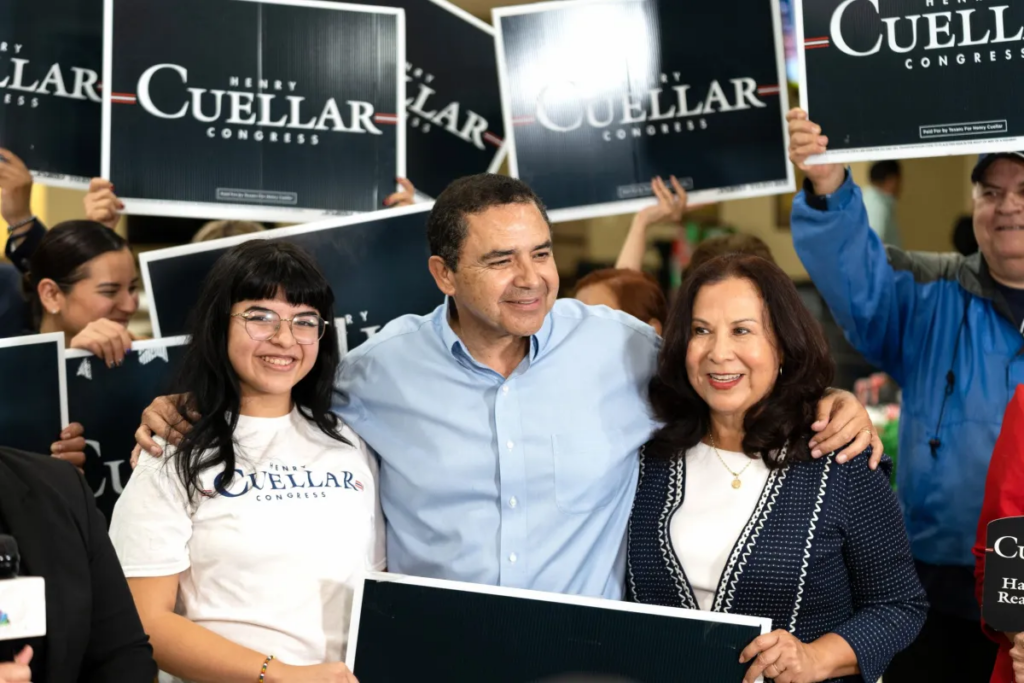
The Charges That Nearly Destroyed Him
Federal prosecutors indicted Henry Cuellar and his wife Imelda in May 2024. The charges alleged they accepted approximately $600,000 in bribes from an Azerbaijan state-owned oil company and a Mexican bank. The money allegedly came disguised as consulting payments to shell companies the Cuellars controlled.
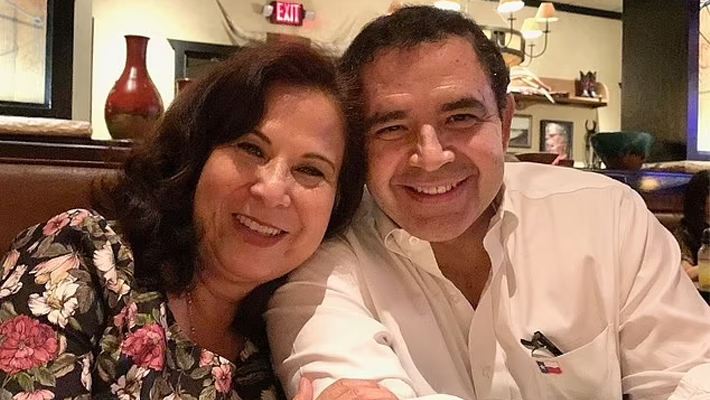
The indictment detailed years of payments starting in 2014. Prosecutors claimed Cuellar performed official acts benefiting the Azerbaijani government and the Mexican bank in exchange for the money.
Cuellar maintained his innocence, arguing the payments were legitimate consulting fees for work his wife performed.
Trial was set for 2025. Legal experts predicted conviction was likely if prosecutors could prove the quid-pro-quo relationship between payments and official acts. Federal bribery cases against sitting members of Congress are rare – and usually successful.
The Cuellars faced financial ruin and decades in prison. Their daughters – both adults – watched their parents’ lives unravel publicly. The emotional and financial toll was crushing. Legal fees mounted. Cuellar’s reputation suffered. Political allies distanced themselves.
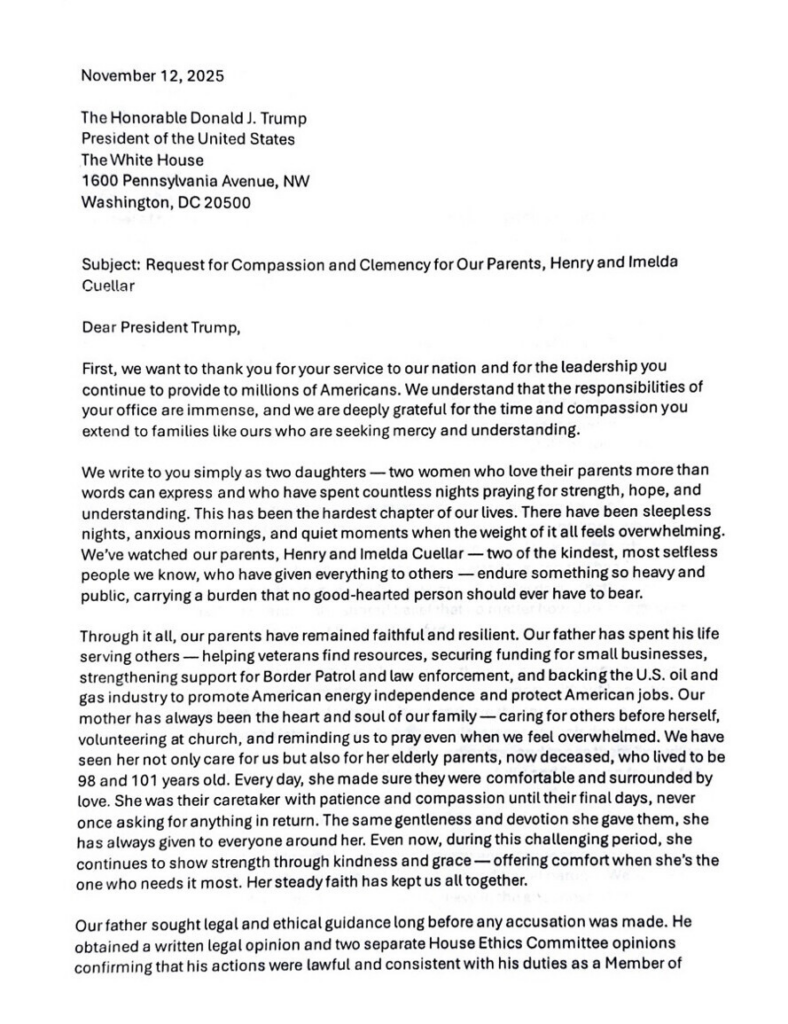
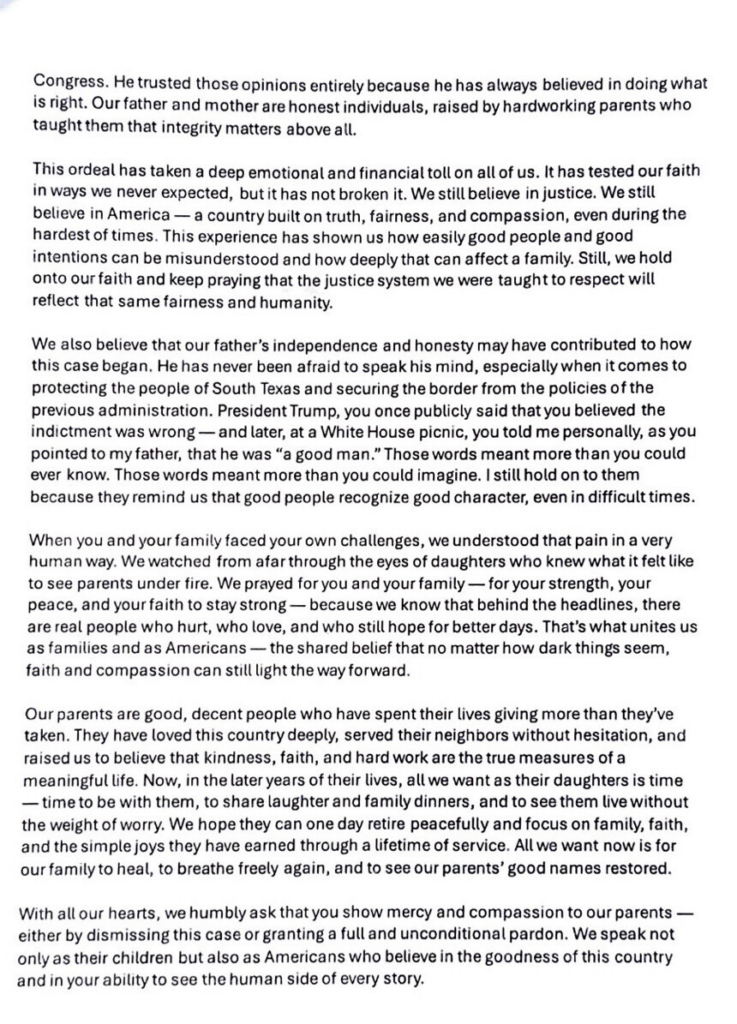
The Letters His Daughters Wrote
The Cuellar daughters’ letters to Trump were personal, detailed, and emotionally raw. They described parents who’d dedicated lives to public service. A father who helped veterans, supported law enforcement, and backed American energy independence. A mother who cared for elderly parents into their late 90s and early 100s, never asking for anything in return.
The letters didn’t claim innocence – they pleaded for mercy.
They described watching their parents “endure something so heavy and public, carrying a burden that no good-hearted person should ever have to bear.” They noted their father sought legal guidance before any accusations, obtaining ethics opinions confirming his actions were lawful.
The daughters framed the prosecution as political retaliation. Their father’s independent stance on border security – supporting stricter enforcement than most Democrats – made him a target for the Biden administration. The letters argued the charges stemmed from policy disagreement, not criminal conduct.
Trump’s post called the letters “heart wrenching and beautiful.” They worked. He granted the pardon without having met Cuellar, based on the daughters’ plea and his own analysis of the case as political weaponization.
The Border Politics That Allegedly Triggered Prosecution
Cuellar represents Texas’s 28th Congressional District—a border district where immigration enforcement is local, immediate, and politically explosive. Unlike progressive Democrats, Cuellar consistently supported border security measures, including barriers and increased enforcement.
That stance created tension with the Biden administration and Democratic leadership. Cuellar voted against party leadership on immigration issues repeatedly. He criticized “defund the police” rhetoric. He supported oil and gas industry interests crucial to his district’s economy.
Trump’s post frames the prosecution explicitly as retaliation: “Biden and his crew of Radical Left Thugs did not like those things about Cuellar, and they worked hard, and expected to put him in jail for the rest of his life.”
That framing mirrors Trump’s own claims about his prosecutions—that they’re politically motivated rather than legitimate. Whether Cuellar’s prosecution was actually political retaliation or straightforward enforcement against corruption is unknowable without access to internal Justice Department deliberations.
But the political logic was clear to Trump: a Democrat who breaks with his party on border issues faces federal prosecution. The pattern – real or perceived – justified mercy.
The Constitutional Power Trump Exercised
Article II, Section 2 grants the president power to “grant Reprieves and Pardons for Offenses against the United States, except in Cases of Impeachment.”
The pardon power is nearly unlimited. Presidents can pardon before conviction, after conviction, or before charges are filed. They can pardon for any reason or no reason. They don’t need to explain their decisions. Courts cannot review pardon decisions for constitutionality or fairness.
The only limits: pardons apply only to federal crimes, not state crimes or civil liability. And presidents cannot pardon impeachment.
Trump’s Cuellar pardon was textbook use of the power. Federal charges. Full and unconditional pardon. No conditions attached. Completely within presidential authority.
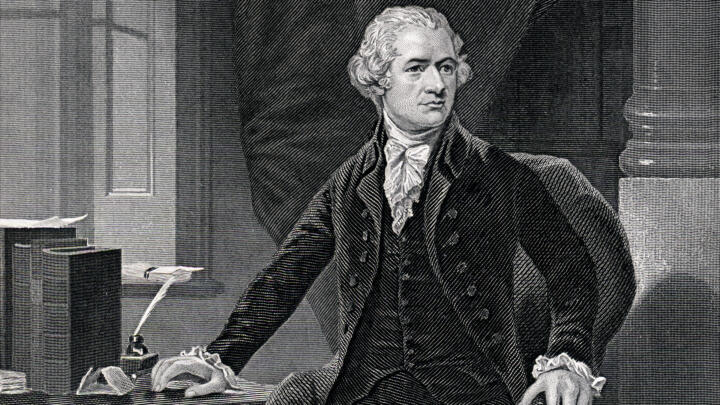
But the Framers designed the pardon power as mercy, not politics. Alexander Hamilton wrote in Federalist 74 that pardons exist because “the criminal code of every country partakes so much of necessary severity, that without an easy access to exceptions in favor of unfortunate guilt, justice would wear a countenance too sanguinary and cruel.”
Hamilton imagined pardons for “unfortunate guilt” – people deserving mercy despite legal culpability. The power was designed to temper justice with compassion, not to benefit political allies or punish enemies.
What Trump Says He Considered
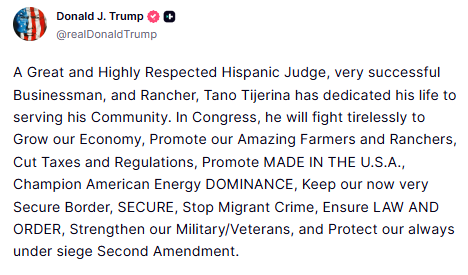
Trump’s post claims he “studied his records, learned about his financing, and listened to his two wonderful daughters.” The analysis wasn’t about Cuellar’s guilt or innocence – it was about whether the prosecution was legitimate or political.
Trump explicitly compares Cuellar’s situation to his own: “Being an expert on Political Weaponization, based on what the Biden Losers had done to me.” The pardon wasn’t mercy for a criminal—it was solidarity with a fellow target of weaponized prosecution.
That framing transforms the pardon power’s purpose. Instead of tempering overly harsh sentences or correcting injustice, it becomes a tool for identifying and protecting perceived victims of political prosecution.
The problem with that framework: everyone claims their prosecution is political. Trump says his prosecutions are political. Cuellar’s daughters say his prosecution is political. Every defendant facing serious charges has incentive to claim persecution rather than legitimate enforcement.
Distinguishing actual political prosecution from legitimate cases is nearly impossible from outside the Justice Department. Trump solved that problem by crediting his own judgment as “an expert on Political Weaponization” – and his sympathy for another border hawk facing charges.
The Complication: Cuellar Runs Again
Trump’s post reveals he “never assumed he would be running for Office again, and certainly not as a Democrat.” The pardon was mercy, not political alliance.
Then Cuellar announced he’d seek reelection. As a Democrat. In a district Trump wants Republicans to win.
Trump’s response: backing Judge Tano Tijerina, a Republican challenger who Trump says is “much more powerful on the Border issue, cutting Taxes, our Military, and just about everything else than is Henry Cuellar.”
The sequence is constitutionally permissible but politically bizarre. Trump saved Cuellar from 20 years in prison. Cuellar returned to politics as a Democrat. Trump now campaigns against the man he pardoned.
The pardon power contains no loyalty requirement. Presidents can pardon people, then oppose them politically. Nothing prevents it legally. But the optics are strange – granting mercy, then attacking the recipient for insufficient gratitude.
The “Stupid” Crime Versus Political Crime
Trump’s post calls Cuellar “stupid” in what he did but frames the prosecution as primarily political. That distinction matters legally and politically.
If Cuellar was genuinely stupid—made mistakes, showed poor judgment, but lacked criminal intent—that’s a case for mercy. The criminal justice system punishes honest mistakes harshly. Presidential pardons exist partly to correct that harshness.
If the prosecution was political—brought because of Cuellar’s border stances rather than evidence of criminal bribery—that’s a case for pardon as protest against prosecutorial abuse.
Trump’s framing combines both: Cuellar made mistakes, but the prosecution was political retaliation disproportionate to the conduct. The pardon corrects both problems simultaneously.
But that framing requires accepting Trump’s analysis. Federal prosecutors maintain the Cuellar case was straightforward corruption—$600,000 in bribes for official actions. No political motivation, just evidence-based prosecution.
Without trial, we’ll never know which narrative is accurate. The pardon ensured the evidence would never be tested in court.
Presidential Pardons as Political Weapon
Every modern president uses pardons politically. Clinton pardoned Marc Rich on his last day in office. Obama commuted Chelsea Manning’s sentence. Trump pardoned Roger Stone, Paul Manafort, and Steve Bannon – all allies.
But pardoning a member of the opposition party, then campaigning against him when he seeks reelection, creates a new dynamic. The pardon becomes currency in political negotiation – mercy granted, political alignment expected.
Trump’s post makes that expectation explicit: he granted “by far the greatest favor of his life, 20 years of FREEDOM,” but Cuellar returned to politics as a Democrat with views “not nearly as good or strong” as Trump’s preferred Republican.
The Constitution permits this. But it transforms mercy into transaction. The pardon power was designed as an act of grace – unearned, unconditional, given freely. When grace comes with implicit expectations of political loyalty, it stops being grace.