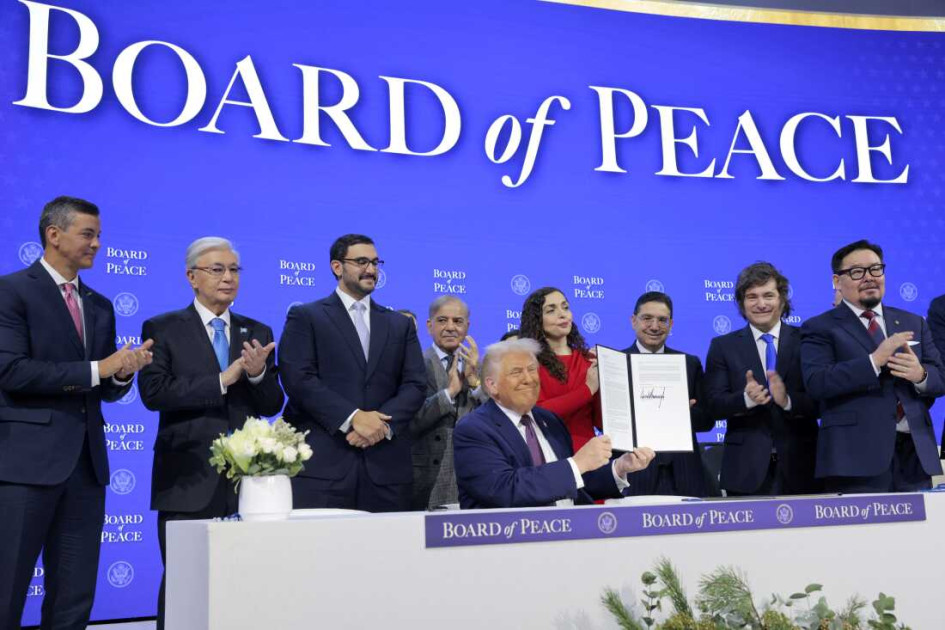
President Trump signed his “Board of Peace” into existence Thursday at the World Economic Forum in Davos. The organization was created to oversee Gaza reconstruction. Trump now describes it as an institution to rival the United Nations.
By Friday, he’d already kicked one country out. Canada’s invitation was rescinded after Prime Minister Mark Carney gave speeches urging smaller nations to resist Trump’s “America First doctrine” and his efforts to “dismantle the post-World War II international order.”
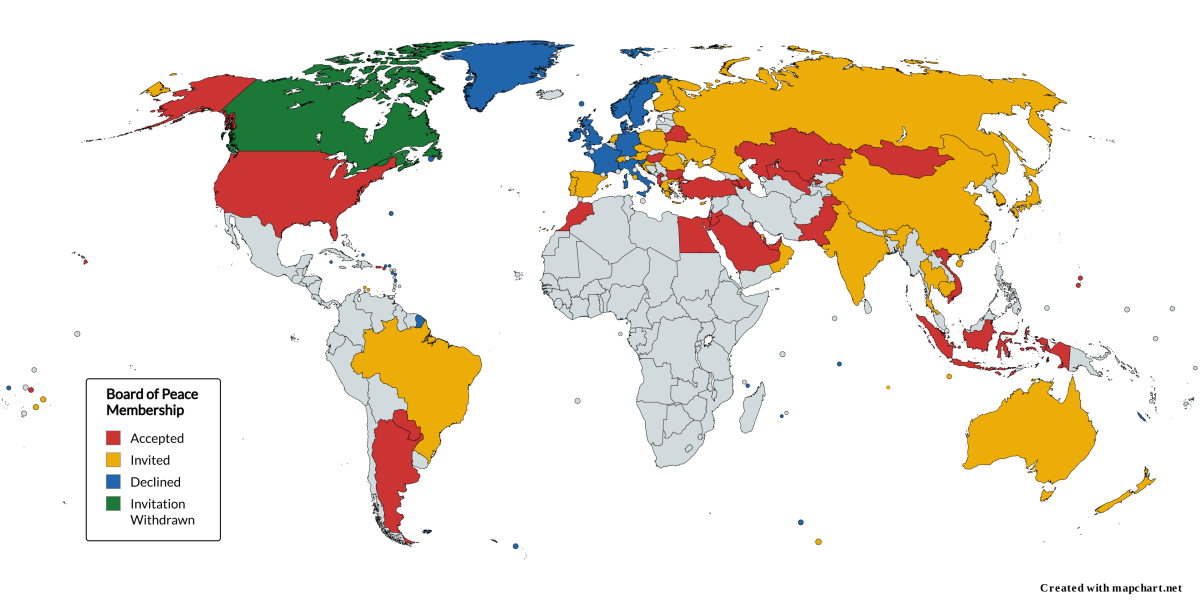
The list of who joined reveals as much as who didn’t. Hungary, Pakistan, and the UAE signed. Canada, UK, France, Germany, Italy, Spain, Sweden, Norway, Slovenia, and Belgium declined or were rejected. Russia was invited. Most major U.S. allies refused to participate.
What started as a Gaza reconstruction board has become a litmus test for global alignment with Trump – and a constitutional question about whether a president can create alternative international institutions through executive action alone.
What the “Board of Peace” Actually Is
The Board of Peace originated as a mechanism to oversee Gaza reconstruction after the Israel-Hamas ceasefire. The United Nations Security Council endorsed it in November 2025.
But Trump’s announcement Thursday dramatically expanded its mandate. It’s no longer just about Gaza – it’s now intended to promote “global stability and conflict resolution around the world.”
The shift transforms the Board from specific reconstruction oversight into a general-purpose international organization competing with the UN for legitimacy and authority.
Trump called it “the most prestigious Board of Leaders ever assembled, at any time.”
The organizational structure includes a broad membership board and a smaller Executive Board to “operationalize the Board of Peace’s vision.” The Executive Board includes Secretary of State Marco Rubio, Middle East Special Envoy Steve Witkoff, Trump’s son-in-law Jared Kushner, former UK Prime Minister Tony Blair, Apollo CEO Marc Rowan, World Bank President Ajay Banga, and security advisor Robert Gabriel.
The composition mixes government officials, private sector leaders, and Trump family members—a structure unprecedented for international organizations claiming to rival the UN.
Who Actually Signed
Nineteen countries sent representatives to the Davos signing ceremony. The list reveals the geopolitical alignment:
Middle Eastern partners: Bahrain, Morocco, Jordan, Qatar, Saudi Arabia, Turkey, UAE—all countries with strategic relationships with the U.S. on regional security and energy.
Emerging economies: Argentina, Indonesia, Pakistan, Paraguay, Kazakhstan, Uzbekistan, Mongolia—nations seeking closer U.S. ties or economic support.
Authoritarian-leaning governments: Hungary (Viktor Orban), Azerbaijan (Ilham Aliyev)—leaders who’ve aligned with Trump’s anti-multilateral institutions rhetoric.
Post-Soviet states: Armenia, Kosovo, Kazakhstan, Uzbekistan—countries navigating between Russian influence and Western alignment.
Regional powers: Turkey and Indonesia—major Muslim-majority nations with complex relationships with both Israel and Palestinian territories.
The common thread: countries seeking U.S. favor, nations with authoritarian governance structures, or states navigating difficult geopolitical positions who see advantage in Trump alignment.
The Major Allies Who Said No
The list of countries that declined or weren’t present is more significant than who signed:
UK Foreign Secretary Yvette Cooper told the BBC Britain “won’t be one of the signatories,” citing concerns over Putin’s invitation to join.
France reportedly turned down the invitation outright.
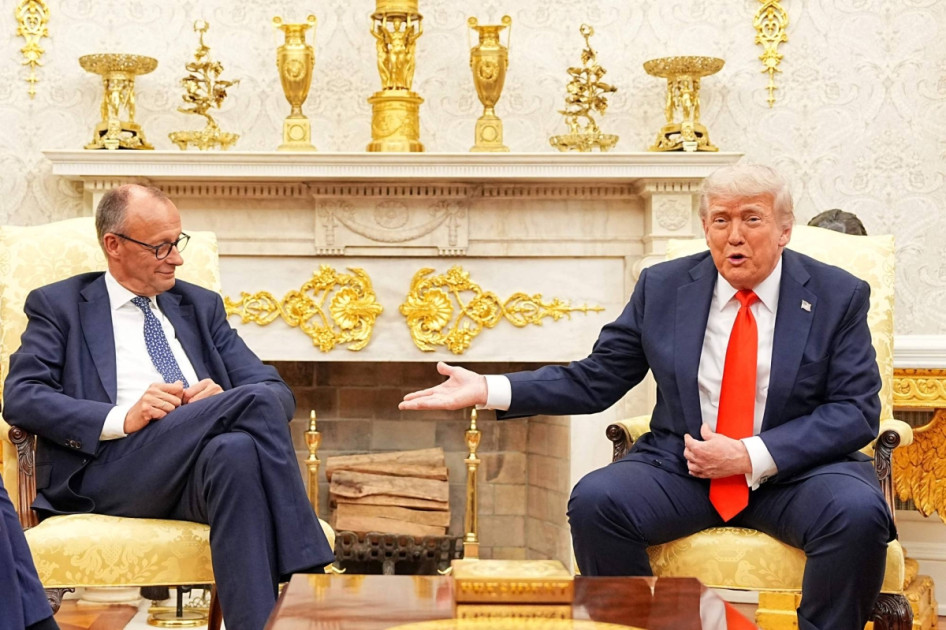
Germany initially hesitated, then Chancellor Friedrich Merz stated definitively that Germany won’t join the Board of Peace in its current form, citing “constitutional reasons.” Merz said he remains open to “new formats” of cooperation but cannot participate in this structure.
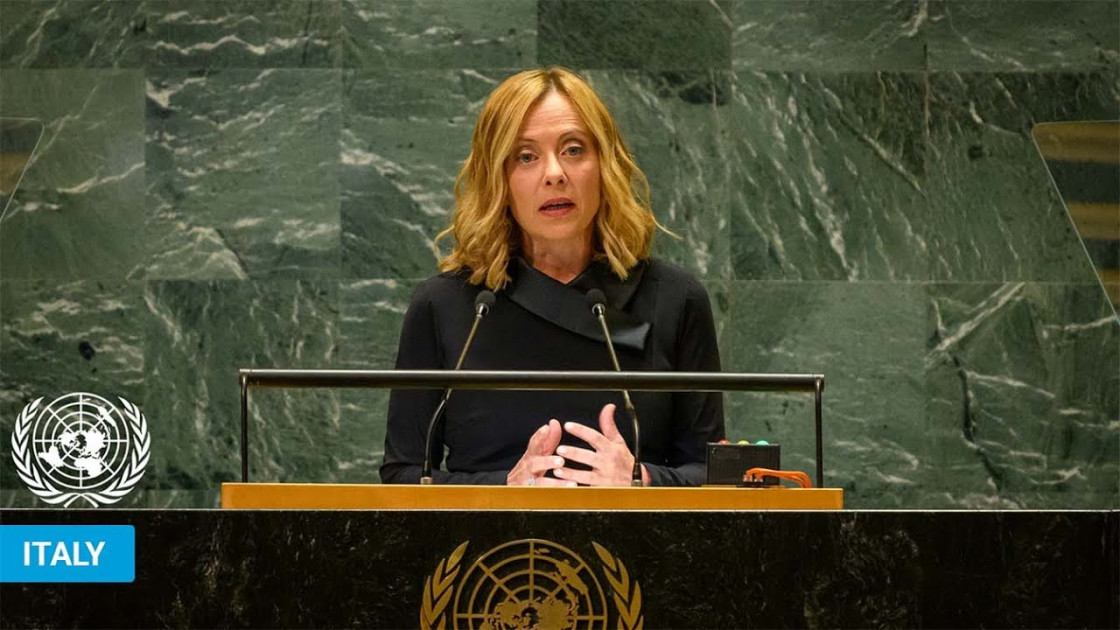
Italy’s Prime Minister Giorgia Meloni said “we need more time” and there’s “work that needs to be done,” suggesting reservations despite maintaining “openness.”
Spain didn’t send a representative. Trump criticized Spain from the podium for wanting “a free ride” on defense spending—public humiliation of a country that declined participation.
Belgium, Sweden, Slovenia, Norway: All turned down invitations according to local news reports. Belgium’s foreign minister cited desire for “common and coordinated European response” and noted “many European countries, we have reservations to the proposal.”
Canada: Initially invited, then invitation rescinded after Prime Minister Carney criticized Trump.
The pattern is clear: America’s closest traditional allies—NATO partners, major democracies, long-standing security partners—declined to participate in Trump’s alternative to the UN.
Why Canada Got Kicked Out
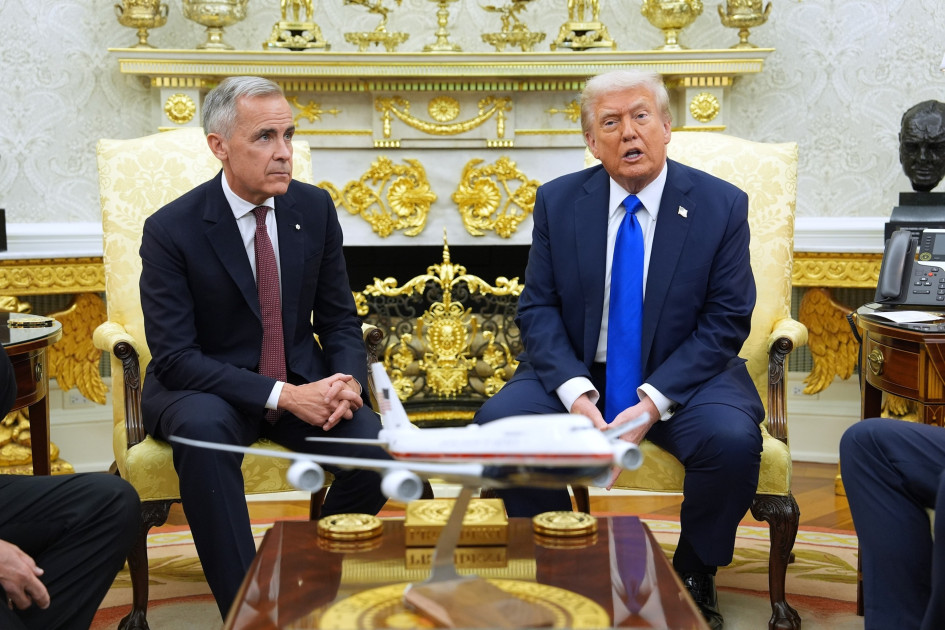
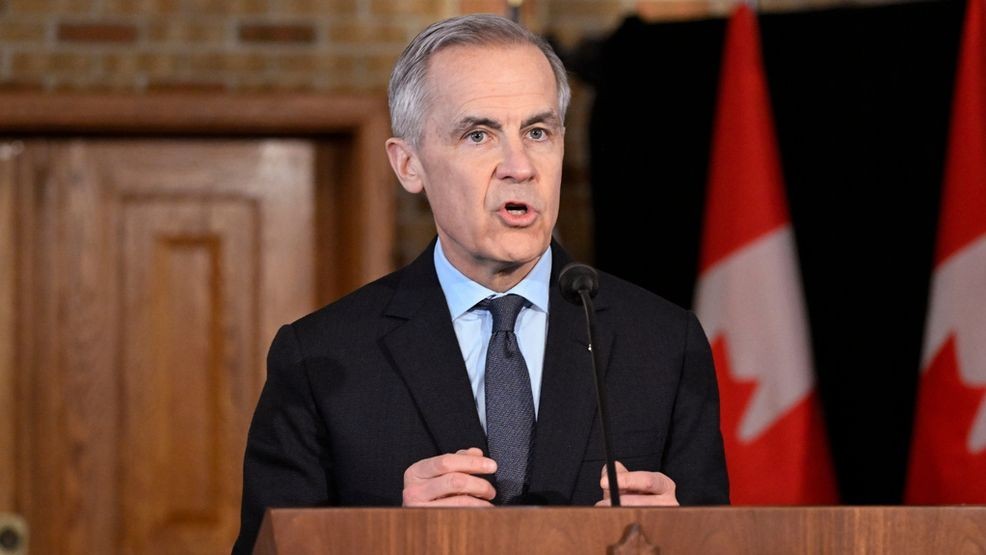
Mark Carney became Canada’s Prime Minister recently. At the World Economic Forum Tuesday, he gave a high-profile speech urging smaller nations to band together to resist Trump’s America First doctrine and efforts to dismantle the post-World War II international order.
Thursday, Carney went further, denouncing “authoritarianism and exclusion” in remarks that appeared to reference Trump directly.
Hours later, Trump rescinded Canada’s invitation via social media post framed as a formal letter:
“Please let this Letter serve to represent that the Board of Peace is withdrawing its invitation to you regarding Canada’s joining, what will be, the most prestigious Board of Leaders ever assembled, at any time.”
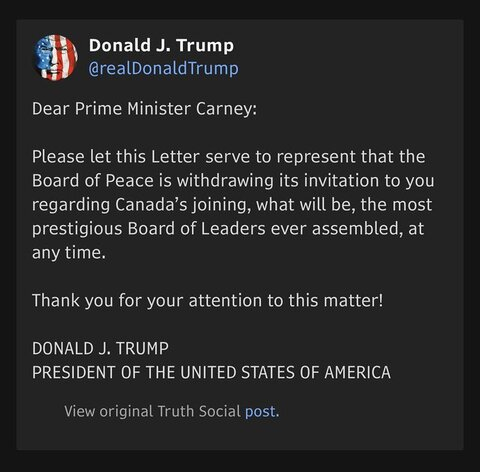
Trump didn’t explicitly state the reason. But the timing—hours after Carney’s speech criticizing authoritarianism—made the connection obvious. Public criticism equals expulsion.
This isn’t the first time Trump has punished Canada for perceived defiance. He previously threatened additional tariffs over a Canadian television ad quoting Ronald Reagan denouncing tariffs.
The message to potential Board members: public disagreement with Trump means exclusion. Loyalty is required for participation.
The Putin Invitation That Horrified Allies
Trump invited Russian President Vladimir Putin to join the Board of Peace. The invitation was delivered Monday. Kremlin spokesman Dmitry Peskov said Russia was “studying all the details of this proposal.”
No Russian representative appeared at Thursday’s signing. But U.S. Special Envoy Steve Witkoff told CNBC Wednesday: “We have to go meet him on Thursday. But it’s the Russians who are asking for that meeting.”
The Putin invitation drove several countries’ decisions to decline participation. UK Foreign Secretary Cooper explicitly cited it as reason Britain wouldn’t sign.
The invitation sends extraordinary messages:
First: Putin – who launched illegal war of conquest against Ukraine, is wanted by the International Criminal Court for war crimes, and is subject to extensive Western sanctions – is welcome in Trump’s international peace organization.
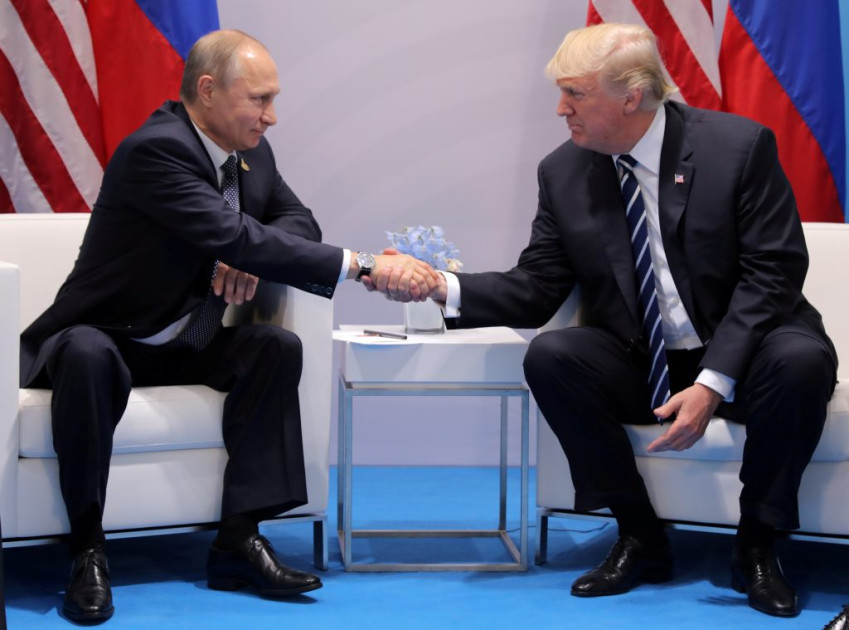
Second: Democratic allies who criticize Trump get excluded (Canada), but authoritarian leaders who invade neighbors get invited (Russia).
Third: Trump’s “Board of Peace” includes the leader prosecuting Europe’s largest war since World War II. The contradiction between “peace” and inviting Putin seems lost on the administration.
European allies noticed. Many cited the Putin invitation specifically when explaining their refusal to participate.
The Constitutional Question Nobody’s Answering
Can a president unilaterally create international organizations that claim to rival the UN?
The Constitution grants the president authority to conduct foreign affairs and negotiate treaties. But treaties require Senate ratification with two-thirds majority. International agreements often require congressional authorization or at least notification.
Trump’s Board of Peace was created through executive action. No congressional authorization. No Senate treaty ratification. No legislative input.
The organization claims authority to oversee not just Gaza reconstruction but “global stability and conflict resolution around the world”—functions the UN and various treaty organizations currently perform under congressional authorization and ratification.
If presidents can unilaterally create rival international institutions, bypass existing treaty obligations, and establish new multilateral frameworks without Senate ratification, what limits remain on executive foreign policy power?
Germany’s constitutional concerns about joining suggest their legal experts see problems with the Board’s structure or authority.
Chancellor Merz cited “constitutional reasons” for Germany’s inability to join – implying the Board’s legal foundation is questionable under German law, possibly because it lacks proper treaty basis or democratic legitimacy.
The UN Rivalry Makes It Worse
Trump describes the Board of Peace as intended to rival the United Nations. That framing creates additional constitutional problems.
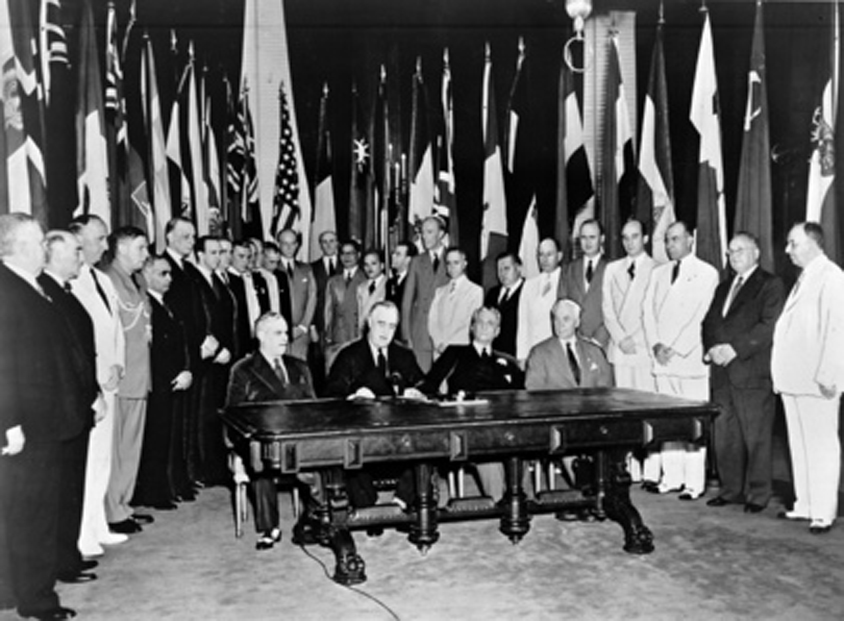
The United States joined the UN through treaty ratified by the Senate in 1945. Congressional authorization and funding for UN participation has continued for 80 years. The UN Charter is a binding international treaty with constitutional weight.
Creating a rival organization to undermine or replace an institution America joined through constitutional treaty process raises questions about whether the president can unilaterally reverse treaty commitments.
Trump isn’t formally withdrawing from the UN—that would require Senate involvement or at minimum create massive political backlash. Instead, he’s creating alternative institution to duplicate and compete with UN functions, effectively undermining the treaty commitment without formally ending it.
That approach bypasses constitutional treaty processes while achieving similar outcomes. If presidents can create rival institutions that make treaty organizations irrelevant, Senate treaty ratification becomes meaningless.
The Executive Board’s Unusual Composition
The Executive Board includes government officials, private sector CEOs, Trump’s son-in-law, and a former foreign prime minister. The mix is unprecedented for international organizations.
Jared Kushner: Trump’s son-in-law has no official government position. His inclusion on the Executive Board of an international organization raises nepotism and conflict-of-interest questions. Kushner has extensive Middle East business interests that could benefit from Gaza reconstruction contracts.
Marc Rowan: CEO of Apollo Global Management, a private equity firm. His presence suggests private sector involvement in reconstruction—and potential profit from the Board’s activities. No disclosure of conflict-of-interest safeguards exists.
Tony Blair: Former UK Prime Minister has no official capacity with current UK government, which declined to join the Board. His inclusion is personal, not governmental representation.
The structure mixes official government capacity with private interests and personal relationships in ways traditional international organizations prohibit. The UN, World Bank, IMF, and other institutions have strict rules preventing this kind of composition.
What “Oversee Gaza Reconstruction” Actually Means
The Board’s original mandate was overseeing Gaza reconstruction. That function alone raises massive questions.
Gaza is Palestinian territory under complex legal status—claimed by Palestinian Authority, controlled by Hamas until recently, occupied or blockaded by Israel depending on legal interpretation, subject to international law on occupied territories.
Who granted authority for a Trump-created board to oversee reconstruction? Palestinian Authority Prime Minister Mohammed Mustafa said carefully: “We want to work with the Board of Peace, with the executive board and with the committee, to ensure that they do their part of things. But we also want to see our government institutions to continue to prepare for a reconstruction effort.”
That statement suggests parallel processes—the Board doing “their part” while Palestinian government does theirs. It doesn’t suggest Palestinian acceptance of Board authority or acknowledgment of its legitimacy.
Israel’s Prime Minister Benjamin Netanyahu will reportedly join the Board, but no Israeli representative attended the signing. Israeli participation while European allies declined creates one-sided structure that undermines claimed neutrality.
The Spain Humiliation
Trump criticized Spain specifically from the Davos podium: “They want a free ride” on defense spending.
Spain’s invitation was “under review” according to Spanish media. No Spanish representative attended the signing. Trump used the platform to publicly humiliate a NATO ally that hadn’t committed to his Board.
The attack reveals how the Board functions politically: participation is expected, declination triggers public criticism, and the organization serves as leverage for unrelated policy disputes like defense spending.
Spain’s NATO contributions and refusal to join Trump’s Board are separate issues. Trump conflated them – suggesting Board participation is tied to broader U.S. relationship rather than Gaza reconstruction specifically.
The Post-World War II Order Trump’s Dismantling
Mark Carney’s speech specifically referenced Trump’s efforts to dismantle the post-World War II international order. That order includes:
- United Nations and Security Council
- NATO alliance
- World Bank and International Monetary Fund
- International trade agreements and WTO
- Geneva Conventions and international humanitarian law
- Treaty-based alliance system
These institutions were created after World War II specifically to prevent great power conflicts through multilateral cooperation, international law, and collective security arrangements.
Trump’s Board of Peace attempts to create alternative structure outside existing treaty frameworks. It’s multilateral cooperation on Trump’s terms—join if you align with his policies, get excluded if you criticize him, participate alongside Russia while traditional allies decline.
The approach treats international cooperation as personal loyalty rather than treaty obligation and shared interests.