
A Presidential Warning, A World on Edge: What ‘Evacuate Tehran’ Means
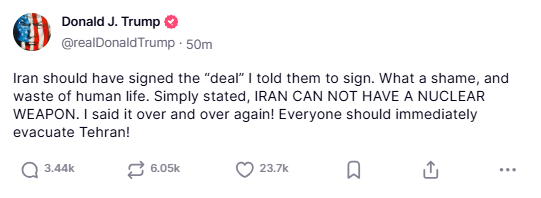
In a shocking and unprecedented statement Monday evening, the President of the United States posted a message on social media with no context or explanation: “Everyone should immediately evacuate Tehran!” Shortly after, explosions were reported in the Iranian capital.
The dramatic warning, directed at a city of 10 million people, has put the world on high alert. It raises urgent questions about American policy, the prospect of a wider war in the Middle East, and the very nature of how a president should communicate in a moment of extreme international crisis. As citizens, it is our duty to understand the facts on the ground and analyze what this dramatic statement could possibly mean.
The Facts on the Ground
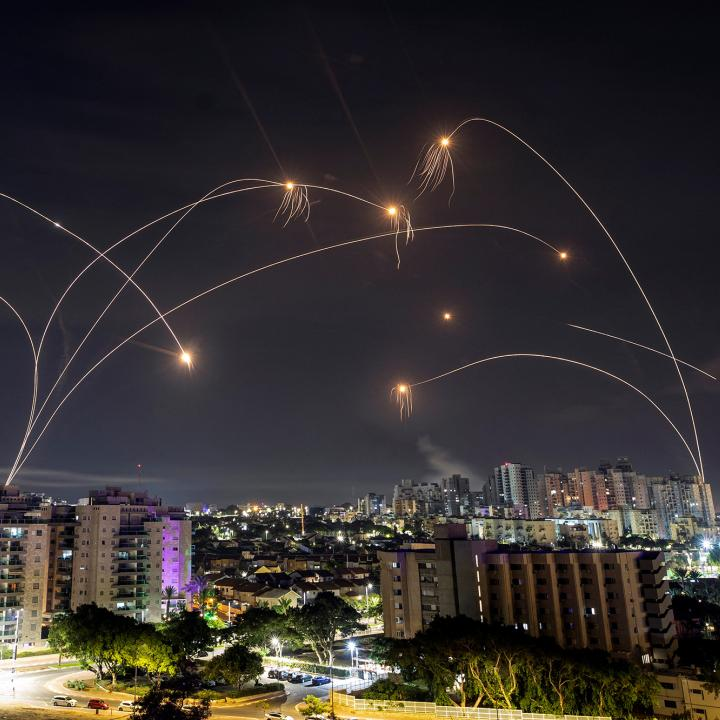
To understand this moment, we need context. For several days, Israel has been conducting a series of airstrikes inside Iran, targeting military, nuclear, and, more recently, government sites like the state TV building in Tehran.
The United States has officially stated it is not participating in these strikes.
However, the Trump administration has a clear objective: to use the pressure from Israel’s military action to force Iran back to the negotiating table to sign a new nuclear deal. This context makes the President’s sudden evacuation order even more confusing, as it came less than two hours after he spoke hopefully at the G7 summit about making a deal with Iran.
What Does the President’s Warning Mean? Four Possibilities
Without clarification from the White House, we are left to analyze the potential meanings of this alarming message. As civic observers, we can infer a few possibilities:
- A Humanitarian Warning. The most straightforward interpretation is that the President received specific intelligence of an imminent, large-scale attack on Tehran—likely by Israel—that would cause mass casualties, and he chose to warn civilians. If this is the case, it is a humanitarian gesture of historic proportions.
- A Signal of a U.S. Policy Shift. The most dangerous possibility is that this was the President’s way of signaling a direct American entry into the conflict. It could have been a warning to the Iranian regime that U.S. forces were about to join the strikes, a dramatic reversal of his administration’s stated policy.
- A High-Stakes Negotiating Tactic. This could be an act of psychological warfare. By creating mass panic and confusion, the President may be attempting to apply maximum pressure on the Iranian government, believing that the threat of a city-wide evacuation will force them to concede and sign the nuclear deal he wants.
- An Unintended and Dangerous Reveal. There is also the possibility that the President revealed highly classified intelligence or a planned military operation prematurely. A social media post is an insecure and ambiguous way to communicate, and it’s possible this was a grave error in judgment.
The Power and Peril of a Presidential Tweet
Regardless of the intent, the method of communication itself is a matter of profound national concern. Traditionally, warnings of this magnitude are delivered through secure, private diplomatic channels. This ensures the message is understood clearly by allies and adversaries, avoiding miscalculation.
Issuing a proclamation of this gravity on social media creates chaos. It can be misinterpreted by other world powers, potentially leading to an accidental escalation that pulls America into a war that neither the President nor the American people want. The words of a U.S. President carry immense weight; they have the power to move markets, armies, and nations. Using that power in such an abrupt and unclear way is a high-risk gamble, not just for the people of Tehran, but for American security and the stability of the world.
The world is now waiting for an answer. The immediate question is what comes next for the people of Tehran. The lasting question for us is about the immense responsibility that comes with presidential power.
- What is the duty of a President when issuing a warning that could start a war?
- How should a President communicate in a crisis to ensure clarity and avoid accidental conflict?
- As citizens, what do we do when our leader’s words create more uncertainty than security?