
When people ask whether the Justice Department is “independent,” I usually answer with a question: independent from whom?
The Constitution does not create an independent Justice Department. It creates a President who must “take Care that the Laws be faithfully executed.” The DOJ is part of that executive machinery. And yet, for most of modern American life, we have treated the department as something more than just another arm of White House will. We expect it to be a law enforcement institution first and a political instrument last.
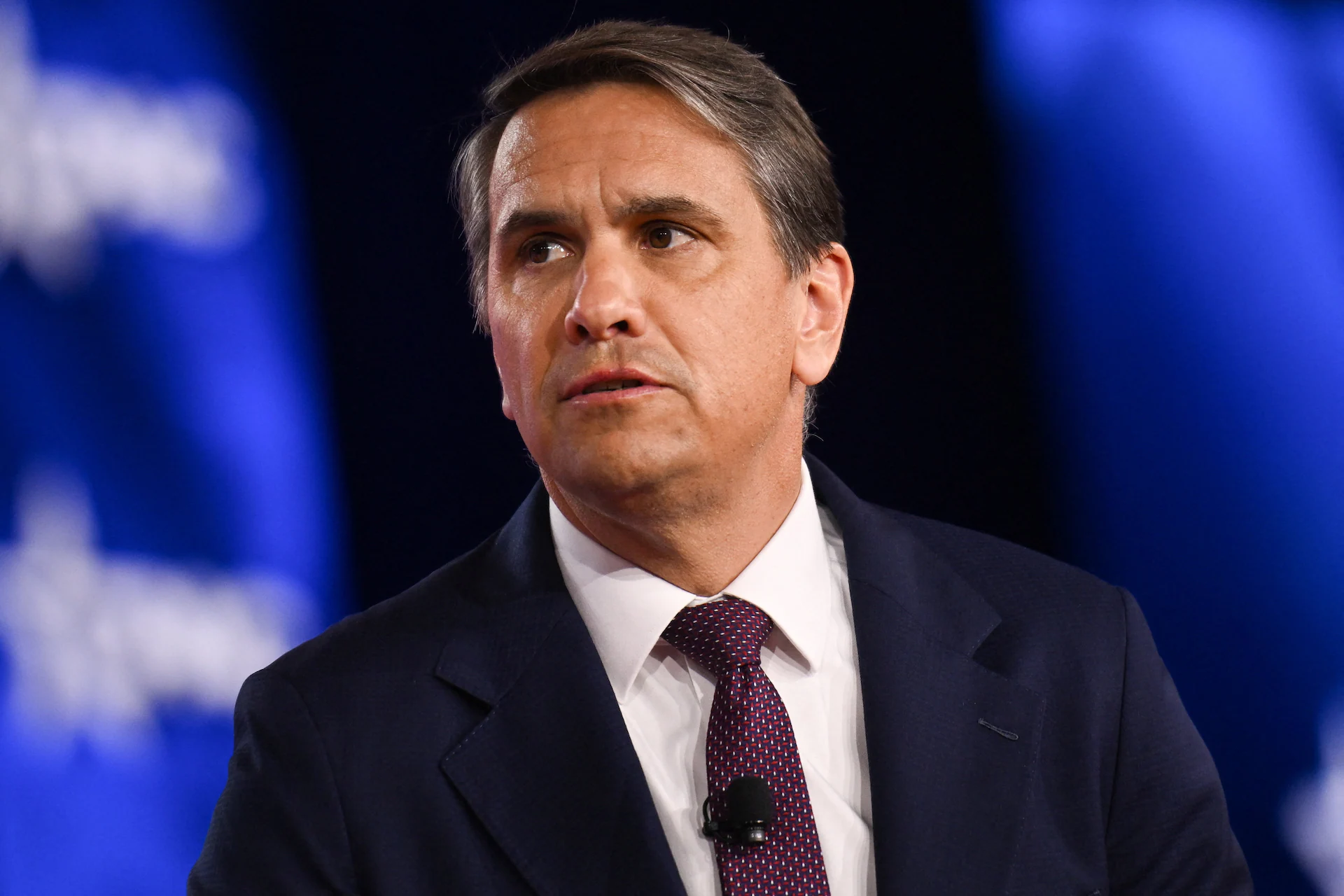
That expectation is now under a fresh stress test. President Donald Trump has announced that Attorney General Pam Bondi is leaving her post, with Deputy Attorney General Todd Blanche stepping in as acting attorney general. A senior administration official and a source familiar with the matter said Bondi was fired. The blunt civic question is not just who takes the job next. It is what happens to your rights when the person in charge of federal prosecution changes hands for political reasons.

Join the Discussion
What the president can do
The president has broad authority to appoint an attorney general, and to remove one. That is not a loophole. It is the design of Article II. If voters choose a president, they are choosing an administration with power over executive branch personnel.
But here is the tension the Framers could not “solve” with a sentence or two: the Justice Department has two masters that do not always get along.
- Master one is democratic accountability. Elections have consequences, and presidents run on enforcement priorities.
- Master two is the rule of law. Prosecutors are not supposed to tailor outcomes to the president’s personal interests, grudges, or legal exposure.
That tension becomes dangerous when the attorney general is treated less like the nation’s top law enforcement officer and more like the president’s personal litigator, tasked with delivering specific targets, specific indictments, and specific political headlines.
How “independence” erodes
Pam Bondi came into the job as a loyalist with long ties to Trump-world. During the 2016 Republican National Convention, she joined in “lock her up” chants aimed at Hillary Clinton, she defended Trump during his first impeachment trial, and after the 2020 election she was involved in efforts to overturn the results, falsely claiming Trump had “won Pennsylvania.” When Trump nominated her, he framed the DOJ as a partisan weapon that needed to be turned back in his favor, writing: “For too long, the partisan Department of Justice has been weaponized against me and other Republicans — Not anymore.”
Once in office, Bondi oversaw the firings of scores of attorneys and FBI agents tied to the prosecutions of Trump. At the same time, the department experienced a larger voluntary exodus of lawyers, leaving far fewer career employees who are beholden to law and not politics.
Those are not small administrative details. They are how a department changes character. You do not have to rewrite the Constitution to pressure a prosecutorial system. Sometimes you just replace the people who say “no,” and reward the people who say “yes.”
The next test is the job
The name on the door matters less than the instructions that come with the keys.
Trump had grown “more and more frustrated” with Bondi in recent days, according to a person familiar with White House deliberations, who added that while he likes her as a person, he does not think she has “executed on his vision” in the way that he wants. That phrase should make every citizen sit up straighter. A president’s “vision” can mean legitimate things: emphasizing fentanyl prosecutions, focusing on public corruption, shifting resources toward immigration-related cases. But it can also mean something far more corrosive: using federal power to punish enemies and protect allies.
Under Bondi, the DOJ shifted priorities in ways that signaled political intent: cutting off investigations into police departments, reframing the department to focus on investigations into the perceived “weaponization” of the Justice Department, and focusing on voter fraud even as it is rare. The department also struggled in high-profile efforts aimed at political opponents, running into judicial roadblocks and dismissals, including a judge blocking the investigation into the Federal Reserve and Chairman Jerome Powell and cases dismissed against former FBI Director James Comey and New York Attorney General Letitia James after a judge ruled the U.S. attorney had been improperly appointed.
That pattern matters because it reveals the trap. Changing leadership does not guarantee results in court. It can, however, change which Americans are investigated, which theories are tested, and which citizens become examples in a political morality play.
Your rights are a chain
When most Americans hear “DOJ independence,” they imagine a magical firewall that keeps politics out. In reality, your rights are protected by something sturdier and more fragile at the same time: a chain of constraints.
1) Courts are a backstop
Judges can dismiss defective cases. They can suppress unlawfully obtained evidence. They can block overreach. They cannot easily stop a federal investigation from being opened, a subpoena from being issued, or a life from being upended before charges ever land.
2) Career staff are continuity
Career prosecutors and agents tend to be the institutional memory that says, “We do not do it that way,” or “That theory will not survive appellate review.” When large numbers of them leave, a department becomes easier to steer with politics, because fewer people remain who are trained and empowered to resist.
3) Congress can pry
Congress can subpoena, legislate transparency rules, and use appropriations to shape behavior. In the Epstein files fight, Congress pushed for access. After the department failed to turn all the files over, the bipartisan Epstein Files Transparency Act passed. That kind of oversight is possible. It is also not automatic. It depends on bipartisan will, which is a scarce resource in modern Washington.
The Epstein files warning
Bondi’s handling of records related to Jeffrey Epstein became a political problem inside the administration and a credibility problem outside it. White House chief of staff Susie Wiles said in a December interview that Bondi had “completely whiffed” on her handling of the files, including giving out binders labeled “The Epstein Files: Phase 1” to a group of conservative social media influencers last year.
The DOJ and FBI later released a joint unsigned memo in July saying they had conducted an “exhaustive” review and that no additional people were expected to be charged, with no further public release anticipated. That led to the House Oversight Committee issuing a subpoena for the files, and after the department failed to turn all the files over, to the bipartisan passage of the Epstein Files Transparency Act, which contained embarrassing allegations about the president and members of his administration. Appearing before the House Oversight Committee in February, Bondi praised the department’s efforts to comply with the act.
Many Epstein survivors and members of Congress criticized the way information was released, including concerns about redactions that appeared to shield possible accomplice information while leaving identifying details about victims insufficiently protected. Whatever you think of the personalities involved, this is the larger constitutional issue: when transparency decisions look self-serving, the department’s legitimacy bleeds out.
And legitimacy is not a public relations luxury. It is the fuel that makes law enforcement work in a free society.
What to watch now
Presidents are allowed to want a DOJ that reflects their policy priorities. They are not entitled to a DOJ that delivers personal vengeance.
If a new contender is floated, the responsible civic posture is not blind panic or blind loyalty. It is careful scrutiny. Here are the questions that actually matter:
- Will the next attorney general commit to even-handed enforcement? Not in vague slogans, but in practice. Who gets investigated first, and why?
- Will the department protect the independence of line prosecutors? Or will it centralize sensitive cases in political appointees’ hands?
- Will DOJ respect due process norms? That includes avoiding public pretrial commentary that poisons juries and intimidates witnesses.
- Will the department use civil rights authority consistently? Pulling back from oversight in one area while expanding it in another can signal principle, or it can signal politics.
- Will Congress keep oversight pressure on? Oversight is not “anti-president.” It is pro-constitutional balance.
The bottom line
The Constitution does not guarantee a Justice Department that feels neutral. It guarantees a system where ambition is supposed to counter ambition, where prosecutors answer to a president but cases answer to courts, and where Congress can pry loose facts the executive would rather keep quiet.
When an attorney general is fired, and replacements are discussed in the language of “vision,” the risk is not merely a change in management. The risk is a shift in the department’s purpose, from enforcing laws to enforcing loyalty.
And when that happens, your rights do not disappear all at once. They get negotiated away in the everyday places most people never see: hiring decisions, charging decisions, investigative priorities, and the quiet message sent through the building about who gets rewarded and who gets punished.
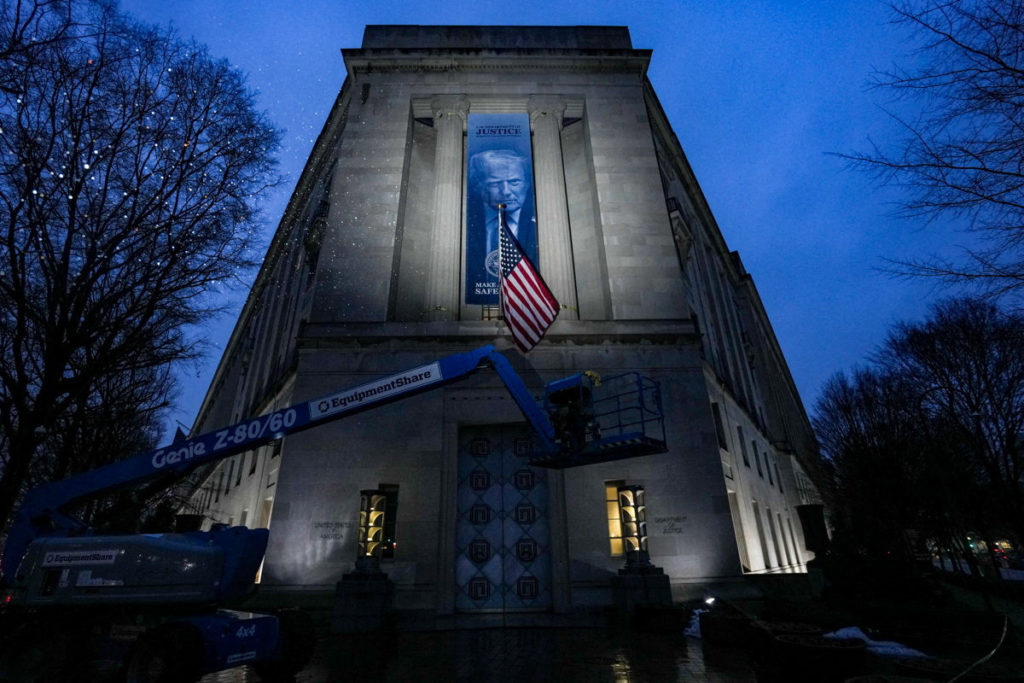
The DOJ changing hands is not just a Washington story. It is a civic story. It is about whether the law remains a shield for the public, or becomes a sword for the powerful.