
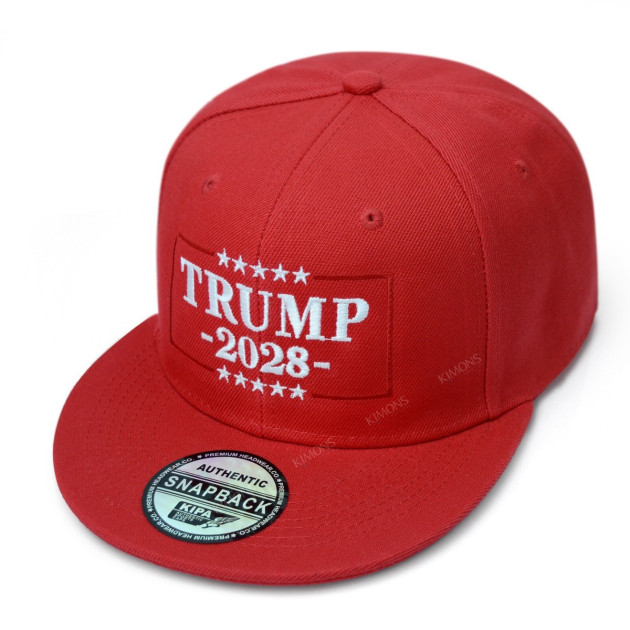
Red hats appeared suddenly on the President’s desk in the Oval Office, emblazoned not with the familiar campaign slogan, but with a date: “Trump 2028.” This carefully staged visual, followed by a new round of comments from the President himself, has reignited a deeply unsettling constitutional question. Is the two-term limit on the presidency just another norm this administration is willing to test?
The President’s repeated flirtation with defying a clear constitutional command is more than just trolling the media or avoiding “lame duck” status. It is a slow, steady, and dangerous erosion of one of our republic’s most important safeguards against unchecked power.
Is He Kidding or Testing the Waters?
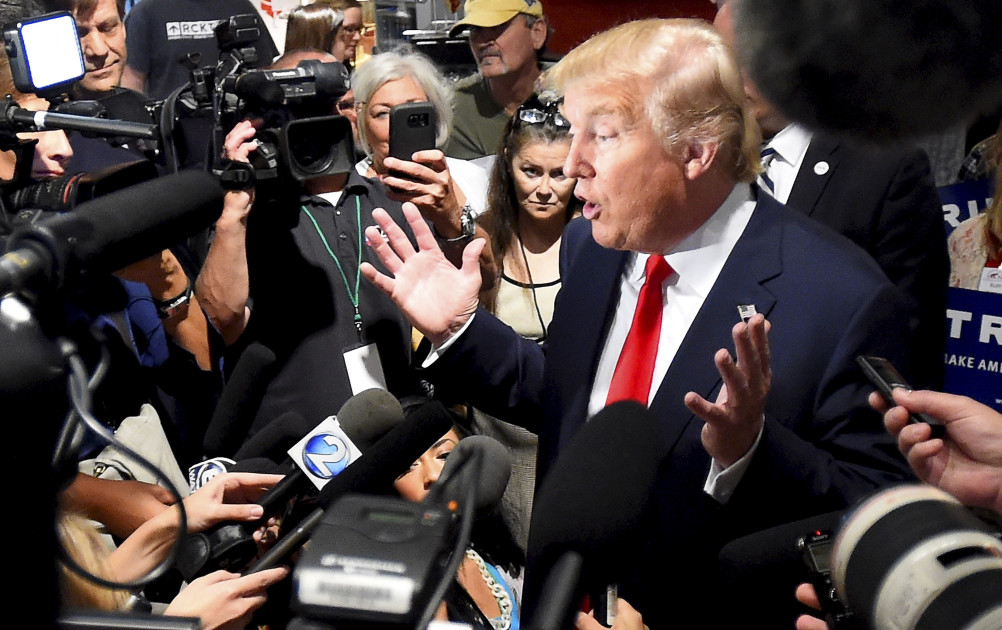
The President’s recent comments followed a familiar pattern. Asked about running for Vice President in 2028, he dismissed the idea as “too cute.” But when asked about seeking a third presidential term, his answer was far less definitive. After claiming he hadn’t “thought about” it – despite the hats and previous statements – he boasted about his poll numbers and concluded:
“I would love to do it.”
This comes after months of similar hints. He told NBC News in March he was “not joking” and that “there are methods which you could do it.” He mused to troops in Doha about winning three elections and perhaps needing to “think about” a fourth.
Why is a Third Term Constitutionally Impossible?
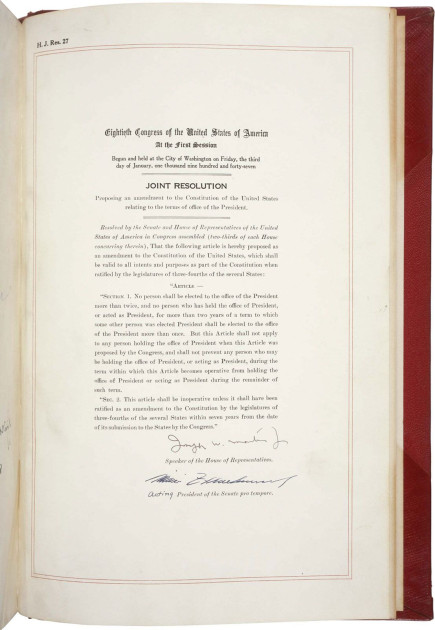
This entire conversation exists in defiance of the plain text of the U.S. Constitution. The 22nd Amendment, ratified in 1951, is unambiguous:
“No person shall be elected to the office of the President more than twice…”
This amendment was not a minor tweak; it was a fundamental constitutional reform. It was passed with broad bipartisan support in direct response to President Franklin D. Roosevelt shattering the long-standing, two-term tradition established by George Washington. Its purpose is clear: to prevent the rise of a “president for life” and ensure the periodic, peaceful transfer of power. The idea that there are secret “methods” or “loopholes” to get around this command is a constitutional fantasy.
Why Keep Talking About the Impossible?
If a third term is legally impossible, why does the President keep bringing it up? The most generous interpretation is that it’s a political tactic – a way to keep his base energized and project strength to avoid the political weakening that typically affects second-term presidents.
A more cynical, and constitutionally alarming, interpretation comes from legal scholars like Scott Cummings of UCLA. Commenting on autocratic leaders around the world, he noted that leaders who systematically attack independent institutions rarely “just walk away.” Rather, they take these steps because they intend “to stay in power permanently.”
What Does This Mean for the Republic?
While the legal barriers to a third term seem insurmountable today, the President’s repeated questioning of this fundamental limit is corrosive. Constitutional norms are like a fortress wall; they are only as strong as the willingness of our leaders to respect them.
Each “joke,” each hint about hidden “methods,” chips away at the public’s understanding of, and respect for, this critical constitutional guardrail. The danger is not necessarily that the President will serve a third term, but that his rhetoric will leave the 22nd Amendment weakened, contested, and vulnerable to future assault. A constitutional principle, once dismissed as merely optional, loses its power to bind.