
Most Americans can name at least one voting rights amendment. Fewer can explain why one of the most powerful voting rights protections in modern history is not an amendment at all.
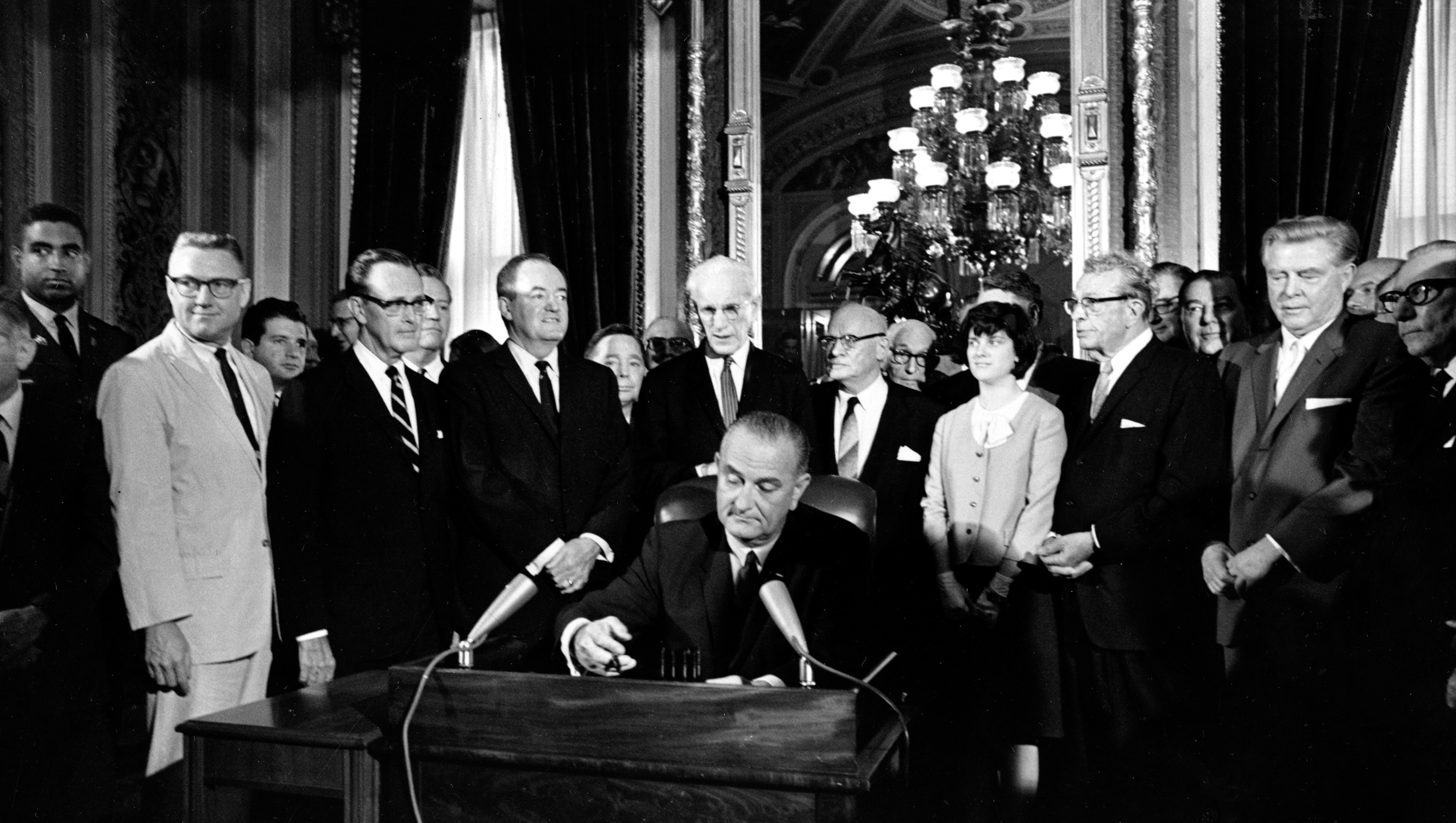
The Voting Rights Act of 1965 is a statute, passed by Congress and signed by President Lyndon B. Johnson. It is not part of the Constitution’s text. But it is one of the clearest examples of the Constitution’s enforcement machinery in action: the Fifteenth Amendment promises that race cannot be used to deny or abridge the right to vote, and the VRA is Congress’s attempt to make that promise real.
Join the Discussion
The constitutional hook: the Fifteenth Amendment
The Constitution does not contain a single, general sentence that says “every citizen has the right to vote.” Instead, it contains a set of limits on how governments can restrict voting. The Fifteenth Amendment is one of the biggest: it forbids denying or abridging the right to vote “on account of race, color, or previous condition of servitude.”
Then comes the part that powers the VRA: Section 2 of the Fifteenth Amendment, often called the Enforcement Clause. It says Congress may enforce the amendment “by appropriate legislation.” That is the constitutional authority Congress relied on in 1965.
One more constitutional piece matters in the background: for federal elections, Congress also has power under the Elections Clause to regulate the “Times, Places and Manner” of congressional elections. The VRA is mainly associated with the Fifteenth Amendment’s enforcement power, but the overall structure of election administration is shared, not state-exclusive.
If you want the text-level foundation, this is where to start: the Fifteenth Amendment. The Voting Rights Act is what Congress built on top of it.
Why Congress passed the VRA in 1965
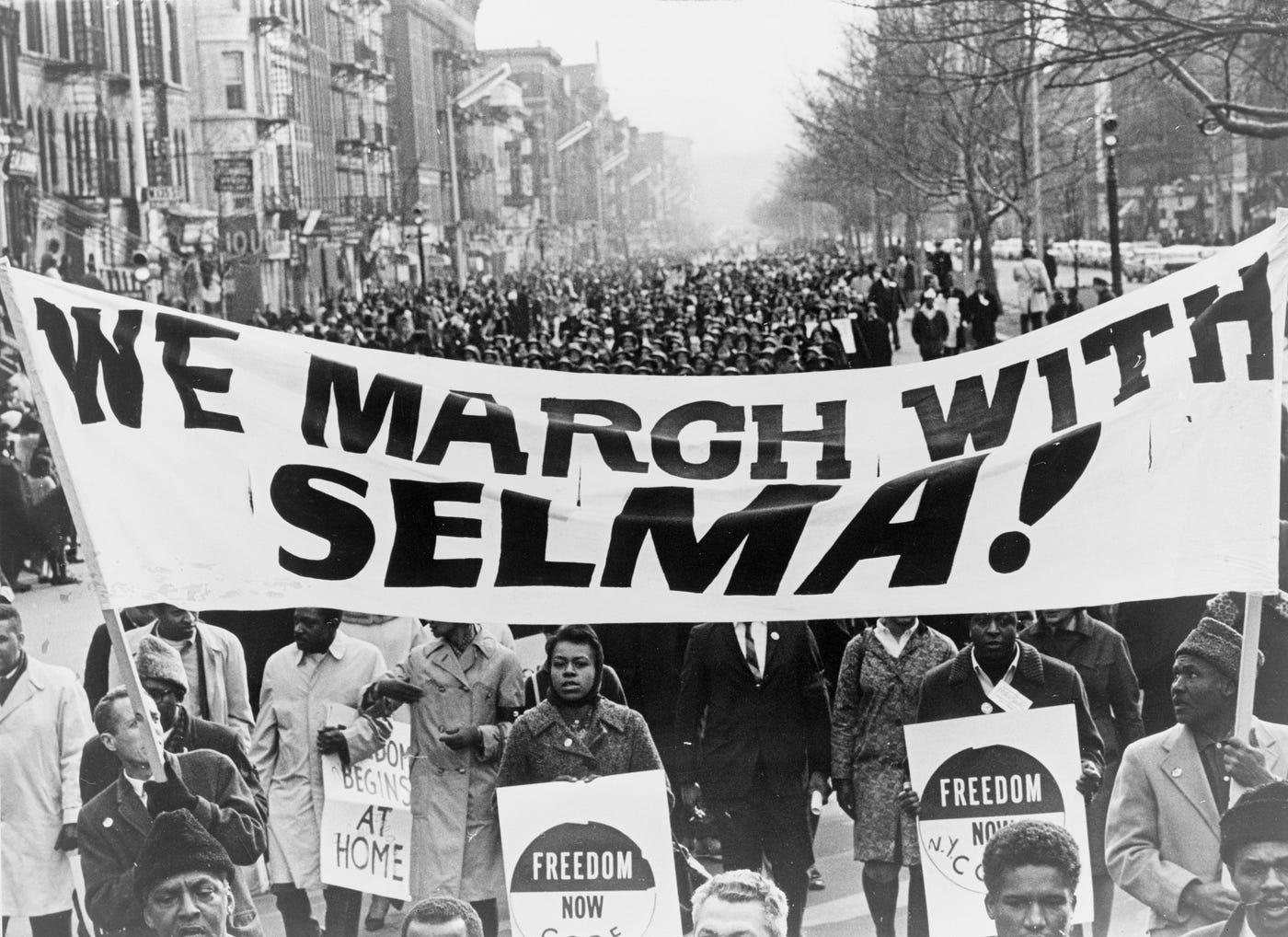
After the Civil War, the Fifteenth Amendment existed on paper. In many places, especially across the Jim Crow South, it did not exist at the polling place.
States and counties used an evolving toolkit to keep Black citizens from registering and voting while staying just inside, or just outside, what courts would strike down:
- Literacy tests that were selectively administered.
- Poll taxes and other costs that made voting a luxury. (Poll taxes were later shut down through the Twenty-Fourth Amendment for federal elections and Harper v. Virginia Board of Elections (1966) for state elections.)
- Registration hurdles like limited office hours and arbitrary paperwork requirements.
- Intimidation and violence aimed at making “legal” rights too dangerous to use.
Congress concluded that case-by-case lawsuits were not enough. The usual pattern was reactive: someone sues, a court finds a violation, a jurisdiction rewrites the rule, and the cycle repeats. The VRA’s major innovation was to force certain places with a history of discrimination to get permission before changing voting rules.
The VRA’s core tools, in plain English
Section 2: the nationwide ban
Section 2 is the VRA’s broad, nationwide rule. It prohibits voting practices that discriminate on the basis of race. It is not limited to the South. It is not limited to certain counties. It applies everywhere.
Section 2 does two big kinds of work in modern voting rights law:
- Vote dilution cases, usually about district maps and whether minority voters have a fair opportunity to elect candidates of choice.
- Vote denial cases, about rules and practices that make voting harder in ways that fall more heavily on minority voters.
In modern practice, Section 2 is often enforced through lawsuits. That means it usually works after a rule is passed and challenged in court. It can be powerful, but it can also be slow, expensive, and dependent on evidence that is hard to gather.
Section 5 preclearance: the “ask first” system
Preclearance, found in Section 5 of the VRA, was the Act’s most famous feature. At a high level, it did something unusual in American law: it flipped the default.
- Normal rule: A state passes an election law, it goes into effect, and opponents sue if it is unconstitutional or unlawful.
- Preclearance rule: Certain jurisdictions could not implement specified voting changes until the federal government cleared them.
Preclearance applied to a wide range of changes, including redistricting plans, changes to polling places, registration rules, and other election procedures. The point was to stop the familiar pattern of “we lost in court, so we swapped in a new barrier” before it could shape an election.
Section 4(b): deciding who had to preclear
Preclearance did not originally apply to every state. Congress used a coverage formula, set out in Section 4(b), that focused on places with a documented record of restrictive voting tests and low voter participation in the relevant years. Covered jurisdictions had to submit certain changes to the U.S. Department of Justice or a federal court.
Federal examiners and observers: enforcement on the ground
The VRA also authorized federal officials to help with registration and monitor elections in certain circumstances. That mattered because some of the most damaging barriers were not “law on the books” problems. They were “law in action” problems: how the rules were applied at the registrar’s office or at the polls.
The Supreme Court and the VRA: what changed in real life
The VRA has always lived in the tension between two ideas:
- Congress’s enforcement power under the Reconstruction Amendments, especially the Fifteenth Amendment.
- State control over elections, backed by federalism principles and the Constitution’s design, even as Congress retains significant authority over federal election rules.
The Court’s major voting rights cases are often framed as technical. Their practical effects are not.
South Carolina v. Katzenbach (1966): the early green light
In South Carolina v. Katzenbach, the Court largely upheld the VRA’s original design, including Section 5 preclearance, as a legitimate exercise of Congress’s Fifteenth Amendment enforcement power. The Court treated the statute as a rational response to an extraordinary problem: persistent, systemic racial discrimination in voting that ordinary litigation had not solved.
City of Boerne v. Flores (1997): the “congruence and proportionality” shadow
Boerne was not a VRA case. It involved Congress’s power under the Fourteenth Amendment. But it introduced a test that later influenced how courts think about enforcement legislation: Congress’s remedy must be “congruent and proportional” to the constitutional violations it seeks to prevent.
Translated: Congress can enforce constitutional rights, but it cannot rewrite them. That idea becomes important when the Court asks whether an aggressive oversight system is still justified by current conditions.
Shelby County v. Holder (2013): preclearance loses its map
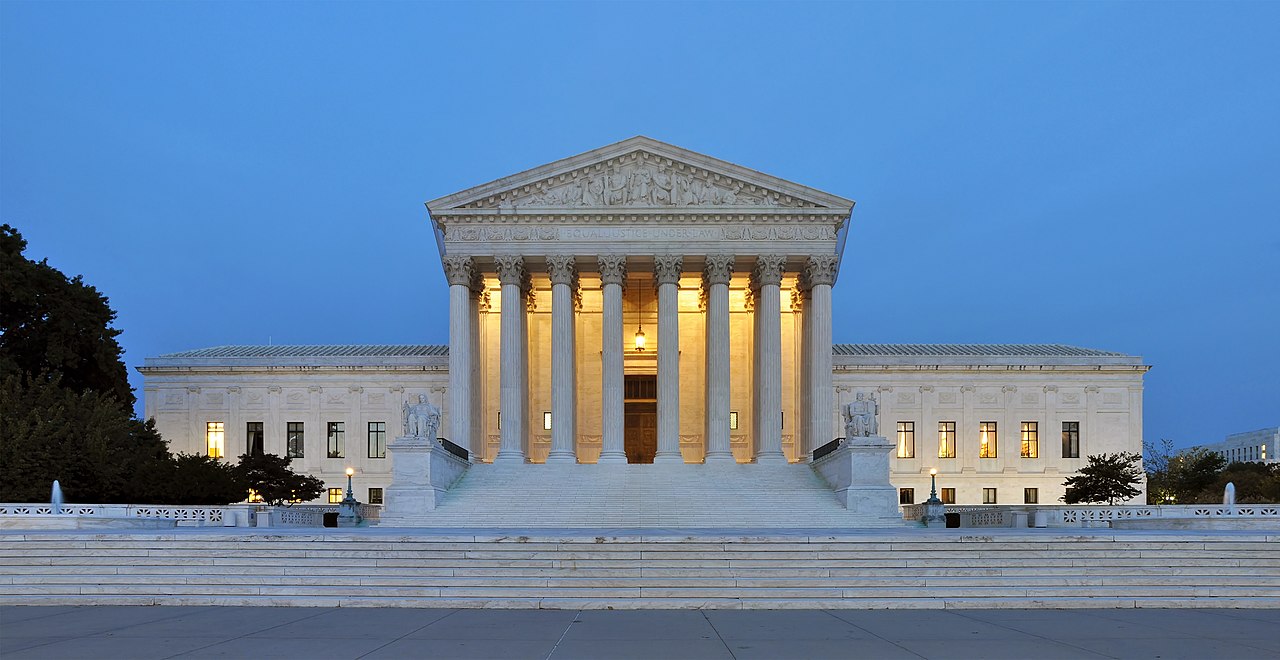
Shelby County v. Holder is the turning point for modern federal oversight.
The Court did not declare Section 5 preclearance itself unconstitutional. Instead, it struck down Section 4(b), the coverage formula that determined who had to preclear. The majority reasoned that the formula relied on old data and no longer matched “current conditions.”
Practical effect: Section 5 stayed in the statute, but it became largely inoperative because there was no longer a valid map of who was covered. Covered jurisdictions no longer had to seek federal approval before changing election rules.
What did not change: Section 2 still applied nationwide. But the system shifted even more toward after-the-fact litigation.
Brnovich v. Democratic National Committee (2021): narrowing Section 2 vote-denial claims
Section 2 is used in two broad ways: challenges to districting that dilutes minority voting strength, and challenges to rules that make voting harder for minority voters. Brnovich focused on the second category.
The Court upheld Arizona rules involving out-of-precinct voting and limits on third-party ballot collection. More broadly, it offered a set of “guideposts” for evaluating vote-denial claims under Section 2, while still pointing courts back to the statute’s totality-of-circumstances inquiry. Not every disparate impact is a Section 2 violation under the Court’s approach. Among the considerations are the size of the burden, how a rule compares to common practices nationwide, and the state’s asserted interests such as election integrity.
Practical effect: Section 2 remains a central tool, but plaintiffs challenging voting rules now face a more difficult path, especially when the burdens are framed as ordinary election administration.
Allen v. Milligan (2023): Section 2 still has teeth in redistricting
In Allen v. Milligan, the Court largely preserved the existing framework for Section 2 redistricting claims and affirmed that, in some circumstances, states must draw additional opportunity districts to avoid unlawful vote dilution.
Practical effect: Even after Shelby County, Section 2 remains one of the main federal checks on maps that weaken minority voting power. But it operates through litigation, which takes time and can miss election cycles.
So what is the VRA now: shield, alarm system, or speed bump?
The Voting Rights Act still matters, but it functions differently than it did at its peak.
- Before Shelby County: In covered jurisdictions, Section 5 preclearance was a gate. Many changes never took effect because they could not get federal approval.
- After Shelby County: The gate is mostly gone because Section 4(b) was invalidated. The main federal backstop is litigation, especially under Section 2.
- After Brnovich: Some Section 2 challenges to voting rules face higher hurdles, making it easier for states to defend restrictions as ordinary administration.
- After Milligan: Section 2 remains potent in redistricting, but it is still lawsuit-driven and timing-sensitive.
If the Constitution is the blueprint, the VRA is the wiring. You do not notice it until the lights flicker. And right now, many of the fights are about what kind of federal wiring we are allowed to have at all.
Why a statute can be more powerful than a constitutional promise
The Fifteenth Amendment is a prohibition. It tells government what it cannot do. The Voting Rights Act is an operating manual. It tells government what procedures it must follow, what evidence matters, and who has to prove what.
That difference explains both the VRA’s historic success and its modern vulnerability:
- Success: Congress can design practical tools that courts cannot easily invent on their own, like Section 5 preclearance and federal observers.
- Vulnerability: A statute can be narrowed by courts and rewritten by Congress. It does not have the permanence of constitutional text.
That is not a flaw in the system. It is the system. The Constitution authorizes enforcement. Congress chooses the method. The Court polices the boundary.
What to watch next
If you are trying to understand voting rights news without drowning in legal jargon, focus on three questions:
- Is the fight about preclearance coming back? Any new formula or coverage rule would test the limits set by Shelby County.
- Is the claim a Section 2 rule challenge or a map challenge? The standards and recent case law pressures are different.
- Is this about intent or results? In 1982, Congress amended Section 2 to make clear that plaintiffs can win by showing discriminatory results under the “totality of circumstances,” not just by proving discriminatory intent. That choice continues to shape modern litigation, especially in districting cases.
The Voting Rights Act was built to solve a specific American problem: the gap between a constitutional guarantee and political reality. The hardest part is that the gap can widen again without anyone “repealing” the Constitution. It only takes new rules, new incentives, and enough time for the headlines to move on.
Quick definitions
- Fifteenth Amendment: Bars race-based denials or abridgments of voting rights and gives Congress power to enforce that rule.
- Section 2 (VRA): Nationwide ban on racial discrimination in voting practices, enforced largely through lawsuits. Amended in 1982 to emphasize a results test under the totality of circumstances.
- Section 5 (VRA) preclearance: A requirement that certain jurisdictions get federal approval before implementing specified voting changes.
- Section 4(b) (VRA) coverage formula: The rule that determined which jurisdictions were subject to Section 5 preclearance before Shelby County.
- Vote dilution: Election structures or district maps that weaken minority voters’ ability to elect candidates of choice.