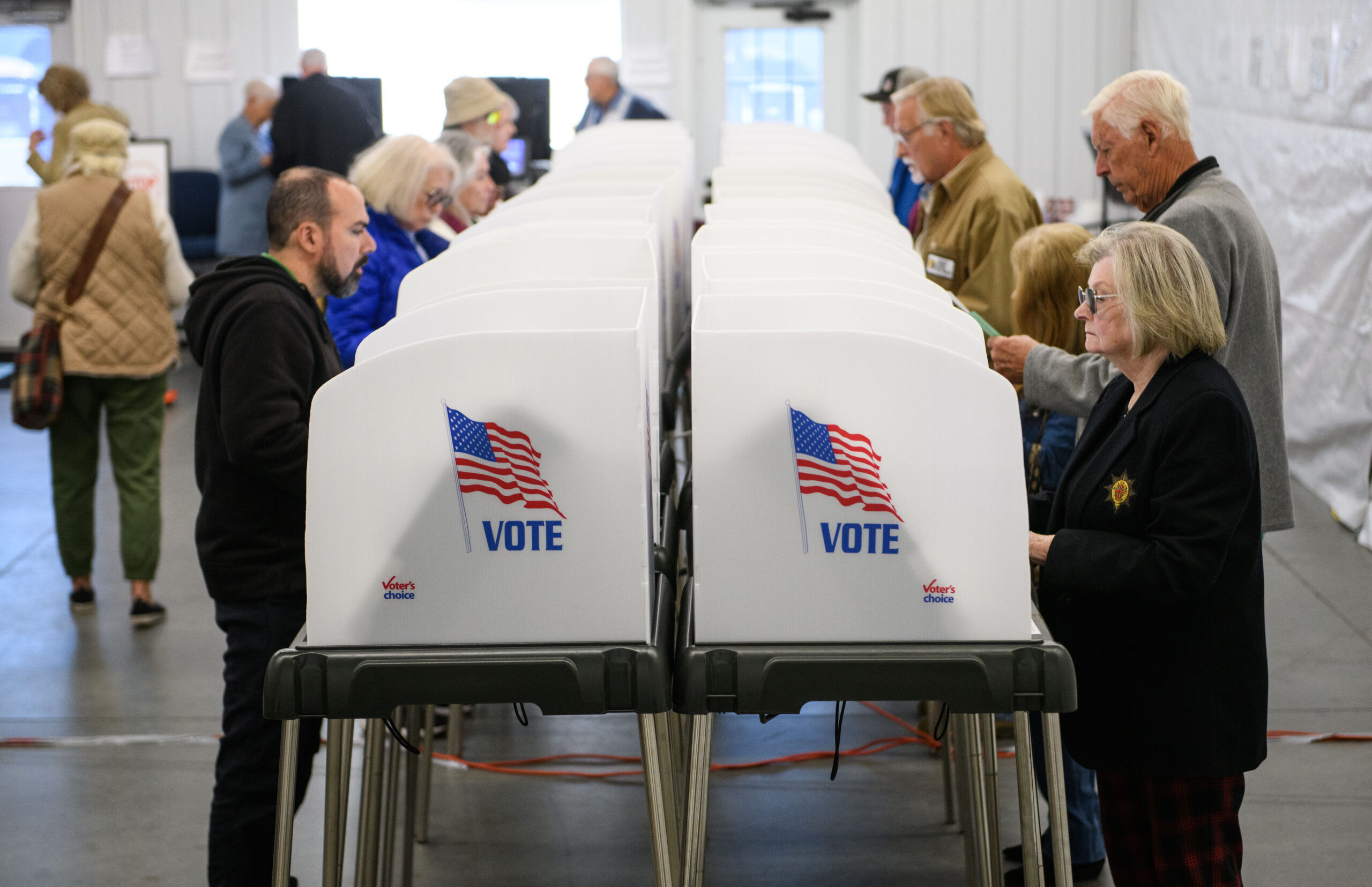
Washington has a favorite magic trick: declare agreement in principle, then make sure the principle never becomes law.
That is the story a Republican senator tried to force into the open this week when he asked the Senate to pass a standalone national voter ID requirement by unanimous consent. The pitch was simple: if Democrats say they do not oppose voter ID, then there should be no drama in approving a clean bill that does only that.
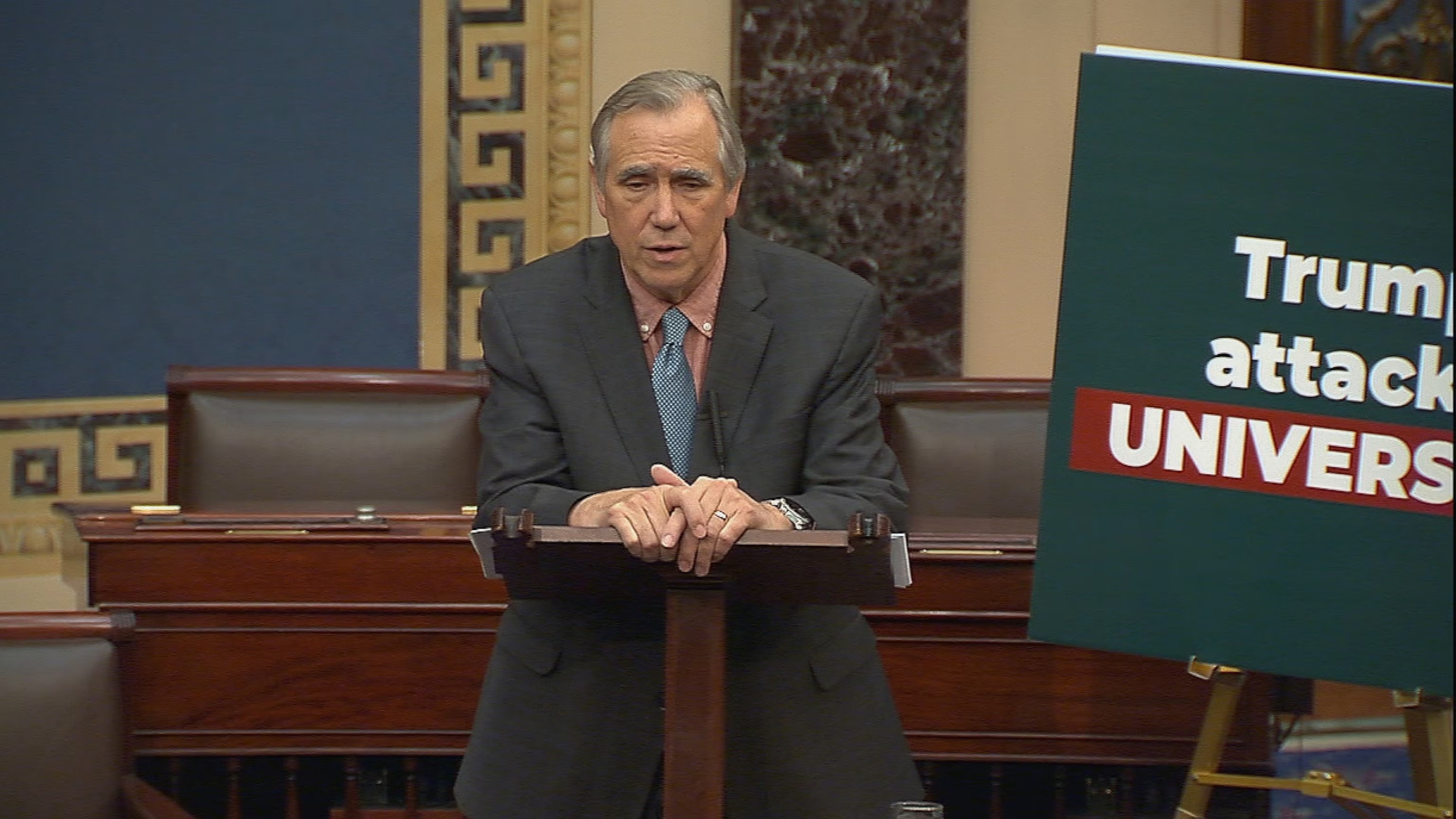
The response was just as simple. Sen. Jeff Merkley, D-Ore., objected, and the bill was blocked on the spot, meaning it did not advance by unanimous consent.
Join the Discussion
To understand why this maneuver matters, you have to understand what unanimous consent is and what it is not. It is not a final, recorded vote where every senator must affirmatively support a bill. It is a shortcut. If no one objects, the Senate can move quickly.
Which means a unanimous-consent request is also a spotlight. It does not test whether a policy can clear 60 votes. It tests something more basic: whether anyone is willing to publicly stop it from even getting started.
That is why a single objection becomes meaningful. It turns vague claims of support into a tangible act of opposition.
Who said they do not oppose it
In the current debate, Sen. Jon Husted, R-Ohio, said he has heard Democratic colleagues argue that their objection is not to photo ID. On the Senate floor, he specifically pointed to comments he attributed to Sen. Chuck Schumer and to a public statement from Sen. John Fetterman of Pennsylvania.
Husted quoted Fetterman’s Tuesday post calling for a “clean, standalone bill” on voter ID and saying he would vote yes on that narrower measure: “If GOP wants real reform over a show vote – –put out a clean, standalone bill and I’m AYE.”
So Husted offered the very thing that was supposedly being requested: a standalone bill requiring photo identification nationwide.
What the bill required
The measure would have enacted a nationwide voter ID requirement, though 36 states already have similar rules on the books.
Husted said citizens could use a state-issued driver’s license, a U.S. passport, or valid military or tribal ID to meet the requirement.
One objection stops it
Merkley objected. Under Senate rules, that was enough to block the request.
This is the part that voters outside Washington often miss. When senators say they “support” something, they might mean they support it as a talking point, as a negotiating chip, or as a concept they prefer not to fight about in public. But the Senate is not built for concepts. It is built for actions: votes, objections, holds, and filibusters.
Husted later summarized the moment as a credibility test, arguing that Democrats want voters to think they are for photo ID, but did not act like it when the opportunity appeared.
He told Fox News Digital: “So apparently they would like people to believe that they’re for photo ID, but when it comes down to it, they didn’t appear to be.”
The SAVE Act backdrop
This move did not happen in a vacuum. It landed in the middle of a multi-day floor fight over the SAVE America Act, a Trump-backed elections bill aimed at preventing noncitizens from voting.
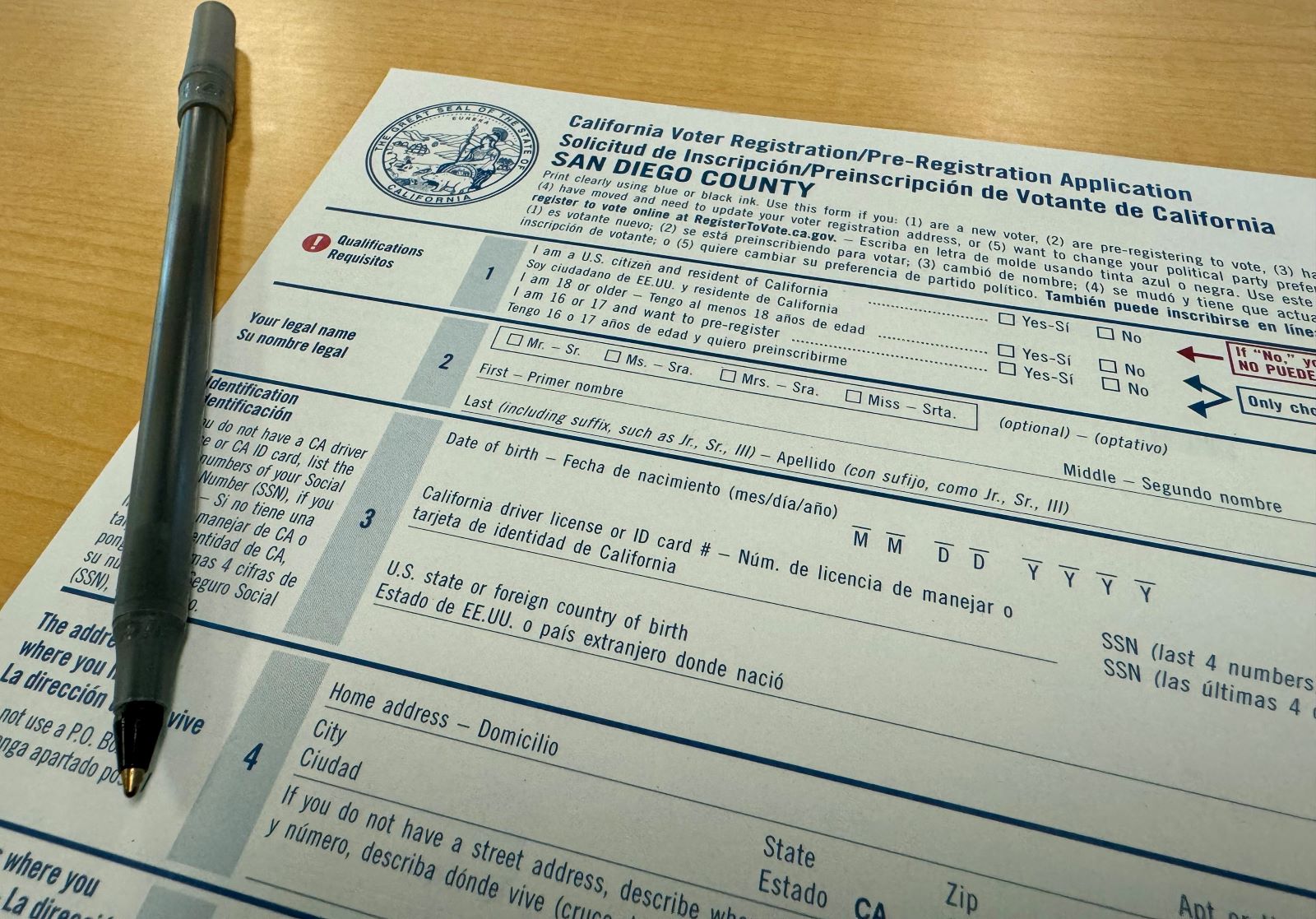
The SAVE Act debate has pulled together several election integrity disputes, but the reference point in this clash is clear: one of the bill’s core components is requiring proof of citizenship to register to vote, something Democrats have pushed back against more fiercely than the voter ID provision.
Fetterman, for his part, notably opposes the SAVE America Act over provisions that would restrict mail-in ballots, while also calling for a standalone voter ID bill.
Voter ID vs citizenship proof
These are not the same policy. Voter ID typically asks, “Are you the person on the voter roll?” Proof of citizenship asks a different question: “Should you be on the voter roll in the first place?”
Sen. Mike Lee, R-Utah, who is leading the SAVE America Act in the Senate, pressed the point in a way that frames the underlying dispute: “I’d love to hear their reasoning, why they would support voter ID but not proof of citizenship.”
Analysis: the federalism tension
This next part is analysis, not a claim from the floor debate itself: there is a constitutional and federalism tension here that gets buried beneath partisan slogans.
Elections are a shared responsibility. States run the machinery of voting, but Congress has real authority over the “Times, Places and Manner” of federal elections. That is why national standards for congressional elections are not inherently unconstitutional. But the closer Congress gets to dictating the fine print of state election administration, the more political and legal friction it creates.
A national voter ID requirement would be a major federal step into an area most voters experience as local: what you bring to the polling place, what counts as acceptable ID, and how exemptions work.
That does not make the idea illegitimate. It makes it consequential. And it helps explain why “I support voter ID” can be an easy sentence to say while “I support this national voter ID bill, right now, with this specific list of acceptable IDs” is a much harder sentence to vote for.
What the numbers say
Public opinion is often invoked as if it ends the argument. In a Fox News poll released in September 2025, 84% of registered voters said photo ID should be required to prove citizenship before voting.
But polls do not write statutes. They also do not answer the implementation questions that become the real battlefield: What IDs count? Who pays for them? What happens when a voter shows up without one? How do you prevent a rule meant to increase confidence from decreasing access?
And even if Republicans pursued an up-or-down vote later, the reference material notes Democrats could still move to filibuster a standalone voter ID bill over the coming days.
The takeaway
Constitutional government depends on more than lofty principles. It depends on follow-through, and on the public’s ability to distinguish between messaging and governing.
If lawmakers truly agree on voter ID, the path is straightforward: introduce a clean bill, debate it, amend it, and take a recorded vote. If they do not agree, the honest move is also straightforward: say so, explain why, and let voters judge the tradeoffs.
What this week revealed is that the Senate still prefers the third option: insist there is consensus, then block the first real test of it.