
Most people picture Supreme Court decisions arriving the same way: months of briefs, a packed courtroom, oral argument, and a long opinion signed in June. That is the Court’s merits docket, and it is the version of the judiciary we teach in civics class.
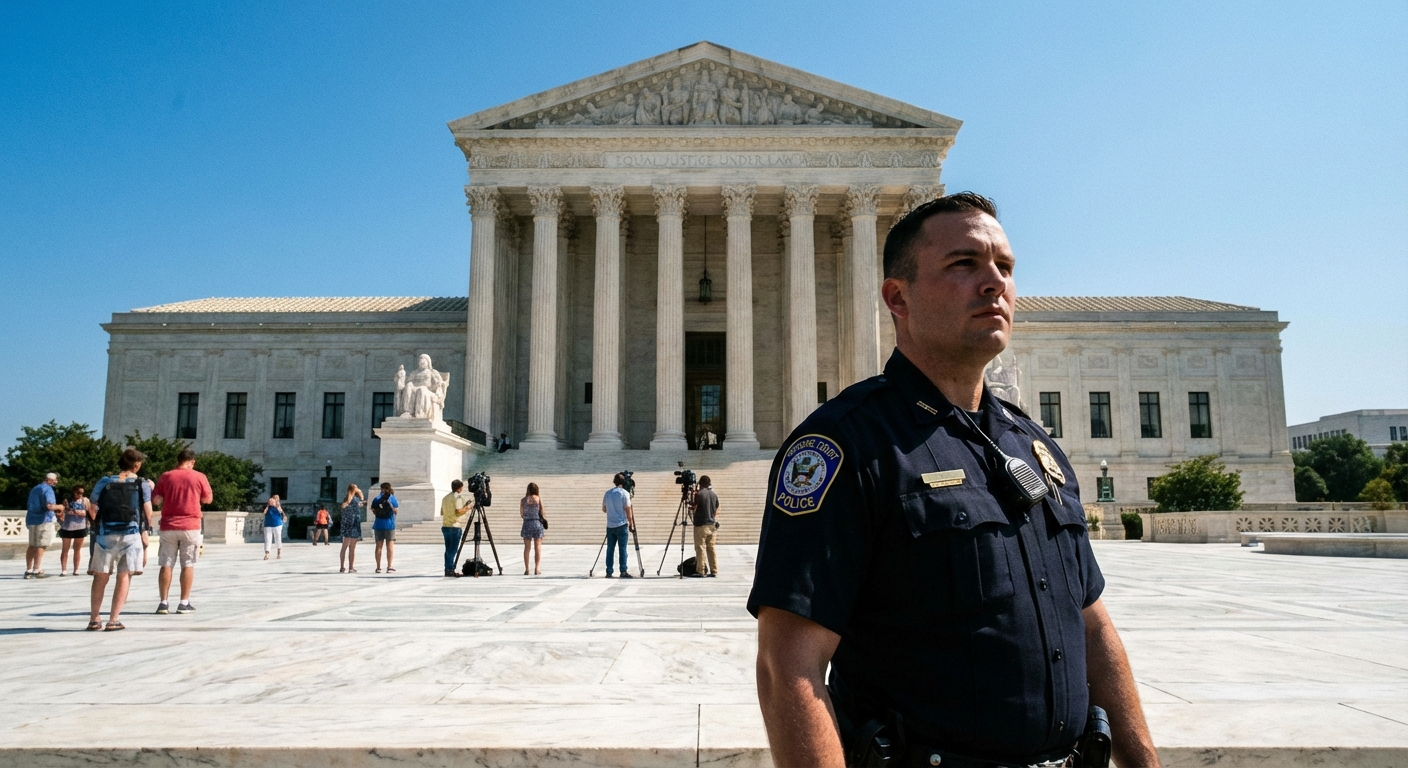
But some of the Court’s most consequential work happens in a different lane: urgent requests for immediate relief that come in late, move fast, and can change the legal ground rules overnight. This is what journalists, scholars, and sometimes the justices themselves call the shadow docket.
The shadow docket is not a secret list or a parallel court. It is the Court doing something it has always done: deciding emergency applications and other fast-moving matters. What has changed, many observers argue, is the volume and the stakes, especially in recent terms. (For concrete tallies and trend reporting, readers often turn to SCOTUSblog’s tracking and scholarship by Stephen Vladeck.) The practical result is that major national policy can sometimes pivot through a short order that does not fully explain itself.
Join the Discussion
Shadow docket vs merits docket
The merits docket
The merits docket is the Court’s main event. Cases usually arrive after a lower court decision, often after final judgment, and the losing side asks the Court to hear the case. The Court then decides whether to grant review. There are exceptions, including rare cases the Court takes earlier (such as “cert before judgment”) and a small set of cases that reach the Court through special statutory routes.
- How it starts: usually a petition for a writ of certiorari
- Timeline: months to a year, sometimes longer
- Process: full briefing, often oral argument
- Output: signed majority opinions, dissents, concurrences, and binding precedent
The shadow docket
The shadow docket is best understood as the Court’s emergency and summary work. It is not one procedure, but a family of fast-moving requests that ask the Court to step in now, before the regular process finishes in the lower courts.
- How it starts: an emergency application or request for interim relief
- Timeline: hours to weeks
- Process: often limited briefing, no oral argument
- Output: short orders, sometimes unsigned, sometimes with separate writings
This is why a “shadow docket” explainer is different from a certiorari explainer. Certiorari is about whether the Court will hear a case on the merits. The shadow docket is about whether the Court will change the status quo while everyone waits for the merits, which can effectively decide the real-world outcome long before a final opinion arrives.
What counts as the shadow docket
People use the phrase differently, and some justices have criticized the label. In most public discussion, it usually includes:
- Emergency applications (often to block or reinstate a policy immediately)
- Requests for stays of lower-court orders
- Orders involving injunctions, including whether an injunction should be paused
- Summary dispositions (the Court resolves something quickly without full briefing and argument, including summary reversals and GVR orders that grant, vacate, and remand)
Not everything on the shadow docket is controversial. Many orders are routine. The controversy arises when the Court uses an emergency posture to make choices with nationwide effect on questions the public assumes require full merits review.
If you want real-world examples without getting lost in citations, think of emergency orders during the COVID-19 era, disputes over immigration policies, and last-minute election rule litigation. Those are the kinds of time-sensitive conflicts that regularly generate emergency applications.
Emergency applications basics
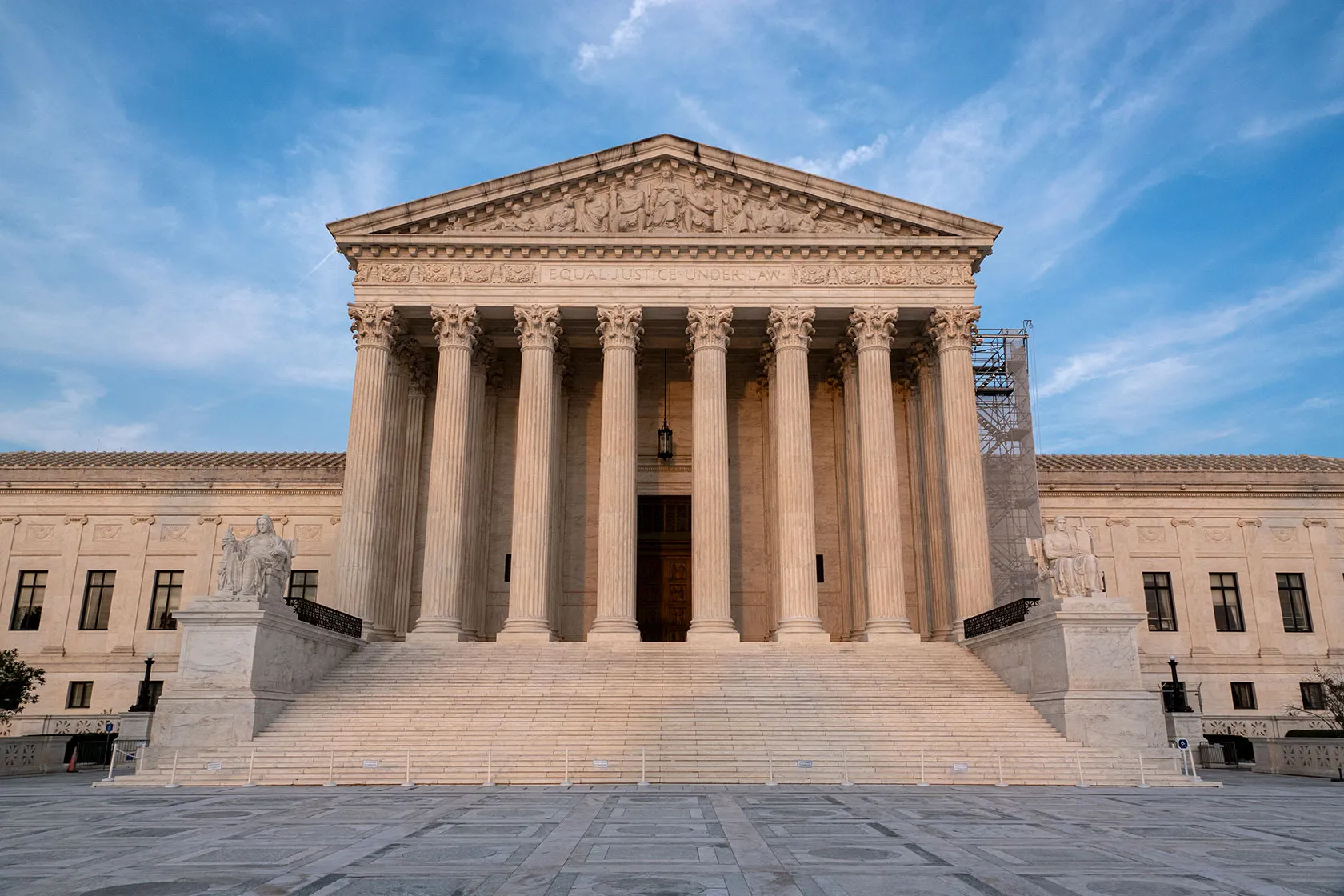
An emergency application asks the Supreme Court to step in quickly because waiting for the normal appellate process would cause harm that cannot be easily undone.
That harm might be personal, like a pending execution date, or structural, like an election rule that will govern an election before appeals are finished. It might also be governmental, like a federal agency arguing that a nationwide injunction is freezing a policy the executive branch is trying to implement.
Who decides first
Emergency applications are typically routed to a single justice based on geography. Each justice is assigned to one or more federal circuits as the “circuit justice.” The circuit justice may request a response from the other side, issue a short administrative order, or refer the matter to the full Court. In high-profile applications, the full Court is often the real decision-maker.
What the Court considers
The Supreme Court often frames emergency relief around familiar factors. The exact wording varies by context and by the type of relief sought, but it generally tracks questions like:
- Likelihood of success on the merits (or, in some formulations, a fair prospect of reversal)
- Irreparable harm without emergency relief
- Balance of equities between the parties
- Public interest
In practice, these are not mechanical. They require judgment calls, and judgment calls become harder to evaluate from the outside when the Court issues only a short order.
Stays, injunctions, and status quo
The shadow docket can feel like legal jargon piled on legal jargon, so it helps to translate the core order types into plain English. The key question is usually: what rules apply while the case is still being fought?
Stays
A stay pauses something. What it pauses depends on the posture of the case.
- Stay of a lower-court order: the Supreme Court temporarily stops that order from taking effect.
- Stay pending appeal: the Court keeps the status quo until a higher court finishes review.
- Stay of mandate: the Court pauses the lower appellate court’s mandate, which can delay when the lower court’s judgment becomes effective.
A stay is powerful because it changes what happens in the real world during the months when litigation continues. In time-sensitive settings, that interim period can be the whole ballgame.
Injunctions
An injunction is a court order telling someone to do something or stop doing something.
- Preliminary injunction: issued early in a case to prevent harm before final judgment.
- Permanent injunction: issued after a court decides the case on the merits.
Shadow docket fights often involve preliminary injunctions because they are designed for speed, and speed invites emergency appeals. At the Supreme Court, you will also see applications that ask the Court to stay an injunction, or to vacate a stay of an injunction entered by a lower court. The labels can be confusing, but the bottom-line question is still the same: which order is controlling right now?
Administrative stays
An administrative stay is a short pause the Court uses to buy time. Think of it as the judicial equivalent of saying, “Hold everything while we read the filings.” It does not necessarily signal how the Court will rule on the underlying emergency request.
Vacating a stay or an injunction
Sometimes the Court does not issue a brand-new order. Instead, it lifts a lower-court stay or vacates an injunction. Those moves can be just as dramatic, because they determine which court’s decision controls right now.
Why these orders can matter
The Constitution does not require the Supreme Court to issue lengthy explanations for every action. Still, the Court’s legitimacy has long been thought to rely in part on a public-facing habit: it explains itself.
Shadow docket orders put pressure on that habit in three ways.
1) Speed compresses scrutiny
Emergency timelines compress the briefing, the factual record, and the chance for outside groups to weigh in. When the Court acts quickly, it often acts with fewer inputs.
2) The remedy becomes the decision
In theory, emergency relief is temporary. In reality, temporary can last a long time. If a policy is blocked for a year, or allowed to operate for a year, the “interim” choice can decide what the country experiences and what future courts treat as normal.
3) Short orders can be hard to interpret
Many shadow docket orders are brief and can be unsigned. Sometimes they include dissents or concurrences, but sometimes they do not. That leaves lawyers, lower-court judges, and the public guessing about what rule, if any, the Court just announced.
Common misconceptions
Shadow docket does not mean secret
The filings and orders are generally public. The “shadow” label is more about visibility and explanation than about access.
It is not the same as certiorari
Certiorari is the Court deciding whether to take a case for full review. Shadow docket activity is often about emergency relief before full review, sometimes even when the Court never plans to hear the case on the merits.
An emergency order is not always final
Technically, many shadow docket orders do not resolve the underlying legal question. Practically, they can signal how the Court is leaning or shape settlement pressure, and they can control national policy for long stretches of time.
Why the Court uses it
Emergency relief is not a loophole invented by modern justices. It exists because the federal judiciary deals with real-time conflicts:
- Elections: rules must be known before ballots are cast.
- Criminal cases: execution dates and pretrial detentions do not wait for the next term.
- Separation of powers disputes: executive actions and congressional demands can create immediate constitutional conflicts.
- Nationwide injunctions: one district judge can freeze a federal policy nationwide, prompting urgent appeals.
In other words, the shadow docket is not inherently illegitimate. It is an emergency tool. The debate is over how often it should be used for how much, and with how much explanation.
Defenders of the practice emphasize necessity and timing: when lower-court orders are already reshaping national policy, the Court may have to act quickly to prevent disruption, even if it cannot yet provide a full merits treatment.
Main criticisms
Less transparency
Critics argue that orders with minimal reasoning make it difficult to understand what standard the Court applied, and difficult to evaluate whether like cases are being treated alike.
Inconsistent procedures
Emergency applications can feel improvisational: tight deadlines, uneven opportunities for responses, and limited third-party input. When the stakes are national, the process can feel too thin for the weight it carries.
Major decisions without full briefing
Some scholars argue that the Court has used emergency orders to effectively decide high-impact issues without the benefits of full record development, comprehensive briefing, and oral argument.
Confusion for lower courts
Lower courts look to the Supreme Court for guidance. When the Court intervenes through a short order, judges may struggle to determine whether the Court is setting a new rule or simply reacting to a specific procedural posture.
Reform ideas in the debate
No reform proposal has unanimous support, and the Court controls many of its own procedures. Still, a few ideas recur in public discussion.
Clearer explanations for big orders
One proposal is a norm, or a rule, that when the Court grants or denies emergency relief in a way that changes national policy, it should provide a fuller explanation of its reasoning.
More consistent timelines
Another proposal is to create default minimum response times, except in true last-minute crises, so that parties have a fair opportunity to be heard.
Fewer unsigned orders in high-stakes cases
Some critics want more transparency about which justices are responsible for emergency decisions, especially when those decisions have broad impact.
More expedited merits review
Instead of deciding the practical outcome through emergency orders, the Court could grant certiorari and place the case on an accelerated schedule. That approach preserves speed while restoring fuller process.
Reduce the pipeline of emergencies
Some proposals focus on upstream causes, especially the rise of nationwide injunctions and rapid-fire litigation strategies that force the Court into emergency posture.
How to read an order
If you want to understand what the Court actually did, look for a few anchors.
- What is being stayed or allowed to proceed? Identify which lower-court ruling is in effect after the order.
- What is the posture? Is this pretrial, pre-final judgment, pending appeal, or after final judgment?
- Is there a written dissent or concurrence? Even if the majority is silent, separate writings can reveal the legal battlefield.
- Is the order framed as temporary? Administrative stays and short pauses often indicate the Court is buying time, not deciding the merits.
The most important habit is this: do not confuse the procedural question with the constitutional question. Emergency relief is about what happens now. The merits are about what is ultimately lawful. The shadow docket is where those two questions collide.
Why it matters
The Supreme Court’s authority rests on more than the words it writes in June. It also rests on the public’s sense that the Court uses power carefully, predictably, and with reasons that can be examined.
The shadow docket is not a constitutional crisis by definition. It is a constitutional pressure point. The more the Court uses emergency orders to steer national policy, the more Americans will demand the one thing that, for many observers, turns judicial power into judicial legitimacy: an explanation.