
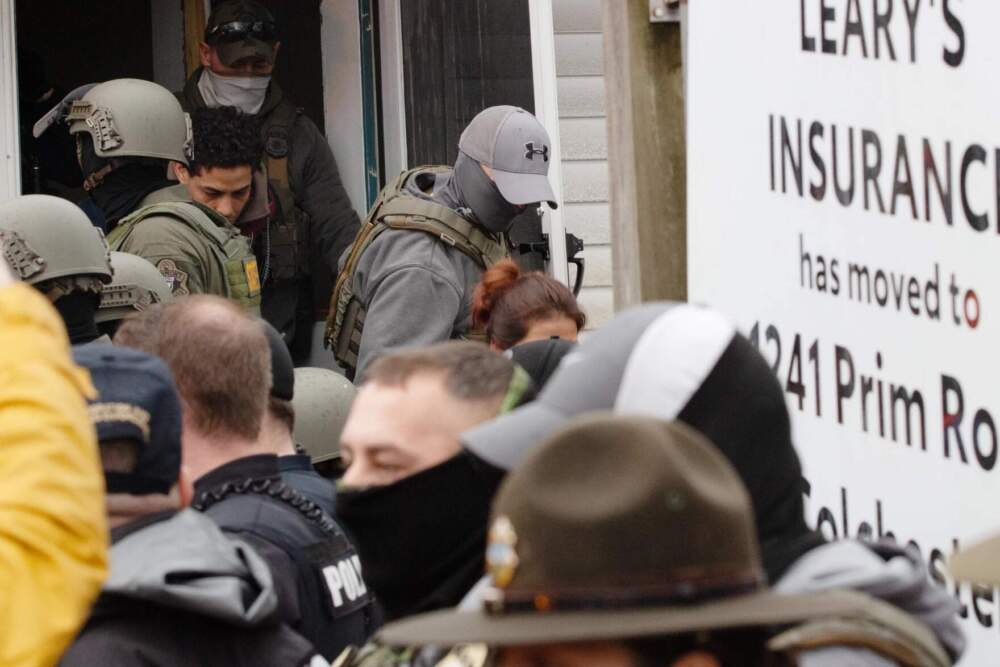
Here is the uncomfortable question hovering over Zorn v. Linton: When a protester refuses to move, what kind of force can an officer lawfully use to make her move, and when can she sue afterward?
On Monday, the Supreme Court did not set a new line for how much force is too much. Instead, it resolved the case the way it often does in qualified immunity disputes, by asking a narrower question: was it already clearly established that this specific conduct, in these specific circumstances, violated the Constitution?
In an unsigned per curiam decision, the Court reversed the U.S. Court of Appeals for the Second Circuit and held that Vermont State Police Sgt. Jacob Zorn is entitled to qualified immunity in a civil lawsuit brought by protester Shela Linton. Justices Sonia Sotomayor, Elena Kagan, and Ketanji Brown Jackson dissented.
What happened
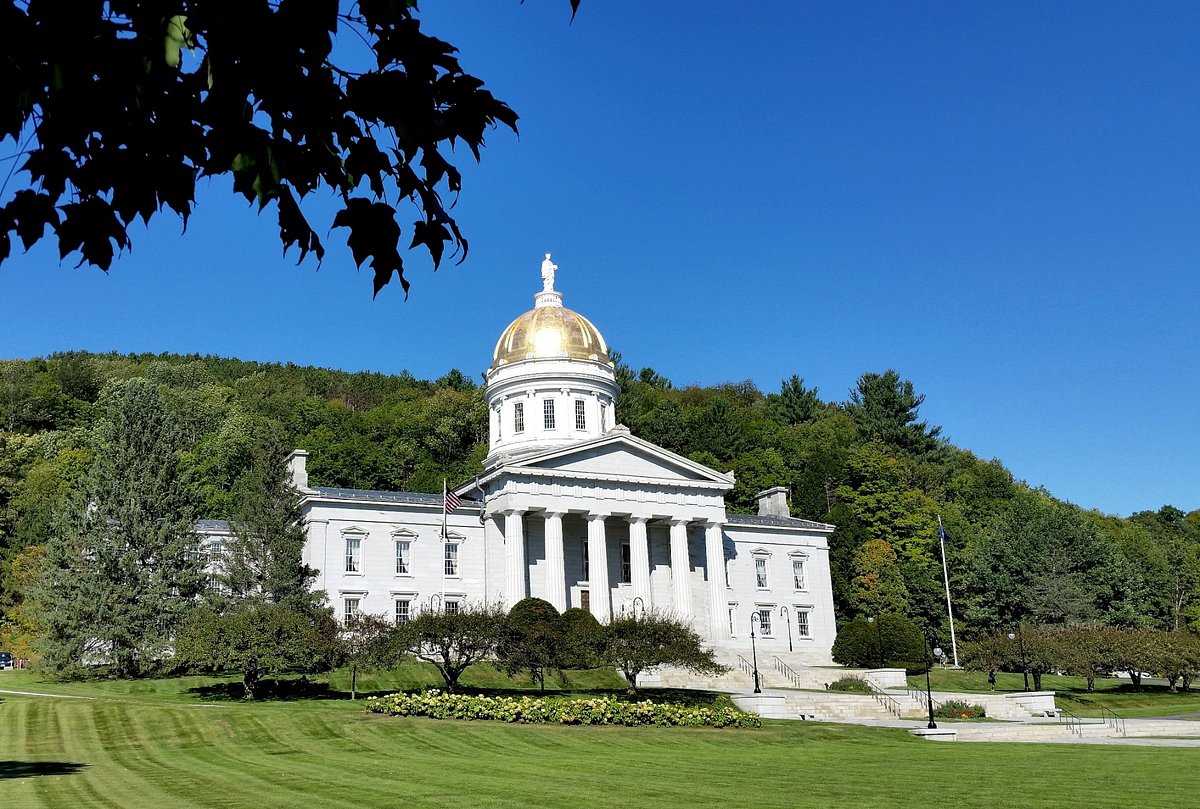
The incident goes back to January 8, 2015, the day of Gov. Peter Shumlin’s inauguration. Health care activists staged a sit-in at the Vermont Statehouse. After the building closed, police began arresting demonstrators who refused to leave.
According to the Court’s account, Linton stayed seated and linked arms with other protesters. Zorn warned her he would have to use force. He then took her arm, moved it behind her back, applied pressure to her wrist, and lifted her up. Linton later sued, alleging physical and psychological injuries and arguing the maneuver amounted to excessive force under the Fourth Amendment.
The legal issue
Qualified immunity is not, in theory, a free pass to use force. It is a rule about notice: government officials are generally shielded from civil liability unless prior case law put the unlawfulness of their actions “beyond debate.”
That framing matters because it narrows what courts are deciding. Instead of resolving whether the force was unreasonable as a first principle, the inquiry often turns on whether existing precedent already made this particular conduct clearly unconstitutional.
The Court concluded the Second Circuit did not do enough work on that front. The Second Circuit had relied heavily on its earlier decision in Amnesty America v. West Hartford. The Supreme Court said that case did not clearly establish that “using a routine wristlock to move a resistant protester after warning her, without more, violates the Constitution.”
“Because the Second Circuit failed to identify a case where an officer taking similar actions in similar circumstances ‘was held to have violated’ the Constitution, Zorn was entitled to qualified immunity,” the ruling concluded. “We grant his petition for writ of certiorari and reverse the judgment of the Second Circuit.”
The upshot is straightforward: the Court did not decide whether what Zorn did was excessive force on these facts. It held that Linton cannot recover damages from this officer because the law, as the Court read it, had not previously spelled out with enough specificity that this particular technique in this particular scenario crossed the constitutional line.
The dissent
Justice Sotomayor’s dissent, joined by Justices Kagan and Jackson, objected both to the outcome and to the Court’s decision to intervene through what she called the “extraordinary remedy of a summary reversal.”
More substantively, she focused on the nature of the protest. This was not described as a violent confrontation. It was passive resistance. In her view, a jury could conclude that Zorn used excessive force against a nonviolent protester who posed no threat to officer safety.
“A jury could find that Zorn violated Linton’s clearly established Fourth Amendment rights,” Sotomayor wrote. And she added the broader charge that “The majority today gives officers license to inflict gratuitous pain on a nonviolent protestor even where there is no threat to officer safety or any other reason to do so.”
“That is plainly inconsistent with the Fourth Amendment’s fundamental guarantee that officers may only use 'the amount of force that is necessary' under the circumstances,” Sotomayor wrote. “Therefore, I respectfully dissent.”
Why it matters
Americans tend to talk about protests in First Amendment terms: speech, assembly, petition. But the moment an officer lays hands on a protester, the Fourth Amendment takes over, and the debate becomes “reasonableness” in the use of force.
In theory, those ideas fit together. People have a right to protest. Police have a duty to enforce lawful orders, including trespass rules after a building closes. The hard part is the seam where enforcement becomes punishment. A wristlock can be a compliance tool, or it can be a pain technique. Sometimes it is both.
This case also illustrates the practical weight of qualified immunity. The Court emphasized that plaintiffs seeking damages must be able to point to precedent that clearly puts the unlawfulness “beyond debate,” and that broad statements about the Fourth Amendment are often not enough unless the facts align in a meaningful way.
What it signals
- Similarity is king. Plaintiffs bringing excessive-force claims may need precedent with closely matching facts, not just general principles.
- Passive resistance is not determinative. Even when a protest is nonviolent, the analysis can turn on the precise mechanics of what the officer did and what prior cases said about comparable conduct.
- The Court will step in. The majority reversed the Second Circuit in an unsigned per curiam opinion, over a dissent that criticized the use of a summary reversal.
Zorn v. Linton does not end the larger argument about how much protection qualified immunity should provide. It does, however, make clear where the Court placed the legal burden here: on the citizen bringing the lawsuit to identify a prior case where similar actions in similar circumstances were held unconstitutional.