
You can spot the State of the Union in two places at once: in the Constitution, and in the political theater of modern America. One is a single sentence in Article II, Section 3. The other is a televised ritual with applause lines, invited guests, real-time media fact-checking, and a second speech from the opposition before the night is even over.
Those two versions are connected, but they are not the same thing. The Constitution requires the President to keep Congress informed. It does not require a prime-time address, a packed House chamber, or a camera-ready moment designed for social media. The modern State of the Union is a tradition built on a mandate, and like many American traditions, it grew into something the Founders would recognize in purpose but not in form.
The constitutional origin
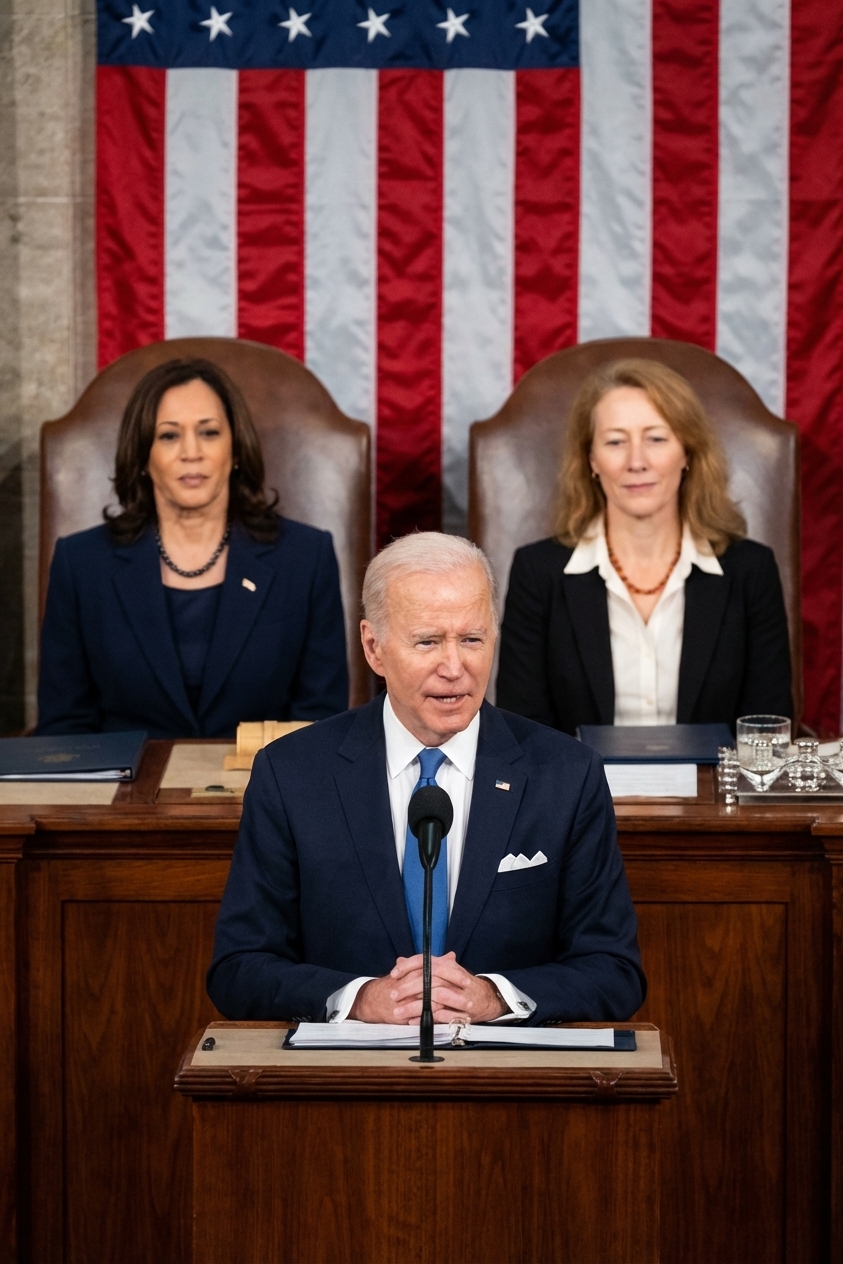
The State of the Union begins with an instruction that is both broad and deceptively modest. Article II, Section 3 says the President:
“shall from time to time give to the Congress Information of the State of the Union, and recommend to their Consideration such Measures as he shall judge necessary and expedient.”
That is the entire constitutional backbone. Notice what is missing:
- No requirement that it be annual.
- No requirement that it be spoken.
- No requirement that it happen in person.
- No requirement that it be broadcast to the public.
The clause does two things at once. First, it makes the President an information source for Congress, a check against legislative blind spots. Second, it makes the President a legislative agenda setter, at least in the sense of recommendations. Congress writes the laws. But the President is constitutionally expected to point Congress toward “Measures” he believes are necessary.
From speeches to messages
Washington sets the pattern
George Washington delivered the first address in person in 1790 in New York City, then the temporary capital. In the early republic, an in-person report made practical sense. The federal government was small. The political class was small. Personal presence carried authority.
Jefferson writes instead
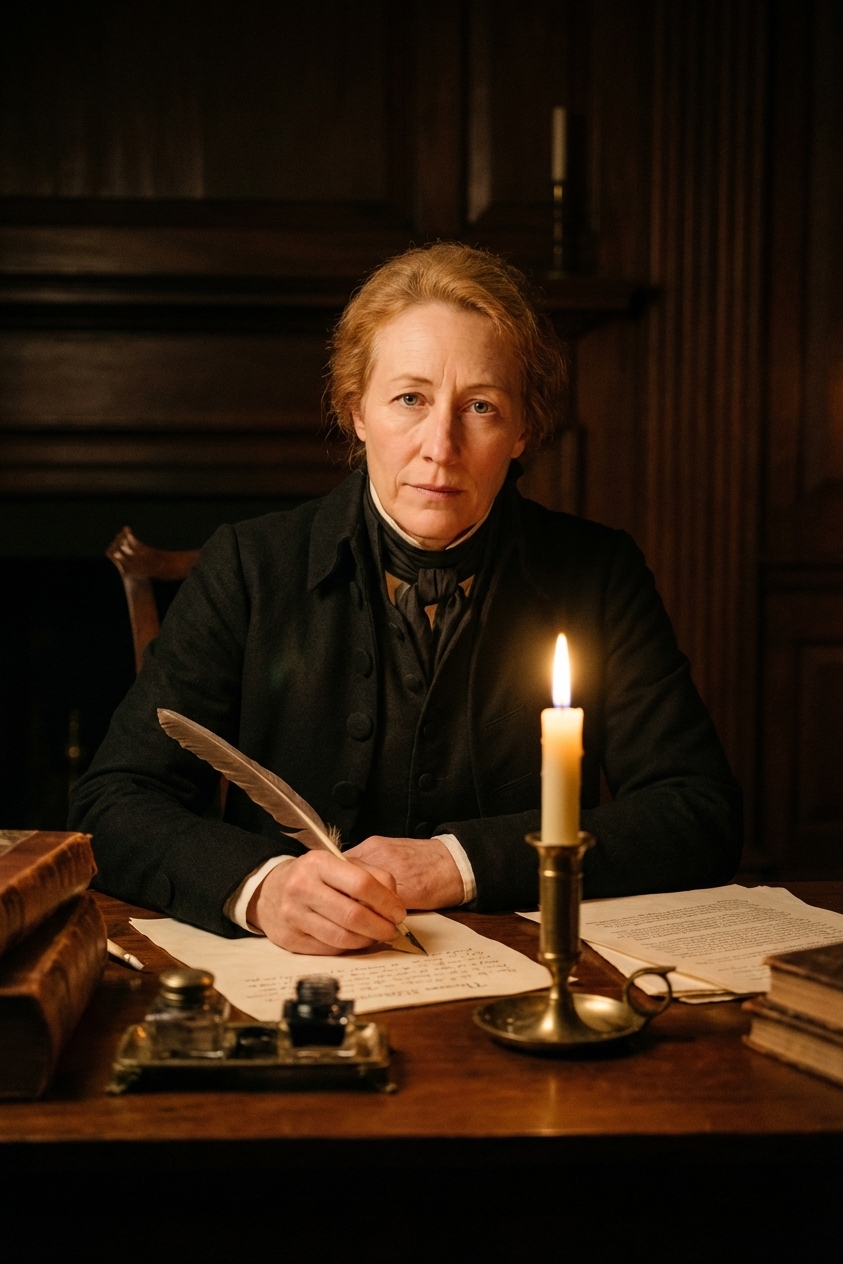
Thomas Jefferson broke from that model. Beginning in 1801, he sent written messages instead of giving a speech. Historians often describe the shift as partly stylistic and partly ideological, including a desire to avoid anything that resembled a British “Speech from the Throne,” where a monarch addresses Parliament with ceremonial grandeur.
Jefferson’s written message became the norm for over a century. Presidents still fulfilled the constitutional requirement, but the event became less of a public show and more of an administrative communication. Clerks would read the message aloud in Congress, and newspapers would later print it for the public. For much of this era, it was commonly known as the “Annual Message.”
Wilson returns, media transforms
Back to the chamber
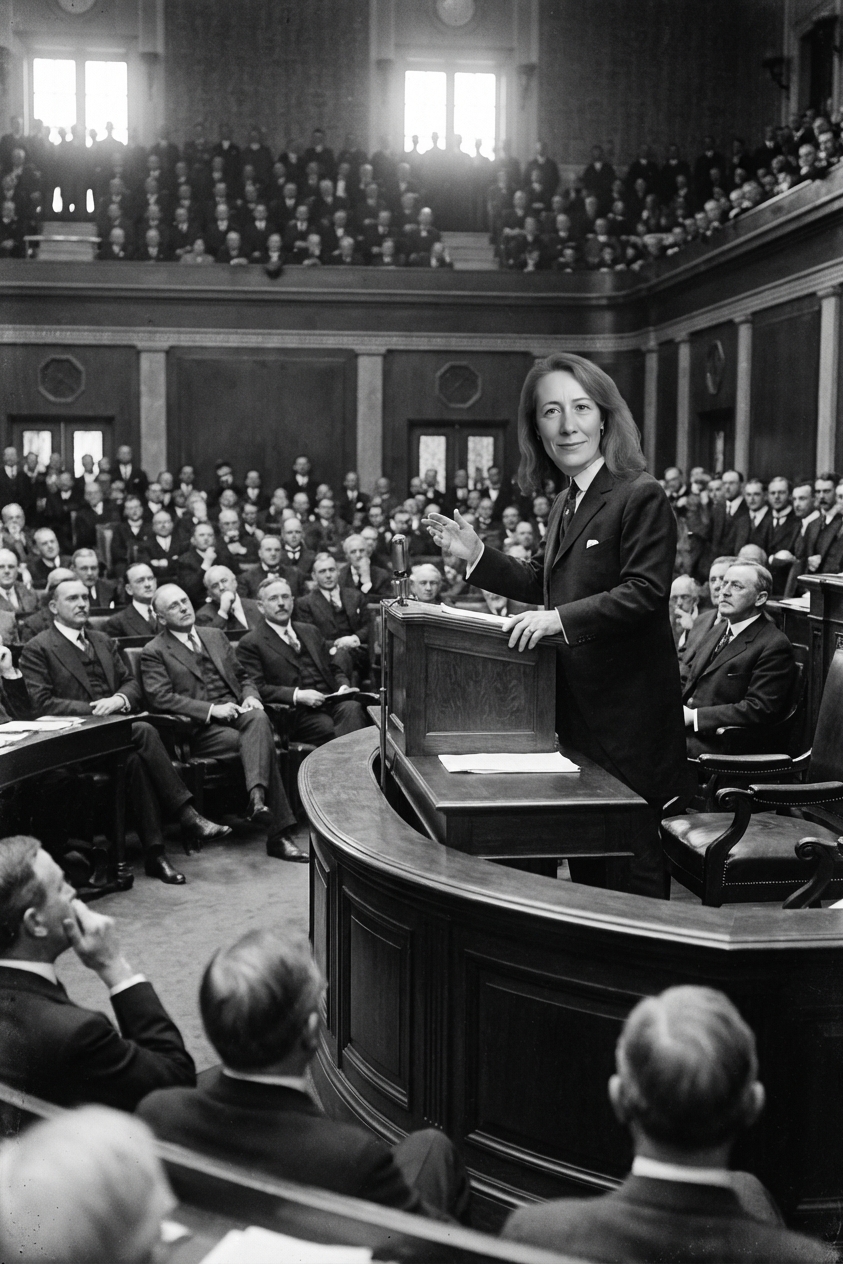
Woodrow Wilson revived the in-person address in 1913. He wanted to push legislation directly and publicly, using the moment to rally not just Congress, but the country. It was a strategic choice: a President speaking in the House chamber creates a national focal point, and focal points create leverage.
Broadcast turns it into an event
Technology did the rest. Radio carried the address beyond Washington. Television turned it into an image as much as an argument. Once Americans could watch the President speak live, the address stopped being primarily for Congress and started being for voters, too.
Franklin D. Roosevelt helped cement “State of the Union” as the standard name in popular use. Over time, the address evolved into a prime-time speech with carefully staged visuals and lines designed for nightly news clips.
What it is, legally
The State of the Union is a constitutional duty, but not a legally enforceable one in the way most people imagine. No court is going to manage it like a deadline with a mandated format. In practice, there is no meaningful judicial remedy here. The Constitution’s remedy is political, not judicial.
Still, the clause matters because it reflects how the Framers expected the branches to interact. Congress is not supposed to operate in isolation. The President is not supposed to govern by private memo alone. The State of the Union is a recurring moment where the executive branch is expected to step forward, describe national conditions, and propose a direction.
Why it happens every year
Even though the Constitution says “from time to time,” annual delivery became customary because Congress meets in regular sessions, the federal budget and legislative calendar are cyclical, and presidents benefit from a predictable national platform. Tradition became expectation, and expectation became routine. Modern presidents also transmit a written version to Congress, even when the televised address gets most of the attention.
How it works today
An invitation and a stage
The President cannot simply walk into the House chamber at will. The event is coordinated with congressional leadership, typically with the Speaker of the House extending an invitation for a joint session. That detail matters symbolically. The President is addressing Congress, not commanding it.
A rare roomful of government
The House chamber fills with members of the House and Senate, Supreme Court justices, Cabinet officials, military leaders, and diplomats. It is one of the only moments when many of the federal government’s separate institutions are physically gathered in one place, even though they are designed to check and balance one another.
Not everyone comes. Some justices and military leadership may skip. And one Cabinet member is deliberately absent for security reasons.
The speech is not a bill
Presidents use the address to lay out priorities, but nothing in the speech becomes law by being said. Congress must still draft, debate, vote, and pass legislation. The President must still sign it, or veto it. The address is agenda, messaging, and bargaining leverage, not governing by proclamation.
The guest system
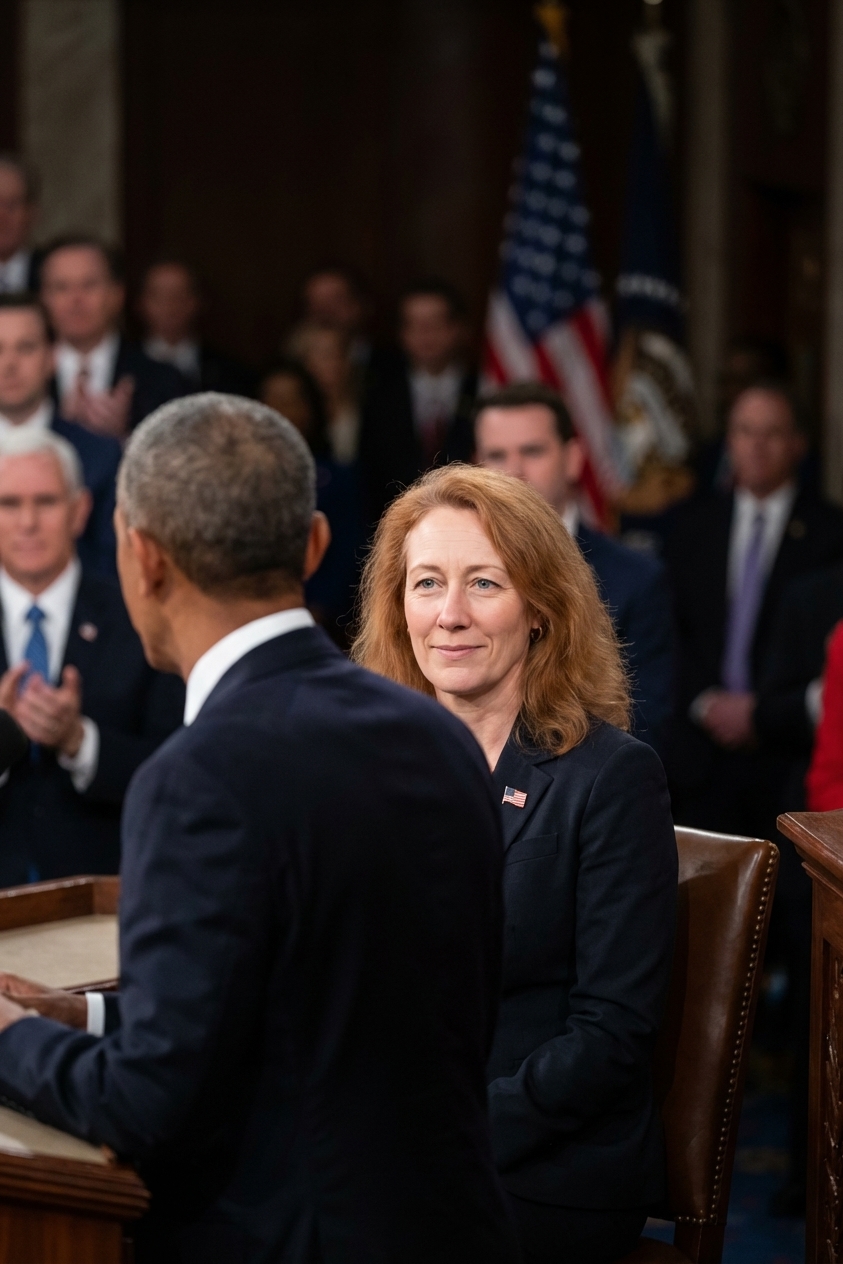
If you have watched a modern State of the Union, you have seen the “guest” system even if you never named it. A president highlights individuals in the gallery, tells their stories, and uses them as living evidence for a policy point. It is emotional narrative grafted onto legislative argument.
This practice has roots in the late twentieth century and is commonly associated with Ronald Reagan’s 1982 address, when he honored Lenny Skutnik, a civilian who rescued a woman after the Air Florida Flight 90 crash in Washington, D.C. After that, the idea of spotlighting guests as symbols of national values became an expectation, not an exception.
Guests today can include:
- People affected by a current crisis, like natural disasters or economic hardship.
- Service members and their families.
- Local officials and civic leaders tied to a policy proposal.
- Individuals whose stories support an argument about crime, health care, education, or immigration.
It is powerful. It is also selective. The guests are not a random sample of the country. They are a curated argument.
The opposition response
The Constitution does not require an opposition response. The State of the Union is addressed to Congress. But modern American politics assumes a rebuttal because the address is now aimed at the public as much as lawmakers.
The opposing party typically delivers a response shortly after the President finishes, often from a smaller venue with a controlled setting. The contrast is part of the message. The President gets the Capitol, the flags, and the full institutional backdrop. The opposition gets a studio-like environment built for a different kind of persuasion: shorter, sharper, and aimed at defining the President’s speech before it settles into public memory.
This practice emerged in the television era and became a regular feature starting in the mid-1960s, often dated to 1966 for the first televised response. It is now a staple of the event, even though it lives entirely outside the constitutional text.
The designated survivor
When the President, Vice President, Cabinet, members of Congress, and Supreme Court justices are in one place, the government creates an obvious vulnerability. That is where the designated survivor comes in.
A designated survivor is a Cabinet member chosen to be absent from the State of the Union and kept in a secure location, ready to assume presidential duties if catastrophe wipes out the leadership gathered at the Capitol.
This tradition is not found in the Constitution, but it is rooted in constitutional succession. Article II and the 25th Amendment govern presidential succession, and Congress has enacted succession statutes, including the Presidential Succession Act, that place Cabinet officers in the line of succession after the Vice President, Speaker, and President pro tempore of the Senate.
The practice became prominent during the Cold War, when fear of mass attack made continuity planning a governing necessity. Today it persists as a reminder that constitutional design is not only about ideals, but also about survival.
Moments that reshaped it
1941: Roosevelt and the Four Freedoms
In January 1941, Franklin D. Roosevelt delivered the “Four Freedoms” address, framing American security and purpose in universal terms: freedom of speech, freedom of worship, freedom from want, and freedom from fear. It became a defining example of how the State of the Union can be used to shape national identity, not just propose policy.
1947: Television arrives
Harry Truman’s 1947 address is often noted as the first televised State of the Union. Whether watched live or encountered later in clips, television accelerated the transformation of the address into a mass political event.
1965: Prime-time becomes normal
Lyndon B. Johnson helped normalize delivering the address in the evening to capture the largest audience. Prime-time moved the speech’s center of gravity from lawmakers to citizens.
1986: Challenger changes the calendar
Sometimes the State of the Union does not happen at all, at least not on its planned night. In 1986, after the Space Shuttle Challenger exploded, Reagan postponed the address and instead delivered a separate national speech. It is an understated lesson in Article II’s flexibility: the duty is to give information “from time to time,” and crisis can redefine what time requires.
1998: Clinton amid impeachment
Bill Clinton delivered the State of the Union in January 1998 as impeachment loomed. The moment illustrated how the address can serve as a political counterweight to institutional peril, allowing a President to project control even when the constitutional system is actively challenging his legitimacy.
2020: Symbolism on camera
Even without changing any law, gestures around the State of the Union can become instant civic shorthand for deeper political conflict. Modern addresses are thick with symbolism because the camera makes symbolism legible.
Why it became a spectacle
The modern State of the Union is not just a report. It is:
- A legislative pitch to pressure Congress.
- A campaign-ad prototype built out of applause lines and digestible segments.
- A loyalty test inside the President’s party, visible in standing ovations and frozen faces.
- A national mood-setter that tries to define what problems matter most.
None of this is constitutionally required. All of it is politically rational. Once the speech became televised, the incentives shifted. A report to Congress turned into a performance for the country, and Congress became part of the set.
How to watch it with a civics lens
The easiest way to misunderstand the State of the Union is to treat it like a checklist of promises. The better way is to treat it like what it really is: a constitutional communication that has absorbed modern media incentives.
- Listen for what the President is asking Congress to do, not just what he is describing.
- Notice which constitutional powers are being implicitly invoked: spending, war powers, regulation, appointments.
- Watch the room. Applause patterns often reveal what a party thinks it must be seen supporting.
- Compare the address with the written messages the White House releases. The written version often contains more detail than the television version.
Article II, Section 3 is short because it assumes something bigger: that a self-governing people will pay attention when their government explains itself. The State of the Union is not just a night on the calendar. It is a recurring test of whether we still think civic attention is part of citizenship, or just background noise.