
Members of Congress say controversial things for a living. Sometimes they say them in hearings, sometimes on the House floor, sometimes in a committee report that lands hard in the news cycle.
So here is the natural question, especially when subpoenas start flying and prosecutors start asking questions: what, exactly, protects a senator or representative from being sued or prosecuted for what they do as lawmakers?
The Constitution’s answer is short, old, and powerful. It is called the Speech and Debate Clause, and it sits in Article I, Section 6.
Join the Discussion
The text in Article I, Section 6
Article I, Section 6 contains a set of protections for legislators, but the famous line is this:
“For any Speech or Debate in either House, they shall not be questioned in any other Place.”
That single sentence does two big things at once.
- It protects legislative independence by giving members immunity for legislative acts and by limiting compelled testimony and evidence about those acts.
- It protects separation of powers by making it much harder for the courts or the executive branch to turn ordinary lawmaking into an “explain yourself” proceeding.
One important nuance: this is not a blanket ban on courts touching anything that involves Congress. Courts still adjudicate lots of disputes involving Congress, including fights over subpoenas or civil claims. The key is that courts generally cannot question members about protected legislative acts, meaning they cannot force testimony, discovery, or proof that probes those acts or the motives behind them.
Think of it less as a personal perk and more as an institutional shield. The Framers were haunted by a familiar story from English history: executives using prosecutions and courts to intimidate Parliament. The clause is a constitutional refusal to repeat that.
What it covers
The name is misleading if you take it literally. It is not limited to speeches. It is not limited to debating. It covers what modern courts usually call legislative acts.
The Supreme Court’s classic formulation is that the Clause protects acts that are part of the “legitimate legislative sphere.” (You will see this language in cases like Kilbourn v. Thompson and, later, Gravel v. United States.) That generally includes:
- Statements on the House or Senate floor, including during formal debate.
- Voting on bills, amendments, nominations, and other matters.
- Drafting and introducing legislation, including internal deliberations tied to that work.
- Committee work, including questioning witnesses in hearings and conducting committee proceedings.
- Committee reports and other official materials that are part of the legislative process.
- Legislative investigations, including formal information-gathering that is tied to a legitimate legislative purpose.
In other words, when Congress is doing Congress things inside its lawmaking lane, the Clause is at its strongest.
Legislative vs political acts
The hardest cases are not about what happens on the floor. They are about the blurry space where lawmakers operate like public officials, political celebrities, and institutional investigators all at once.
Courts draw a line between:
- Legislative acts: things that are integral to deliberating, drafting, investigating for legislative ends, and voting.
- Non-legislative conduct: things that are political, administrative, or personal, even if a member does them while holding office.
This is why the Clause can feel counterintuitive. A speech on the House floor can be protected even if it is incendiary. But a similar statement at a press conference is usually fair game, because it is not part of the legislative process.
What “questioned” means
“They shall not be questioned” is doing more work than it looks like. It usually means you cannot use the courts or prosecutors to force answers, or build a case, by digging into protected legislative activity.
In practice, that often shows up as:
- No compelled testimony about protected legislative acts, whether in a deposition, at trial, or in front of a grand jury.
- Limits on discovery that would require producing legislative files or internal deliberations, when the point is to probe legislative acts.
- Limits on evidence, even in otherwise valid cases, when the proof would require introducing legislative acts or asking a jury to infer wrongdoing from them.
What is not protected
The Speech and Debate Clause is not a general immunity from the law. It does not turn members of Congress into untouchables. It protects the legislative process, not every job a legislator performs.
Common categories that are typically not protected include:
- Bribery and corruption. Taking a bribe is not a legislative act, even if the bribe is connected to a future vote. (United States v. Brewster (1972), bribery is not protected as a legislative act.)
- Constituent services and political errands. Helping a constituent with an agency problem may be good politics, but it is not lawmaking. Courts often treat this as outside the legislative sphere, even if it is connected to policy issues. (See Brewster (1972), distinguishing lawmaking from “errands” and political activities, and Hutchinson v. Proxmire (1979), rejecting protection for public communications outside Congress.)
- Press releases, newsletters, and media appearances. Communicating with the public is not the same as deliberating in Congress. (Hutchinson v. Proxmire (1979), newsletters and press releases not protected even when they repeat floor remarks.)
- Employment and office management. Hiring, firing, and day-to-day personnel decisions are usually treated as administrative conduct, not “speech or debate.” In Davis v. Passman (1979), the Court permitted a damages claim to proceed over an alleged discriminatory firing, rather than treating the personnel decision as protected legislative activity.
- Private republication of materials. Even if something appears in a committee record, distributing it outside Congress can fall outside the Clause depending on the context. (Gravel v. United States (1972), protection for legislative acts and aides acting in that sphere, but not an all-purpose shield for private republication.)
Tests in plain English
You will often see courts ask some version of: Was this act an integral part of Congress doing its constitutional work?
That question shows up through a few recurring principles:
- Integral to deliberation: The closer the act is to debating, voting, drafting, or formal investigation for legislation, the more likely it is protected.
- Labels do not control: It is not enough to call something “legislative.” Courts look at what it actually is.
- Evidence limits: Even when a prosecution is allowed for non-legislative crimes, the government often cannot use evidence that would require probing protected legislative acts or motives.
That last point is where the Clause becomes not just a defense, but an evidentiary shield. In United States v. Helstoski (1979), for example, the Court held that prosecutors could not introduce evidence of legislative acts to prove a bribery-related case, even though bribery itself is not protected. The Clause can allow criminal accountability while still blocking proof that would “question” legislative acts.
Subpoenas and investigations
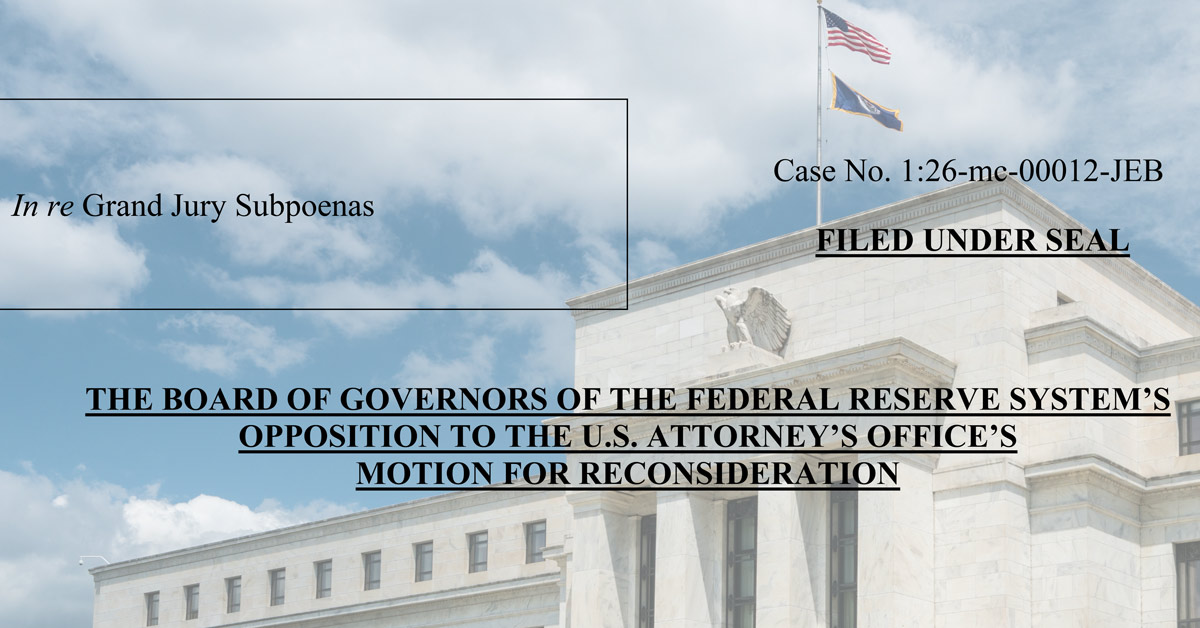
The Speech and Debate Clause matters most when Congress and the executive branch collide. That collision is common now: congressional subpoenas, federal investigations, inspector general inquiries, and court fights over records.
Here is the practical takeaway:
- Congress can investigate, and subpoenas can be part of legitimate legislative work.
- The act of legislating is strongly protected, including core internal deliberations and formal steps taken as part of a legislative inquiry.
- But subpoena fights get complicated. Litigation often turns on whether the activity is genuinely legislative, versus a proxy for law enforcement or pure politics, and on how much downstream conduct is really part of the protected legislative sphere.
A helpful reference point on how courts think about subpoena power, even outside Speech and Debate, is Trump v. Mazars (2020). That case was not about the Clause, and it involved Article I subpoenas to third parties for a president’s personal financial records. But it captures a broader instinct in subpoena fights: courts look for a legitimate legislative purpose, weigh separation-of-powers concerns, and ask whether a subpoena is appropriately tailored.
When the target is a member of Congress (or their legislative materials), Speech and Debate adds a distinct layer. Courts become wary of any inquiry that turns into “why did you do that legislatively?” or “hand over your legislative files so we can build a case.”
Aides and civil cases
Two points that often surprise people:
- It can apply in civil cases too. The Clause is not just a criminal-law rule. Civil plaintiffs also run into it when their claims would require probing legislative acts.
- It can extend to aides. In Gravel v. United States (1972), the Court recognized that congressional aides can share the protection when they are performing legislative functions, because modern lawmaking is not a one-person operation.
Other Article I confusion
Readers also mix this up with another part of Article I, Section 6: the separate “Arrest Clause” language about arrest in certain circumstances while attending sessions. That is a different protection with a different history. The Speech and Debate Clause is the one that governs being “questioned” for legislative acts.
Why it exists
The Speech and Debate Clause can feel like a loophole when you first encounter it, especially in moments of scandal. But its purpose is not to protect misconduct. It is to protect the legislature’s ability to function without fear of retaliation from the other branches.
Without it, every controversial vote could trigger a lawsuit. Every aggressive hearing could trigger a prosecution framed as “harassment.” Every internal legislative memo could become evidence in an executive-branch fishing expedition.
The Clause is part of the Constitution’s broader design choice: conflict between branches is inevitable, so the system needs guardrails that keep conflict from becoming domination.
Recap
- Source: Article I, Section 6 protects members for “Speech or Debate” in Congress.
- Core coverage: legislative acts inside the legitimate legislative sphere, including floor speech, voting, committee work, and legislative investigations tied to lawmaking.
- Not covered: bribery, many constituent services, press work, and most administrative or personal conduct.
- Modern reality: it operates both as immunity from being “questioned” and as a powerful limit on what evidence prosecutors and civil plaintiffs can use.
- Why it matters now: subpoenas and investigations routinely test the boundary between legitimate oversight and impermissible intrusion into the legislative process.
The Constitution does not promise that Congress will be virtuous. It promises that Congress will be independent. The Speech and Debate Clause is one of the quiet mechanisms that makes that independence real.