
You can feel the word emergency doing work in American politics. It signals urgency, danger, and the idea that normal rules might need to bend.
But under federal law, a “national emergency” is also something much more technical. It is a legal switch. Flip it, and scores of dormant statutory authorities become available to the president.
That switch exists because of the National Emergencies Act of 1976, usually called the NEA. Congress wrote it to rein in unchecked emergency government after Watergate. In practice, it standardized emergency declarations and made them easier to keep in place.

What the National Emergencies Act is
The NEA is not a grab bag of powers by itself. It is a framework law that:
- Creates a formal process for the president to declare a national emergency.
- Requires publication and reporting so Congress and the public can track what authorities are being used.
- Provides a termination mechanism for Congress and the president to end an emergency.
Think of the NEA as the door, not the room. The room is filled with separate statutes, passed over decades, that say some version of: “During a national emergency declared by the president, the executive may do X.”
Before 1976, presidents could invoke emergency authorities under a patchwork of proclamations, some of which stayed on the books for years or decades. The NEA’s goal was to put emergency governance on a cleaner track and to restore a measure of legislative oversight.
The big number: 100+ authorities
You will often see the NEA described as unlocking “more than 100” special powers. That shorthand is basically accurate, with two important caveats.
First, the NEA itself does not list them in one neat menu. The authorities live across the U.S. Code. Second, the “100+” figure is an estimate that depends on methodology, meaning what exactly is being counted (for example, statutory provisions that become available after a presidential emergency declaration). For readers who want to chase the footnotes, tallies and inventories are commonly compiled by the Congressional Research Service and research groups such as the Brennan Center.
Many of the most consequential modern uses involve statutes such as the International Emergency Economic Powers Act (IEEPA), which requires the president to declare a national emergency to address an “unusual and extraordinary threat” with a foreign nexus. Put plainly, many national emergencies today are declared specifically to invoke IEEPA, especially for sanctions.
Other major crisis authorities often appear in the same conversation, even though they do not uniformly depend on an NEA “national emergency” declaration. The Defense Production Act and the Stafford Act have their own triggers and structures, but they sit in the same ecosystem of crisis governance.
Examples of what emergency-linked authorities can cover
- Economic sanctions and financial restrictions (often via IEEPA), including blocking transactions and freezing assets tied to foreign threats.
- Military and national defense adjustments, including certain reallocations or construction-related moves when specific statutory conditions are met.
- Communications-related actions in limited contexts under older statutes (for example, authorities historically associated with 47 U.S.C. § 606). Modern use is rare, contested, and shadowed by serious constitutional and First Amendment concerns.
- Transportation and maritime restrictions tied to security and emergency needs, depending on the triggering statute.
- Special regulatory flexibilities across agencies that Congress pre-authorized for emergencies.
The phrase that matters is pre-authorized. In the American system, the president does not get new powers because a crisis exists. The president gets power because Congress previously wrote a law saying the executive may act if an emergency is declared.
How a national emergency is declared
The mechanics are straightforward.
Step 1: The proclamation
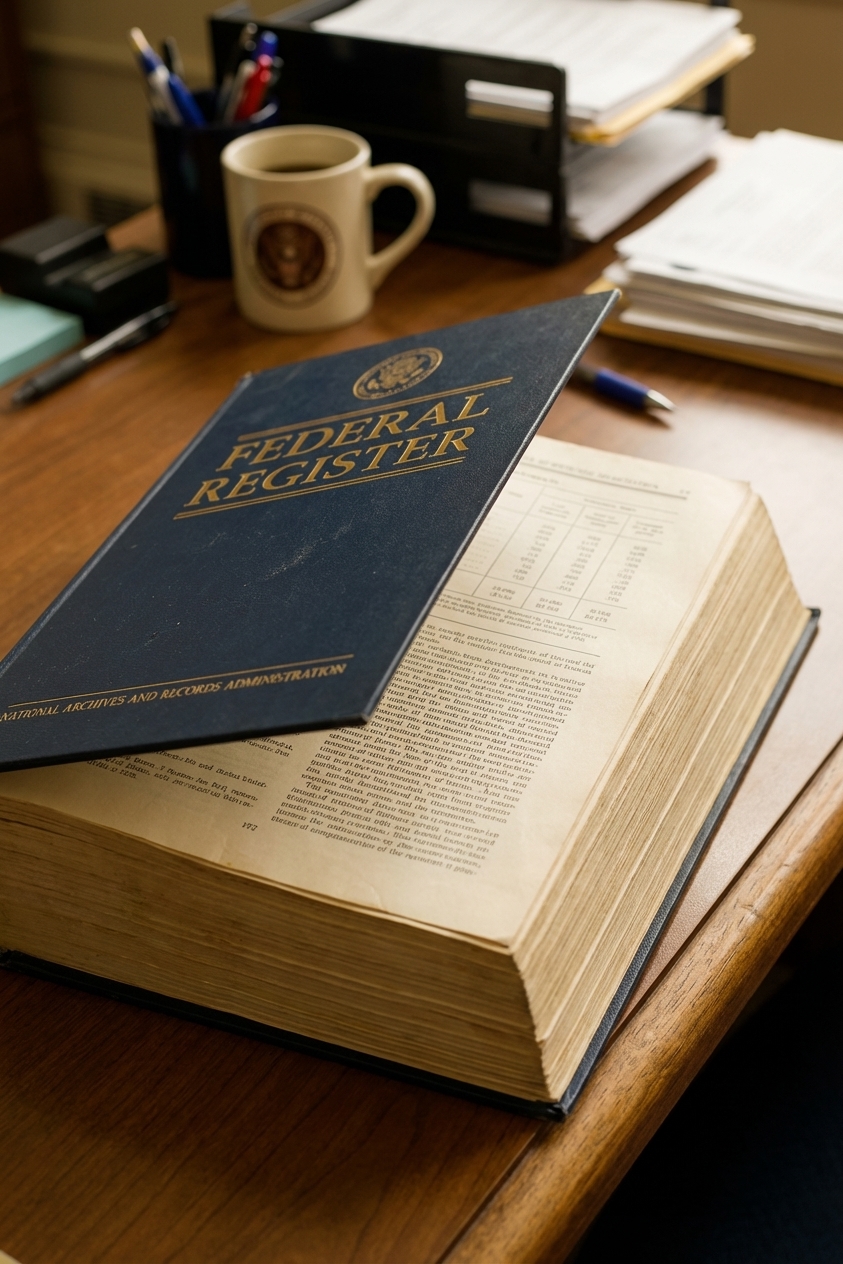
The president declares a national emergency in a formal document, usually a presidential proclamation. It is published in the Federal Register.
Step 2: The cited statutes
The NEA requires the president to identify which statutory powers will be activated. In theory, this is where transparency lives: the public is not just told “emergency,” but which laws are being invoked because of it.
Step 3: Reporting and recordkeeping
The executive branch must transmit certain reports to Congress and keep track of expenditures and actions taken under emergency authorities.
One underappreciated detail: a declaration can be broad, while the actual authorities used can expand over time. A president may declare an emergency now and cite additional statutory authorities later as policy evolves.
How long emergencies last
Here is the part that surprises people: a national emergency can be renewed indefinitely.
Under the NEA, an emergency declaration automatically ends after one year unless the president publishes a notice of continuation. In practice, administrations routinely renew emergencies year after year, sometimes across party lines, because the underlying authorities are useful and because the political cost of ending them can be higher than the cost of keeping them.
So the NEA created a yearly check. It also created a yearly routine. Those are not the same thing.
Congressional checks
The NEA was designed with congressional oversight in mind. Congress has several tools, but each has a practical problem.
1) Termination by law
Congress can pass a joint resolution terminating a national emergency. Today, that means a bill that must either be signed by the president or passed over a veto with a two-thirds vote in both chambers.
There is a reason this check rarely bites. When the NEA was enacted in 1976, Congress included a form of legislative veto that allowed termination without the president’s signature. In INS v. Chadha (1983), the Supreme Court struck down legislative vetoes as unconstitutional. The practical result is the modern system: termination requires ordinary legislation, which is vulnerable to a presidential veto.
2) The power of the purse
Congress still controls appropriations, and it can try to fence off money for certain emergency-driven initiatives. But this depends on political will, timing, and legislative coordination. It also collides with the fact that some emergency authorities allow the executive to repurpose certain funds under conditions Congress already authorized.
3) Amend the underlying statutes
This is the most structural fix: if a particular emergency authority is too broad, Congress can narrow or repeal it. But that requires going law by law across a sprawling landscape of provisions that most voters never see until a crisis hits.
4) Courts and case-by-case review
Judicial review is real, but it is not automatic. Litigation often turns on standing, deference, statutory interpretation, and how clearly Congress spoke when it wrote the relevant emergency authority. Courts can block particular actions without necessarily ending the emergency itself.
The result is the NEA’s central paradox: Congress built the system to constrain emergency governance, but it also built a mechanism that can persist as long as the political branches tolerate it.
Not all emergencies are NEA emergencies
One common point of confusion is that “emergency” is not a single legal category. The NEA governs a “national emergency” declaration that can activate certain statutory authorities across the federal government.
Other emergency frameworks operate on separate tracks. For example, the Stafford Act governs presidential disaster declarations for major disasters and emergencies, and the Public Health Service Act supports HHS public health emergency declarations. Those can overlap with NEA practice in real-world crises, but they are not the same legal switch.
How many are active right now?
There is no single number that stays true for long because national emergencies are declared, renewed, and terminated on different schedules. In modern practice, the United States often has dozens of active national emergencies at once, frequently in the range of roughly 30 to 50, many tied to foreign policy sanctions regimes or ongoing security concerns.
For the most current count, the best public-facing reference points are:
- The Federal Register, which publishes declarations and annual continuation notices.
- Congressional Research Service (CRS) products tracking active emergencies and related authorities.
- The National Archives, which maintains presidential documents and proclamations.
If you have ever wondered why “emergency” can feel permanent, this is why. The NEA normalized continuity. An emergency can be exceptional in name while routine in administration.

The constitutional tension
The Constitution does not contain a master “emergency powers” clause. Instead, it sets up separation of powers and expects ambition to counteract ambition. Emergencies test that architecture because they reward speed, unity, and discretion, which are traits the executive branch is built to supply.
Article I and Article II
Congress has Article I power to legislate, tax, and appropriate funds. The president has Article II power to execute the laws, conduct foreign relations, and serve as commander in chief. The NEA is a bridge between them, and it is also a stress point:
- Congress “lends” authority in advance through statutes that activate during emergencies.
- The president decides when the trigger is pulled by declaring the emergency and selecting which statutes to invoke.
This structure can blur the line between making the law and executing it, especially when the statutory authority is broad and the emergency is politically disputed.
The delegation question
At the core is a classic constitutional worry: How much power can Congress delegate to the executive without effectively transferring legislative power?
The Supreme Court has generally allowed broad delegations as long as Congress supplies an “intelligible principle” to guide executive action. Many emergency statutes meet that standard in the Court’s eyes, even if they feel open-ended in public debate. But every expansive use of emergency power reopens the same civic question: whether the principle is truly intelligible, or simply convenient.
Emergency as precedent
The deeper tension is not just what a president can do in a crisis. It is what becomes normal afterward. The NEA makes it possible for extraordinary tools to remain on standby for years, waiting for the next proclamation to bring them back to life.
What to watch
If you want to read a new emergency declaration like a constitutionalist instead of a partisan, focus on three concrete questions.
- What statutory authorities are cited? “Emergency” is rhetoric. The cited statutes are the legal engine.
- What is the limiting principle? Does the statute contain clear boundaries, definitions, and reporting requirements, or is it mostly discretionary?
- What is Congress doing next? Hearings, appropriations language, targeted amendments, and termination efforts reveal whether the legislative branch is accepting the new baseline.
There is a reason emergency power debates keep returning. They are a referendum on the same basic constitutional bargain: a president energetic enough to act, and a Congress jealous enough to supervise.
The NEA did not settle that bargain. It proceduralized it. And in American politics, procedure is often destiny.